Disclosure: As an Amazon Associate, we earn from qualifying purchases. If you click a link on this page and make a purchase, we may receive a small commission at no extra cost to you.
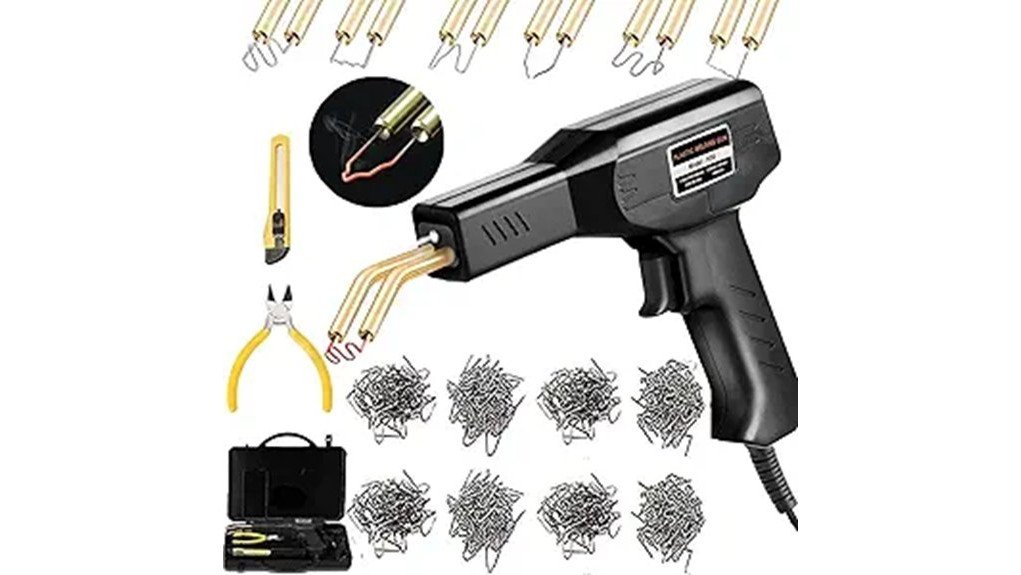
Cracked plastic parts can be frustrating because glue often leaves weak spots, rough seams, or repairs that do not hold under daily use. The Plastic Welding Machine gives you a hot-staple repair option for common plastic fixes around cars, motorcycles, and household items. This review helps you decide if the kit is practical for your repair needs, especially if you want a hands-on tool with a large staple assortment. Its biggest strengths are the 1050 included staples, simple operation, and repair flexibility, but it is not meant for metal, structural vehicle repairs, or every type of plastic.
Quick Verdict
Rating: Recommended with caveats, 8/10
Best For: DIY users who want to repair cracked plastic bumpers, dashboards, household plastic parts, and similar non-metal items.
Bottom Line: This plastic welding kit is a useful repair tool if you want a large staple assortment and a simple way to reinforce cracked plastic. The main tradeoff is that the article does not verify brand-specific specs, so you should check the current Amazon listing and manual before buying.
| Specification | Detail |
|---|---|
| Product name | Plastic Welding Machine |
| Amazon ASIN from link | B09Z2V5F3Q |
| Product type | Plastic welding and hot-staple repair kit |
| Included staple count | 1050 staples |
| Staple types mentioned | 0.8mm wave staples, 0.8mm flat staples, 0.6mm wave staples, and 0.6mm M staples |
| Design | Ergonomic handle for better control during longer repair tasks |
| Best use | Plastic repair projects, including automotive plastic and household plastic items |
| Example repairs | Cracked bumpers, dashboards, lamp holders, and plastic rings |
| Finish after repair | Repaired areas can be polished or painted after proper curing and finishing |
| Safety note | Use protective gear, follow the manual, and do not use it for metal or safety-critical repairs unless a qualified professional confirms the repair method is appropriate. |
What Is the Plastic Welding Machine?
The Plastic Welding Machine is a plastic repair tool designed to reinforce cracked or broken plastic with heated staples. Instead of relying only on adhesive, the tool helps place staples across a damaged area so the repair has extra internal support.
The kit is aimed at DIY users who want to handle common plastic fixes without paying for every small repair. Based on the article details, it includes 1050 staples in several shapes and sizes, which gives you more flexibility when working on straight cracks, curved sections, and uneven plastic surfaces.
This is not a universal welding machine for every material. It is focused on plastic repair, so you should not expect it to weld metal, replace professional body-shop work, or fix parts where safety, impact strength, or electrical protection is critical.
Key Takeaways
- The kit includes 1050 staples, giving you a wide supply for repeated plastic repair projects.
- Staple options include 0.8mm wave, 0.8mm flat, 0.6mm wave, and 0.6mm M staples.
- The ergonomic handle is useful when you need steadier control during longer repair sessions.
- It is best suited for DIY plastic repairs, including cracked bumpers, dashboards, lamp holders, and plastic rings.
- The repaired area can be polished or painted after the repair is finished and cured correctly.
- It is not the right choice for metal welding, safety-critical structural repairs, or unknown plastics without testing first.
Who Should Buy It?
Best For
- DIY users who often repair cracked plastic parts instead of replacing them.
- Car and motorcycle owners working on non-structural plastic pieces such as bumpers, trim, and dashboards.
- Home users who want a practical repair kit for plastic household items.
Skip If
- You need a verified brand, exact power rating, dimensions, or warranty before purchasing.
- You want to weld metal, glass, rubber, or materials outside plastic repair use.
- The damaged part is safety-critical, load-bearing, close to fuel components, or part of an electrical enclosure.
Before You Buy: Check the current Amazon listing and manual before ordering because the available article details do not confirm the brand, power rating, dimensions, included case, or exact warranty terms.
Key Features of the Plastic Welding Machine
The main feature is the large 1050-staple assortment. That matters because plastic cracks do not all form in the same shape. A straight split, a corner crack, and a curved bumper edge may need different staple shapes to get a cleaner repair.
The article lists 0.8mm wave and flat staples along with 0.6mm wave and M staples. Wave staples can help bridge uneven cracks, flat staples can work well on straighter sections, and M-style staples can be useful when the damaged area needs more grip around a corner or stress point.
The ergonomic handle is another useful feature. Plastic repairs often require careful placement, steady pressure, and patience. A more comfortable handle can reduce hand strain when you need to place several staples across one damaged area.
Design and Build Quality
The design appears focused on quick, practical plastic repair rather than advanced shop-level controls. That can be helpful if you want a tool you can learn without a long setup process. You still need to work slowly because heated staples can deform plastic if you press too hard or stay in one spot too long.
The handle design is important for control. When you repair a crack, your goal is to place staples across the break without pushing through the visible face of the part. A steady grip helps you keep the repair neater and lowers the chance of heat damage.
The article does not verify the outer housing material, cord length, power rating, or temperature control details. For that reason, you should confirm those points on the seller page if they matter for your workspace or repair style.
Included Staples and Repair Flexibility
A 1050-piece staple supply gives you room to practice before working on a visible repair. That is useful because your first few placements may not be perfect, especially if you have never used a hot-staple plastic repair tool before.
The included shapes also help with different repair locations. A flat crack on a plastic panel may call for a different staple than a curved bumper edge or a broken tab. Having several shapes in the kit means you are less likely to stop mid-repair because one staple style does not fit the damage.
For best results, match the staple to the crack instead of forcing one shape into every repair. The staple should bridge the damaged area cleanly and sit deep enough to reinforce the plastic without showing through the finished side.
Ease of Use
The article describes the machine as quick to operate and beginner-friendly. That makes it appealing if you want to start with simple plastic repairs, such as a cracked plastic ring, a damaged lamp holder, or a hidden area on an automotive plastic panel.
Begin with a low-risk repair or a scrap piece of similar plastic when possible. This helps you learn how fast the staple heats, how much pressure to apply, and how long the plastic takes to cool. That practice can prevent messy results on a part you care about.
Even though the tool is simple, the repair still needs careful finishing. After the staple is embedded and the plastic has cooled, you may need to trim staple ends, smooth rough edges, polish the area, or prepare it for paint.
Pro Tip: Practice on a hidden or spare piece of plastic first, then repair the real part only after you know how deep the staple sits and how quickly the plastic softens.
Practical Applications for Everyday Repairs
This plastic welding machine is most useful when a plastic part is cracked but still mostly complete. For automotive use, that may include cracked bumpers, dashboard plastic, trim pieces, and other non-structural plastic parts. For home use, it may help with plastic rings, lamp holders, and similar hard plastic items.
The tool can help you save money when the alternative is replacing an entire plastic part. A small crack in a bumper cover, for example, may not justify buying a replacement part if the damage is cosmetic and the repair can be reinforced safely.
The repair can also be finished after the staple work is complete. The article notes that repaired areas can be polished or painted, which matters when the repair is visible. Still, paint quality depends on surface preparation, plastic type, and the finishing materials you use.
How It Performs in Real Use
For Automotive Plastic Repairs
The machine makes the most sense for non-structural automotive plastic repairs, such as bumper covers, dashboards, and plastic trim. It can reinforce a crack from behind so the visible side can be finished more cleanly. Do not use it as a shortcut for safety-critical vehicle components.
For Household Plastic Items
For home repairs, the kit can help when a plastic item cracks but still has enough material left to hold a staple. Lamp holders, plastic rings, and similar pieces are better candidates than thin, brittle, or heat-sensitive plastic. Test carefully because some plastics can melt unevenly or deform.
For First-Time DIY Repairs
The quick operation is useful for beginners, but you should start with simple repairs. Straight cracks and hidden surfaces are easier than curved, thin, or highly visible parts. The 1050 staples give you enough supply to practice and make several repairs over time.
For Long-Term Use
The kit has better long-term value if you repair plastic often. If you only have one small crack, a simpler adhesive repair may be enough. If you regularly work on car trim, household plastic, or project parts, the large staple count gives the kit more practical value.
How to Use It Correctly
Start by cleaning the damaged plastic so dust, grease, and loose fragments do not interfere with the repair. Align the cracked edges as closely as possible before placing staples. If the part is badly warped or missing chunks of plastic, the repair may need extra prep or a professional assessment.
Choose a staple shape that matches the crack. Place staples across the damaged line rather than along it, since the goal is to bridge the break. Let each staple cool before trimming or finishing the area.
After the repair is reinforced, inspect both sides of the part. If the staple is too shallow, it may not add enough strength. If it is too deep, it may push through or distort the visible side. Work slowly and follow the product manual for setup, heating, cooling, and safe handling.
Compatibility and Safety
This kit is designed for plastic repair, not metal welding. It should not be used on materials or parts that the manual does not support. Some plastics may respond better than others, and thin or brittle plastic can crack further if overheated.
Use basic safety gear, including eye protection and heat-resistant gloves. Work in a clean, stable area, keep the hot tip away from skin, and allow the repaired section to cool before trimming, sanding, polishing, or painting.
Be careful with automotive parts near wiring, sensors, fuel system components, airbag areas, or structural mounting points. For those repairs, a professional body technician or qualified repair specialist is the safer choice.
Pros and Cons
Pros
- Includes 1050 staples for repeated plastic repair projects.
- Multiple staple styles help with straight cracks, curved repairs, and different plastic shapes.
- Ergonomic handle can improve comfort and control during longer repairs.
- Useful for common non-structural automotive and household plastic fixes.
- Repaired areas can be polished or painted after proper finishing.
Cons
- Brand, power rating, dimensions, and warranty details are not verified from the available article details.
- Not suitable for metal, safety-critical parts, or every type of plastic.
- Requires correct staple placement and practice to avoid visible damage or overheating.
Is It Worth the Price?
This kit can be a strong value for the price if you expect to repair plastic more than once. The 1050-staple supply makes it more useful than a small one-time repair tool, especially if you work on automotive plastic, garage projects, or household repairs.
You get the most value if you are comfortable doing careful DIY work. The kit can help you avoid replacing some plastic parts, but it still requires patience, correct staple selection, and safe finishing.
It is not the best fit if you need verified professional-grade specs, exact temperature settings, or a guaranteed repair for every plastic material. In those cases, compare the current listing details and consider a professional repair tool or service.
How It Compares to Alternatives
Compared with basic plastic glue or epoxy, this machine adds internal reinforcement with staples. That can be useful when a crack needs more support than surface adhesive alone can provide.
Compared with professional hot-air plastic welding or full part replacement, this kit is more approachable for DIY repairs but less specialized. It makes the most sense if you want a practical plastic repair tool for non-structural parts and you do not need a full body-shop setup.
Frequently Asked Questions
Can this plastic welding machine repair car bumpers?
Yes, it can be useful for non-structural plastic bumper repairs when the cracked area still has enough material to hold staples. Do not use it for safety-critical vehicle repairs unless a qualified professional confirms the method is appropriate.
How many staples come with the kit?
The article states that the kit includes 1050 staples. The listed staple types include 0.8mm wave, 0.8mm flat, 0.6mm wave, and 0.6mm M staples.
Can it weld metal?
No. This tool is reviewed as a plastic welding machine for plastic repair projects. If you need to weld metal, you need equipment made for metal welding and the right safety setup.
Is it safe for beginners?
It can be beginner-friendly for simple repairs, but it still uses heat and requires careful handling. Start with a hidden area or scrap plastic, wear protective gear, and follow the manual closely.
Can the repaired area be painted?
The article states that repaired areas can be polished or painted after the repair is complete. For a cleaner finish, let the area cool fully, smooth the surface carefully, and use paint products that match the plastic type.
What plastics can it repair?
The article supports general plastic repair use, including automotive and household plastic items. Because plastic types vary, check the manual and test carefully before using it on thin, brittle, heat-sensitive, or unknown plastic.
Are replacement staples available?
Replacement staples are commonly sold for plastic repair welders, but compatibility matters. Match the staple size and shape to this kit before buying extra staples.
Who should skip this plastic welding kit?
Skip it if you need verified professional specs, a tool for metal welding, or a repair method for structural or safety-critical parts. It is better for practical DIY plastic fixes than for certified professional repairs.
The Bottom Line
The Plastic Welding Machine is worth considering if you want a simple hot-staple repair kit with 1050 staples for common plastic repairs. It is best for DIY users fixing non-structural automotive and household plastic parts, while buyers who need verified brand specs, metal welding ability, or professional structural repairs should skip it.