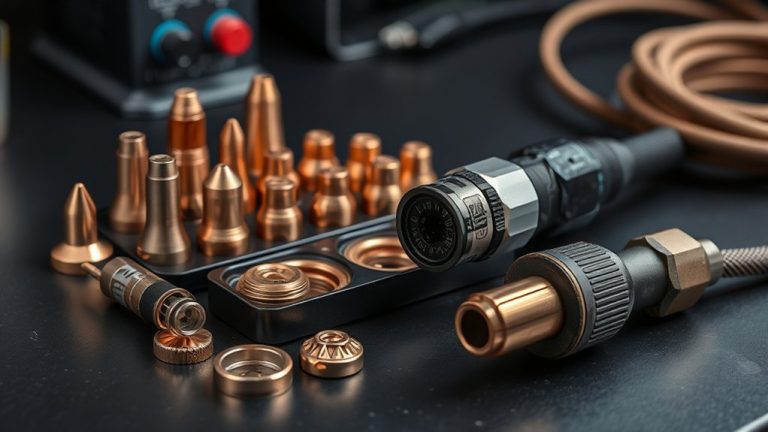
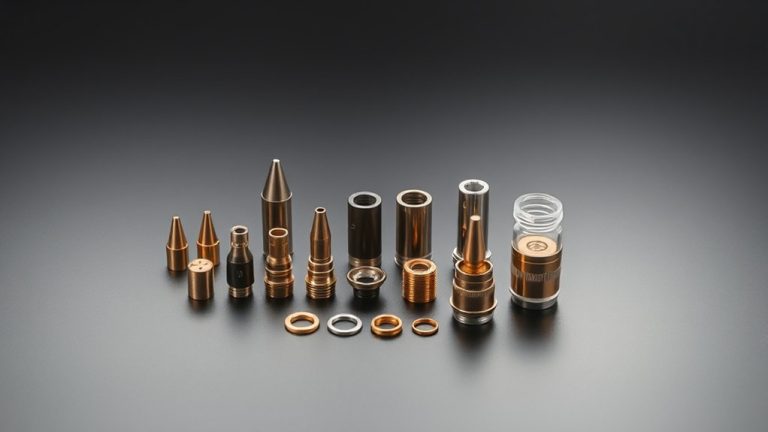
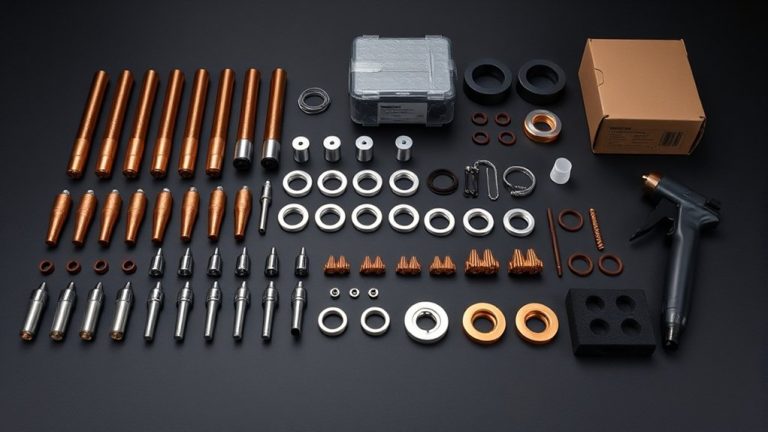
Up to 70% of cut-quality variance traces back to consumable condition and fit on Powermax Pro 80 torches. You’ll match electrodes, tips, shields, and caps by amperage, gas, and standoff to hold ~90% of OEM performance. Tight tolerances stabilize the arc, improve kerf consistency, and extend service life under proper duty cycles. You’ll also want cross-referenced part numbers and wear metrics in mils to time replacements precisely—because the next run’s edge quality depends on it.
Company Info
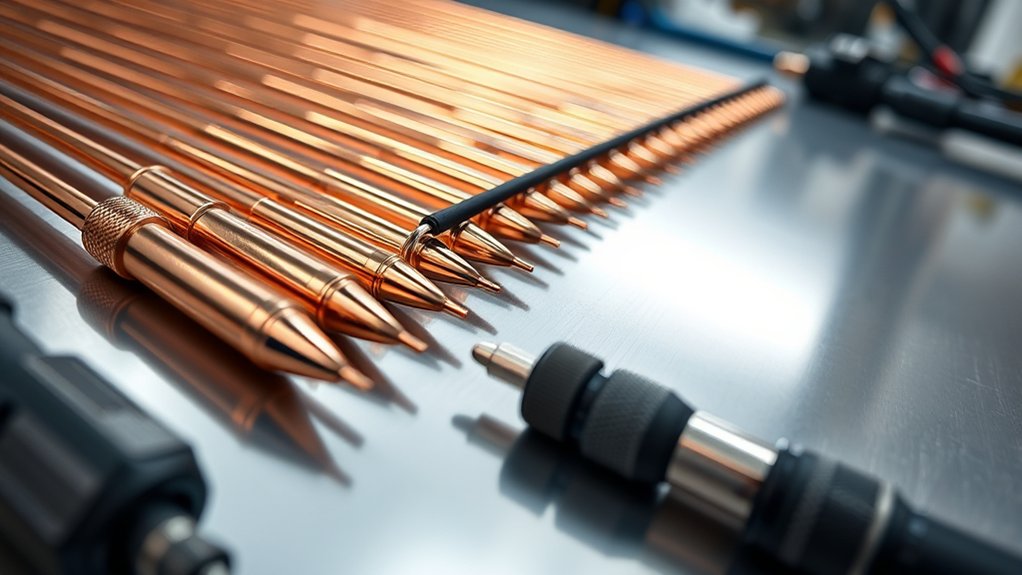
Precision defines Changzhou Forman Welding Equipment Co., Ltd., a supplier of high-quality plasma consumables engineered to meet approximately 90% of OEM performance standards. You benefit from a company mission focused on reliable compatibility and measurable performance for the Powermax Pro 80 torch.
Engineered plasma consumables delivering reliable Powermax Pro 80 compatibility at ~90% OEM performance.
The portfolio includes electrodes, nozzles, and shields validated for fit and arc stability, aligning with stringent tolerance control and repeatability. You can specify customization options when your process demands unique cut quality or durability targets.
Product innovation centers on material selection, flow-path geometry, and wear-life optimization, so you maintain consistent kerf and reduced dross across duty cycles. Forman’s data-driven approach benchmarks consumables against OEM metrics—current capacity, thermal load handling, and nozzle orifice integrity—to guarantee predictable outcomes.
When you need answers, support responds quickly with technical guidance on part matching and operating parameters. This standards-aware orientation helps you streamline procurement, minimize downtime, and maintain cost-performance balance for Powermax Pro 80 operations.
Basic Info
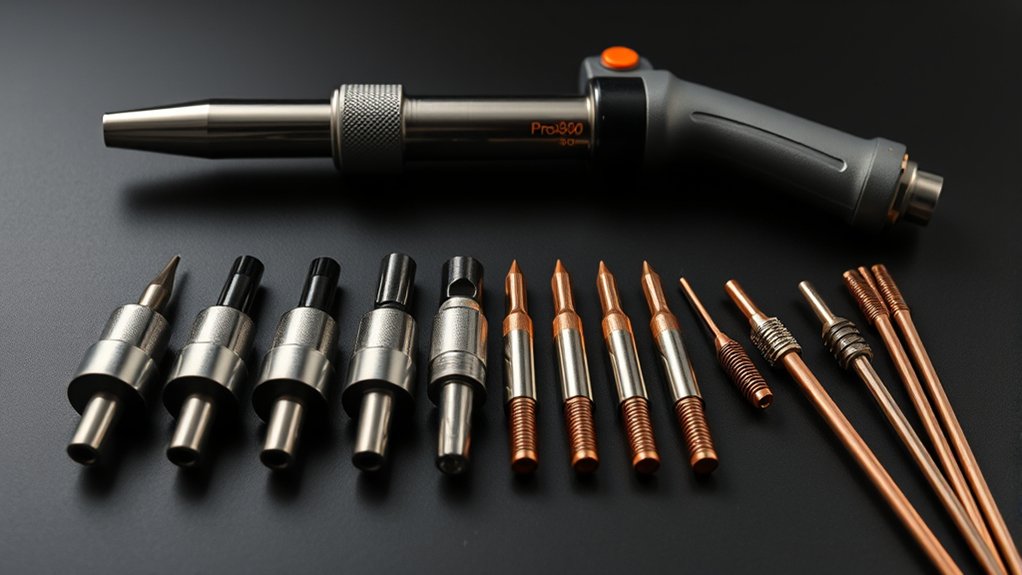
Core scope: Powermax Pro 80 consumables cover electrodes, nozzles/tips, and shields engineered for the Hypertherm Powermax platform, delivering up to ~90% of OEM performance.
You’re working with high-grade copper alloys and emissive inserts selected for thermal stability, arc density, and erosion resistance under modern plasma technology duty cycles. These parts are built to maintain consistent kerf, taper control, and edge quality across typical amperage settings.
Expect dimensional tolerances that protect standoff accuracy and gas flow symmetry, sustaining cut repeatability.
With disciplined consumable maintenance—inspection of orifice wear, pit depth on electrodes, and shield integrity—you’ll extend torch uptime and protect downstream components. Replace on schedule to minimize double-arcing, misfires, and dross accumulation.
Customization options exist for application-specific needs, such as optimized orifice geometries or coatings to tune arc constriction and life in particular materials or thickness ranges.
When you standardize inspection intervals and track part life by pierce counts, you’ll stabilize performance, reduce operating cost, and preserve system longevity.
Compatibility With Powermax Pro 80 Systems
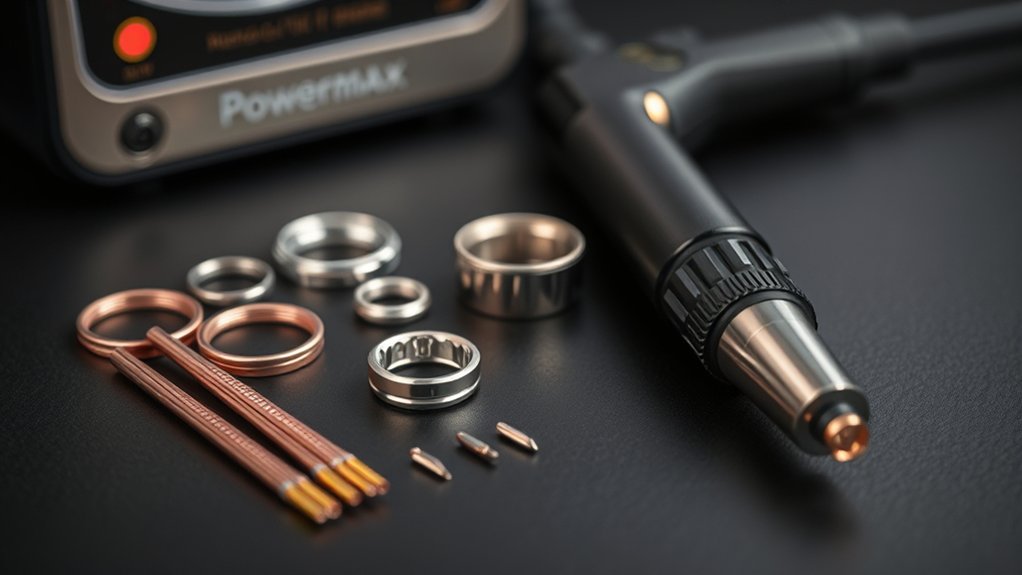
Building on maintenance and material guidance, compatibility starts with using Powermax Pro 80–specific electrodes, nozzles, and shields that match the torch’s gas dynamics, amperage range, and standoff requirements.
You’ll verify torch part compatibility by selecting parts engineered for the Pro 80’s thermal load and flow characteristics, not just thread fit. Verify orifice size, swirl ring pairing, and shield geometry against the Pro 80 duty cycle and arc voltage setpoints.
Consumable quality matters: choose high‑grade components validated to about 90% of original factory standards. That threshold maintains kerf accuracy, arc stability, and cut face consistency while protecting the torch from premature heat damage.
Choose high‑grade consumables validated to ~90% OEM standards to preserve kerf accuracy and arc stability.
Replace tips and electrodes on a schedule tied to arc starts, pierce counts, and cut length—waiting for visible failure will degrade cut precision.
If you require niche performance, use approved customization options (e.g., nozzle orifice variants) documented for the Pro 80.
Always confirm gas type, flow rate, and stand-off with the selected consumable set.
Key Consumables: Tips, Electrodes, Shields, and Caps
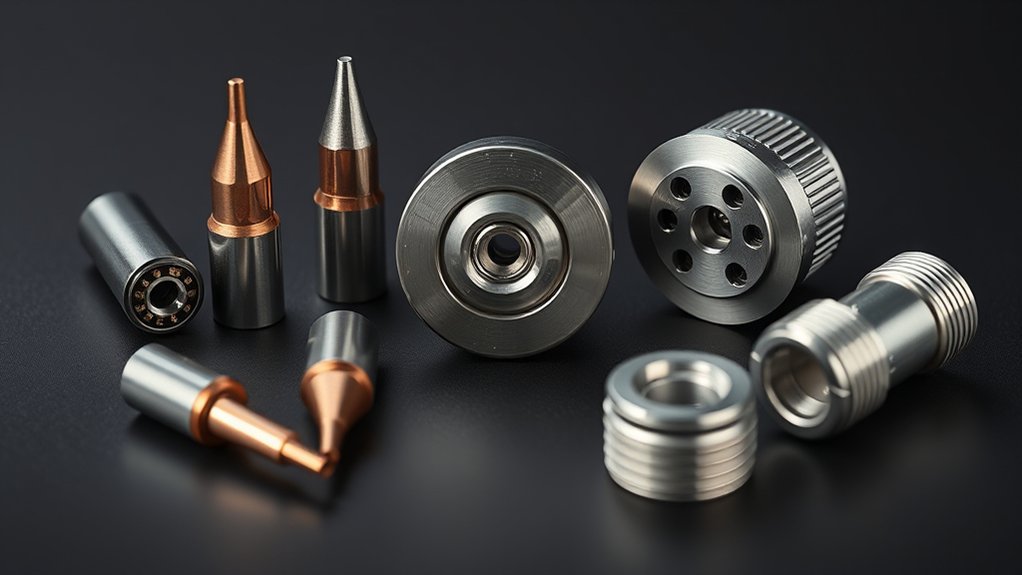
Blueprint for performance: the Powermax Pro 80 relies on four primary consumables—tips, electrodes, shields, and caps—engineered as a matched set for arc stability, kerf control, and torch protection.
You’ll get predictable results because each component is manufactured to approximately 90% of original factory standards, balancing cost with specification fidelity.
Electrodes use high‑grade materials to stabilize the arc column and resist erosion, directly supporting cutting efficiency and consumable longevity.
Pair them with precision‑bored tips that meter orifice diameter to suit material thickness, maintaining consistent kerf width and clean edge quality.
Select tip sizes to match amperage and standoff; tight tolerances help minimize dross and double‑arcing.
Shields modulate gas flow and isolate the arc from spatter, helping preserve tip geometry and reduce collateral heat load.
Caps secure alignment, protect threads, and maintain concentricity across the consumable stack.
When you install these parts as a coordinated set, you preserve torch integrity, sustain process repeatability, and control total consumable spend.
Performance Benefits and Service Life
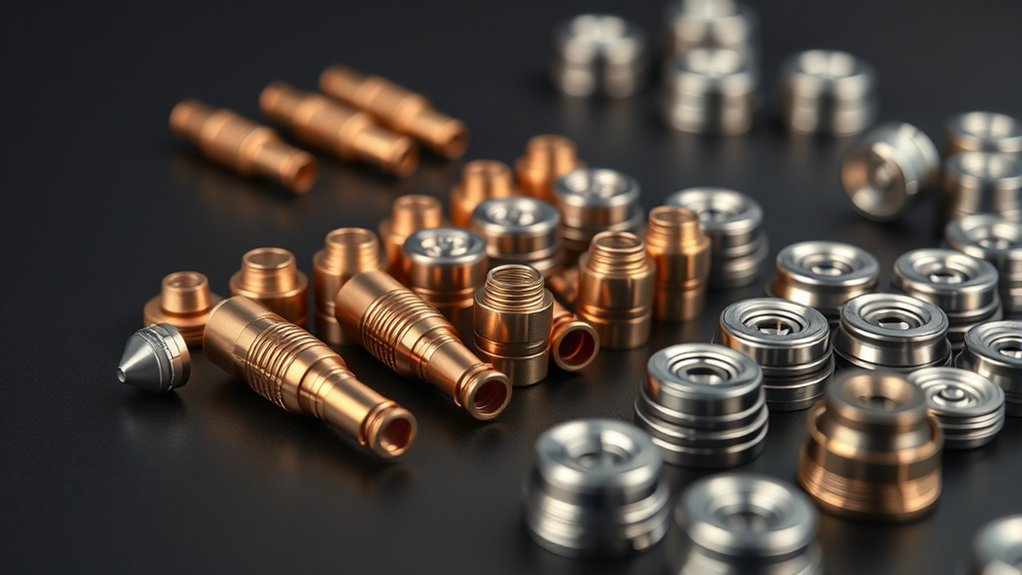
Although cost control matters, you’ll feel the bigger win in cut quality and uptime: Powermax Pro 80 consumables deliver cleaner, more precise kerfs and stable arcs across common alloys by combining high‑grade electrodes and tightly toleranced tips with optimized shields and caps.
You get measurable gains in cutting efficiency—straighter edges, reduced dross, and lower heat input—so post‑processing shrinks and throughput rises.
Service life is engineered, not guessed. Using high‑grade copper alloys and advanced manufacturing, these parts routinely achieve up to 90% of original factory benchmarks for wear rate and arc stability.
Engineered service life: high‑grade alloys deliver up to 90% factory‑level wear and arc stability.
That predictability reduces unplanned stoppages and aligns with a zero‑defect objective by minimizing cut defects and rework.
Apply disciplined maintenance tips: inspect tip orifice growth, track arc starts, monitor electrode pit depth, and replace on schedule rather than after cut degradation.
Keep dry, clean air; verify coolant and torch alignment; and log consumable hours. The result is longer intervals between changes, fewer complaints, and sustained productivity.
Selection Guide and Model Cross-References
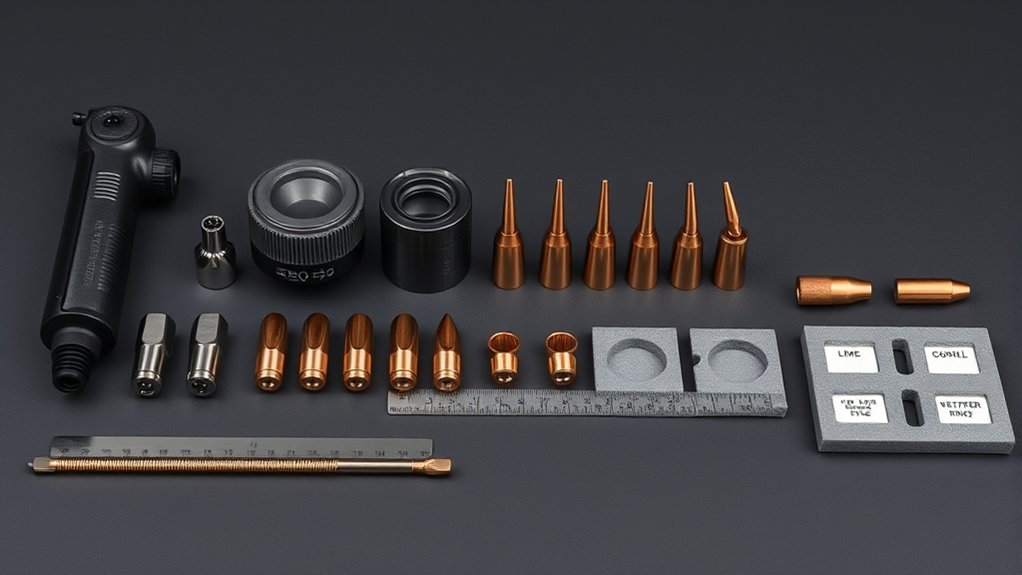
With cut quality and uptime established, you now need the right part set for your torch and application. Use data-driven selection criteria and a compatibility chart to match Powermax Pro 80 consumables with your Hypertherm torch model.
Focus on electrode/nozzle/shield pairings, amperage rating, material type, and cut thickness. Powermax Pro 80 tips and electrodes come in multiple orifice sizes and configurations; choose by current, gas, and standoff to maintain arc stability and edge fidelity.
Replace worn parts proactively—performance drops rapidly as wear exceeds thresholds, even though these high‑grade parts hold about 90% of factory standards.
1) Model cross-reference: Verify torch family and connector style; confirm Powermax Pro 80 consumables are approved for your Hypertherm torch variant using the compatibility chart.
2) Process match: Select nozzle orifice and shield style by amperage and material thickness; pair with the correct electrode geometry.
3) Maintenance interval: Track pierce counts and kerf quality; schedule electrode/nozzle swaps before visible wear to preserve cut speed and dimensional accuracy.
Send Your Message to This Supplier
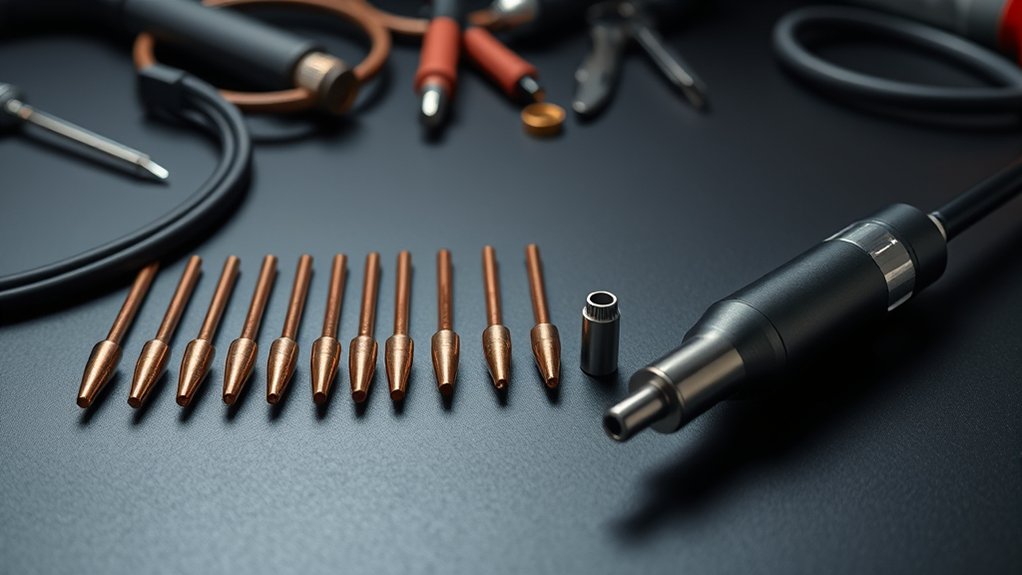
Ready to contact the supplier? Specify your Powermax Pro 80 requirements clearly to accelerate response time and guarantee accurate quoting. Reference torch parts, tips, and electrodes by model, amperage rating, and cut thickness targets.
Note that these consumables are engineered for the Hypertherm Powermax series and manufactured to achieve approximately 90% of original factory standards—use this benchmark when defining performance expectations.
When sending customer inquiries, include:
- Required quantities and expected duty cycle
- Material types and thickness range (mild steel, stainless, aluminum)
- Air quality/pressure specifications at the torch
- Preferred lead time, shipping address, and Incoterms
- Need for certificates of conformity or test data
Ask for warranty terms, batch traceability, and dimensional tolerances for electrodes and nozzles. If you need product customization, detail nozzle orifice size, electrode hafnium slug specs, and compatibility with your torch body.
Request packaging options for high-throughput operations. The supplier will respond with availability, pricing, shipping methods, and documentation, enabling you to validate fit, performance, and lifecycle cost before purchase.
Frequently Asked Questions
How Should Consumables Be Stored to Prevent Corrosion or Contamination?
Store consumables in sealed, desiccated containers with humidity indicators, under 40% RH, 15–25°C. Use anti-corrosion VCI bags, clean nitrile gloves, and segregated bins. Implement FIFO, periodic inspections, and particulate controls. Document storage solutions and corrosion prevention per ISO/IPC guidance.
What Safety Precautions Apply When Changing Torch Consumables?
Picture sparks frozen midair: you disconnect power, lock out/tag out, verify zero energy, wear safety gear, vent gas, cool components, use insulated tools, follow proper handling torque specs, inspect O-rings, avoid contamination, reassemble per manufacturer standards, then test.
Are There Eco-Friendly or Recyclable Options for Spent Consumables?
Yes. You can select consumables made from sustainable materials and route spent copper, brass, and hafnium through certified recycling processes. Segregate alloys, remove contaminants, document chain-of-custody, and verify recyclers meet ISO 14001 and R2/RIOS standards for environmental performance.
How Do Ambient Temperature and Humidity Affect Cut Quality?
Ambient temperature and humidity directly influence cut performance: you’ll see hotter, drier ambient conditions improve arc stability, kerf consistency, and dross control. High humidity promotes condensation, nozzle wear, and voltage fluctuation. Maintain manufacturer-specified ambient conditions and dry air delivery for repeatable results.
What Troubleshooting Steps Fix Inconsistent Arc Starts?
Verify gas pressure and flow, inspect electrode alignment, confirm standoff, and clean contact surfaces. Check ground clamp resistance, update parameters, and test arc stability with fresh consumables. Measure open‑circuit voltage, replace worn leads, and validate duty-cycle and power input.
Conclusion
You’re equipped to choose Powermax Pro 80 consumables with confidence. Match tips, electrodes, shields, and caps to your amperage, gas, and material specs, and you’ll hold OEM-level performance—about 90%—like a machinist holding microns. Verify cross-references, maintain standoff, and rotate parts by wear metrics to stabilize arc quality, extend service life, and reduce downtime. Follow recommended duty cycles and inspection intervals, and you’ll keep cut speed, kerf, and edge quality consistently within tolerance across jobs.