Disclosure: As an Amazon Associate, we earn from qualifying purchases. If you click a link on this page and make a purchase, we may receive a small commission at no extra cost to you.
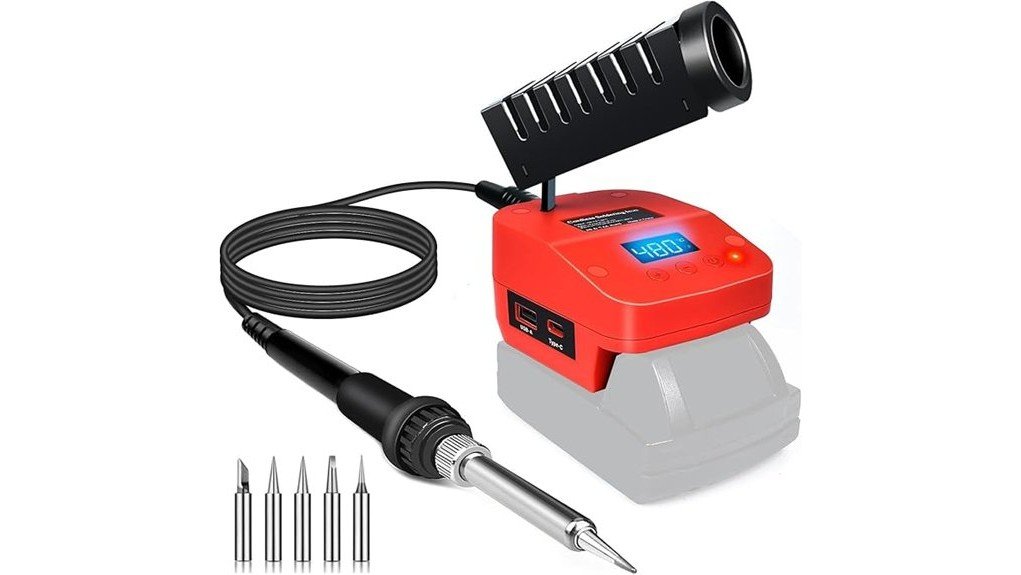
A cordless soldering iron is useful only if it heats quickly, holds enough temperature for the job, and works safely around electronics. The QSDXNYDC Cordless Soldering Iron aims to solve that with 60W output, a wide 180°C to 480°C temperature range, and compatibility with Milwaukee M18 batteries. This review helps you decide if its fast heat-up time, portable design, and safety features are enough for your DIY, repair, or field-work needs. Its biggest strength is convenience, but the main limitation is that runtime depends on the battery pack you use.
Quick Verdict
Rating: 8.4/10, Recommended with caveats
Best For: DIY electronics work, light appliance repair, field repairs, and users who already own Milwaukee M18 batteries.
Bottom Line: The QSDXNYDC Cordless Soldering Iron is a practical pick if you want fast cordless heat and adjustable temperature control. Skip it if you need a plug-in bench station with constant power, verified manufacturer documentation, or a complete kit with clearly listed accessories.
Key Specifications
| Specification | Detail |
|---|---|
| Brand | QSDXNYDC |
| Product Type | Cordless soldering iron |
| Power Output | 60W |
| Temperature Range | 180°C to 480°C, or 356°F to 896°F |
| Fast Heat Claim | Reaches 350°C, or 662°F, in about 8 seconds |
| Weight | 0.42 kg |
| Battery Compatibility | Designed for Milwaukee M18 batteries |
| Charging Ports | Type C and USB ports |
| Charging Output Listed | 5V 2A |
| Handle Design | Heat-insulated, antislip handle |
| Safety Features | Automatic shut-off, low-battery reminders, overvoltage protection, short-circuit protection, and overcurrent protection |
| Best Use | DIY soldering, circuit board repairs, appliance repair, and mobile repair tasks |
| Warranty Note | The source article mentions a typical one-year warranty period, but you should confirm the current seller terms before buying. |
What Is the QSDXNYDC Cordless Soldering Iron?
The QSDXNYDC Cordless Soldering Iron is a battery-powered soldering tool made for jobs where a corded iron is inconvenient. It is designed around Milwaukee M18 battery compatibility, so it makes the most sense if you already use that battery platform or want a portable tool for repairs away from a bench outlet.
The main appeal is its 60W output and fast heating claim. According to the article-supported specs, it can reach 350°C in about 8 seconds and adjust from 180°C to 480°C. That range gives you more control than a fixed-temperature iron when working across light wires, circuit boards, and general repair tasks.
It also includes practical safety features, including automatic shut-off, low-battery reminders, and protections against overvoltage, short circuits, and overcurrent. Those features help reduce risk, but they do not replace careful handling, a safe soldering stand, eye protection, and good ventilation.
Before You Buy: This soldering iron is designed for Milwaukee M18 batteries. If you use another battery system, do not assume it will fit or operate safely without confirmed compatibility from the seller or manual.
Who Should Buy It?
Best For
- DIY users who need a cordless soldering iron for quick repairs.
- People who already own Milwaukee M18 batteries and want battery-platform convenience.
- Small electronics, wire, circuit board, and appliance repair jobs that benefit from adjustable heat.
Skip If
- You need a professional bench station with steady plugged-in power for long sessions.
- You do not use Milwaukee M18 batteries and do not want to manage battery compatibility.
- You need verified dimensions, included accessories, or detailed manufacturer documentation before buying.
Performance and Heating Capabilities
The 60W output is the most useful performance detail here. For a portable soldering iron, 60W gives you enough headroom for many light to moderate soldering jobs, especially when compared with low-power hobby irons that can struggle to recover heat after touching a joint.
The listed temperature range of 180°C to 480°C lets you match the heat to the work. Lower settings are better for smaller electronics and more delicate joints, while higher settings can help with thicker wires or larger terminals that pull heat away from the tip faster.
The fast heat-up claim, 350°C in about 8 seconds, is helpful when you need to make a quick repair and move on. It also reduces idle time when you are doing short soldering tasks in a garage, vehicle, workshop, or outdoor repair setting.
Pro Tip: Start at a moderate temperature and increase only as needed. Too much heat can lift pads from circuit boards, damage insulation, or burn flux before it can clean the joint properly.
Design and Build Quality
At 0.42 kg, this soldering iron is light enough for handheld repair work but still depends on the battery you attach. A larger M18 battery may improve runtime, but it can also make the tool feel heavier during long or detailed jobs.
The heat-insulated, antislip handle is a useful feature because soldering often requires controlled hand movement. A better grip helps when you are working around small wires, tight areas, or parts that cannot be moved to a bench.
The cordless design is the biggest practical difference from a standard plug-in iron. You can work without dragging a cord across a work surface, but you still need a stable place to rest the hot tool between joints.
Charging Functionality
The QSDXNYDC Cordless Soldering Iron includes Type C and USB ports, with 5V 2A charging functionality listed in the article. That can be useful if you need to keep a phone or small device powered while working.
This is a convenience feature, not the main reason to buy the tool. The soldering performance, battery compatibility, heat control, and safety protections matter more for most buyers. Still, the extra charging option can help when you use the tool in a garage, vehicle, jobsite, or outdoor workspace.
Compatibility and Safety
The tool is specifically described as designed for Milwaukee M18 batteries. That is a major buying point if you already have M18 packs, but it is also the main limitation if you use a different cordless tool platform.
Safety features listed for this soldering iron include automatic shut-off, low-battery reminders, overvoltage protection, short-circuit protection, and overcurrent protection. The article also describes shut-off behavior after 30 minutes of inactivity and a temperature-related shut-off threshold listed as 100°C.
Even with those protections, you should treat the tip as a burn and fire hazard. Use the soldering iron on a stable surface, keep it away from flammable materials, wear eye protection, and work with ventilation because soldering fumes can irritate your eyes and lungs.
Applications and Use Cases
This tool fits repair tasks where portability matters. It can be used for circuit board work, wiring repairs, appliance repair, and small DIY projects where a corded iron would be harder to position.
For circuit boards, the adjustable temperature range is helpful because you can lower the heat for delicate work. For wiring, the higher end of the range can help when a joint needs more heat transfer. The key is to use the lowest effective temperature for the material and solder you are working with.
It is also a useful backup tool for garage and field repairs. If you need to fix a wire, repair a connector, or handle a quick soldering task away from a bench, cordless power makes the job easier to set up.
How It Performs in Real Use
For Quick DIY Repairs
The 8-second heat-up claim is most useful for short jobs. If you only need to solder a small wire, reattach a connector, or repair a loose lead, you can begin working without waiting long for the tip to reach temperature.
For Circuit Board Work
The adjustable 180°C to 480°C range gives you room to work carefully on smaller components. You should still use the right tip style, clean the tip often, and avoid holding heat on a pad longer than needed.
For Garage or Vehicle Repairs
The cordless setup helps when the repair area is away from an outlet. It can be useful for low-voltage wiring and small connector repairs, but you should avoid working near fuel vapors, flammable trim, or energized circuits.
For Longer Work Sessions
Runtime depends on the specific Milwaukee M18 battery you use and how high you run the temperature. A larger pack may run longer, but it can also make the tool heavier, so buyers who do detailed work should think about balance as well as battery life.
How to Use It Correctly
Before your first job, confirm that the battery is seated securely and that the tip is properly installed. Set up a heat-safe rest area before the tool gets hot, not after you start soldering.
Use the temperature control with the job in mind. Thin wires and circuit boards usually need more control than heavy connectors. If solder is not flowing, clean the tip and joint before raising the heat too far.
After use, allow the tip to cool in a safe position. Do not store the tool while the tip is still hot, and do not rely only on automatic shut-off to prevent burns or surface damage.
Pros and Cons
Pros
- 60W output gives the tool useful power for many light and moderate repair tasks.
- 180°C to 480°C temperature range supports different soldering needs.
- Fast 350°C heat-up claim helps with quick jobs and short repair sessions.
- Milwaukee M18 battery compatibility is convenient if you already own that platform.
- Safety protections include automatic shut-off, low-battery reminders, overvoltage protection, short-circuit protection, and overcurrent protection.
Cons
- Runtime depends on the Milwaukee M18 battery size and temperature setting.
- Not ideal if you need constant bench-station power for long soldering sessions.
- Compatibility appears limited to Milwaukee M18 batteries, so buyers using other platforms should confirm fit before purchase.
Is It Worth the Price?
The QSDXNYDC Cordless Soldering Iron looks like a strong value for the price if you already own Milwaukee M18 batteries and want a portable soldering option. You get 60W output, adjustable temperature control, fast heating, and several safety protections in a cordless format.
It is worth considering if you need quick heat for DIY repairs, small electronics work, or field use. The value is weaker if you still need to buy batteries separately or if your work is mostly long bench soldering, where a plug-in station may be more comfortable and consistent.
How It Compares to Alternatives
Compared with a basic corded soldering iron, this QSDXNYDC model is easier to move around and use away from an outlet. A corded station, however, may be better if you need constant power, a dedicated stand, and more predictable long-session performance.
Compared with butane soldering irons, this battery-powered design avoids fuel refills and open flame concerns. Butane tools can still make sense for certain outdoor repair situations, while this model makes the most sense for buyers who want electric cordless operation and already use the M18 battery platform.
Frequently Asked Questions
Is the QSDXNYDC Cordless Soldering Iron compatible with all batteries?
No. The article-supported compatibility detail is Milwaukee M18 battery support. If you use another battery brand or platform, confirm fit and safety with the seller before buying or using an adapter.
How hot does this soldering iron get?
The listed adjustable range is 180°C to 480°C, or 356°F to 896°F. The article also states that it can reach 350°C, or 662°F, in about 8 seconds.
Is 60W enough for soldering repairs?
For many small electronics, wire, connector, and appliance repair tasks, 60W is a useful power level. It may not replace a full bench station for heavy, repeated, or production-style soldering.
How long does the battery last during continuous use?
Runtime depends on the Milwaukee M18 battery size, battery condition, temperature setting, and how often the iron is actively heating. The source article describes runtime as varying from about one hour to several hours, depending on the battery used.
Can you use it outdoors?
Yes, the cordless design makes it practical for outdoor or remote repair tasks. You should still avoid windy conditions that cool the tip, keep the hot iron away from flammable materials, and use safe ventilation.
What soldering tips work with this tool?
The source article says it can work with pointed, chisel, and bevel tip styles. Before buying replacement tips, confirm the correct tip size and fit with the seller because the article does not list a detailed tip standard.
Who should skip this cordless soldering iron?
Skip it if you do not use Milwaukee M18 batteries, need a full bench soldering station, or want verified manufacturer documentation before purchase. It is better for portable repair work than for long, fixed-workbench sessions.
What is the warranty period?
The source article mentions a typical one-year warranty period. Because warranty terms can vary by seller and listing, check the current Amazon product page before ordering.
The Bottom Line
The QSDXNYDC Cordless Soldering Iron is a good fit if you want fast cordless heating, adjustable temperature control, and Milwaukee M18 battery compatibility for DIY and repair work. Its main limitation is that battery runtime and balance depend on the M18 pack you use, and it is not a full replacement for a dedicated bench station.
Buy it if portability matters more than long-session bench performance. Skip it if you need confirmed manufacturer documentation, broad battery compatibility, or a plug-in soldering setup for extended daily use.