Disclosure: As an Amazon Associate, we earn from qualifying purchases. If you click a link on this page and make a purchase, we may receive a small commission at no extra cost to you.
Removing factory spot welds is difficult when you need to separate two sheet-metal panels without drilling through both layers. The JESTUOUS Spot Weld Cutter Set, model JES-SWC-5PCS, uses replaceable high-speed steel cutting blades and a spring-loaded pilot guide to help you cut around each weld. The kit is designed for thin sheet metal and fits handheld drills with a 3/8-inch chuck or larger. It offers useful value for occasional body-panel and garage work, but blade life and cut quality still depend on correct speed, alignment, and pressure.
Quick Verdict
Rating: 8.2/10
Best For: DIY users, auto-restoration hobbyists, and light shop work involving spot-welded thin sheet metal.
Bottom Line: This set gives you five replaceable HSS cutting blades, a guided arbor, spare pilot pins, and a storage case for controlled spot weld removal. Its main limitation is that it is not intended to replace heavier-duty tooling for thick, hardened, or structural metal.
| Specification | Detail |
|---|---|
| Brand | JESTUOUS |
| Model | JES-SWC-5PCS |
| Product type | Annular spot weld cutter set for a handheld drill |
| Cutting-blade count | 5 replaceable cutting blades |
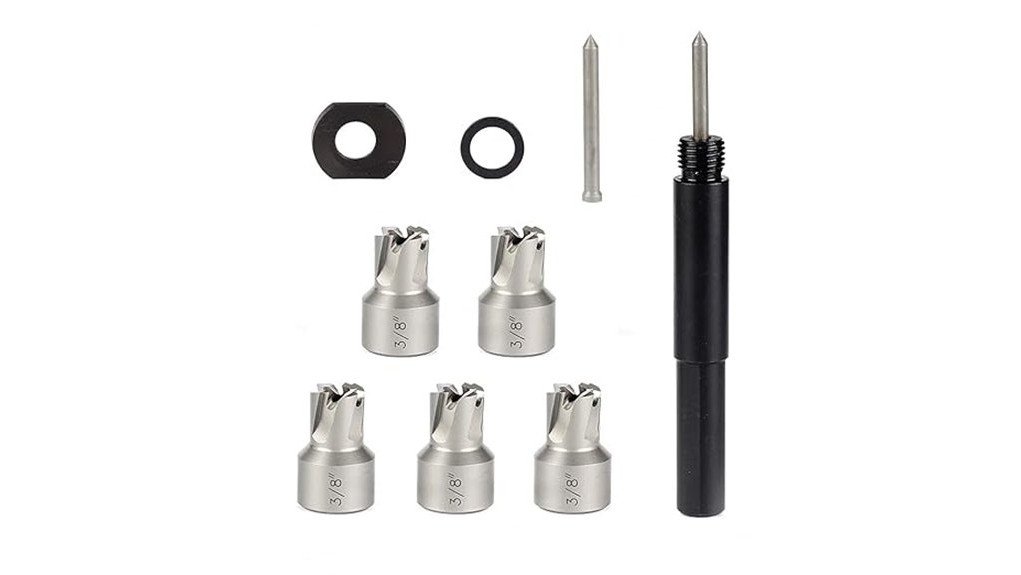
| Included parts | 5 cutting blades, 1 arbor, 2 pilot pins, and a carrying case |
| Blade material | High-speed steel (HSS) |
| Cutting diameter | 3/8 inch |
| Arbor length | 3-13/16 inches |
| Pilot-pin length | 1-5/16 inches |
| Drill compatibility | Handheld drill with a 3/8-inch chuck or larger |
| Guide design | Spring-loaded pilot pin for centering the cutter |
| Listed materials | Thin stainless steel, iron, aluminum, alloy steel, carbon steel, and similar sheet metal |
| Best use | Separating spot-welded panels while limiting damage to the lower panel |
| Storage | Clean and inspect the parts before returning them to the included case |
What Is the JESTUOUS Spot Weld Cutter Set?
The JESTUOUS JES-SWC-5PCS is an annular cutting kit made for removing spot welds from thin metal panels. Instead of boring through the center of a weld like a standard twist drill bit, the circular blade cuts around the weld so you can separate the upper sheet from the panel below.
The package contains five replaceable 3/8-inch cutting blades, one arbor, two pilot pins, and a carrying case. The arbor holds the blade, while the spring-loaded pilot pin rests near the center of the weld and helps control the cutter as it begins rotating.
This design is mainly intended for automotive body panels, patch-panel preparation, restoration projects, and other light sheet-metal work. It is not a complete panel-removal system, since you still need a suitable drill, stable work support, and tools for separating the panel after the weld has been cut.
Who Should Buy It?
Best For
- You need to separate spot-welded automotive or fabrication panels made from thin sheet metal.
- You own a controllable handheld drill with a 3/8-inch chuck or larger.
- You want spare cutting blades and pilot pins for a project with multiple welds.
Skip If
- You mainly cut thick, hardened, or structural metal that requires heavier-duty tooling.
- Your drill has a chuck smaller than 3/8 inch or lacks adequate speed control.
- You need a professional cutter for frequent production work with verified industrial specifications.
Before You Buy: The 3/8-inch measurement describes the cutting diameter, and the listing also calls for a drill chuck measuring 3/8 inch or larger. Confirm your drill size and the thickness of your workpiece before ordering.
Package Contents and Blade Design
The five-pack refers to five replaceable annular cutting blades, not five complete assembled tools. The set also includes a single arbor that connects the blade to your drill, two pilot pins, and a case for keeping the small components together.
Having five blades is useful when a repair involves dozens of spot welds. If one blade becomes dull or damaged, you can replace it without stopping to buy another complete arbor assembly. The second pilot pin also provides a backup for a part that can be misplaced or damaged during use.
The carrying case is a practical addition because the cutting edges and pilot pins should not be stored loose with heavier tools. Keeping each component contained reduces the chance of chipped edges, contamination, or missing hardware.
High-Speed Steel Build Quality
The replaceable blades are made from high-speed steel. HSS is commonly used for cutting tools because it can retain a working edge under the heat and friction produced during drilling.
That material does not make the blades resistant to poor technique. Excessive drill speed, uneven pressure, an angled start, or repeated contact with two panel layers can produce more heat and shorten blade life.
Inspect each blade before installation. Do not use a blade with cracked teeth, a bent body, heavy corrosion, or an edge that no longer cuts cleanly. A damaged blade can chatter, wander, or leave a rough opening around the weld.
Fit and Drill Compatibility
The product listing states that the arbor fits handheld drills with a 3/8-inch chuck or larger. Check the maximum opening of your drill chuck rather than assuming that every cordless drill will accept the arbor.
A variable-speed drill gives you more control during the initial cut. The chuck should be tightened securely around the arbor, and the drill should run without visible wobble before the blade contacts the panel.
Panel support also affects performance. A loose or vibrating panel can cause chatter even when the cutter is installed correctly. Secure the workpiece and make sure there are no wires, fuel lines, glass, trim, or other parts behind the cutting area.
Centering and Cutting Precision
The spring-loaded pilot pin is the most helpful control feature in this kit. You place the pin near the center of the spot weld, and its spring pressure helps keep the circular blade positioned as the cut begins.
The guide reduces wandering, but it does not correct a badly angled drill. Keep the arbor as close to perpendicular to the panel as the work area allows. Starting at an angle can make one side of the blade contact first, increasing chatter and edge wear.
Paint, seam sealer, rust, and surface debris can make a weld harder to locate. Clean enough of the surface to identify the weld center before placing the pilot pin. Accurate marking is especially important when you plan to preserve the lower panel.
Performance on Thin Metal
The set is designed for thin sheet metal, including stainless steel, iron, aluminum, alloy steel, and carbon steel. Actual cutting effort will vary with material hardness, coating, panel thickness, drill condition, and blade wear.
On a typical two-layer spot weld, the goal is to cut through the upper sheet around the fused area without continuing through the lower sheet. This leaves a small circular section attached to the lower panel, which you can address during surface preparation.
Thicker material requires more cutting time and creates more heat. If the cutter stops producing clean chips, begins rubbing, or needs increasing pressure, stop and inspect the setup instead of forcing the blade through the panel.
How It Performs in Real Use
For Automotive Body-Panel Removal
The 3/8-inch annular blade is suited to locating and cutting individual factory-style spot welds on thin body panels. It can help you remove an outer panel while preserving more of the support panel underneath, provided you stop at the correct depth.
For Patch-Panel Preparation
When replacing a rusted section or preparing an overlap joint, the cutter lets you work through multiple welds without drilling a full hole through every panel layer. The five spare blades are useful when corrosion, paint, and uneven surfaces increase wear.
For Stainless Steel and Aluminum Sheet
The listing includes thin stainless steel and aluminum among the supported materials. Stainless steel may build heat quickly, while softer aluminum can load a cutting edge with material, so use controlled speed and inspect the blade between cuts.
For Projects With Many Spot Welds
A panel with many attachment points can expose weak technique quickly. The replaceable-blade format lets you change a worn cutter, but accurate marking and consistent drill alignment will do more to improve results than simply applying additional pressure.
How to Use It Correctly
- Locate each weld. Remove enough paint, rust, or seam sealer to see the center of the spot weld.
- Inspect the work area. Check both sides of the panel and move vulnerable wiring, hoses, trim, and other components away from the cutting path.
- Secure the workpiece. Support loose panels so they cannot vibrate or shift while the drill is running.
- Install the cutter. Seat the blade, arbor, and pilot pin correctly, then tighten the drill chuck securely.
- Center the pilot pin. Place it on the weld and hold the drill square to the surface.
- Cut with controlled pressure. Let the blade cut instead of forcing it. Stop if the tool chatters, overheats, or stops producing a clean cut.
- Check the depth often. Stop once the upper panel can be separated so you do not unnecessarily cut through the lower sheet.
Pro Tip: Practice on scrap metal with a similar thickness and material before cutting a panel you need to preserve. This helps you learn how the cutter feels when it reaches the bottom of the upper sheet.
Common Mistakes to Avoid
- Starting the drill before the pilot pin is centered on the weld.
- Holding the arbor at an angle and loading only one side of the blade.
- Using extra pressure to compensate for a dull or damaged cutting edge.
- Continuing to drill after the upper panel has already been released.
- Cutting an unsupported panel that vibrates or flexes under the tool.
- Storing dirty blades loose in a toolbox where their edges can be damaged.
Safety and Maintenance
Spot weld cutting produces sharp chips, hot metal, noise, and newly exposed panel edges. Wear suitable eye protection, secure the workpiece, keep loose clothing and hair away from the drill, and follow the safety instructions supplied with your power tool.
Do not place your free hand behind the cutting area. Before drilling an automotive panel, inspect the opposite side for electrical wiring, fuel-system parts, brake lines, insulation, glass, and interior trim.
After use, allow the components to cool before handling them. Remove metal chips and residue, inspect the blade and pilot pin, and dry each part before returning it to the case. Moisture and loose metal debris can encourage corrosion or damage the cutting edge during storage.
Pros and Cons
Pros
- Includes five replaceable 3/8-inch HSS cutting blades.
- Comes with an arbor, two pilot pins, and a carrying case.
- Spring-loaded pilot design helps center the blade on the weld.
- Fits handheld drills with a 3/8-inch chuck or larger.
- Designed to separate thin spot-welded panels without automatically drilling through both layers.
Cons
- Not intended for thick, hardened, or heavy structural metal.
- Requires accurate centering, controlled speed, and frequent depth checks.
- Blade life can drop quickly if the cutter chatters, overheats, or contacts both panel layers repeatedly.
Is It Worth the Price?
The JESTUOUS Spot Weld Cutter Set is a value-focused option for occasional repair, restoration, and sheet-metal projects. The package provides multiple replacement blades and the supporting arbor, pilot pins, and case, so you are not buying a single disposable cutter with no backup.
You will get the most value from the kit if you already own a compatible variable-speed drill and mainly work with thin panels. The extra blades are useful for a project with many welds, but they do not remove the need for careful alignment and correct cutting depth.
It is not the best fit if you need verified professional-grade durability for daily collision-shop work or a cutter for thick structural components. In those situations, a more specialized spot weld drill, premium annular cutter system, or panel-removal tool may justify the added cost.
How It Compares to Alternatives
A standard twist drill bit cuts through the center of a spot weld and can easily continue through both panel layers. The JESTUOUS annular cutter instead removes a ring around the weld, which gives you more control when the lower panel needs to remain usable.
Double-sided spot weld cutters may offer two cutting edges on each blade, while dedicated cobalt spot weld drill bits can be worth comparing for harder material or frequent shop use. A spot weld chisel is another useful separation tool, but it normally works best after the weld has already been weakened and can distort thin panels if used too aggressively.
Frequently Asked Questions
What is the JESTUOUS Spot Weld Cutter Set used for?
It is made to cut around spot welds in thin sheet-metal panels. This approach helps you separate the upper panel while limiting unnecessary damage to the panel underneath.
What comes in the five-piece cutter set?
The package includes five replaceable 3/8-inch cutting blades, one arbor, two pilot pins, and a carrying case. The five-piece description refers to the cutting-blade count rather than five complete arbor assemblies.
Will the cutter fit my drill?
The product listing specifies a handheld drill with a 3/8-inch chuck or larger. Check your drill’s chuck capacity and make sure it can hold the arbor securely before buying.
Can it cut stainless steel and aluminum?
The listing includes thin stainless steel and aluminum among the supported materials. Material hardness, thickness, drill speed, and blade condition will affect how quickly and cleanly each cut is completed.
Is this cutter suitable for thick metal?
It is mainly intended for thin sheet-metal applications. Thick, hardened, or structural material can create excess heat, shorten blade life, and require a more specialized cutting tool.
How do you avoid cutting through the lower panel?
Use light, controlled pressure and pause often to check the cut. Stop when the upper sheet releases instead of continuing to drill after the blade has reached the lower panel.
How should you maintain and store the cutters?
Allow the parts to cool, remove chips and residue, and inspect the cutting edges after use. Store the dry components in the included case instead of leaving them loose with heavier tools.
Who should skip this spot weld cutter set?
Skip it if your work mainly involves thick structural metal, hardened components, or high-volume professional use. It is also unsuitable if your drill chuck is smaller than 3/8 inch or the panel cannot be supported safely.
The Bottom Line
The JESTUOUS Spot Weld Cutter Set is recommended with caveats for DIY users and light shop projects involving thin spot-welded panels. Its strongest advantages are the five replaceable HSS blades, guided arbor, spare pilot pin, and common drill compatibility, while its main limitation is reduced suitability for thick or demanding metalwork.
Buy it when you need an affordable kit for controlled panel separation and are prepared to use careful drilling technique. Skip it when you need production-grade durability, heavy structural cutting capacity, or a tool that can compensate for poor work support and alignment.
Ready to Buy?
Check the latest price, seller, package contents, and product details before you decide.