Disclosure: As an Amazon Associate, we earn from qualifying purchases. If you click a link on this page and make a purchase, we may receive a small commission at no extra cost to you.
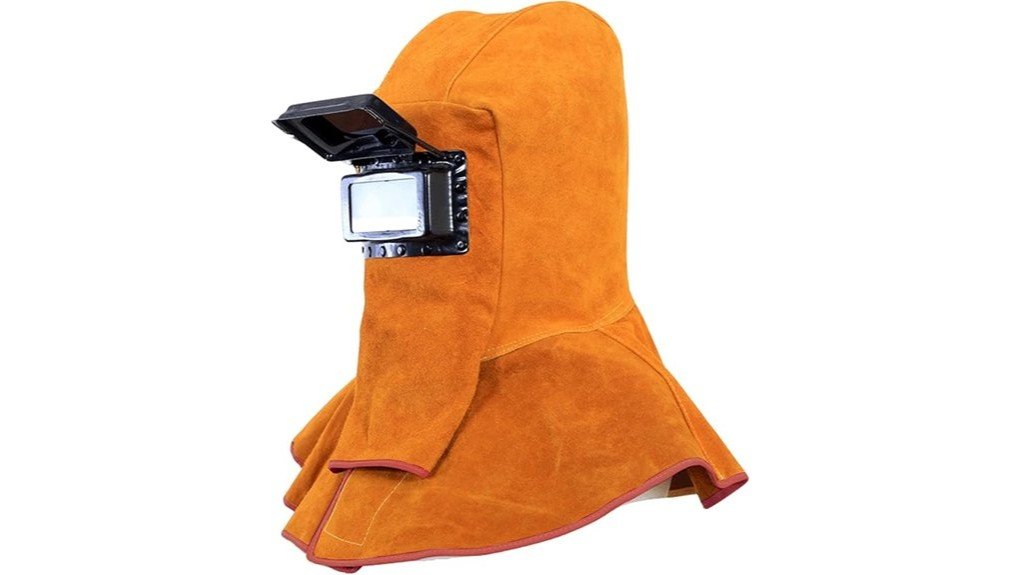
A welding hood needs to do more than block sparks. You also need clear sight of the work, coverage around your head and neck, and a design you can wear without constantly stopping to adjust it. The T TOVIA Welding Helmet Mask combines a leather welding hood with a solar-powered auto-darkening filter, a flip-open lens cover, breathable inner mesh, and extended neck and shoulder coverage. It is a practical option if you prefer flexible leather protection, but buyers who need a published shade range, switching-speed specification, or clearly stated certification should confirm those details before ordering.
Quick Verdict
Rating: 7.5/10, Recommended with caveats
Best For: Welders who want a flexible leather hood with head, neck, and shoulder coverage plus an auto-darkening viewing lens.
Bottom Line: The cowhide construction, breathable mesh, reinforced stitching, and solar-powered flip-open auto-darkening filter make this a useful all-in-one protective hood. The main tradeoff is that the supplied article does not state key lens specifications such as shade range, switching speed, or a safety certification, so you should verify those points for your exact welding process.
| Specification | Detail |
|---|---|
| Brand | T TOVIA |
| Product type | Leather welding hood / welding helmet mask |
| Size | Large |
| Color | Brown |
| Weight | 0.4 kg |
| Outer material | Flexible cowhide / leather |
| Inner layer | Breathable mesh |
| Lens | Auto-darkening filter with flip-open cover |
| Lens power | Solar powered |
| Coverage | Head with neck and shoulder drape coverage |
| Construction detail | Reinforced stitching |
| Listed use cases | Welding, metal processing, sanding, plasma cutting, metal art, smelting, and related shop work |
What Is the T TOVIA Welding Helmet Mask?
The T TOVIA is a flexible leather welding hood built around a large brown cowhide shell rather than a rigid plastic helmet body. Its design extends beyond the face to cover more of the head, neck, and shoulder area, which can be useful when sparks or hot debris may approach from different angles.
The viewing system uses an auto-darkening filter lens with a flip-open cover. The lens is described as solar powered, so the product is intended to avoid routine battery replacement. Inside the hood, breathable mesh and reinforced stitching are used to balance comfort with durability.
This combination makes the product most relevant to buyers who value flexible coverage and a built-in auto-darkening lens. It is less attractive if your first priority is a detailed control panel, a published shade range, or documented compliance information that you can review before purchase.
Key Takeaways
- Cowhide outer layer: The leather shell is designed to shield your head and surrounding areas from welding splatter, sparks, and shop debris.
- Auto-darkening filter: The flip-open lens lets you check positioning without removing the entire hood.
- Solar-powered lens system: The product description states that the lens does not require routine battery replacement.
- Breathable inner mesh: The lining is intended to improve airflow during longer work periods.
- Reinforced construction: Stitching and flexible leather are intended for repeated workshop use.
- Important limitation: Shade range, switching speed, optical class, and certification details are not stated in the supplied article, so verify them before using the hood for a process with strict eye-protection requirements.
Who Should Buy It?
Best For
- Welders who prefer flexible leather coverage instead of a rigid shell around the head.
- Shop users who want added neck and shoulder coverage against sparks and hot debris.
- Buyers who want an auto-darkening viewing lens without routine battery replacement.
Skip If
- You need a clearly published shade range, switching speed, or optical-class specification before buying.
- Your employer or worksite requires a specific safety certification that you cannot confirm for this exact model.
- You prefer a rigid helmet with external sensitivity, delay, or shade controls.
Before You Buy: Do not choose a welding helmet only by material and comfort. Confirm that the lens shade range, switching behavior, and any required safety standard are appropriate for your welding process and workplace rules.
Safety Features and Coverage
Cowhide Head, Neck, and Shoulder Protection
The outer layer uses cowhide leather, and the hood extends coverage around the neck and shoulders. This is the main reason to consider the T TOVIA over a basic face-only shield. More surrounding material can help reduce direct exposure to sparks, spatter, grinding spark spray, and other debris that may reach areas a short rigid helmet does not cover.
The leather is described as flexible and heat insulating. Flexibility can help when you are leaning into an awkward repair area or working close to a fabrication bench because the hood can move with your head instead of projecting as far as some rigid shells.
Auto-Darkening Flip-Open Lens
The integrated auto-darkening filter lens is designed to darken when welding begins and return to a lighter state when the arc stops. The flip-open cover is useful when you need to inspect the weld position between passes without pulling the full hood off your head.
The lens system is listed as solar powered. That reduces battery-maintenance hassle, but you should still inspect the lens before every job. If the filter does not respond correctly, is cracked, has damaged controls, or gives you uncertain visibility, stop using it until the issue is resolved.
Comfort and Durability in Design
Breathable Inner Mesh
Leather offers useful coverage, but it can hold heat around your head during a long session. T TOVIA addresses that with a breathable mesh inner layer. The mesh is intended to improve airflow and reduce the closed-in feeling that can come with a full hood.
Comfort still depends on your work environment, ambient temperature, fit, and how long you wear the hood. A breathable lining helps, but it does not turn a full leather hood into a cool-weather product.
Reinforced Stitching and Flexible Leather
The hood uses reinforced stitching to support repeated flexing and handling. That matters because a leather hood is folded, bent, put on, removed, and stored more often than a rigid shell. The material needs to stay intact around seams and the lens opening for the hood to remain useful.
The listed weight is 0.4 kg. For a full hood, that keeps the design relatively manageable, but perceived comfort will also depend on how the hood sits on your head and how much material rests around your neck and shoulders.
How It Performs in Real Use
For Fabrication and Shop Welding
In a fabrication area, the main advantage is coverage. The cowhide shell and neck/shoulder drape can be useful when sparks travel sideways or downward while you reposition parts. The flip-open lens also makes it easier to check fit-up between welds without removing the entire hood.
For Automotive and Confined Work
A flexible hood can make sense around vehicle frames, exhaust work, or other locations where a bulky rigid shell may bump nearby surfaces. The leather body can move with you, while the inner mesh reduces direct contact between your skin and the outer material. You still need enough room to work safely and should never trade proper eye protection for a tighter fit.
For Plasma Cutting and Metalworking
The product is listed for tasks that include plasma cutting, metal processing, sanding, smelting, and metal art. These jobs can create different levels of light, sparks, heat, and debris. Match the filter and protection level to the specific task instead of assuming one lens setting is suitable for every process.
For Longer Work Sessions
During longer sessions, the combination of breathable mesh and a 0.4 kg listed weight can help with wearability. The tradeoff is that full leather coverage can still feel warm, especially in hot shops. Take normal work breaks, keep the hood dry, and inspect seams and the lens area as part of routine PPE checks.
How to Use It Correctly
- Inspect the lens first. Check the auto-darkening filter and cover for cracks, heavy scratches, loose parts, or delayed response before striking an arc.
- Check the hood coverage. Make sure the leather sits so it protects the areas you expect without blocking your breathing, movement, or line of sight.
- Keep the viewing area clean. Dust, soot, and spatter on the lens can reduce visibility and make it harder to position a weld accurately.
- Match the lens to the process. Confirm the shade and protection requirements for the welding or cutting method you are using.
- Follow workplace PPE rules. A welding hood is one part of a complete setup. Use suitable gloves, clothing, footwear, respiratory protection, or other PPE when your job requires it.
Pro Tip: Test the auto-darkening response and your field of view before starting the real weld. It is easier to correct fit or visibility problems before your gloves are on and the workpiece is hot.
Applications and Use Cases
The T TOVIA Welding Helmet Mask is positioned for a broad range of welding and metalworking environments. The listed applications include welding work, metal processing, plasma cutting, sanding, metal art, and smelting. It may also suit workshops, steel mills, shipyards, automotive centers, and manufacturing environments where head and neck coverage is useful.
The broad application list should not be read as proof that one lens setup is correct for every job. Arc welding, plasma cutting, grinding, and other processes can have different eye and face protection requirements. Use the hood only when its filter and construction meet the needs of the task you are performing.
Material Safety and Maintenance
The main protective body is leather with a breathable mesh inner layer. Keep the hood away from unnecessary moisture, chemicals, and storage conditions that could degrade the leather, stitching, mesh, or lens assembly. Do not soak the auto-darkening filter or use aggressive solvents on the viewing area.
For routine cleaning, remove loose dust with a soft cloth and use a mild cleaning method that is compatible with the lens and leather. If the manufacturer provides cleaning instructions, follow them first. Replace damaged protective parts rather than continuing to use a hood with torn seams, a cracked viewing window, or unreliable darkening behavior.
Pros and Cons
Pros
- Cowhide hood provides broader head, neck, and shoulder coverage than a face-only shield.
- Auto-darkening filter reduces the need to repeatedly remove the hood between welds.
- Flip-open lens cover makes quick visual checks more convenient.
- Solar-powered lens avoids routine battery replacement.
- Breathable mesh and reinforced stitching support comfort and repeated use.
Cons
- The supplied article does not state the shade range or switching-speed specification.
- No specific welding safety certification is stated in the supplied article, so workplace compliance should be verified separately.
- Full leather coverage may feel warmer than a more open rigid helmet in hot working conditions.
Is It Worth the Price?
The T TOVIA makes the most sense as a value-focused leather welding hood for buyers who care about coverage and convenience more than advanced electronic controls. You get a cowhide shell, neck and shoulder protection, an auto-darkening flip-open lens, solar power, breathable mesh, and reinforced stitching in one product.
Its value is weaker for buyers who need a detailed technical lens specification before purchase. If your work depends on a specific shade range, sensitivity control, delay adjustment, optical class, or documented safety standard, a helmet that publishes those details more clearly may be worth the extra cost.
How It Compares to Alternatives
Compared with a typical rigid auto-darkening helmet, the T TOVIA’s main advantage is its flexible leather body and extended neck and shoulder coverage. A rigid helmet may be easier to find with clearly labeled shade controls, sensitivity settings, delay controls, and certification details, while this hood focuses more on full-coverage leather protection and a simple flip-open viewing system.
Compared with a passive-lens leather hood, the T TOVIA adds the convenience of an auto-darkening filter. That can reduce repeated hood lifting during stop-and-start work. The better choice depends on whether you value electronic lens convenience or the simplicity of a fixed passive lens.
Frequently Asked Questions
What is the weight of the T TOVIA Welding Helmet Mask?
The verified product listing states an item weight of 0.4 kg. That is useful for a full leather hood, although actual comfort will also depend on fit and how the neck and shoulder drape rests while you work.
Does the auto-darkening lens need replacement batteries?
The product description states that the auto-darkening filter is solar powered and is designed so you do not need routine battery replacement. You should still test the filter before use and follow any care instructions supplied with the product.
Can you wear prescription glasses under it?
The supplied article does not provide verified clearance dimensions for prescription glasses. If you wear glasses, confirm the internal space and fit before relying on the hood, and make sure your eyewear does not interfere with the filter seal, visibility, or required safety protection.
What shade range does the lens provide?
A specific shade range is not stated in the supplied article. Check the current product listing, packaging, or manual for the exact shade information and confirm it is appropriate for your welding or cutting process.
How should you clean the welding hood?
Start by wiping away loose dust and debris with a soft cloth. Avoid harsh chemicals or soaking the auto-darkening filter, and follow the manufacturer’s instructions for cleaning the leather, mesh, and lens whenever those instructions are available.
Is the T TOVIA hood suitable for plasma cutting and sanding?
The product description lists plasma cutting, sanding, and other metalworking applications. You should still confirm that the filter shade and face protection are suitable for the exact task because different processes can require different levels of eye and face protection.
Can you use this welding hood outdoors?
You can use a welding hood outdoors when the welding setup and work conditions are safe, but solar power does not mean the lens or hood is weatherproof. Keep the filter dry, protect the leather from unnecessary moisture, and do not weld in unsafe weather conditions.
What is the warranty period?
A specific warranty period is not stated in the supplied article. Check the current Amazon listing or seller terms before purchase because warranty coverage and return conditions can change.
The Bottom Line
The T TOVIA Welding Helmet Mask is worth considering if you want flexible cowhide coverage around the head, neck, and shoulders plus the convenience of a solar-powered auto-darkening flip-open lens. It is a weaker fit if you need clearly documented lens specifications or a specific workplace certification before buying, so verify those details for your process before you depend on it as protective equipment.
Ready to Buy?
Check the latest product details and confirm the lens specifications you need before you decide.