Disclosure: As an Amazon Associate, we earn from qualifying purchases. If you click a link on this page and make a purchase, we may receive a small commission at no extra cost to you.
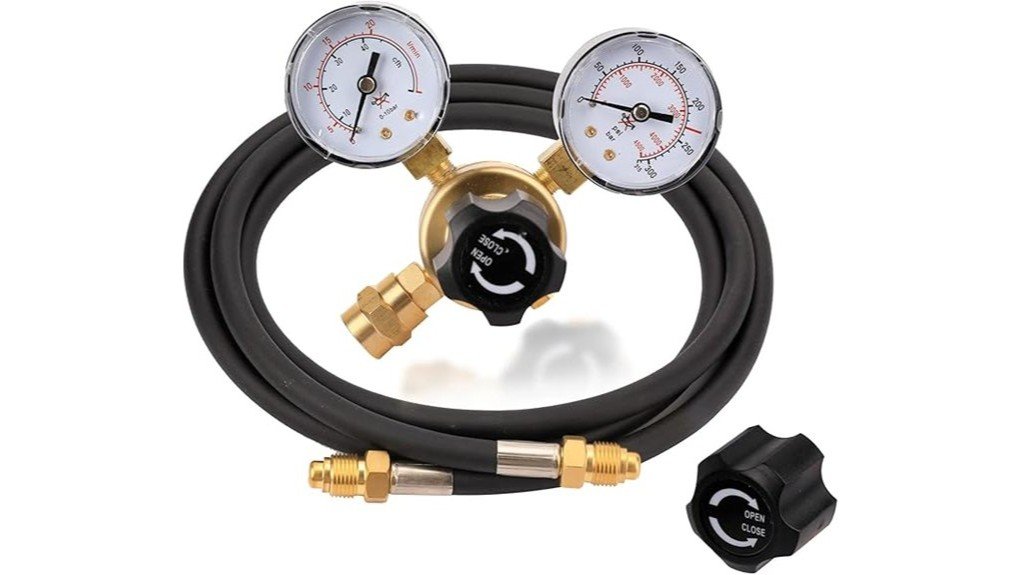
Shielding gas control can affect weld quality, gas waste, and setup safety. The Tutor Auto Argon CO2 Regulator is built for welders who need a brass regulator with dual gauges, a CGA-580 inlet, and an included 6.6-foot hose for compatible MIG and TIG setups. This review helps you decide whether its simple design, 0-4500 PSI inlet gauge range, and safety relief feature fit your welding bench. It looks like a practical pick for everyday shop use, but you should confirm your cylinder connection before buying, especially if you plan to use straight CO2.
Quick Verdict
Rating: 8/10, Recommended with caveats
Best For: MIG and TIG welders using compatible CGA-580 argon or argon/CO2 shielding-gas cylinders.
Bottom Line: The Tutor Auto regulator offers a brass body, dual gauges, safety pressure relief, and simple gas adjustment for common welding work. The main limitation is compatibility, because a CGA-580 inlet will not fit every CO2 cylinder without the correct valve setup.
Key Takeaways
- The Tutor Auto Argon CO2 Regulator uses a CGA-580 inlet connection, so you should match it to the cylinder valve before ordering.
- The article-supported inlet gauge range is 0-4500 PSI, which suits high-pressure shielding-gas cylinder monitoring.
- The solid brass construction helps resist corrosion and gives the regulator a sturdy feel for regular shop use.
- The dual-gauge layout helps you monitor cylinder pressure and working pressure without adding a separate gauge.
- The internal safety pressure relief design adds a useful safety layer, but you still need to follow cylinder and regulator instructions.
| Specification | Detail |
|---|---|
| Brand | Tutor Auto |
| Product type | Argon CO2 welding gas regulator |
| Primary use | MIG and TIG welding shielding-gas control |
| Inlet connection | CGA-580 |
| Input pressure range | 0-4500 PSI, article-stated |
| Gauge layout | Two gauges for pressure monitoring and adjustment |
| Material | Solid brass body |
| Included hose | 6.6-foot hose, article-stated |
| Safety feature | Internal safety pressure relief design |
| Best use | Compatible shop, garage, and hobby welding setups |
What Is the Tutor Auto Argon CO2 Regulator?
The Tutor Auto Argon CO2 Regulator is a welding gas regulator made for controlling shielding gas during MIG and TIG welding. It uses a CGA-580 inlet connection and two gauges, so you can watch cylinder pressure and adjust the working pressure for your setup.
The original article highlights its solid brass construction, precision thread design, and internal safety pressure relief. Those details matter because gas regulators deal with high-pressure cylinders, and weak fittings or poor sealing can waste gas and create unsafe working conditions.
Before You Buy: Check your cylinder valve before ordering. CGA-580 is common for argon and some argon shielding-gas mixes, while many straight CO2 cylinders use a different connection. Do not force mismatched fittings.
Who Should Buy It?
Best For
- MIG welders who use a compatible CGA-580 shielding-gas cylinder.
- TIG welders who want a simple brass regulator with dual gauges.
- Home garage users who need a regulator and hose for occasional welding projects.
Skip If
- Your cylinder uses a non-CGA-580 valve and you do not want to source the correct regulator or adapter.
- You need a flowmeter-style regulator with detailed CFH markings for precise shielding-gas flow.
- You need a verified warranty term, certification, or industrial compliance document before purchase.
Features and Specifications
The key feature is the CGA-580 inlet connection. For the right cylinder, that connection keeps setup simple and avoids extra parts. For the wrong cylinder, it becomes the biggest buying mistake, so compatibility should be your first check.
The article lists an input pressure range of 0-4500 PSI. That range gives you a way to monitor high-pressure gas remaining in the cylinder while the second gauge helps with adjustment during welding.
The included 6.6-foot hose gives you more placement flexibility than a regulator-only purchase. It can help when your cylinder sits beside or behind a welder, but you should still route the hose away from heat, spatter, sharp edges, and foot traffic.
Material Quality and Design
The Tutor Auto regulator uses a solid brass body. Brass is a common choice for gas fittings because it resists corrosion and handles repeated connection better than many lighter-duty materials.
The article also mentions a precision thread design. In real use, clean threads and a square fit matter because they help the regulator seat correctly against the cylinder connection. You should never cross-thread the nut or use force to make an incompatible cylinder fit.
The best feature is not just the brass body. It is the combination of brass construction, dual gauges, and a clear compatibility requirement.
Compatibility and Safety
This regulator is best treated as a CGA-580 regulator for compatible argon or argon/CO2 shielding-gas cylinders. If you use a separate straight CO2 cylinder, confirm the valve type first because many CO2 bottles use a different outlet connection.
Gas cylinders can be dangerous when handled incorrectly. Keep the cylinder upright, secure it before use, open the valve slowly, and check for leaks with an approved leak-detection method. Avoid oil, grease, makeshift adapters, damaged hoses, or cracked gauges.
The internal safety pressure relief design is a useful feature, but it does not replace safe setup. Follow the product instructions, your welder manual, and your gas supplier’s guidance before connecting any regulator.
Pro Tip: Before your first weld, connect the regulator, open the cylinder valve slowly, set your working pressure, then shut the torch or welder gas valve and watch the gauges briefly. A pressure drop can point to a loose fitting or leak that needs attention.
Applications and Performance
For MIG welding, stable shielding gas helps protect the puddle from contamination. A regulator with easy adjustment can reduce wasted gas and help you dial in settings for thin sheet, mild steel projects, or small repair jobs.
For TIG welding, gas control matters even more because the weld area and tungsten electrode need clean shielding. The Tutor Auto regulator makes the most sense for users who want basic pressure control without a complicated setup.
The dual-gauge design also helps you plan cylinder refills. One gauge lets you monitor cylinder pressure, while the other gives a quick view of the adjusted output setting during use.
Setup Tips Before First Use
- Confirm the cylinder valve is CGA-580 before attaching the regulator.
- Inspect the regulator body, gauges, threads, and hose before each use.
- Secure the gas cylinder upright before opening the valve.
- Open the cylinder valve slowly and stand to the side of the regulator, not directly in front of the gauges.
- Route the hose away from hot metal, grinder sparks, sharp table edges, and moving carts.
- Use only compatible fittings and follow the product label or welding supplier guidance.
How It Performs in Real Use
For Home Garage Welding
The brass body and simple gauge layout make this regulator a practical fit for occasional garage welding. You get enough information to monitor gas pressure without adding unnecessary controls for basic MIG or TIG work.
For Small Fabrication Jobs
On small brackets, repairs, and light fabrication, the main advantage is quick adjustment. You can make pressure changes without fighting a flimsy knob or guessing from a single gauge.
For Longer Welding Sessions
The 6.6-foot hose can help you keep the cylinder in a safer spot while still reaching the welder. The tradeoff is that any hose connection adds another place to inspect for leaks before extended use.
For Shared Shop Use
In a shared shop, the clear CGA-580 compatibility point matters. Label the cylinder and regulator setup so another user does not try to connect it to the wrong gas bottle.
Pros and Cons
Pros
- Solid brass construction supports durability in regular welding environments.
- CGA-580 inlet works well with compatible argon and argon shielding-gas cylinders.
- Dual gauges help you monitor cylinder pressure and adjusted working pressure.
- Internal safety pressure relief design adds a useful safety feature.
- Included 6.6-foot hose improves placement flexibility around your welder.
Cons
- CGA-580 compatibility will not fit every CO2 cylinder setup.
- The article does not verify dimensions, weight, certifications, or warranty terms.
- Users who need exact CFH flow control may prefer a dedicated flowmeter regulator.
Is It Worth the Price?
The Tutor Auto Argon CO2 Regulator looks like a strong value for the price if you need a basic brass regulator for a compatible welding cylinder. Its best value comes from the combination of a solid brass body, dual gauges, pressure relief design, and included hose.
It is a smart buy for everyday use if you care more about simple setup than advanced flowmeter features. It is not the best fit if you need verified industrial certifications, exact flow control, or guaranteed compatibility with a straight CO2 bottle.
How It Compares to Alternatives
Compared with low-cost no-name regulators, the Tutor Auto model gives you a more complete setup because the article lists brass construction, two gauges, and a 6.6-foot hose. Compared with flowmeter-style regulators from welding brands such as Victor or Harris, it may feel simpler but less precise for users who want detailed gas-flow readings.
The Tutor Auto regulator makes the most sense if you want a straightforward CGA-580 regulator for hobby or general shop welding. Compare alternatives if your welder manual calls for a specific flow range, fitting, or certified regulator type.
Frequently Asked Questions
Is the Tutor Auto Argon CO2 Regulator compatible with all CO2 tanks?
No. The article lists a CGA-580 inlet, which you should match to the cylinder valve. Many straight CO2 cylinders use a different connection, so check your tank before buying.
Can you use this regulator for MIG welding?
Yes, it is suitable for MIG welding when your shielding-gas cylinder and welder setup match the regulator. Confirm the correct gas type, cylinder valve, and hose connection before use.
Can you use it for TIG welding?
Yes, the article supports TIG welding use with compatible gas cylinders. TIG welding is sensitive to shielding quality, so make sure your fittings are tight and your gas setting matches your welder manual.
What does the 0-4500 PSI range mean?
The article lists a 0-4500 PSI input pressure range. In practical terms, this helps you monitor high-pressure cylinder gas while using the regulator to control the working pressure.
Does the regulator include a hose?
The article lists a 6.6-foot hose. That extra length can help with placement, but you should inspect the hose for wear and keep it away from heat and sharp edges.
What safety features does it have?
The article notes an internal safety pressure relief design. You should still secure the cylinder, open the valve slowly, inspect for leaks, and follow the product instructions.
Who should skip this regulator?
Skip it if your cylinder does not use CGA-580 or if you need a regulator with verified certifications and detailed flowmeter readings. You may also want a brand-name industrial regulator for heavy daily shop use.
The Bottom Line
The Tutor Auto Argon CO2 Regulator is worth considering if you need a brass CGA-580 regulator with dual gauges, an included hose, and a simple setup for compatible MIG or TIG welding. Its main strength is practical gas control for everyday welding, while its main limitation is cylinder compatibility.
Buy it if your cylinder valve matches and you want an affordable regulator-style setup. Skip it if you need exact flowmeter control, verified industrial certifications, or a regulator for a non-CGA-580 CO2 bottle.
Ready to Buy?
Check the latest product details and confirm cylinder compatibility before you decide.