Disclosure: As an Amazon Associate, we earn from qualifying purchases. If you click a link on this page and make a purchase, we may receive a small commission at no extra cost to you.
Cracked plastic parts can be hard to fix cleanly, especially when glue alone does not hold or the repair needs extra shaping. The 150W Plastic Welder Kit is made for small DIY plastic repairs where heat, filler rods, and smoothing tools can help restore broken areas. This review looks at its heating speed, temperature control, included accessories, repair uses, and safety limits so you can decide if it fits your projects. It is a practical kit for hands-on repairs, but you still need to match the material, work carefully, and practice before touching visible parts.
Quick Verdict
Rating: 8/10
Best For: DIY users who need a compact plastic repair tool for car trim, bumpers, electronics housings, toys, and household plastic parts.
Bottom Line: The 150W Plastic Welder Kit gives you fast heat-up, multiple tips, and 70 multi-colored welding rods for a wide range of small plastic repairs. Its main tradeoff is that it will not suit every plastic type or every structural repair, so testing and safe handling matter.
| Specification | Detail |
|---|---|
| Product name | 150W Plastic Welder Kit |
| Product type | Electric plastic welding and repair kit |
| Power | 150W |
| Design | Compact, lightweight, pen-shaped body with a non-slip handle |
| Heating system | Ceramic heating chip |
| Heat-up time | About 15 to 20 seconds, based on the supplied article details |
| Maximum listed heat | Up to 1112°F, based on the supplied article details |
| Temperature control | Three-speed temperature control, with low mode around 450°F and high mode around 1100°F |
| Included tips | Lead-free tip, large triangle tip, and small triangle tip |
| Welding rods | 70 multi-colored welding rods |
| Other included components | Smoothing heads, stainless steel wire mesh, aluminum foil tape, sponge sandpaper, metal brush, and screwdriver |
| Cooling feature | Six ventilation holes for heat dissipation |
| Best use | Small to medium plastic repairs on car bumpers, electronics housings, toys, kayaks, and household plastic parts |
| Safety note | Use on a safe work surface, allow hot parts to cool, ventilate the area, and test on scrap plastic first. |
What Is the 150W Plastic Welder Kit?
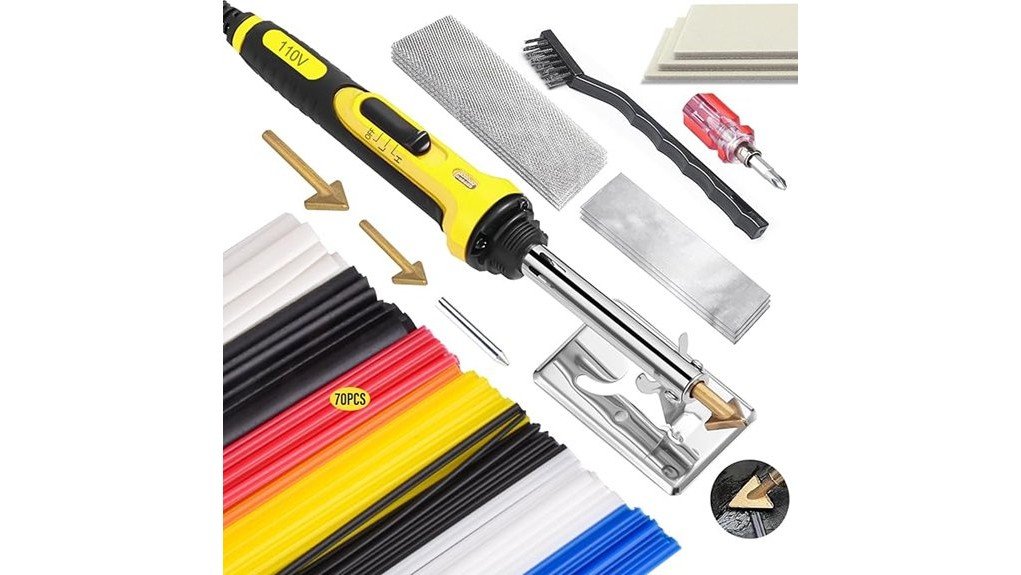
The 150W Plastic Welder Kit is a heated plastic repair tool designed to soften, join, shape, and reinforce damaged plastic. Instead of relying only on adhesive, it uses heat and filler rods to help rebuild cracked or broken areas. The supplied kit details mention a pen-shaped body, non-slip handle, ceramic heating chip, three soldering tips, and 70 multi-colored welding rods.
This type of tool is best for hands-on users who are comfortable working with heat and small repair accessories. It can help with visible and functional repairs on items such as car bumpers, small plastic housings, toys, and household parts. The kit is not a magic fix for every plastic, but it gives you more control than basic glue when the surface needs melting, filling, smoothing, or reinforcing.
Before You Buy: This kit can repair many plastics, but not all plastics weld the same way. Identify the material when possible, practice on scrap first, and avoid using it on load-bearing or safety-critical parts unless you have the right repair method and experience.
Who Should Buy It?
Best For
- DIY users who repair cracked plastic instead of replacing the whole part.
- Automotive hobbyists working on bumper covers, trim pieces, and small plastic panels.
- Home users who want a compact kit with rods, mesh, smoothing tools, and cleaning accessories included.
Skip If
- You need a certified structural repair on a safety-critical vehicle part.
- You want a no-heat repair method, such as tape, glue, or two-part epoxy.
- You are not comfortable managing hot tips, melted plastic, fumes, and surface preparation.
Design and Handling
The compact pen-shaped design is one of the kit’s main strengths. A slim tool is easier to guide along cracks, corners, tabs, and narrow seams than a bulky repair gun. The non-slip handle also matters because plastic welding often requires slow, controlled movement rather than quick pressure.
The lightweight body should help during longer repair sessions, especially when you need to fill a crack, smooth the surface, and check the shape more than once. For the best control, keep your wrist steady and work in small sections. That approach helps prevent overheating one spot or leaving excess melted material on the surface.
Heating Technology and Temperature Control
The supplied details list a 150W power rating and a ceramic heating chip that can reach up to 1112°F in about 15 to 20 seconds. Fast heating is useful when you only need a short repair session, but it also means you should set up your work area before turning the tool on. Keep the rods, mesh, sandpaper, and cleaning brush within reach so you are not handling accessories while the tip is hot.
The three-speed temperature control gives you more flexibility than a single-temperature tool. Low temperature mode, listed around 450°F, is better for delicate work where too much heat could deform a thin plastic shell. High temperature mode, listed around 1100°F, is better suited for melting tougher repair material and filling larger damaged areas.
Pro Tip: Start lower than you think you need, then increase heat only if the plastic or rod is not softening well. This gives you more control and reduces the chance of burning, bubbling, or warping the part.
Included Components and Repair Versatility
The kit includes three soldering iron tips: a lead-free tip, a large triangle tip, and a small triangle tip. This gives you a few ways to approach a repair. A smaller tip can help with detail work, while triangle tips can help spread heat over a wider area when filling, flattening, or blending plastic.
The 70 multi-colored welding rods are useful for color matching, especially on visible repairs. They may not make every repair invisible, but they can reduce the contrast between the filler and the original part. The included smoothing heads, sponge sandpaper, and metal brush also help you move from joining the crack to cleaning and finishing the repair.
The stainless steel wire mesh adds another option when the repair needs reinforcement. Mesh can help bridge a cracked area or strengthen a weak section, while aluminum foil tape can help with insulation or surface protection during certain repair steps. These extras make the kit more useful than a basic hot tool with only one tip.
Compatibility and Safety
The kit is described as suitable for many plastic repair tasks, including car bumpers, electronics, toys, kayaks, and household items. That range is helpful, but plastic type still matters. Some plastics melt and bond more cleanly than others, while some can burn, deform, or fail to bond well.
Because the tool works at high temperatures, you should use it in a ventilated area and keep it away from children, pets, flammable items, and finished surfaces that could be damaged by heat. Wear heat-resistant gloves and eye protection when appropriate. Let the tool and repaired part cool fully before touching, sanding, or testing the repair.
The six ventilation holes are meant to support heat dissipation during use. Even with that design, avoid covering the vents, laying the hot tool on unsafe surfaces, or running it longer than needed. If the handle, cord, or body feels abnormal during use, stop and let the tool cool before inspecting it.
How to Use It Correctly
Clean the damaged plastic before you begin. Dust, grease, paint flakes, and old adhesive can reduce the quality of the repair. Use the metal brush or sandpaper to prepare the surface, then align the cracked area as closely as possible before adding heat or filler.
Choose the tip based on the repair area. Use a smaller tip for narrow cracks and detail work, then move to a wider tip or smoothing head when you need to blend the surface. If the damage needs strength, consider using the stainless steel wire mesh on the back side or less visible side of the part where it can reinforce the repair without affecting appearance as much.
After welding, let the repair cool naturally. Do not rush the cooling with water unless the product instructions specifically allow it. Once the repair is cool, lightly sand or smooth the area as needed, then inspect for gaps, weak spots, or uneven filler.
How It Performs in Real Use
For Car Bumpers and Automotive Trim
For bumper covers and trim pieces, the 150W power rating and high-temperature setting can help soften repair rods and blend cracked plastic edges. The compact shape is helpful when working around curved surfaces or tabs. Still, cosmetic repairs may need extra sanding, shaping, and paint work after welding.
For Electronics Housings
For small electronics housings, the lower temperature setting gives you more control around thin plastic. This can help reduce melting beyond the repair area. You should avoid touching internal components with heat and should never repair powered electronics while plugged in or assembled in a risky way.
For Toys and Household Plastic Items
The multi-colored rods make the kit useful for visible household repairs where a closer color match matters. Toys, bins, handles, and plastic covers may benefit from a filled crack or reinforced seam. For children’s items, make sure the finished repair is smooth, secure, and appropriate for the item’s use before returning it to service.
For Kayaks and Outdoor Gear
The kit may help with certain plastic kayak or outdoor gear repairs when the material is compatible. Outdoor items often see stress, water, and temperature changes, so you should inspect the repair carefully. For major leaks, deep cracks, or high-stress areas, follow the product maker’s guidance or seek a more specialized repair method.
Pros and Cons
Pros
- 150W power and fast 15 to 20 second heat-up support quick repair sessions.
- Three-speed temperature control helps match heat level to delicate or tougher plastic work.
- Includes three tips, 70 multi-colored welding rods, mesh, tape, sandpaper, brush, and screwdriver.
- Pen-shaped design and non-slip handle make detailed work easier to control.
- Six ventilation holes help with heat dissipation during extended use.
Cons
- Not every plastic type will weld cleanly, so testing is important.
- Visible repairs may still need sanding, finishing, or paint for a clean look.
- Not ideal for safety-critical structural repairs without proper experience and repair guidance.
Is It Worth the Price?
The 150W Plastic Welder Kit offers strong value for the price if you want one kit that includes the heating tool, tips, filler rods, reinforcement material, and finishing accessories. Buying those items separately can be less convenient, especially if you are new to plastic welding and want a ready-to-use setup.
It is worth considering if you regularly fix plastic parts around a garage, workshop, vehicle, or home. The best value comes from small repeat repairs where the tool saves you from replacing an otherwise usable item. It is not the best fit if you only need one tiny repair and would rather use a simple adhesive or replacement part.
How It Compares to Alternatives
Compared with a basic soldering iron, this kit gives you more repair-focused accessories, including welding rods, smoothing heads, and reinforcement mesh. Compared with two-part plastic epoxy, it gives you a heat-based repair method that can fill and reshape plastic, but it also requires more care and practice.
A hot-air plastic welder may be better for larger or more advanced plastic fabrication work. A plastic staple gun may be better when the main goal is crack reinforcement from the back side. The 150W Plastic Welder Kit makes the most sense when you want a compact, affordable, all-in-one kit for common DIY plastic repairs.
Frequently Asked Questions
Can the 150W Plastic Welder Kit repair all types of plastic?
No. It can repair many plastic items, but plastic type, thickness, damage location, and filler compatibility all affect the result. Test on a hidden area or scrap piece before repairing a visible or important part.
Is this plastic welder safe for beginners?
It can be beginner-friendly if you work slowly, use protection, and practice first. The tool heats very quickly and can reach high temperatures, so you should treat it like any hot workshop tool.
What are the three tips used for?
The kit includes a lead-free tip, a large triangle tip, and a small triangle tip. Smaller tips help with narrow cracks and detail work, while triangle tips can help spread heat and smooth wider repair areas.
How long do the 70 welding rods last?
That depends on the size and depth of each repair. Small cracks may use very little rod material, while larger fills or repeated practice sessions will use rods faster.
Can it fix a cracked car bumper?
It may help repair some bumper cover cracks when the plastic is compatible and the damage is not safety-critical. A clean cosmetic result may still require sanding, shaping, filler work, primer, and paint after welding.
Do you need the stainless steel mesh?
You do not need mesh for every repair, but it can help when a crack needs extra support. It is most useful on the back side of a repair where strength matters more than appearance.
Who should skip this kit?
Skip it if you need a certified structural repair, do not want to work with heat, or cannot test the plastic first. It may also be more tool than you need for a single low-stress repair that glue or replacement can solve.
The Bottom Line
The 150W Plastic Welder Kit is a practical choice if you want a compact repair kit with fast heating, adjustable temperature control, multiple tips, 70 rods, and useful finishing accessories. It is best for DIY plastic repairs on compatible materials, while buyers who need certified structural work or a no-heat fix should choose another method.