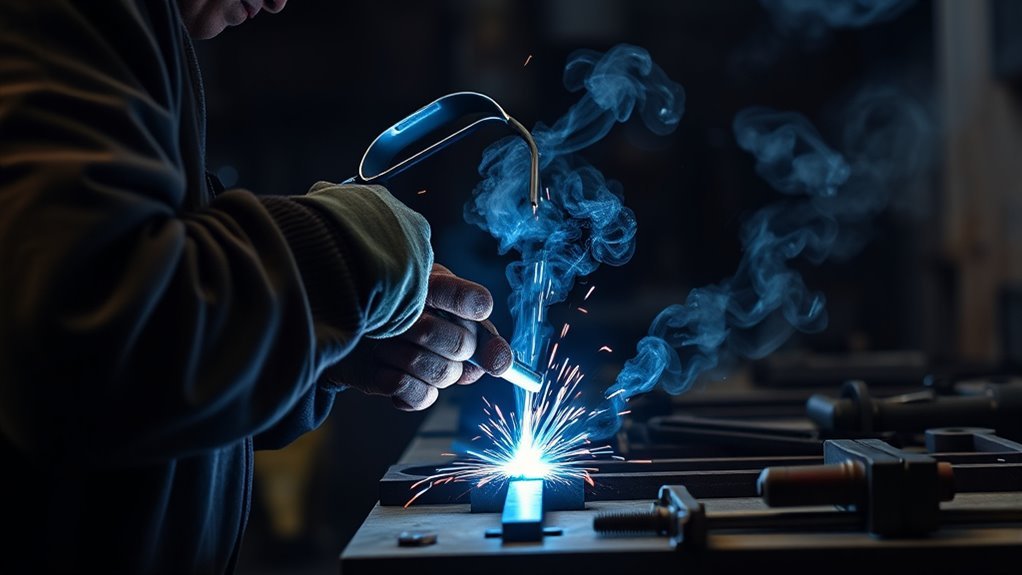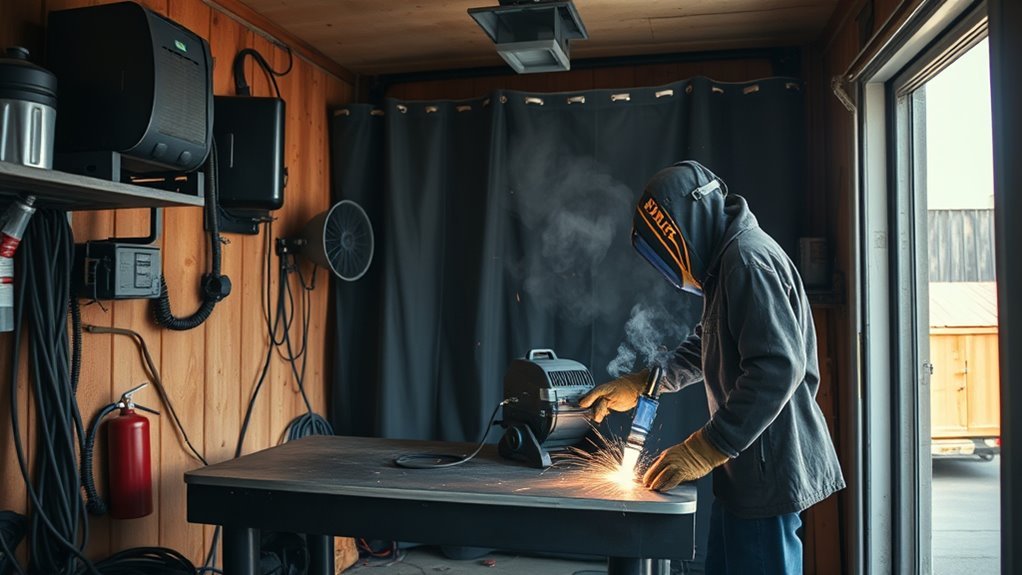
Weld safely in a small garage by treating the space like a controlled hot-work zone. Clear clutter, move combustibles away, secure gas cylinders, check electrical connections, wear proper PPE, and use ventilation that pulls fumes away from your breathing zone. Keep a charged Class ABC fire extinguisher nearby, watch for smoke or hot debris after welding, and stop if you cannot control fumes, sparks, or heat.
Quick Answer
Yes, you can weld safely in a small garage if you remove fire hazards, create strong airflow, use local fume extraction, wear welding-rated PPE, secure cylinders, and inspect the area before and after welding. If fumes build up or combustibles cannot be moved or shielded, do not weld until the setup is safer.
Key Takeaways
- Clear or shield combustibles before welding, and inspect the garage for hot debris after every session.
- Use both general airflow and local fume extraction so smoke moves away from your breathing zone and outdoors.
- Wear a welding helmet, safety glasses, flame-resistant clothing, leather gloves, and leather boots.
- Keep cylinders upright, capped when stored, away from heat, and secured so they cannot fall.
- Do not weld coated, galvanized, painted, solvent-contaminated, or unknown materials in a small garage unless you can control fumes safely.
At a Glance
| Time Required | 20–45 minutes to set up and inspect, plus at least 30 minutes for post-weld fire watch when sparks or hot work could reach combustibles. |
| Difficulty | Moderate. The welding may be simple, but the fire, fume, and electrical controls must be handled carefully. |
| Tools Needed | Welder, grounded work clamp, welding table, fume extractor or exhaust fan, welding blanket, Class ABC fire extinguisher, PPE, wire brush or grinder, and bright inspection light. |
| Cost | About $75–$400 for added safety gear if you already own a welder; more if you need a quality fume extractor or dedicated electrical upgrade. |
Set Up Your Small Garage Welding Space
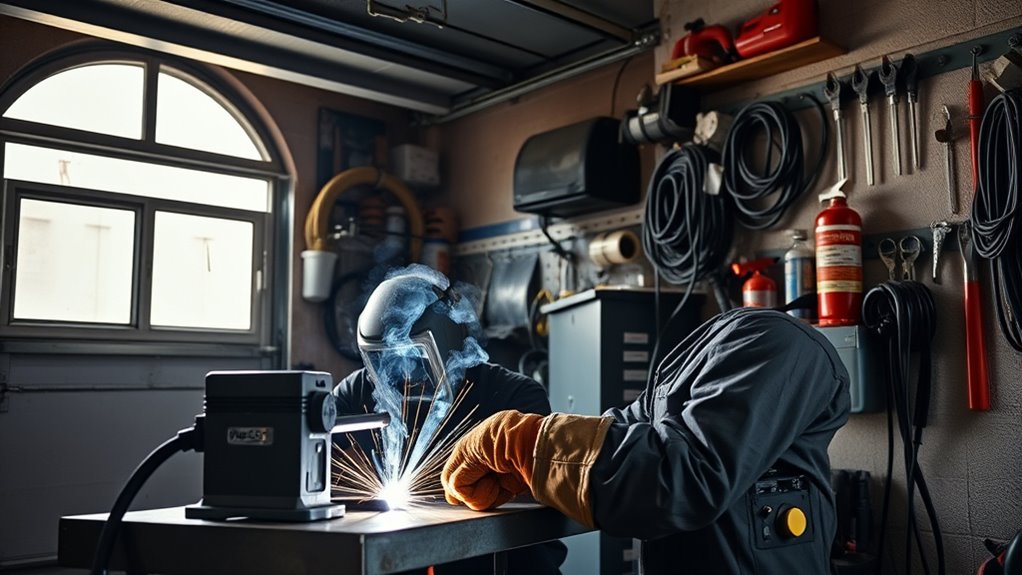
Before you strike an arc, set up a flat, stable work surface that is clear of clutter, trip hazards, and anything that can burn. In a small garage, sparks can reach cardboard, sawdust, plastic bins, oil rags, curtains, shelves, and cords faster than you expect.
Claim one clear welding zone and keep the welder, work clamp, cables, gas hose, and hand tools inside that zone. Use a portable cart to store welding equipment so you can move tools fast and keep the floor open. Do not let cords or hoses cross the walking path to the door.
Secure gas cylinders upright so they cannot tip. Keep them away from sparks, heat, and the direct welding area. If the cylinders are stored rather than connected for use, keep valve protection caps in place when the cylinder design allows it.
Improve ventilation before welding, not after the garage fills with smoke. Open the main garage door, add a second opening when possible, and use a portable fume extractor or exhaust fan to move fumes away from your face and outdoors. OSHA guidance for welding ventilation says local exhaust hoods should be placed as close as practical to the work to remove fumes and smoke at the source. You can also review the basics of proper ventilation before setting up your workspace.
Warning: Do not weld in a garage that smells like gasoline, solvent, paint thinner, propane, or natural gas. Stop, ventilate the area, remove the source, and do not resume until the air is safe.
Pre-Weld Safety Checklist
Use a short checklist every time. Small garages change quickly, especially if the space is also used for parking, storage, woodworking, or repairs.
- Move paper, cardboard, sawdust, rags, gasoline, aerosol cans, plastic bins, and other combustibles away from the welding zone.
- Cover immovable nearby surfaces with a welding blanket or metal shield.
- Check that the floor is dry and clear of cords, hoses, scrap, and offcuts.
- Confirm the work clamp is attached to clean metal close to the weld area.
- Inspect the electrode holder, torch, gun liner, leads, hoses, and plugs for heat damage or cuts.
- Set the fume extractor near the arc and confirm air moves away from your face.
- Keep one exit path open at all times.
- Place a charged Class ABC fire extinguisher where you can reach it without crossing sparks or cables.
Pro Tip: Sweep first, then use a flashlight to inspect corners, under the bench, and behind stored items. Sparks often hide in dust, fabric, wood shavings, and small gaps.
Choose the Right PPE
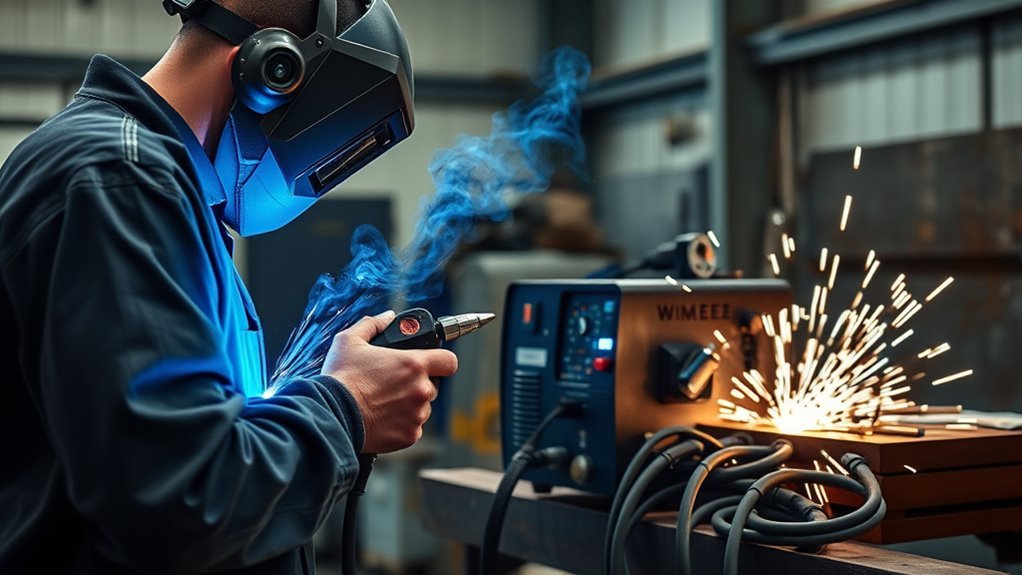
Choose PPE that shields you from sparks, heat, ultraviolet radiation, infrared radiation, and flying debris. Your gear should fit well enough to cover your skin without catching on the table, clamps, or torch lead.
Start with a welding helmet that meets current eye and face protection requirements and has the correct filter shade for the process. Auto-darkening lenses are helpful in a tight garage because they let you position the torch without repeatedly lifting the hood. Wear safety glasses underneath for extra protection when chipping, brushing, grinding, or handling hot metal.
Add flame-resistant clothing that covers your arms, torso, and legs. Avoid polyester, nylon, fleece, and other synthetic fabrics that can melt into skin. High-top leather boots protect your feet from sparks and small drops of hot metal. Welding gloves should match the process: thicker gloves for stick and flux-core work, and more flexible gloves when you need TIG control.
A welding jacket, such as flame-resistant cotton with leather panels, can improve protection without feeling too bulky. Keep clothing clean and dry, inspect it before each job, and replace damaged gear right away. Good flame-resistant clothing lowers burn risk, but it does not replace ventilation, fire control, or safe setup.
Products Worth Considering

True Color Clear View: A 3.64" x 1.67" viewing area with 1/1/1/1 optical clarity delivers a true color view for improved visibility and reduced eye strain.

【FASTER AUTO-DARKENING】Features high-end auto-darkening lenses with 4 premium arc sensors, switching from light to dark in 1/25000 sec. Easily adjust the shade and sensitivity of the lenses for different working environments, perfect for TIG/MIG/ARC welding. Dark state level: 4/9-13.

AUTO DARKENING FILTER - This welding helmet comes with high-end auto-darkening lens and 4 premium arc sensors which let you adapt to different working environments by adjusting the lens's shade and sensitivity while you are operating ARC/MIG/TIG Welding. DIN4 on light state, DIN5-9/9-13 on dark state.
Improve Ventilation in a Small Garage
Open doors and windows to create a clean airflow path so welding fumes can move out and fresh air can move in. Then use local extraction near the arc, because open doors alone may not remove fumes from your breathing zone.
Welding fumes can contain metal particles and gases, and exposure changes with the welding process, filler metal, base metal, coating, and workspace. NIOSH notes that confined-space welding can significantly increase exposure to manganese fumes, so a small garage should never be treated like open outdoor air.
Open Airflow Paths
| Step | Result |
|---|---|
| Open the garage door and a second opening | Creates a path for fresh air to enter and fumes to leave |
| Clear boxes, shelves, and curtains from the airflow path | Reduces blocked airflow and hidden fire risks |
| Place the exhaust fan so fumes move outdoors | Keeps contaminated air from recirculating through the garage |
| Check the smoke path before welding | Shows whether fumes are moving away from your breathing zone |
Keep the space clutter-free so air moves freely. If fumes drift back toward you, pause and reposition the fan or extractor before continuing.
Use Portable Fume Extractors
If your garage feels tight, use a portable fume extractor to pull welding fumes away right at the source. Portable fume extractors give you localized ventilation without a permanent duct system, which makes them useful for small home shops.
Aim the adjustable arm close to the arc without blocking your view or disturbing shielding gas. The goal is to capture smoke, metal fumes, gases, and fine particles before they spread across the garage.
Choose a unit designed for welding fumes and maintain it on schedule. Clean or replace filters as directed by the manufacturer. A clogged filter can make the unit loud but ineffective.
Position Exhaust Safely
Position exhaust so contaminated air leaves the garage and does not return through a window, door, attic vent, or HVAC intake. Keep the fan path clear and check that it does not blow sparks toward combustibles.
- Aim exhaust outdoors and away from fresh-air intake points.
- Run portable extraction close to the arc.
- Keep replacement air clean and breathable.
- Stop if fumes collect near your helmet or linger in the garage.
Warning: Never use oxygen for ventilation, cooling, blowing dust from clothing, or cleaning the work area. Oxygen can make fire hazards much worse.
Reduce Sparks and Fire Hazards
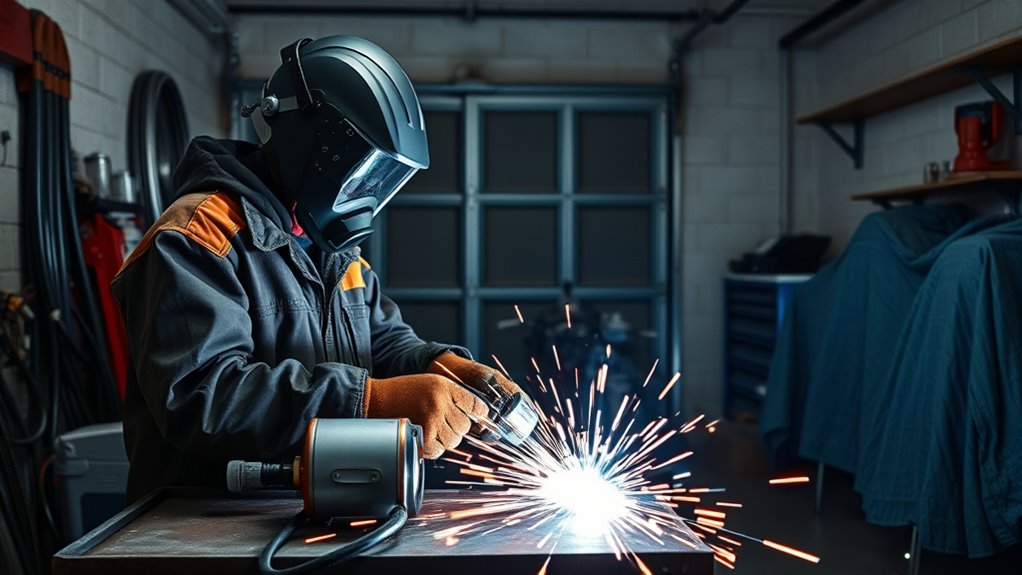
To reduce sparks and fire hazards in a small garage, start by clearing out anything flammable, including cardboard, cloth rags, sawdust, gasoline, paint cans, aerosols, paper, foam, and plastic storage bins.
Where practical, keep combustibles at least 35 feet from the welding area. If you cannot move an item that far, shield it with a welding blanket, sheet metal, or another fire-resistant barrier. Check both sides of nearby walls, shelves, benches, and metal partitions because heat can travel through metal and ignite material you cannot see.
Keep a charged Class ABC fire extinguisher within reach and learn how to use it before welding. A Class ABC extinguisher is a practical home-garage choice because it covers ordinary combustibles, flammable liquids, and energized electrical equipment. Do not rely on water near live electrical equipment.
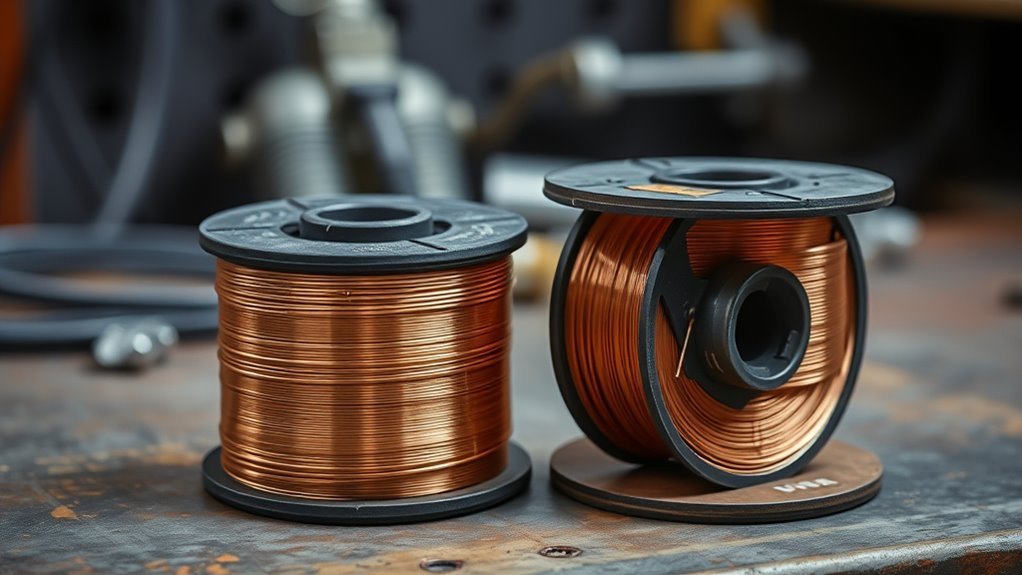
You should also verify proper grounding because loose connections can create shorts, heat, and stray arcing. Inspect the floor, corners, and bench often, and stop immediately if you spot smoke, heat, or glowing debris. A self-shielded wire such as the Forney 42300 Flux Core MIG Wire can be useful outdoors or in drafty conditions, but it still creates fumes and spatter, so the same garage safety rules apply.
A small garage can become unsafe in seconds if sparks reach hidden rags, sawdust, gasoline vapors, cardboard, or plastic storage bins.
Check Electrical Safety and Grounding
Electrical safety matters just as much as fire control. Use a circuit that matches your welder’s voltage and amperage requirements, and do not overload a shared household circuit. If the breaker trips, the plug gets hot, or the cord smells burnt, stop and fix the electrical problem before welding again.
Inspect extension cords carefully. Use only heavy-duty cords rated for the welder’s current draw, and keep cords as short as practical. Do not run cords through standing water, under tires, under doors, or across sharp metal edges.
Attach the work clamp to clean bare metal close to the weld. A poor ground path can cause unstable arc starts, heat buildup, and current traveling through paths you did not intend. Keep welding cables clear of doorways, ladders, and foot traffic.
Note: If your garage needs a new outlet, larger breaker, or dedicated welder circuit, hire a qualified electrician. Do not modify plugs, bypass breakers, or use undersized wiring.
Store Tools and Materials Safely
Keep welding tools and materials stored in metal cabinets whenever possible, because metal storage helps reduce fire risk and keeps your garage organized. Store grinders, clamps, welding consumables, and PPE where they stay dry, clean, and easy to inspect.
Keep flammable items like cardboard, cloth rags, gasoline, thinner, and aerosol cans away from the welding area. Label hazardous materials clearly and close every container tightly so you do not create leaks, vapors, or misuse.
- Inspect storage areas for damage, rust, loose lids, or leaking containers.
- Sort tools, consumables, scrap metal, and PPE into separate storage areas.
- Keep grinding dust, sawdust, and scrap piles away from sparks.
- Check cabinets regularly so you catch problems before they turn dangerous.
You can keep your garage efficient and safer when you treat storage as part of welding safety, not an afterthought. Items like hardware cloth can be useful for DIY projects, but store mesh, screens, and sharp metal pieces so they do not create trip hazards or contact live leads.
Handle Gas Cylinders Safely
Gas cylinders need stable storage, ventilation, and protection from heat. Store cylinders upright in a dry, well-ventilated location where they cannot be knocked over by a vehicle, cart, door, or falling item.
Keep cylinders away from radiators, heaters, direct flame, and hot work. Close cylinder valves when work is finished, and do not leave regulators exposed where they can be struck. Do not use a cylinder as a roller, support, or work stand.
Keep oxygen cylinders away from oil, grease, and fuel-gas cylinders. If you store oxygen and fuel gas in the same building, separate them by distance or an approved barrier. For home garage use, the safest practical habit is to keep only what you need, secure it upright, and move unused cylinders to a safer approved storage location.
Avoid High-Risk Materials in a Small Garage
Some materials are not good candidates for small-garage welding. Galvanized steel, painted metal, plated hardware, stainless steel, brake-cleaner-contaminated parts, solvent-soaked parts, and unknown coatings can release hazardous fumes when heated.
If you must weld galvanized steel, remove the coating in the weld area only when you can do so safely, use strong local fume extraction, and wear the correct NIOSH-approved respiratory protection for the hazard. A respirator should never be your only control. Ventilation and source capture come first. For more detail, review safe practices for MIG welding galvanized steel.
Never weld, cut, or heat a tank, drum, pipe, or closed container that held fuel, oil, solvent, chemical, or unknown material unless it has been professionally cleaned, vented, and verified safe. Residue can produce toxic vapors or explode when heated.
Make Cleaner, Safer Welds
Start by cleaning the weld area so paint, rust, oil, grease, and other contaminants are not adding smoke and porosity to your weld. Use a wire brush, grinder, or flap disc as needed, then wipe the part with an appropriate cleaner and let it dry fully before welding.
Keep your work space free from clutter so you can move easily and reach your welding machine, fume extractor, and fire extinguisher without obstruction. Make sure the extractor sits close enough to the arc to pull fumes away before they spread.
Check hoses, cords, tips, nozzles, drive rolls, and machine settings before you strike an arc. Worn gear can increase smoke, spatter, and poor arc control. Use air blowers only when they will not push dust, sparks, or fumes into your breathing zone.
Run controlled passes instead of forcing one long, overheated pass. Shorter passes give you more chances to inspect the bead, adjust heat, and prevent the workpiece from overheating. Reinspect each pass, then adjust voltage, wire speed, amperage, travel speed, or stickout as needed.
Choose Safety Gear for Garage Welding
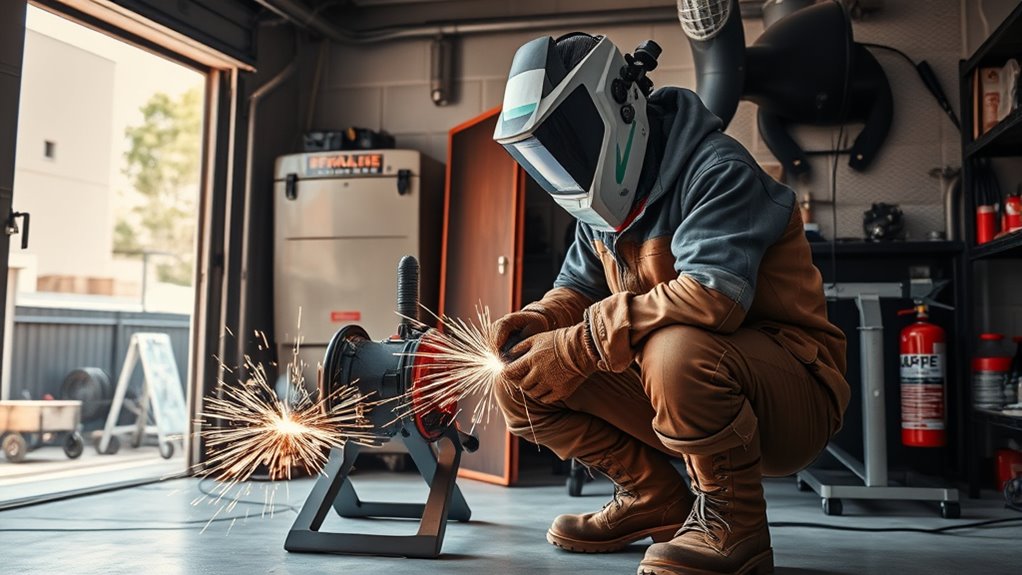
Before each garage welding project, lay out your safety gear and inspect it. A good setup helps you focus on the weld instead of burns, arc flash, smoke, or hot metal.
- Wear flame-resistant clothing that fully covers your skin.
- Use a welding helmet with the correct shade and add safety glasses underneath. Quality helmets, including models with advanced blue light blocking technology, can also reduce eye fatigue during longer sessions.
- Put on dry leather gloves and high-top leather boots for heat, sparks, and support.
- Use hearing protection when grinding, cutting, or welding in a reflective enclosed space.
- Use a properly selected, fit-tested NIOSH-approved respirator when ventilation and fume extraction are not enough for the material or process.
This setup helps shield you from UV radiation, hot metal, spatter, and electrical hazards. Good protection should let you move naturally without leaving your wrists, neck, ankles, or forearms exposed.
Products Worth Considering

✅Arc & Flame Resistant for Life - This 7 oz material is a soft, breathable cotton. They will remain arc and flame retardant regardless of the washes and wear cycles. These cotton fr balaclavas are NFPA 70E Compliant, HRC / CAT 2, EBT = 12 cal/cm² and meet ASTM F1506.

High Quality-100% Heavy Duty Leather Apron with Gloves

FR MATERIALS:Made from 5.5oz lightweight 100% cotton flame-resistant fabric in both paisley print and solid styles,this balaclava delivers a soft,breathable feel for long-hour comfort.One size fits all,the stretchable knit adapts to any head shape,ensuring a universal fit.Multiple wearing methods allow you to pull the face mask down when full coverage is not needed.
Post-Weld Fire Watch and Shutdown
Do not leave the garage as soon as the bead is finished. Many garage fires start after the visible welding work is done because sparks settle into dust, fabric, boxes, cracks, or hidden corners.
- Turn off the welder and close gas valves when finished.
- Remove electrodes from holders if the welder will sit unused.
- Let hot metal cool in a safe place and mark it if someone else may touch it.
- Inspect the floor, bench, wall gaps, shelves, and trash area with a flashlight.
- Smell for smoke or melting plastic.
- Stay in the area long enough to confirm nothing is smoldering, especially if sparks reached nearby surfaces.
If combustibles were close enough to ignite or sparks could have entered hidden spaces, maintain a fire watch for at least 30 minutes after welding. Longer monitoring may be wise if the garage has wood framing, stored boxes, insulation, or wall gaps near the work area.
When to Stop and Call a Professional
Stop welding and get qualified help if the garage cannot be ventilated, the electrical circuit is undersized, the breaker trips repeatedly, a gas cylinder leaks, fumes make you dizzy or irritated, or the work involves a fuel tank, pressure vessel, structural repair, trailer hitch, suspension part, or load-bearing component.
Also stop if you are unsure what coating is on the metal. Grinding off a small area is not always enough to make coated metal safe in a small garage. When in doubt, move the work outdoors with proper controls or hire a trained welding professional.
Frequently Asked Questions
Can you weld in a small garage?
Yes, you can weld in a small garage if you control fire hazards, ventilation, electrical safety, PPE, cylinder storage, and post-weld inspection. The space must stay clear enough for airflow, movement, and a fast exit. If you cannot move or shield combustibles, do not weld there.
How do you weld without inhaling fumes?
Use source capture first. Place a welding-rated fume extractor close to the arc, move contaminated air outdoors, and keep fresh air entering the garage. Clean coatings and contaminants before welding. Use a properly selected NIOSH-approved respirator when ventilation alone cannot control the hazard.
Do fumes from a welder need to be ventilated?
Yes. Welding fumes and gases need ventilation because they can contain metal particles and other hazardous byproducts. Use local exhaust near the arc, general airflow through the garage, and clean replacement air. Do not rely on an open door if smoke still reaches your helmet.
What should you do if a small garage does not have enough ventilation?
Stop welding and improve the setup. Add local fume extraction, reposition fans, open another airflow path, or move the job outdoors if it can be done safely. Do not block your exit to create airflow. For true confined-space work, OSHA rules can require airline respirators and an outside attendant, which is beyond normal DIY garage welding.
What fire extinguisher should you keep near a garage welding area?
A charged Class ABC extinguisher is a practical choice for most home garages because it covers ordinary combustibles, flammable liquids, and energized electrical equipment. Keep it visible, easy to reach, and inspected. Know how to use it before you start welding.
Can you weld galvanized steel in a garage?
It is not a good idea in a small garage unless you can control fumes with proper preparation, local extraction, fresh-air ventilation, and suitable respiratory protection. Galvanized coatings can release zinc oxide fumes when heated. If you are not trained and equipped for it, move the job to a safer setup or hire a professional.
Conclusion
Welding in a small garage can be done more safely when you control the space before you control the arc. Clear combustibles, keep air moving, capture fumes near the source, wear welding-rated PPE, secure cylinders, check electrical connections, and inspect for heat or smoke after the weld. Work slowly, stop when conditions change, and do not treat a cramped garage like an open shop. Good habits turn a risky space into a more controlled place to weld.
Sources
- OSHA 29 CFR 1910.252, General requirements for welding, cutting, and brazing — fire prevention, eye protection, ventilation, combustibles, and fire watch guidance.
- OSHA 29 CFR 1926.353, Ventilation and protection in welding, cutting, and heating — mechanical ventilation, local exhaust, outdoor discharge, oxygen warning, and confined-space requirements.
- OSHA 29 CFR 1910.253, Oxygen-fuel gas welding and cutting — gas cylinder storage, handling, heat separation, and oxygen/fuel-gas precautions.
- CDC/NIOSH Welding Fumes and Manganese — welding fume health effects and exposure risks.
- NFPA 51B, Standard for Fire Prevention During Welding, Cutting, and Other Hot Work — hot-work fire prevention framework.