Disclosure: As an Amazon Associate, we earn from qualifying purchases. If you click a link on this page and make a purchase, we may receive a small commission at no extra cost to you.
Choosing the right TIG tungsten electrode affects arc starts, puddle control, and how clean your welds look. WeldingCity TIG Welding Electrodes are aimed at welders who want a practical assortment of tungsten options for different TIG jobs instead of buying one type at a time. The article-supported details include common electrode types such as 2.0% thoriated, lanthanated, ceriated, and pure tungsten options, with sizes listed from 1/16 inch to 3/32 inch by 7 inches. This review helps you decide where this electrode pack makes sense, where it needs caution, and what to check before you buy.
Quick Verdict
Rating: 8.2/10
Best For: TIG welders who want a small tungsten assortment for shop, repair, and practice work.
Bottom Line: WeldingCity TIG Welding Electrodes are worth considering if you want several tungsten types in one pack and need stable, predictable arc behavior. The main tradeoff is that thoriated tungsten requires more careful handling during grinding and disposal, and you should confirm the exact alloy mix on the current product listing before ordering.
| Specification | Detail |
|---|---|
| Brand | WeldingCity |
| Product type | TIG welding tungsten electrodes |
| Electrode types mentioned | 2.0% thoriated, lanthanated, ceriated, and pure tungsten options |
| Sizes listed | 1/16 inch to 3/32 inch by 7 inches |
| Pack quantity | 10 electrodes per pack, based on the source article |
| Standards mentioned | ANSI/AWS and ISO standards are referenced in the article |
| Best use | TIG welding practice, repair work, fabrication, and projects that need different tungsten choices |
| Safety note | Thoriated tungsten should be ground and handled with proper dust control and shop safety practices. |
What Are WeldingCity TIG Welding Electrodes?
WeldingCity TIG Welding Electrodes are non-consumable tungsten electrodes made for TIG welding machines. The main appeal is the variety of alloy types, which lets you match the tungsten to your metal, current type, and welding style.
The source article describes a pack with ten electrodes and sizes from 1/16 inch to 3/32 inch by 7 inches. That makes the set more useful for welders who want to test different tungsten types before committing to larger quantities.
This is not a one-size-fits-all solution for every welding job. You still need to choose the correct tungsten type, diameter, grind angle, amperage range, and machine setting for your material and torch setup.
Before You Buy: Confirm the exact tungsten types and diameters on the current Amazon listing before ordering. Assortments can vary by seller, and the best electrode choice depends on your TIG machine, current type, base metal, and welding process.
Who Should Buy It?
Best For
- TIG welders who want a small assortment of tungsten types for different jobs.
- DIY and shop users who weld steel, stainless, aluminum, or mixed project materials.
- Welders who want to compare arc starts, stability, and electrode life across alloy types.
Skip If
- You need only one exact tungsten type and diameter for a qualified welding procedure.
- You want to avoid thoriated tungsten because of grinding dust and disposal concerns.
- You need a bulk pack for production welding instead of a smaller mixed pack.
Product Features and Specifications
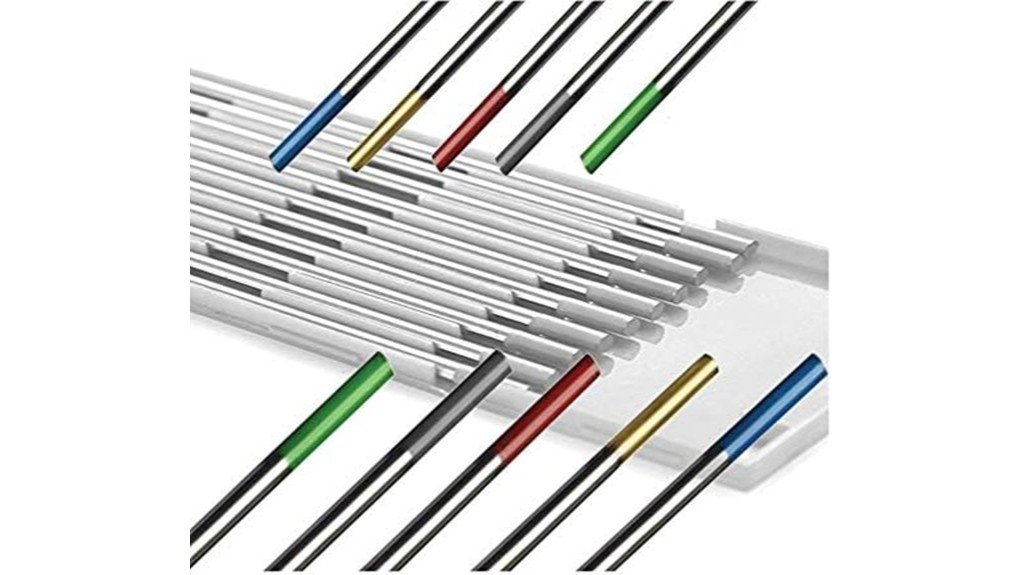
WeldingCity’s TIG welding electrodes focus on variety. The article mentions 2.0% thoriated, lanthanated, ceriated, and pure tungsten options, which gives you several common choices for different TIG welding tasks.
The 1/16 inch to 3/32 inch size range covers many light to medium TIG applications. Smaller electrodes can help with lower-amperage control, while larger diameters can handle more heat when matched correctly to the machine and material.
The listed 7-inch length is common for TIG tungsten electrodes. You can grind the tip for your preferred arc shape, then shorten the electrode over time as it wears or becomes contaminated.
Build Quality and Materials
Tungsten electrodes are chosen because tungsten handles extreme heat while keeping a stable point better than many other metals. For TIG welding, that matters because the electrode must carry the arc without becoming the filler metal.
Different alloy additions change how the electrode starts, holds a point, and resists burn-off. Lanthanated and ceriated tungsten types are often chosen for stable arc starts, while thoriated tungsten is known for strong DC performance but needs more careful safety handling.
Pure tungsten is usually more specialized than a general all-purpose choice. It can be useful in certain AC welding setups, but many welders now compare lanthanated options when they want broader versatility.
Performance and Arc Stability
The biggest benefit of this WeldingCity set is the ability to test different electrode types against your real work. If your arc wanders, starts poorly, or contaminates easily, changing tungsten type or diameter can make a noticeable difference.
For steel and stainless work, thoriated, lanthanated, or ceriated tungsten can give you a focused arc when the electrode is ground correctly. For aluminum work, your machine settings and current type matter just as much as the electrode.
Arc stability also depends on prep work. Clean base metal, correct shielding gas flow, a properly sized collet, and a steady torch angle all affect results, so the electrode is only one part of the setup.
Compatibility and Sizing
These electrodes are intended for TIG welding machines and TIG torches that accept the listed tungsten diameters. Before buying, check your torch collet size, gas lens or collet body, and cup setup.
A 1/16 inch electrode suits lower-amperage work and thinner material when your machine and procedure support it. A 3/32 inch electrode is a common shop size for broader TIG use, especially when you need more heat capacity.
Do not choose tungsten diameter by guesswork alone. Match it to your amperage range, base metal, joint type, and the guidance from your welder manual or welding procedure.
Pro Tip: Keep each tungsten type separated and labeled after opening the pack. Once the color mark wears off from grinding, it becomes much harder to identify the alloy by sight.
Safety Notes for Thoriated Tungsten
The article mentions 2.0% thoriated tungsten, also known as EW-Th20 or red tungsten in many welding shops. This type can perform well, especially in DC TIG work, but it contains thorium oxide.
The main safety concern is not normal welding use alone. The bigger concern comes from grinding dust, broken tips, and disposal practices. Use proper ventilation, avoid breathing grinding dust, and follow your workplace safety rules.
If you prefer to avoid thoriated tungsten, lanthanated or ceriated options may be better choices to compare. You should still follow safe grinding and handling practices for all tungsten electrodes.
How It Performs in Real Use
For Shop Practice
This pack makes sense for practice because you can compare how each tungsten type starts and holds an arc. That is useful when you are learning how electrode choice affects puddle control and bead shape.
For Steel and Stainless Repairs
For steel or stainless repair work, the thoriated, lanthanated, and ceriated options can give you a focused arc when you prepare the tip correctly. The best result still depends on clean material, correct amperage, and proper shielding gas coverage.
For Aluminum TIG Work
The article says these electrodes can be used for aluminum welding, but you should treat that as setup-dependent. Aluminum TIG requires the right machine mode, current settings, cleaning, shielding gas, and tungsten choice.
For Long-Term Use
A 10-pack gives you enough electrodes to keep spares in your drawer, especially if you are still learning and occasionally contaminate the tungsten. Long-term value improves when you grind carefully and avoid dipping the tip into the weld puddle.
How to Use These Electrodes Correctly
Start by confirming the electrode diameter matches your torch collet. A loose or mismatched collet can cause poor current transfer, overheating, or inconsistent arc behavior.
Grind the tungsten lengthwise, not around the electrode. A lengthwise grind helps guide the arc more predictably toward the workpiece and reduces wandering.
Keep the tungsten clean. If you dip it into the puddle or touch filler metal to the electrode, stop and regrind before continuing. Contaminated tungsten can make the arc unstable and leave defects in the weld.
Pros and Cons
Pros
- Assorted tungsten types help you compare arc starts and stability across different jobs.
- Sizes listed from 1/16 inch to 3/32 inch cover many light and medium TIG applications.
- Ten-electrode pack gives you spares for practice, setup changes, and normal wear.
- Article-supported ANSI/AWS and ISO references add confidence for buyers who care about classification.
- Useful for welders who want one compact pack instead of several separate electrode orders.
Cons
- Exact assortment and diameter options should be confirmed on the current listing before purchase.
- Thoriated tungsten requires extra care when grinding and handling dust.
- A mixed 10-pack may not be enough for production welders who use one size every day.
Is It Worth the Price?
WeldingCity TIG Welding Electrodes look like a strong value for the price if you want an assorted tungsten pack for general TIG work. The value comes from variety, not from bulk quantity.
This set is best for buyers who care about testing different electrode types or keeping several options available in a small shop. It is not the best fit if you already know the exact tungsten type and diameter you need for repeated production work.
Before you buy, compare the current listing details with your welder manual and torch setup. That step helps you avoid ordering an assortment that does not match your preferred diameter or welding process.
How It Compares to Alternatives
If you want one tungsten type for everyday DC steel work, a dedicated pack of 2% lanthanated or 2% thoriated electrodes may be simpler. If you weld mostly aluminum, you may want to compare pure tungsten, zirconated tungsten, and lanthanated tungsten based on your AC TIG machine and settings.
The WeldingCity pack makes the most sense if you want flexibility and comparison value. It is less ideal when your work requires one approved electrode classification for repeatable code or production welding.
Frequently Asked Questions
Are WeldingCity TIG Welding Electrodes suitable for beginners?
Yes, they can suit beginners who want to learn how different tungsten types affect arc starts and puddle control. You still need to match the electrode to your machine settings, material, and torch parts.
Can these electrodes be used for aluminum welding?
They may work for aluminum when the tungsten type, AC machine settings, and cleaning process are correct. Do not assume every electrode in the assortment is the best aluminum choice, because aluminum TIG is very setup-sensitive.
What size TIG torch parts do I need?
Your collet and collet body must match the tungsten diameter you use. If you plan to use both 1/16 inch and 3/32 inch electrodes, make sure you have torch consumables for both sizes.
Can TIG tungsten electrodes be reused?
Yes, tungsten electrodes can usually be reused many times if they are not cracked, badly contaminated, or too short to hold safely. Regrind the tip after contamination and replace the electrode when it no longer holds a proper point.
Are thoriated tungsten electrodes safe to use?
Thoriated tungsten is common in TIG welding, but it contains thorium oxide. Use dust control when grinding, avoid breathing dust, and follow your shop’s safety and disposal rules.
How should I store these electrodes?
Store them dry, clean, and separated by type. A labeled tube or divider helps prevent mix-ups after the painted identification end wears down.
Who should skip this WeldingCity electrode pack?
Skip it if you need one exact electrode classification for a formal welding procedure or production job. You may also want a non-thoriated-only pack if you prefer to avoid thorium oxide entirely.
What is the biggest buying mistake to avoid?
The biggest mistake is buying by brand name alone without checking diameter, alloy type, and torch compatibility. Confirm the current listing details against your welder manual before you order.
The Bottom Line
WeldingCity TIG Welding Electrodes are a smart buy for welders who want a compact assortment of tungsten types for TIG practice, repair work, and general shop use. The main strength is flexibility, while the main limitation is that you must confirm the exact assortment and handle thoriated tungsten with care.
Buy it if you want several electrode options in one pack. Skip it if you need one approved tungsten type in bulk or want to avoid thoriated electrodes completely.