Disclosure: As an Amazon Associate, we earn from qualifying purchases. If you click a link on this page and make a purchase, we may receive a small commission at no extra cost to you.
Hot air welding can go wrong fast when you use the wrong heat, nozzle, speed, or pressure. The Weldy 1600W Hot Blast Torch, verified as the WELDY energy HT1600 Overlap Welding Kit, is made for controlled hot air work on compatible thermoplastic materials. It gives you a 120V, 1600W tool with wide heat adjustment and starter welding accessories. This review helps you decide if it fits your repair, roofing, tarp, vinyl, or industrial fabric work, and where a simpler heat gun may be the better choice.
Quick Verdict
Rating: 8/10
Best For: DIY users, roof repair pros, fabricators, and installers who need a 120V overlap welding kit with useful starter accessories.
Bottom Line: The WELDY energy HT1600 is worth considering if you need strong heat, slot nozzles, and a pressure roller in one kit. It is not a casual household heat gun, so you still need test welds, ventilation, safe handling, and material-specific technique.
| Specification | Detail |
|---|---|
| Brand | WELDY |
| Model | energy HT1600 Overlap Welding Kit |
| Article number | 120.885 |
| Product type | Corded hot air hand tool and overlap welding kit |
| Voltage | 120V |
| Power | 1600W |
| Temperature range | 104°F to 1,292°F (40°C to 700°C) |
| Air volume | 240 l/min at 20°C |
| Static pressure | 2600 kPa |
| Weight | 2.2 lb without 3 m cord |
| Size | 13.6 x 4.0 in, handle diameter 2.3 in |
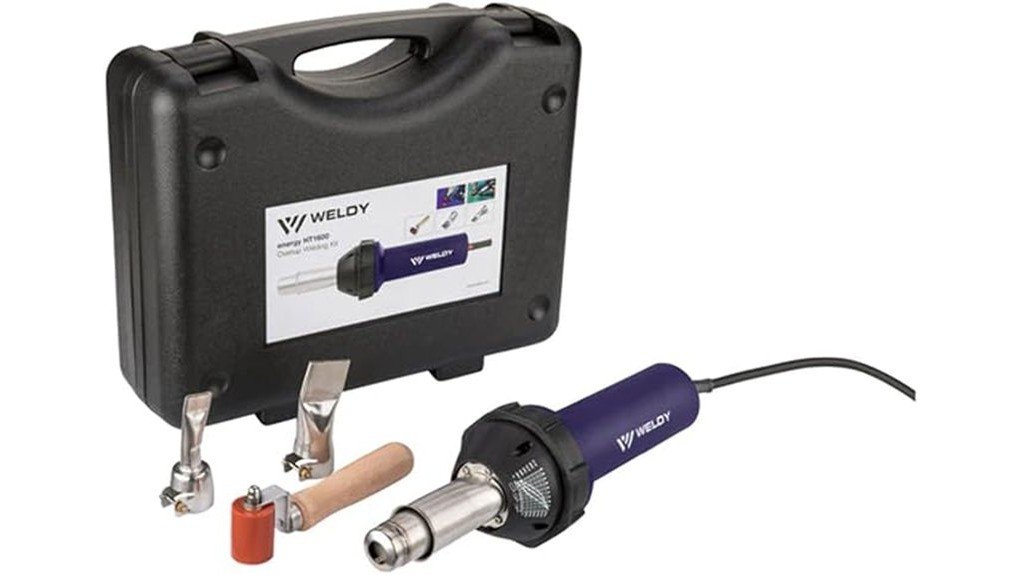
| Included accessories | 20 mm wide slot nozzle, 40 mm wide slot nozzle, 40 mm silicone pressure roller, spare carbon brushes, and storage case |
| Best use | Overlap welding, thermoplastic welding, vinyl work, tarpaulins, banners, industrial fabrics, heating, shrinking, and drying |
| Safety note | Use with ventilation, protective gear, supervision, and material-specific test welds. |
Key Takeaways
- The WELDY energy HT1600 is a 120V, 1600W hot air hand tool made for overlap welding and thermoplastic work.
- Its verified temperature range is 104°F to 1,292°F, which gives you room to tune heat for different materials and seam types.
- The kit includes two wide slot nozzles, a 40 mm silicone pressure roller, spare carbon brushes, and a storage case.
- It suits roofing detail work, tarpaulins, banners, vinyl, industrial fabrics, heating, shrinking, and drying tasks.
- You should skip it if you need a plug-and-play household heat gun or do not want to learn safe hot air welding technique.
What Is the WELDY energy HT1600?
The WELDY energy HT1600 is a compact hot air hand tool from WELDY. This version is sold as an overlap welding kit, so it is more specialized than a basic heat gun. You get the hot air tool, two slot nozzles, a pressure roller, spare carbon brushes, and a storage case.
The main purpose is controlled hot air application for compatible thermoplastic welding. You can use it for PVC and TPO-style membrane work when the material, nozzle, temperature, speed, and pressure all match the job. That makes it useful for roof repair detail work, vinyl seams, tarpaulin repair, banners, and industrial fabric joining.
The strongest reason to consider it is the mix of 1600W power, wide heat adjustment, and kit accessories. The tradeoff is that hot air welding depends heavily on your setup and technique, so clean seams require practice and test welds.
Who Should Buy It?
Best For
- Installers who need a 120V hot air kit for overlap seams and detail work.
- DIY users who already understand heat safety and want to practice thermoplastic welding.
- Fabric, banner, tarp, vinyl, and membrane repair users who need nozzles and a pressure roller in one kit.
Skip If
- You only need a low-cost heat gun for paint, crafts, or light adhesive removal.
- You need a digital temperature display or preset programs on the tool.
- You plan to use it near flammable materials, children, pets, or tight indoor spaces without proper controls.
Before You Buy: This is a hot air welding tool, not a simple household dryer or craft blower. Match the tool to your material, test your weld settings first, and never use it unattended or near hidden flammable materials.
Features and Specifications
The biggest feature is the 104°F to 1,292°F temperature range. That gives you flexibility for heating, shrinking, drying, and welding thermoplastics, but it also means you can damage material quickly if you use too much heat or move too slowly.
The 1600W motor and 240 l/min air volume help the tool deliver steady heat across longer work areas. For overlap welding, that matters because the seam needs heat and pressure at the same time. The included pressure roller helps you apply contact pressure while the heated material bonds.
Design and Handling
At 2.2 lb without the cord, the WELDY energy HT1600 stays manageable for hand use. The 13.6-inch body gives you enough length to keep your hand away from the hot nozzle area while still giving you control over the seam.
The tool has a compact, work-focused design rather than a consumer-style shape. That is a plus if you are following a seam or aiming heat into a specific overlap. It may feel less familiar if you are used to a basic pistol-grip heat gun.
Included Accessories
The kit includes a 20 mm wide slot nozzle and a 40 mm wide slot nozzle. The smaller nozzle helps when you need narrower heat placement, while the 40 mm nozzle makes more sense for wider overlap seams.
You also get a 40 mm silicone pressure roller. That is important because hot air welding does not work by heat alone. You need pressure at the right time to press the warmed layers together.
Heating Tube Protection and Serviceability
WELDY lists heating tube protection, carbon brush stop, and heating element protection as protective features for this model. Those details matter because a hot air tool runs under thermal stress. They do not remove the need for careful cooling, clean airflow, and safe use, but they help the tool fit more demanding work than a basic heat gun.
Performance and Applications
The WELDY energy HT1600 performs best when you treat it as a controlled welding tool. You set heat, choose the nozzle, move at a steady pace, and use the roller to press the overlap while the material is warm.
| Application | How You Use It | Buyer Benefit |
|---|---|---|
| Roof membrane detail work | Use hot air and pressure on compatible overlap seams. | Useful for repairs, edges, and smaller seam areas. |
| Industrial fabrics | Pair heat with a wide slot nozzle and roller pressure. | Creates cleaner joins than loose adhesive or tape on compatible materials. |
| Tarpaulins and banners | Heat the overlap and press the seam while it is still warm. | Helpful for repair, edge finishing, and custom sizing. |
| Vinyl and sheet goods | Use compatible nozzles and material-specific guidance. | Good for trained users who need controlled heat placement. |
| Heating, shrinking, and drying | Use lower or adjusted heat settings based on the material. | More versatile than a single-purpose welding tool. |
How It Performs in Real Use
For Overlap Welding
The 20 mm and 40 mm nozzles give you two practical heat widths. The 40 mm nozzle is the better match for wider seams, while the 20 mm nozzle gives you more control on edges, corners, and smaller repairs.
For Roofing Detail Work
This tool can help with compatible roofing membrane detail work, especially where a large automatic welder is too bulky. You still need to follow the membrane maker’s temperature and welding guidance because the wrong settings can weaken the seam.
For Tarpaulins, Banners, and Industrial Fabrics
The kit makes sense for users who repair or fabricate flexible thermoplastic materials. It gives you heat, nozzle control, and a roller in one package, so you do not need to source every accessory separately before starting.
For Long Work Sessions
The lightweight body helps reduce hand fatigue compared with heavier industrial tools. Still, the cord, nozzle heat, and required hand pressure mean you should plan breaks, keep the air intake clean, and cool the tool down properly after use.
How to Use It Correctly
Start with scrap material before working on the final piece. Make a test weld, let it cool, and check whether the bond holds without scorching, shrinking, or tearing the surface.
Choose the nozzle based on seam width. Use the 20 mm nozzle for narrower work and the 40 mm nozzle for wider overlap areas. Keep the nozzle moving so you do not overheat one spot.
Use the pressure roller immediately behind the heat zone. If you wait too long, the material may cool before the layers bond. If you press too early or use too much heat, you can deform the surface.
Pro Tip: Write down your test settings for each material, including temperature, nozzle size, travel speed, and pressure. That gives you a repeatable starting point the next time you weld the same material.
Safety and Maintenance Tips
Hot air tools can burn skin, ignite hidden flammable materials, and damage surfaces before you notice a flame. Wear heat-safe gloves, eye protection, and work clothing that will not melt near hot air.
Use the tool in a ventilated area and avoid breathing fumes from heated plastic, coatings, adhesives, paint, or unknown materials. Keep children, pets, loose paper, solvents, and flammable dust away from the work area.
Let the unit cool before changing nozzles or storing it. After each use, reduce the temperature, run cool air as directed by the manual, and give the nozzle and heating tube time to cool completely.
Inspect the air intake, nozzle, roller, cord, and heating tube area regularly. A clogged filter or damaged accessory can reduce performance and create safety problems. For repairs, use proper WELDY accessories and qualified service when needed.
Pros and Cons
Pros
- 1600W output gives you strong heat for welding, shrinking, drying, and repair work.
- Wide 104°F to 1,292°F temperature range supports many compatible thermoplastic tasks.
- Includes 20 mm and 40 mm slot nozzles, so you can match heat width to the seam.
- Comes with a 40 mm silicone pressure roller, which is useful for overlap welding.
- 2.2 lb tool weight keeps it manageable for hand use during detail work.
Cons
- Requires practice, test welds, and material-specific settings for good results.
- Not ideal if you only need a basic heat gun for light household tasks.
- No digital temperature display is listed for this non-D version.
- Hot nozzle and airflow create burn, fire, and fume risks if used carelessly.
Is It Worth the Price?
The WELDY energy HT1600 sits in the serious DIY to professional-use range rather than the basic household heat gun category. You get value from the kit if you actually need overlap welding accessories and a tool built for thermoplastic work.
It is worth considering if you work with tarpaulins, banners, vinyl, compatible membranes, or other heat-weldable plastic materials. The included nozzles, roller, carbon brushes, and case add practical value because they help you start with a more complete setup.
It is not the best fit if your main goal is occasional heat shrinking, craft heating, or paint softening. For those jobs, a cheaper heat gun may be enough and may feel easier for casual use.
How It Compares to Alternatives
Compared with premium plastic welding tools like the Leister TRIAC ST, the WELDY energy HT1600 is a more value-focused option for buyers who want a capable kit without moving into higher-end tool pricing. The Leister option may make more sense for full-time professionals who want a larger accessory ecosystem and higher-end shop support.
Compared with industrial heat guns like the Steinel HG 2620 E, the WELDY kit is more focused on overlap welding because it includes slot nozzles and a pressure roller. The Steinel-style tool may suit buyers who want digital controls or general heat-gun precision, while the WELDY makes more sense when seam work is the main job.
Frequently Asked Questions
What materials can the WELDY energy HT1600 work with?
It is made for thermoplastic welding, heating, shrinking, and drying. Common use cases include compatible PVC or TPO-style membranes, vinyl, banners, tarpaulins, and industrial fabrics, but you should always follow the material maker’s welding instructions.
Is this the same as a regular heat gun?
No. It is a hot air hand tool sold as an overlap welding kit, so it is more specialized than a basic heat gun. The included slot nozzles and silicone pressure roller make it better suited for seam work.
Can beginners use it for DIY projects?
Yes, but only if you treat it as a high-heat tool and practice first. Use scrap material, work in a ventilated area, keep flammables away, and learn how heat, speed, nozzle choice, and roller pressure affect the weld.
What comes in the overlap welding kit?
The kit includes the energy HT1600 heat gun, a 20 mm wide slot nozzle, a 40 mm wide slot nozzle, a 40 mm silicone pressure roller, spare carbon brushes, and a storage case. Check the seller’s current package details before ordering because marketplace bundles can vary.
What is the temperature range?
The verified temperature range is 104°F to 1,292°F, or 40°C to 700°C. The correct setting depends on your material, seam type, nozzle, speed, and pressure.
How heavy is the tool?
The tool weighs 2.2 lb without the 3 m cord. That is light enough for hand-guided seam work, but long jobs still require steady control and breaks.
Are replacement parts available?
WELDY lists spare carbon brushes in the kit, and the manual advises using original WELDY accessories and spare parts. For heating elements, brushes, nozzles, or repairs, check WELDY, the seller, or an authorized service point.
How does the warranty process work?
Warranty handling can depend on the seller, region, and proof of purchase. Keep your receipt, product packaging, and order details, then contact the seller or WELDY support for the current warranty and repair process.
The Bottom Line
The WELDY energy HT1600 is a smart buy if you need a 120V hot air welding kit with strong heat output, useful slot nozzles, and a pressure roller for compatible thermoplastic seam work. Skip it if you only need a casual heat gun or do not want to manage hot air welding safety, test settings, and material-specific technique.