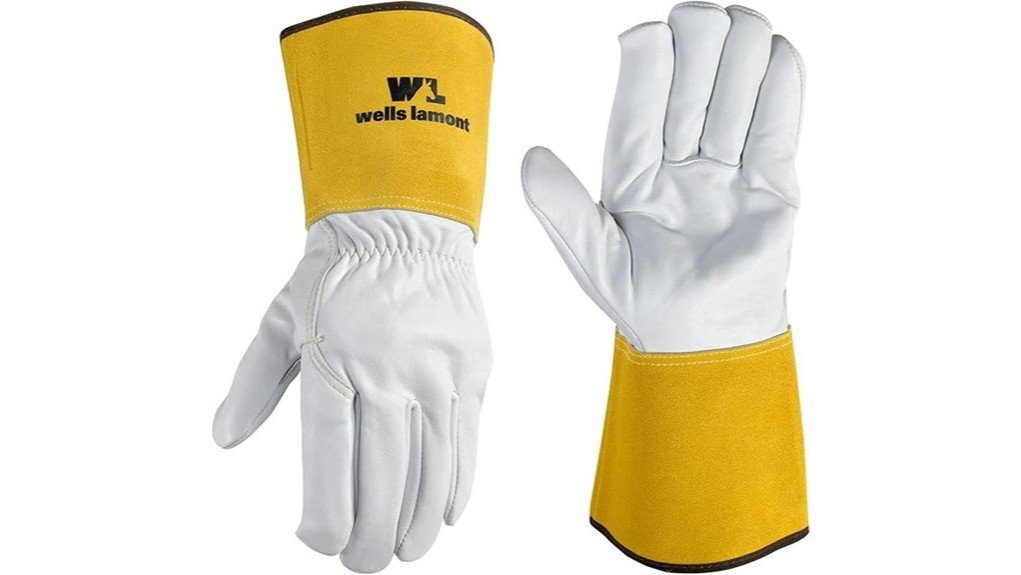
The Wells Lamont men’s TIG welding gloves are lightweight leather gloves with a slip-on design and elastic wrist, aimed at the finger control TIG welding needs. This Wells Lamont TIG gloves review is based on the Amazon listing. They are worth considering if you want a thin, flexible glove for low-amp TIG work, but they are not the best choice for heavy MIG or stick welding.
Wells Lamont TIG Gloves at a Glance
| Item | Per the listing |
|---|---|
| Material | Grain pigskin with split cowhide |
| Stitching | Kevlar thread, fully welted seams |
| Wrist | Elastic, slip-on design |
| Weight | Listed at about 4 ounces |
| Size | Check the available size and fit chart |
| Intended process | TIG |
Check Current Price on Amazon →
What They Are and Who They Suit
TIG welding uses a small arc and little spatter, so gloves can be thin. That helps you hold the torch lightly and feed the filler rod with your other hand. This model uses lighter leather and an elastic wrist to keep it simple.
It suits hobbyists and fabricators doing low-amp TIG on steel and stainless, along with light-duty tasks where feel matters. It is a poor choice for stick, flux-core or heavy MIG, where heat and spatter call for thicker gloves.
How to Check They Fit Your Setup
- Confirm the process. If you do TIG exclusively, thin gloves make sense. If you do all three, you may want a second pair.
- Check the size. TIG gloves should fit snugly. Extra length at the fingertips makes rod handling harder.
- Consider amperage. At higher amperage the radiant heat from TIG, especially on aluminum or thick steel, can come through thin leather. Rest your hand away from the work.
- Look at cuff length. An elastic wrist is comfortable, but long sleeves or a jacket are needed for forearm cover.
- Check the stitching. Kevlar thread resists burning better than cotton.
Pros and Limitations
Pros
- Light, thin construction for torch and rod control.
- Kevlar stitching and welted seams add durability.
- Elastic wrist for easy on and off.
Limitations
- Less heat and spatter protection than MIG or stick gloves.
- Short wrist can leave forearms exposed.
- Thin leather wears out faster with heavy use.
Use and Care Tips
- Don’t pick up hot work with thin gloves. Use pliers.
- Keep gloves dry; sweat and moisture make them stiff.
- Replace when fingertips scorch or thin out.
- Keep a heavier pair nearby for grinding and heavy-duty tasks.
Alternatives and Related Guides
- John Tillman TIG welders gloves for another TIG option.
- Tillman 48XL gloves for a MIG glove with a goatskin palm.
- Caiman split deerskin gloves for deerskin feel.
Frequently Asked Questions
Are Wells Lamont TIG gloves good for beginners?
They can be, because the lighter leather makes it easier to feel the torch, filler rod and workpiece than thick MIG gloves. Beginners should still check fit and keep the fingers snug, since loose fingertips make rod handling awkward and increase burn risk.
Can I use these gloves for MIG or stick welding?
For light MIG or stick work they may be acceptable, but TIG gloves are thinner and offer less heat and spatter protection. For higher-amp stick, MIG or flux-core, thicker cowhide gloves with insulated lining are the safer choice.
Why is pigskin used in TIG gloves?
Pigskin is a thin, flexible leather often used in work gloves for feel and breathability. Many TIG gloves use goatskin or deerskin instead. The listing says grain pigskin with split cowhide, so check the product page for exact construction before buying.
How do I care for leather TIG gloves?
Keep them dry, hand wash gently with mild soap only if needed, and air dry away from heat so the leather does not stiffen. Replace them when the fingertips thin or when stitching starts to open.
Conclusion
These Wells Lamont gloves are a lightweight choice for TIG, where feel matters more than heavy insulation. Check size and construction on the listing, and use thicker gloves for MIG or stick.