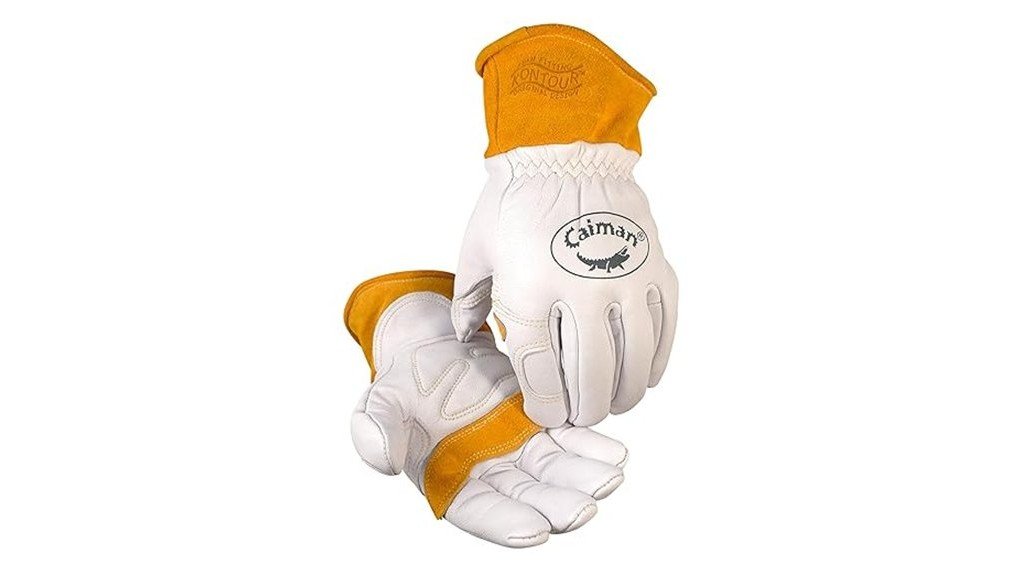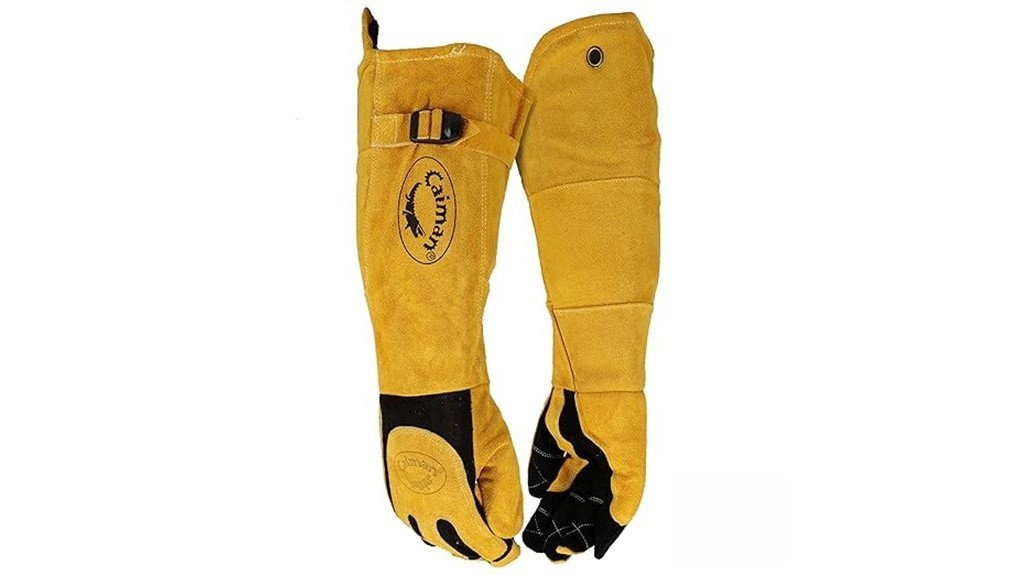
The Caiman premium split deerskin welding gloves are 21-inch MIG and stick gloves made from American deerskin, with a gold split cowhide heat shield patch and sock-lined foam and fleece insulation, per the Amazon listing. This Caiman deerskin welding gloves review is a buyer’s guide built from that listing. They are worth considering for stick and MIG welders who want flexible gloves with long cuffs, but they can run warm and are not TIG gloves. The Caiman split deerskin welding gloves offer comfort and heat protection for MIG and stick.
Caiman Split Deerskin Gloves at a Glance
| Item | Per the listing |
|---|---|
| Main leather | Split deerskin (listing says American deerskin) |
| Heat shield | Gold split cowhide patch |
| Lining | Sock-lined foam and fleece insulation |
| Fit | Pre-curved fingers; reinforced palm, cuff and lean-on patch |
| Length | 21 inches |
| Intended use | MIG and stick welding |
What Are the Caiman Deerskin Welding Gloves and Who Suits Them?
Deerskin is known for being soft and staying flexible after heat exposure. A split deerskin glove uses the underlying layer of the hide, which is typically more rugged than the soft grain side. Combined with a lined interior and reinforced areas, it aims to balance feel and protection.
They suit stick and MIG welders, fabricators and welders working outdoors or in cooler shops who want insulation and a long cuff. For TIG, thinner goatskin or deerskin gloves give better feel.
How to Check They Fit Your Setup
- Match the process. MIG and stick suit this glove. TIG usually needs thinner gloves.
- Check the size chart. Pre-curved fingers fit well when the size is right, and poorly when it isn’t.
- Consider the length. 21 inches is long. Make sure it works with your jacket and the spaces you weld in.
- Consider the temperature. Lined gloves are warm. Think about the climate you work in.
- Inspect the reinforcements. Reinforced palm and lean-on patches wear out first on gloves, so check they cover your wear areas.
Pros and Limitations
Pros
- Soft leather with pre-curved fingers for a natural grip.
- Heat shield patch and reinforcements where the glove takes the most abuse.
- Long cuff covers wrist and forearm.
Limitations
- Lined construction can be warm in summer.
- Bulkier than TIG gloves.
- No glove is fireproof. Limit contact with hot metal.
Use and Care Tips
- Keep gloves dry; wet leather conducts heat faster.
- Don’t hold hot pieces for long. Use pliers or tongs.
- Brush off grinding dust and let gloves dry naturally.
- Replace when the palm is thin or seams open.
Alternatives and Related Guides
- Caiman Leather Revolution gloves for another Caiman option.
- Tillman 48XL gloves for a goatskin MIG glove.
- Elkskin welding gloves for a 14-inch unlined option.
- Caiman 1878-5 split deerskin gloves for a similar 21-inch listing in X-Large.
Frequently Asked Questions
Are Caiman split deerskin gloves good for MIG and stick welding?
They are marketed as MIG and stick gloves. Split deerskin is soft and flexible, and the extra patches and lining add protection. For very high-amp stick welding or heavy overhead work, some welders prefer thicker cowhide, so match the glove to your amperage and position.
Will these gloves be too hot in summer?
The sock-lined foam and fleece insulation adds warmth and heat protection, which can feel hot in warm shops or summer. If you mostly weld in hot conditions, consider an unlined or lightly lined glove and take breaks to let your hands cool.
Why is the glove 21 inches long?
A long cuff covers the wrist and part of the forearm, which are exposed to spatter and heat during stick and overhead work. It can feel bulky in tight spaces. The listing gives the length, so check that it fits your workspace and jacket sleeves.
How do I care for deerskin welding gloves?
Brush off debris, hand wash gently with mild soap if needed and air dry away from heat so the leather stays soft. Avoid soaking or tumble drying, and replace the gloves when the palm thins, the stitching loosens or you feel heat quickly.
Conclusion
These Caiman gloves combine soft deerskin, a heat shield patch and a long lined cuff for MIG and stick welding. Check sizing, length and your climate before ordering.