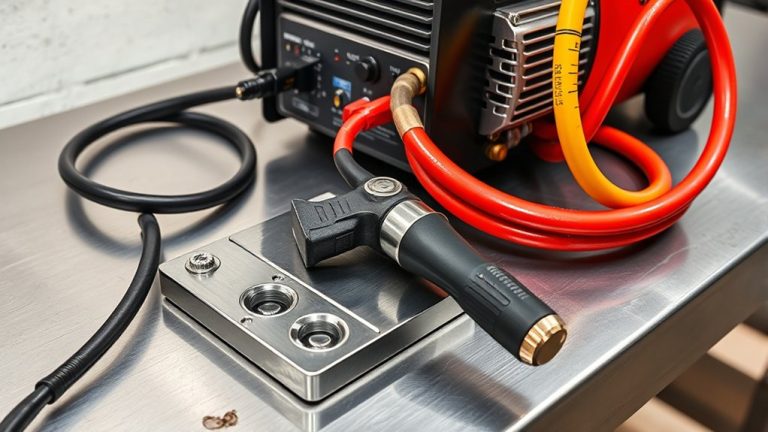
You might think operating a plasma cutter is straightforward, but several key elements guarantee precision and safety. A reliable power supply matching your cutter’s requirements is essential. Don’t overlook the importance of a compressor providing at least 80 psi and 3.5 SCFM for generating the plasma arc. Equally vital is wearing appropriate PPE like flame-resistant clothing and eye protection. High-quality consumables and proper ventilation also play a significant role in peak performance.
Essential Power Supply for Plasma Cutting
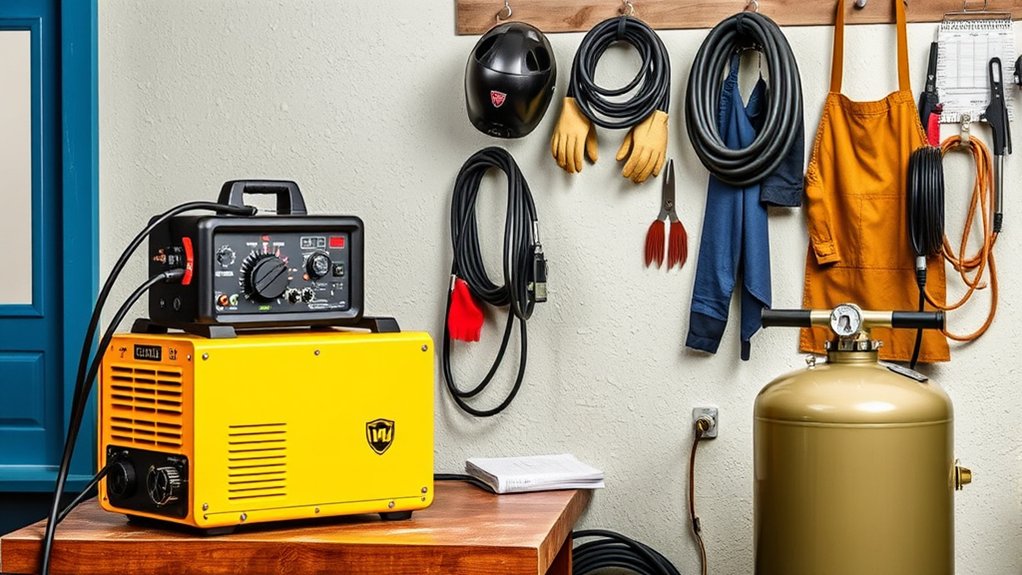
When it comes to plasma cutting, confirming you have the right power supply is essential for efficient operation. You need to be aware of the power requirements specific to your plasma cutter model.
Smaller units typically run on 110-120VAC and draw 15-20A. In contrast, professional-grade models often require 220-240VAC and may demand 30A or even 50A circuits.
Before starting, check your workspace’s voltage compatibility. Make certain your property is equipped with the appropriate power outlets to prevent operational issues.
Ensure your workspace is voltage-compatible and equipped with suitable power outlets to avoid operational issues.
Some newer plasma cutters offer dual voltage capabilities, allowing seamless adaptation between 110V and 220V, thereby providing flexibility if you’re working in different environments.
Properly matching the power supply to your cutter’s needs prevents damage and guarantees efficiency. Always verify the specific power requirements of your equipment to maintain peak performance and avoid potential setbacks during your plasma cutting projects.
Importance of Compressed Air in Plasma Cutting
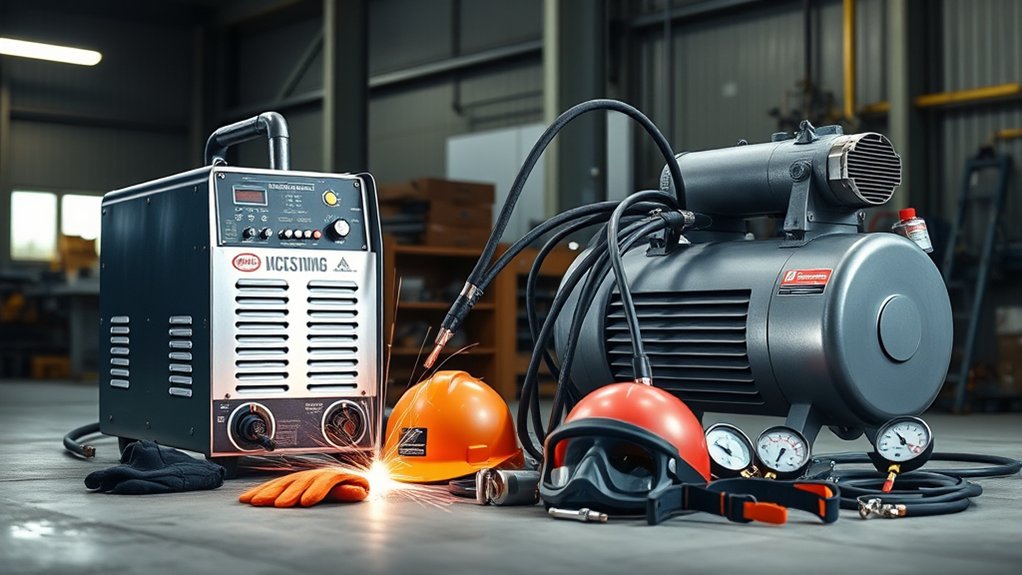
Compressed air plays an essential role in plasma cutting, acting as the medium that generates the plasma arc necessary for cutting through conductive materials.
To guarantee ideal performance, it’s critical to maintain proper air quality and pressure regulation. The minimum air pressure required for most plasma cutters is 80 psi, but some models may demand up to 115 psi. A flow capacity of at least 3.5 SCFM is necessary for smaller systems, while larger models might need 6.7 SCFM.
Clean and dry air is fundamental to prevent moisture and contaminants from impacting the cutting process and damaging consumables. This necessitates selecting and maintaining the right air compressor.
Necessary Personal Protective Equipment (PPE) for Plasma Cutting
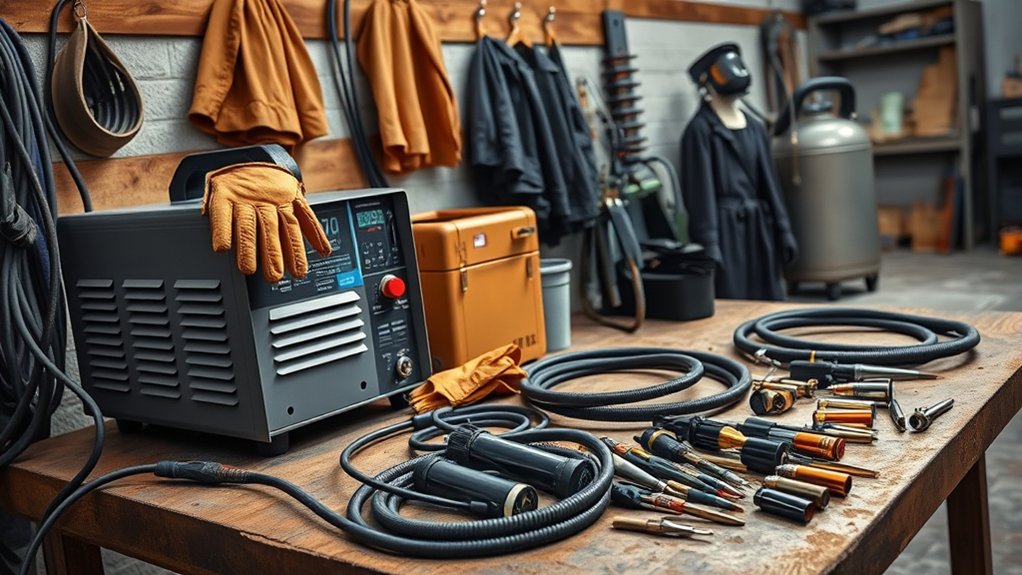
To guarantee safety while operating a plasma cutter, wearing the right personal protective equipment (PPE) is non-negotiable. Start with flame-resistant clothing like a long sleeve shirt and long pants to shield your body from sparks and heat.
Hand protection is essential—use leather gloves and welding gauntlets to prevent burns and cuts. For your eyes, equip yourself with an auto-darkening helmet set to shade 10 or 11, or opt for shade 5 goggles if your machine operates between 20-40 amps. This gear protects against harmful UV radiation and intense light.
A full face shield offers additional protection from flying debris, while ear plugs help mitigate noise exposure.
Adhering to safety standards, use flame-resistant aprons and chaps to further guard against sparks and molten metal. Investing in thorough protective gear not only guarantees compliance but greatly reduces the risk of injury, enhancing your overall work experience.
Key Accessories for Optimal Plasma Cutting Performance
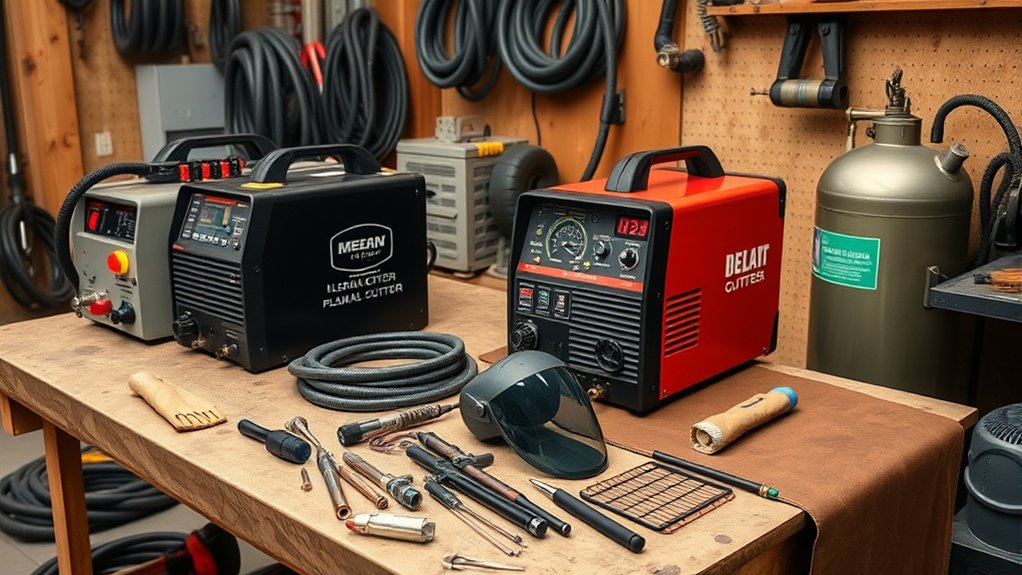
After confirming you’re equipped with the necessary personal protective equipment for plasma cutting, it’s important to focus on the key accessories that enhance performance and efficiency.
Start with high-quality consumables like electrodes and nozzles; regular replacement is vital for maintaining cutting efficiency and reducing operational costs. A reliable air compressor is essential, with a minimum requirement of 80 psi and a 3.5 SCFM flow capacity to guarantee peak cutter performance.
Incorporate maintenance tips into your routine by monitoring the condition of consumables and maintaining proper air quality. Protective gear such as flame-resistant gloves, aprons, and face shields should be used to protect against burns and sparks.
For eye protection, use an auto-darkening helmet with a shade setting of 10 or 11, and shade 5 goggles for machines operating between 20-40 amps. Confirm proper ventilation with fume extractors or fans to mitigate harmful fumes, enhancing safety and cutting techniques.
Frequently Asked Questions
How Does Plasma Cutting Compare to Other Cutting Methods in Terms of Precision?
You’ll find plasma cutting offers superior cutting accuracy compared to many methods, especially on varied metal thickness. It’s ideal for intricate designs, providing clean cuts with minimal kerf, making your work efficient and precise.
Can a Plasma Cutter Be Used on All Types of Metal?
You can’t use a plasma cutter on all metal types. Its cutting capabilities excel with conductive metals like steel, stainless steel, and aluminum. However, it’s ineffective on non-conductive materials such as wood, plastic, or glass.
What Are Common Troubleshooting Steps for Plasma Cutter Malfunctions?
Check the electrode for wear and replace it if necessary. Guarantee proper gas flow by inspecting hoses and regulators. Verify connections are tight. Clean or replace the nozzle if it’s clogged. Confirm correct voltage settings.
How Does Environmental Temperature Affect Plasma Cutter Performance?
Ironically, you’d think plasma cutters would love a bit of a chill. However, temperature fluctuations can reduce cutting efficiency. Keep your workspace stable to guarantee consistent performance and avoid unnecessary downtime from overheating or cold-related issues.
What Maintenance Is Required to Ensure a Plasma Cutter’s Longevity?
To guarantee your plasma cutter’s longevity, create a maintenance checklist. Regularly inspect consumables, clean the torch, and maintain a cleaning schedule for filters and vents. Keep connections tight and check for wear to prevent unexpected breakdowns.
Conclusion
At its core, when you’re gearing up for plasma cutting, make certain your power supply meets your cutter’s specifications, typically between 110-240VAC. Don’t overlook the compressor—80 psi and 3.5 SCFM are your magic numbers. Remember, safety first! Equip yourself with flame-resistant clothing, leather gloves, and eye protection. Quality consumables and ventilation aren’t just extras—they’re essentials. Like a conductor orchestrating a symphony, each component must harmonize to achieve seamless and safe cutting performance.