Kickback on an angle grinder is a dangerous reaction where the wheel binds, causing the tool to jerk violently. This often leads to loss of control and severe injuries. Common causes include dull wheels, incorrect disc types, and improper mounting. To prevent kickback, make certain you use the correct wheel, secure the workpiece, and maintain a solid grip. Proper tool maintenance and awareness of techniques can further enhance safety. There’s much more to learn about effectively managing these risks.
What Is Kickback on an Angle Grinder and Why Does It Happen?
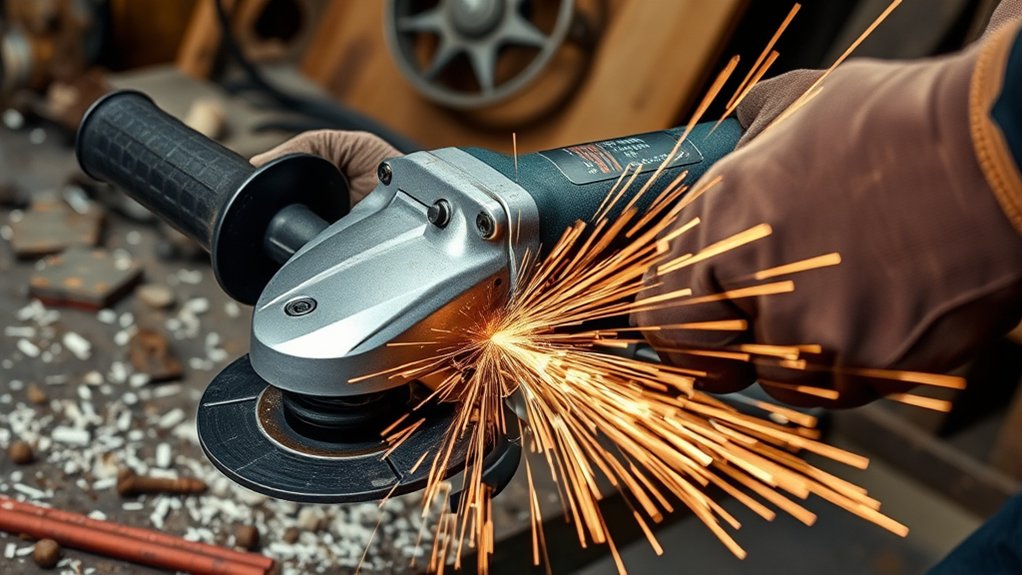
Kickback on an angle grinder is a dangerous phenomenon that occurs when the cutting disc unexpectedly catches on the material you’re working with, causing the tool to jerk away from you. This sudden movement can lead to a loss of control, which often results in severe injuries. Kickback incidents are more likely when you use dull wheels or an incorrect disc, increasing the risk of the disc jamming. To prevent this, guarantee proper mounting of the discs, utilizing the right flange and locking nut. A well-mounted disc considerably reduces kickback risks. Additionally, maintain a balanced stance and use both hands to operate the grinder, enhancing your control over the tool. This awareness not only empowers your operation but also protects you from potential injuries. By understanding the causes of kickback, you can take the necessary precautions to liberate yourself from dangers associated with angle grinding.
Identifying and Avoiding Common Causes of Kickback
Understanding the various factors that contribute to kickback is vital for safe angle grinding. To prevent kickback, guarantee you’re using the correct type of wheel, properly mounted and suited for the material you’re cutting. Dull or damaged wheels greatly increase the risk of wheel jams, leading to a sudden loss of control. Always secure your workpiece firmly; a loose workpiece can shift unexpectedly, causing dangerous kickbacks. Anticipate any material movement during your cutting process to avoid potential wheel jams. Regular training on proper wheel mounting techniques and safe operating procedures is essential for all users, fostering risk mitigation. Adhering to these practices can greatly reduce the likelihood of kickback incidents, keeping your grinding experience safe and effective. Remember, safety starts with awareness and preparation.
How Grip and Stance Influence Kickback Risk
When operating an angle grinder, your grip and stance play an essential role in minimizing kickback risk. A solid grip using both hands enhances stability, making it easier to maintain control and decreasing the chances of kickback when the wheel encounters material. Positioning your body at a safe distance and angle from the cutting area allows you to react swiftly to unexpected movements. Keeping your feet shoulder-width apart and slightly bending your knees creates a stable base, which mitigates the impact of kickback and helps you maintain control of the tool. In addition, employing proper grip techniques, such as using the auxiliary handle, can greatly enhance your control. By prioritizing grip and stance, you’re not just ensuring your safety but also actively preventing injuries that could arise from unpredictable kickback situations. Always remember, your position matters just as much as the tool you wield.
Effective Techniques to Prevent Kickback When Grinding
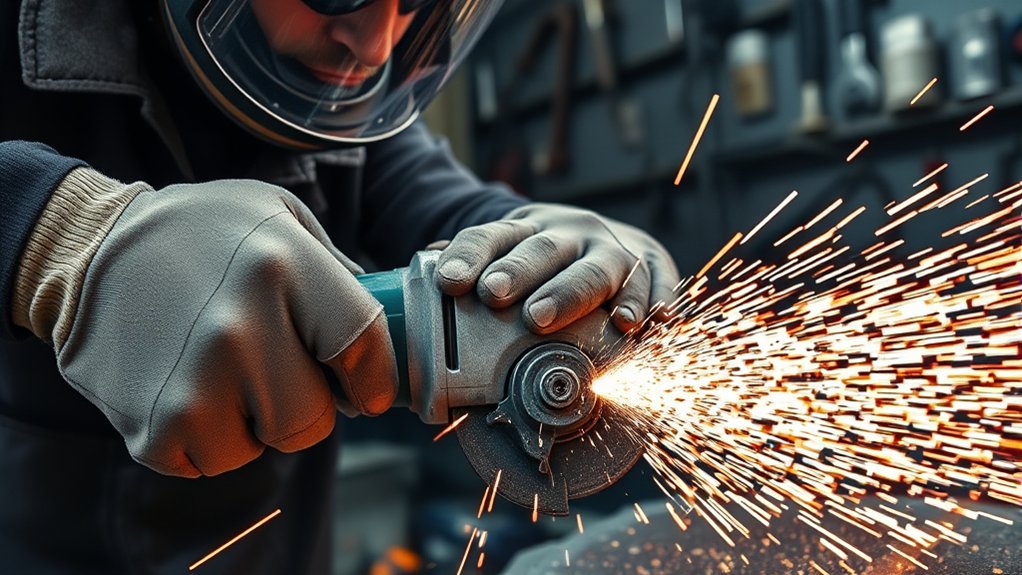
To effectively prevent kickback when grinding, you need to choose the right wheel for your angle grinder. This means selecting a disc that matches the tool’s specifications and maintaining controlled pressure throughout your work. By allowing the grinder to do the work rather than forcing it, you can greatly reduce the risk of kickback.
Proper Wheel Selection
Choosing the right grinding wheel is essential for minimizing the risk of kickback while using an angle grinder. Proper wheel selection involves opting for hard discs instead of fiber discs, as they deliver superior cutting capabilities. Always verify the grinding wheel is compatible with your angle grinder’s specifications, particularly the maximum speed rating, to prevent dangerous accidents. Regularly inspect your grinding wheels for cracks or defects; damaged wheels are prone to jamming and kickback incidents. Additionally, maintaining an appropriate angle of 15 to 30 degrees ensures the wheel doesn’t dig into materials. Finally, using a softer touch while allowing the grinder to work at its own pace minimizes the likelihood of the wheel catching, further reducing kickback risks.
Maintain Controlled Pressure
Proper wheel selection lays the groundwork for safe angle grinder operation, but maintaining controlled pressure is equally important in preventing kickback. By applying minimal pressure, you allow the grinding disc to cut efficiently without jamming, thereby reducing the risk of sudden tool movement. Keeping the disc at a 15 to 30-degree angle to the workpiece promotes smoother cutting, further minimizing kickback incidents. Additionally, using both hands to stabilize the grinder enhances your control. Regularly inspect the grinding disc for wear; a sharp disc guarantees consistent cutting performance.
| Technique | Description | Benefits |
|---|---|---|
| Minimal Pressure | Apply light pressure while cutting | Reduces kickback risk |
| 15-30 Degree Angle | Maintain proper angle during use | Smoother cutting |
| Use Both Hands | Stabilize the tool with both hands | Enhances control |
| Regular Inspections | Check disc sharpness and condition | Maintains performance |
Kickback Risks From Incorrect Disc Types
When you use the wrong type of disc on an angle grinder, the risk of kickback increases considerably, especially with discs like fiber types that can easily jam in the material. Using an incorrect type of disc not only raises the chances of kickback but also leads to potential disc breakage. Dull or damaged discs require more force, which can cause jamming and a subsequent loss of control.
It’s vital to guarantee compatibility between the grinder and the disc type; exceeding the speed or specifications can exacerbate risks. Proper training in selecting and mounting the correct disc type is essential to minimize kickback risks. Knowing the potential dangers of using inappropriate discs helps you implement necessary safety measures. By prioritizing the right disc choice and maintaining awareness, you can liberate yourself from the hazards associated with angle grinder kickback.
Responding to Kickback Incidents
When a kickback incident occurs, your first step is to instantly release the trigger to stop the grinder and regain control. After ensuring your safety and that of others, assess any injuries before you consider resuming work. Finally, it’s essential to report and document the incident to improve safety protocols and prevent future occurrences.
Immediate Safety Measures
To effectively respond to a kickback incident with an angle grinder, you should immediately release the trigger to halt the tool’s operation and regain control. Next, move away from the grinder and assess the situation to confirm no one’s injured and the work area is clear. If the grinder remains active, maintain a clear stance to prevent falling or losing balance. After confirming safety, inspect the tool for any visible damage or defects, as a kickback may signal deeper issues. It’s essential to report any kickback incidents to a supervisor or safety officer. This step allows for thorough analysis and helps implement safety measures to prevent similar incidents in future operations.
Report and Document Incident
Reporting and documenting a kickback incident with an angle grinder is essential for ensuring safety and preventing future occurrences. First, stop the tool and assess the situation for any injuries or equipment damage. Next, document the incident by noting the time, location, type of material being cut, and any observed tool malfunctions. If there are witnesses, collect their statements to add context. It’s vital to report the incident to a supervisor or safety officer, enabling a proper investigation and the implementation of necessary corrective actions. Additionally, maintain a log of kickback incidents and responses, as this helps identify patterns and refine safety protocols for future operations, ultimately promoting a safer work environment.
Essential Safety Gear for Preventing Kickback
While working with an angle grinder, wearing the right personal protective equipment (PPE) is vital for minimizing the risk of kickback injuries. Start with safety goggles to shield your eyes from flying debris. A face shield adds another layer of protection. Gloves are necessary to grip the tool securely while preventing cuts. Don’t forget to wear a safety helmet; it can protect your head from impacts during unexpected kickback events. Anti-slip safety boots are essential to stabilize your footing, helping you maintain balance when the grinder unexpectedly jerks. Additionally, using a dust mask or respirator safeguards your respiratory system from harmful particles ejected during kickback. Always verify your protective equipment fits properly and is in good condition, as this maximizes safety. By employing the right gear, you greatly reduce the risk of injuries and empower yourself to work confidently with an angle grinder.
Importance of Proper Tool Maintenance in Reducing Kickback
Proper tool maintenance is essential for reducing the risk of kickback when using an angle grinder, as neglecting this aspect can lead to dangerous situations. Regular inspection of your angle grinder and its components—like the disc, guard, and handles—ensures they’re in good condition and properly mounted. Replace worn discs promptly; dull or improperly sized discs are more likely to jam, increasing kickback risks. Always use the correct type of disc and adhere to maximum speed limits specified by the manufacturer. Conduct routine maintenance checks to secure connections and inspect the power cord, preventing unexpected malfunctions. Additionally, maintain a clean work area free from debris and obstacles. A cluttered environment can hinder proper tool handling and stability, further increasing the likelihood of kickback. By implementing these angle grinder safety measures, you actively reduce kickback risks and enhance your overall safety during operation.
Frequently Asked Questions
What Causes Angle Grinder Kickback?
Angle grinder kickback occurs due to improper handling, operator mistakes, and inadequate tool maintenance. Factors like speed settings, blade selection, material resistance, and lack of safety gear amplify risks, undermining user experience and safety features.
How to Prevent Kick Back?
To prevent kickback, use safety gear, maintain a proper grip, and guarantee tool maintenance. Operate at slow speed, secure the workpiece, avoid pressure, and practice handle training and awareness drills while using guards effectively.
What Is a Kick Back Grinder?
A kickback grinder refers to an angle grinder that, if misused, can violently recoil, posing serious risks. Prioritize grinder safety with proper grip, disc selection, user training, and emergency response to guarantee effective kickback prevention.
What Is the Most Common Angle Grinder Injury?
The most common angle grinder injury is severe lacerations from kickback. To prevent power tool accidents, guarantee you use proper safety gear, including eye and hand protection, undergo operator training, and maintain your tools regularly.
Conclusion
In summary, understanding kickback on an angle grinder is vital for your safety and efficiency. By identifying common causes and adopting effective prevention techniques, you can greatly reduce the risks involved. Remember, maintaining proper grip and stance, using the right discs, and donning essential safety gear can make the difference between a smooth project and a disaster of epic proportions. Prioritizing tool maintenance not only enhances performance but also keeps you safe in the long run.