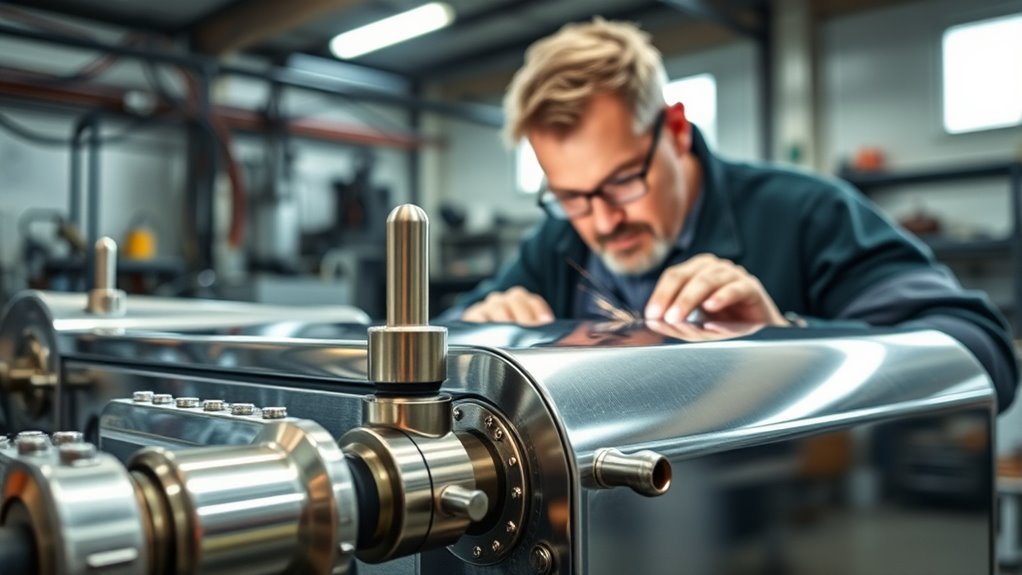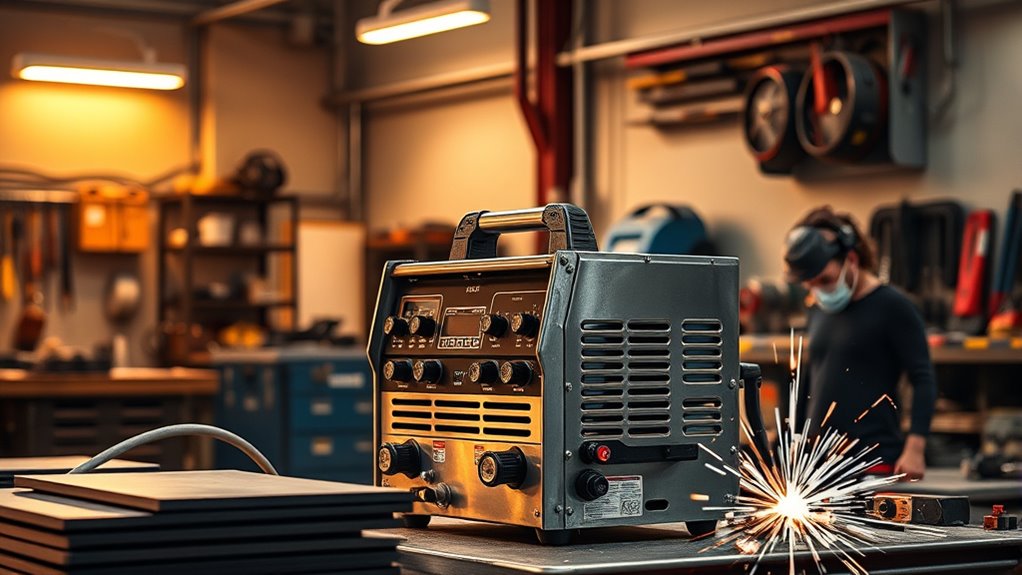
Choosing between TIG welding and plasma welding can change the strength, speed, cost, and look of your finished weld. A stainless steel bicycle frame, for example, needs clean welds and tight heat control, while a thicker production part may need deeper penetration and faster travel speed. This guide compares how both processes work, where each one fits best, and how to choose the right method for your project.
Quick Answer
Tungsten inert gas (TIG) welding gives you the best control for thin metals, detailed joints, and clean visible welds. Plasma welding uses a tighter, hotter arc, so it suits thicker materials, deeper penetration, and faster production work. Choose TIG for precision and appearance. Choose plasma welding for speed, depth, and repeatable industrial output.
Key Takeaways
- TIG welding offers finer heat control, which helps you weld thin stainless steel, aluminum, and copper.
- Plasma welding creates a constricted arc, which gives you deeper penetration and faster travel speed.
- TIG equipment usually costs less and uses a simpler gas setup than plasma welding equipment.
- Plasma welding works well for automated and high-volume production where repeatability matters.
- Your best choice depends on material thickness, weld appearance, production speed, and operator skill.
Evolution of Welding Technologies
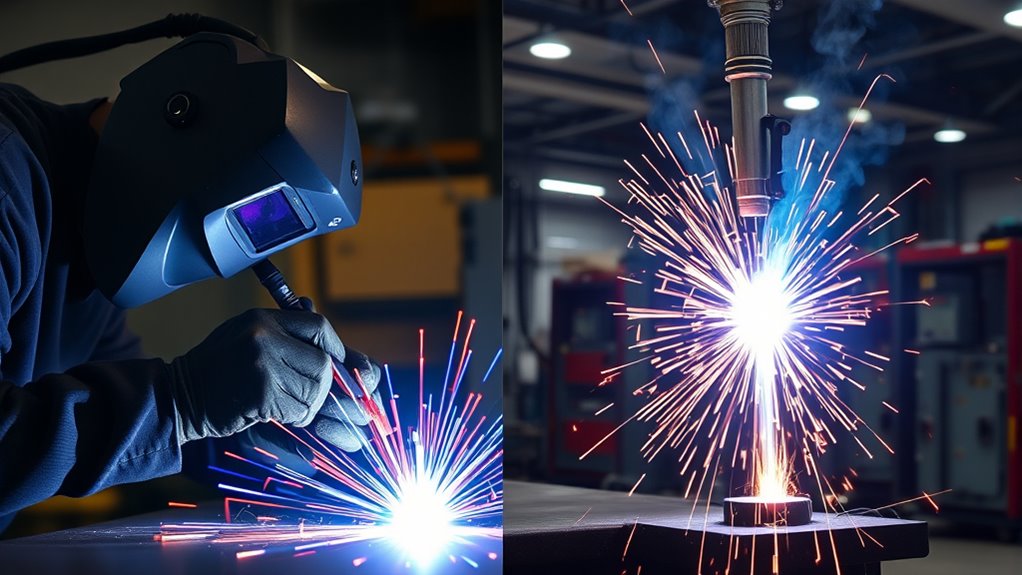
Welding methods have changed from basic flame-based joining to precise electric arc processes. TIG and plasma welding both grew from that move toward better control, cleaner welds, and stronger results.
Early welding relied on open flames and simple heat control. Electric arc welding gave welders a more stable heat source, which helped them join thin metals and high-value parts with more accuracy.
TIG welding became popular because it can create clean welds on aluminum, stainless steel, and other metals that need careful heat control. Plasma welding took arc control further by forcing the arc through a small nozzle, which creates a narrow and intense heat source.
Automation has also changed how shops use both methods. You can still use TIG by hand for detailed work, while plasma welding often fits automated cells and repeat production.
Core Principles of TIG Welding

In TIG welding, you use a non-consumable tungsten electrode to create an electric arc. The arc melts the base metal and forms a weld pool.
You use an inert shielding gas, usually argon or helium, to protect the electrode and weld pool from air. That shielding helps prevent oxidation, porosity, and other weld defects.
TIG welding gives you strong control over heat input. That control makes it a top choice for high-precision welds on thin aluminum, stainless steel, and other metals.
Non-Consumable Tungsten Electrode
TIG welding uses a non-consumable tungsten electrode to create a stable arc. The electrode does not melt into the weld during normal use.
Different tungsten types suit different current settings and materials. Pure tungsten often works with alternating current (AC), while thoriated, ceriated, or lanthanated tungsten may work well with direct current (DC), depending on the job and shop standards.
Tungsten has a very high melting point, so it keeps its shape under intense heat. You still need to grind and maintain the electrode tip because tip shape affects arc focus, arc stability, and weld quality.
Inert Gas Shielding
Inert gas shielding plays a key role in TIG welding. Argon, helium, or a blend of the two protects the weld pool and tungsten electrode from oxygen and nitrogen in the air.
Clean shielding helps reduce oxidation and porosity. You also need the right gas flow because too little flow leaves the weld exposed, while too much flow can pull air into the shielding stream.
| Inert Gas Type | Main Function | Why It Matters |
|---|---|---|
| Argon | Shields the weld pool | Supports stable arcs and clean welds |
| Helium | Raises heat input | Helps on thicker sections or heat-hungry metals |
| Mixed gases | Balances arc behavior | Adapts the process to specific materials |
High-Precision Welds
When you need high-precision welds, TIG welding gives you excellent control. You can adjust heat, travel speed, filler metal, and arc length with care.
This control helps you weld thin stainless steel, aluminum, and other materials that can warp or burn through. TIG also creates a smooth bead with low spatter when you use the right settings.
The slower travel speed can help on delicate work. It gives you time to place filler metal with accuracy and keep the weld pool small.
Understanding Plasma Welding

Plasma welding, also called plasma arc welding (PAW), uses a tungsten electrode and a constricting nozzle to create a focused plasma arc. The nozzle narrows the arc, which raises arc energy density and improves penetration.
This process can weld thin materials with care, but it also handles thicker sections better than TIG in many industrial settings. You can use different modes, such as microplasma welding for delicate parts and keyhole welding for deeper penetration.
Plasma welding often uses two gas flows. One gas forms the plasma arc, while the other shields the weld from air.
| Feature | Benefit | Common Materials |
|---|---|---|
| Constricted arc | Improves penetration and focus | Stainless steel and aluminum |
| Operating modes | Fits delicate and heavy work | Electronics to steel plates |
| Dual gas setup | Supports heat and shielding control | Many conductive metals |
Plasma welding can give you speed and depth, but it needs more complex equipment. It also requires trained operators who understand arc settings, gas flow, and torch setup.
TIG vs Plasma Welding: Quick Verdict
Choose TIG welding if you need clean, visible welds on thin metals or detailed parts. It suits custom fabrication, repair work, bicycle frames, aerospace parts, and medical components.
Choose plasma welding if you need deeper penetration, faster welding, or repeatable production on thicker materials. It suits automated manufacturing, structural parts, and high-volume runs where speed and consistency matter.
| Factor | TIG Welding | Plasma Welding |
|---|---|---|
| Best use | Precision and appearance | Speed and penetration |
| Arc shape | Broader arc | Constricted arc |
| Gas setup | One shielding gas | Plasma gas plus shielding gas |
| Equipment cost | Usually lower | Usually higher |
| Skill need | High manual skill | High setup and process skill |
| Production fit | Custom or low-volume work | Automated or high-volume work |
Key Differences in Equipment Setup

TIG and plasma welding use similar basic arc principles, but their equipment setups differ in key ways. The torch design, gas system, power supply, and cooling needs affect cost and ease of use.
TIG uses a simpler torch and a shielding gas around the electrode. Plasma welding uses a constricted nozzle, plasma gas, and shielding gas to create a more focused arc.
Products Worth Considering

Complete TIG Torch Kit - 71pcs Tig Welding Torch accessories (consumables) kit. This set includes all the essential TIG torch accessories and consumables, so you can get started on your welding projects right away.

Complete 123-Piece Set:All necessary TIG torch accessories and consumables for WP-17, WP-18, and WP-26 torches.

SÜA Line of 3-piece Water-Cooled TIG Torches - Available Amperage: 250 Amp (20 Series) and 350 Amp (18 Series) - Available Cable Length: 12.5 or 25 feet. Select your option from the menu.
Electrode and Nozzle Design
In TIG welding, a non-consumable tungsten electrode sits inside a torch cup. The cup directs shielding gas around the electrode and weld pool.
This setup creates a broader heat source than plasma welding. You can control the weld puddle by adjusting arc length, torch angle, amperage, and travel speed.
Plasma welding places the tungsten electrode inside a constricted nozzle. The nozzle squeezes the arc into a narrow plasma jet, which increases heat concentration and penetration.
Gas Supply Management
TIG welding usually uses one inert shielding gas, often argon. You control gas flow with a regulator and flow meter, then adjust it for material, cup size, and weld position.
Plasma welding uses a more complex gas setup. One gas creates the plasma arc, while another shields the weld pool.
You need careful gas control in plasma welding because flow affects arc shape, penetration, and weld quality. Small changes in gas flow can change how the plasma arc behaves.
Current Control Precision
TIG welding lets you make fine current changes, which helps on thin metal. Many TIG setups also use foot pedals or fingertip controls so you can adjust heat while welding.
Plasma welding also needs precise current control, but the constricted arc changes how heat enters the metal. You must balance current, gas flow, torch height, and travel speed.
Plasma welding often uses higher voltage and more complex equipment than TIG. Many setups also need water-cooled torches to manage heat during longer or higher-power welds.
Comparing Welding Process Parameters
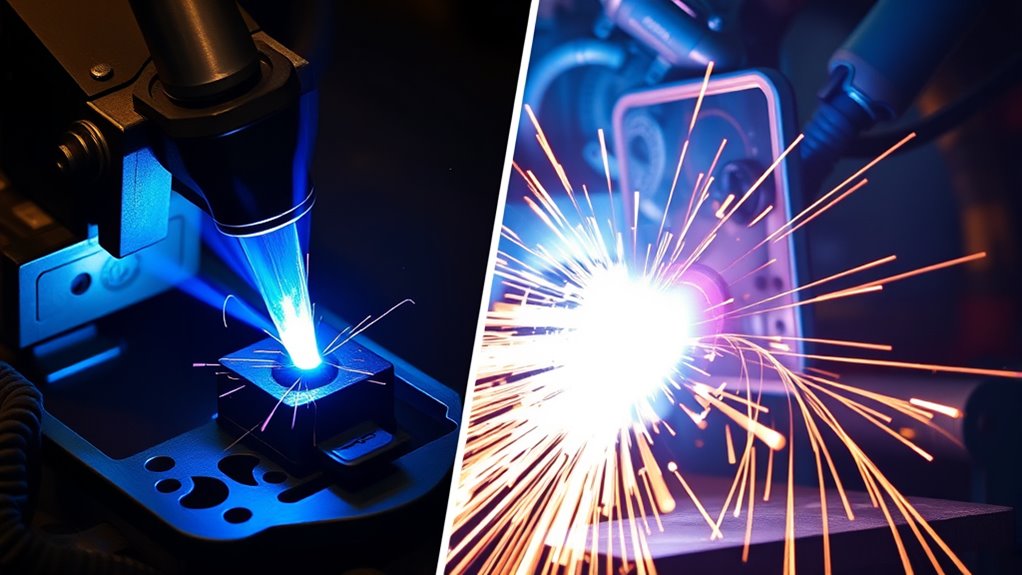
Process parameters shape weld quality in both methods. You need to match current, voltage, gas flow, and travel speed to the material and joint design.
- Current range: TIG welding often works across low to moderate amperage ranges, which helps on thin metals. Plasma welding can use higher power for thicker materials and deeper penetration.
- Open circuit voltage: TIG systems often use lower open circuit voltage than plasma welding systems. Plasma welding needs enough voltage to sustain a constricted arc.
- Arc stability and heat distribution: Plasma welding creates a narrow, stable arc that can reduce the heat-affected zone. TIG spreads heat more broadly, which can help with manual control but may add distortion risk.
TIG welding needs careful adjustment of gas flow, arc length, and travel speed. Plasma welding needs the same care, plus tighter control of nozzle condition and plasma gas flow.
These differences make each process stronger for different tasks. TIG favors fine control, while plasma welding favors focused energy and repeatability.
Material Compatibility and Applications
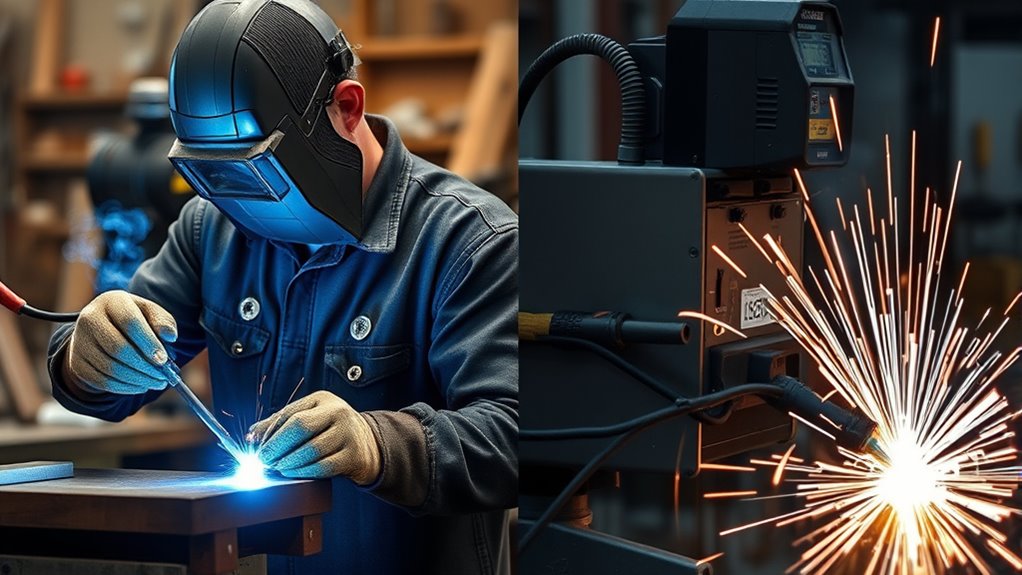
TIG welding works well with aluminum, stainless steel, copper, nickel alloys, titanium, and many other metals. Its precision makes it useful for thin sections, intricate joints, and visible welds.
You’ll often see TIG welding in aerospace, automotive, motorsports, bicycle fabrication, food-grade stainless work, and medical device manufacturing. It can create clean, low-spatter welds when you use proper setup and technique.
Plasma welding also works on many conductive metals, including stainless steel and aluminum. Its deep, narrow weld profile can help on thicker sections and repeat production parts.
You’ll find plasma welding in industrial manufacturing where speed and consistency matter. It can support automated systems that produce many similar welds with tight process control.
Choose TIG Welding If…
Choose TIG welding if your job needs a clean bead, low spatter, and tight heat control. It suits thin sheet metal, tubing, and joints where appearance matters.
TIG also makes sense when you need manual flexibility. A skilled operator can adjust filler metal, travel speed, and heat input during the weld.
- You weld thin stainless steel, aluminum, copper, or titanium.
- You need visible welds that look clean and precise.
- You work on custom parts, repairs, prototypes, or low-volume jobs.
- You want simpler equipment than a plasma welding setup.
Choose Plasma Welding If…
Choose plasma welding when your project needs speed, deeper penetration, or repeatable results. It can help reduce weld time in production environments.
Plasma welding also suits work where a narrow heat-affected zone matters. The focused arc can reduce distortion when you set up the process correctly.
- You weld thicker materials that need deeper fusion.
- You run repeat parts in a production setting.
- You plan to automate the welding process.
- You can support higher equipment cost and operator training.
Assessing Weld Quality and Precision

Weld quality depends on preparation, settings, shielding, and operator skill. TIG and plasma welding both need clean base metal and strong process control.
TIG welding excels at smooth, precise welds on thin metals. It can reduce spatter and give you a neat bead, especially on stainless steel and aluminum.
Plasma welding gives you deeper penetration and a narrow weld profile. That can improve weld consistency on thicker materials when the setup stays stable.
- Control the process: Match current, travel speed, torch angle, and gas flow to the material.
- Inspect the weld: Use visual inspection first, then use other tests when the part requires it.
- Match the method to the job: Choose the process based on thickness, strength needs, finish, and production volume.
Cost and Productivity Considerations
TIG welding usually costs less to set up because it uses simpler equipment. It can cost more in labor when the work needs many long welds because travel speed stays slower.
Plasma welding often costs more upfront due to the power supply, torch, gas system, and cooling needs. It can pay off in production when faster travel speed and automation reduce labor time.
Your total cost depends on more than equipment price. Consider operator training, gas use, maintenance, scrap rates, and inspection needs before you choose a process.
Products Worth Considering

Crafted with precision, our steel plates are laser-cut, offering unparalleled edge smoothness and dimensional accuracy compared to stamped and sheared parts.

Set includes:3pcs Back cup, 20 collets, 8pcs collet body, 25pcs Alumina gas cup/ nozzle, 2 gasket

Purging Kit: Includes 7 pairs of purging plugs covering sizes from 0.9" to 4.0" (3.5"-4.0", 3.0"-3.5", 2.5"-3.0", 2.0"-2.5", 1.5"-2.0", 1.2"-1.5", 0.9"-1.2"). Yellow and purple pieces form standard pairs. Comes with a 5-meter heavy-duty welding hose and a durable storage case for easy carry.
Safety Risks to Consider
Both TIG and plasma welding create intense arc light, heat, fumes, and electrical hazards. You need proper personal protective equipment, ventilation, and safe work habits.
Warning: Always protect your eyes and skin from arc radiation, and use ventilation that matches the metal and filler you weld.
TIG welding can create ozone and metal fumes, especially on some alloys or coated materials. Plasma welding can produce more intense heat and light, so you should treat shielding, ventilation, and fire control with extra care.
Operator Skill and Training Requirements

Both TIG and plasma welding demand skill, practice, and a strong understanding of settings. You need to know how heat, gas flow, travel speed, and joint design affect the weld.
TIG welding requires steady hand control and careful filler metal placement. You also need to manage the arc length and heat input, especially on thin metals.
Plasma welding requires strong process setup skills. You must adjust current, plasma gas, shielding gas, torch height, and travel speed to keep the arc stable.
Certification needs depend on your industry, material, code, and employer. Aerospace, pressure vessel, structural, and medical work may require specific qualifications and documented procedures.
Industrial Applications and Use Cases

TIG and plasma welding serve different needs across many industries. TIG supports detailed work where accuracy and finish matter, while plasma welding supports speed and repeatability.
- Aerospace: TIG welding helps produce clean welds on lightweight metals and high-value parts.
- Automotive: Plasma welding can help join thicker production parts with faster cycle times.
- Medical devices and electronics: TIG supports clean, precise welds, while microplasma welding can join small parts with low distortion.
Both methods can produce high-quality results when you match the process to the application. The wrong choice can raise costs, slow production, or create weld defects.
Frequently Asked Questions
What Safety Precautions Are Specific to TIG and Plasma Welding?
Wear welding gloves, flame-resistant clothing, and a helmet with the right shade lens for the arc. Use proper ventilation to reduce fume exposure, and keep flammable materials away from the work area.
How Do TIG and Plasma Welding Affect the Environment?
TIG welding often uses less power than plasma welding for light work, but the impact depends on material, machine settings, and job length. Plasma welding may use more energy at higher power levels, but faster travel speed can offset some of that in production.
Are There Specific Certifications Required for Each Welding Type?
Certification requirements depend on your industry, welding code, material, and employer. TIG qualifications often focus on manual skill and weld quality, while plasma welding qualifications may also test setup control and repeatability.
Can TIG and Plasma Welding Be Used on Similar Material Thicknesses?
Yes, you can use both methods on some similar thickness ranges. TIG often gives better manual control on thin materials, while plasma welding often performs better when you need deeper penetration or faster travel speed.
How Do Maintenance Requirements Differ for TIG and Plasma Welding Equipment?
TIG equipment usually needs simpler upkeep, such as checking cups, collets, gas lines, and tungsten condition. Plasma welding equipment needs more attention to nozzle condition, gas flow, cooling systems, and torch parts.
Conclusion
The best choice comes down to the kind of weld you need most: precise and clean, or fast and deeply fused. Use TIG welding when thin materials, visible beads, and fine control matter. Use plasma welding when you need speed, penetration, and repeatable production results. Before you commit, test both methods on scrap material that matches your actual job.