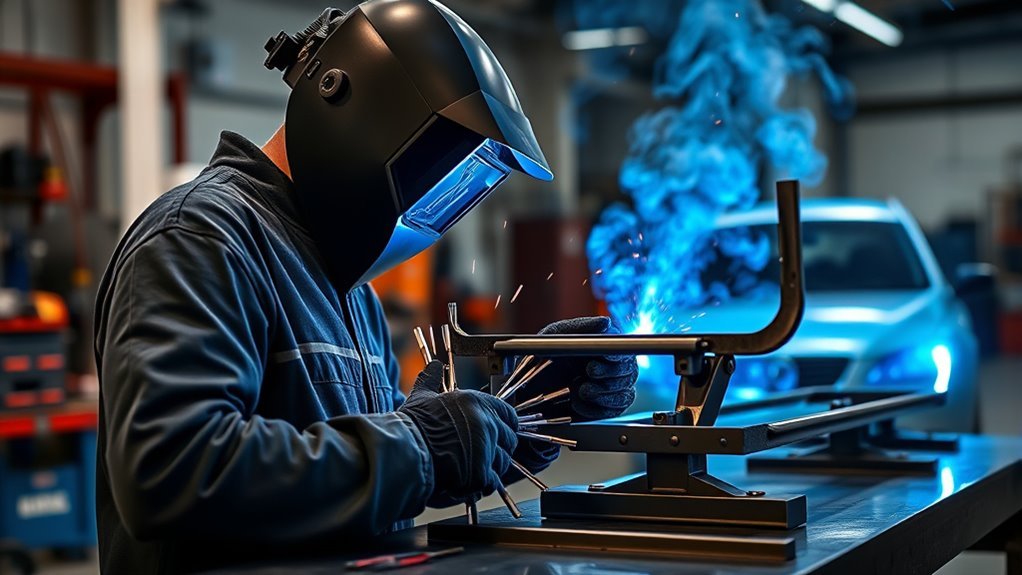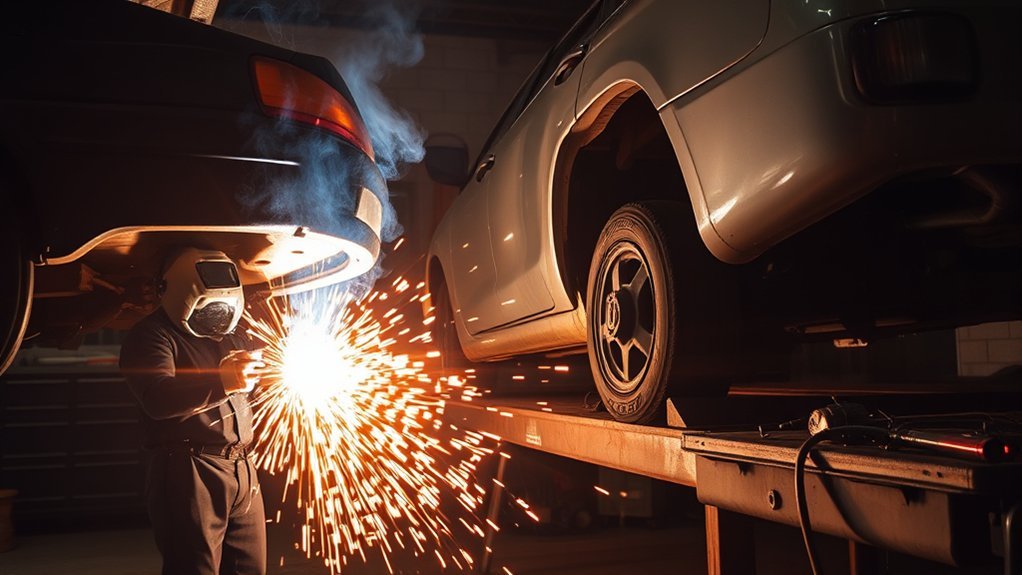
If a fire starts while welding on a car, treat it as an emergency first and a repair problem second. Stop welding, shut off the welder or torch if you can do it safely, warn anyone nearby, and use the correct fire extinguisher only if the flames are small, contained, and you have a clear escape route.
Quick Answer
If a fire starts while welding on a car, stop welding, disconnect power or shut off gas only if safe, alert others, and use a properly rated extinguisher on a small contained fire. Evacuate and call emergency services if flames spread, smoke builds, or fuel, wiring, or batteries are involved.
Key Takeaways
- Use a fire extinguisher only on a small, early-stage fire when you are trained, the extinguisher matches the hazard, and your exit is clear.
- A dry chemical ABC extinguisher is a strong baseline for most garage hot-work risks; CO2 can be useful for some electrical or liquid-fuel fires but is not the best all-purpose choice.
- Never use water on energized electrical parts, fuel-fed flames, unknown chemicals, lithium battery fires, or any fire that is spreading beyond the immediate weld area.
- Keep a fire watch during welding and continue checking hidden areas, trim, undercoating, and the back side of the panel for at least 30 minutes after welding when fire risk exists.
At a Glance
| Time Required | 5 minutes for emergency response; 30 minutes or longer for post-weld fire watch when hazards are present |
| Difficulty | High, because vehicle interiors, fuel systems, wiring, and hidden cavities can ignite quickly |
| Tools Needed | ABC fire extinguisher, optional CO2 extinguisher, welding blanket, metal shield, pliers, battery wrench, flashlight, spray bottle for safe Class A cooling, and a phone |
| Cost | Usually $30 to $150 for basic fire-prevention gear, depending on extinguisher size and welding blankets |
Warning: Do not try to fight a fire that is spreading, producing heavy smoke, blocking your exit, touching fuel lines or the fuel tank, involving a hybrid or EV battery, or re-igniting after extinguisher use. Evacuate, call emergency services, and keep others away.
Preventive Measures to Avoid Fires While Welding
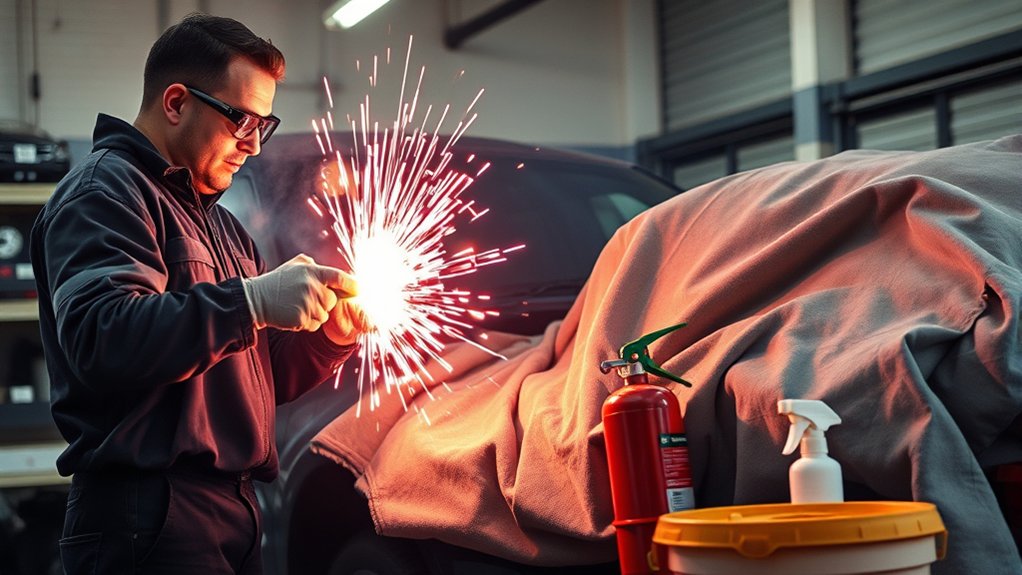
Good fire response starts before you strike an arc. Remove loose paper, rags, cardboard, solvents, aerosols, fuel containers, and plastic parts from the work area. When practical, keep combustibles at least 35 feet from the weld area. If you cannot move them, cover them with a welding blanket or a metal shield that blocks sparks, slag, and radiant heat.
On a car, the biggest danger is often hidden behind the panel. Pull carpet, jute padding, foam, upholstery, plastic trim, wiring clips, sound deadener, seam sealer, and undercoating away from the heat zone. Check the back side of the weld area with a flashlight before welding, during breaks, and after each short weld. Sparks can fall into rocker panels, pillars, floor braces, trunk corners, and wheel wells where you cannot see them from the outside.
Before you begin, disconnect the 12-volt battery following the vehicle maker’s service procedure, then keep the ground clamp close to the weld area so current does not travel through bearings, modules, cables, or sensitive electronics. For late-model vehicles, hybrids, and EVs, stop and check the service manual first. Do not weld near high-voltage cables, battery packs, or pyrotechnic safety devices unless you are trained and the system has been made safe by the correct procedure.
Keep suitable fire extinguishing equipment close enough to reach without walking through smoke or sparks. For most garage welding around vehicles, a charged ABC dry chemical extinguisher is the most practical first extinguisher because it covers ordinary combustibles, flammable liquids, and energized electrical equipment. A CO2 extinguisher can be a useful secondary choice where residue matters, but it is not a substitute for matching the extinguisher to the actual fire hazard.
Use ventilation to control welding fumes, but do not aim fans or compressed air at sparks, flames, fuel vapors, or hot slag. Air movement can push fire into hidden cavities and can spread burning debris.
Pro Tip: Before welding near a floor pan, rocker, quarter panel, trunk, or firewall, assign a second person as a fire watch with a flashlight and extinguisher. That person should watch the opposite side of the weld, not the arc.
Products Worth Considering

Made of Flame Retardant Fiberglass

✅【Fire-Resistant Carbon Felt Construction】The Matace welding blanket is made from 5mm thick carbon felt and has been tested in accordance with ASTM D6413 standards. Its dense, heavy-duty structure is designed to help manage sparks, hot slag, and radiant heat during welding and high-temperature work.

✅【Fire-Resistant Carbon Felt Construction】The Matace welding blanket is made from 5mm thick carbon felt and has been tested in accordance with ASTM D6413 standards. Its dense, heavy-duty structure is designed to help manage sparks, hot slag, and radiant heat during welding and high-temperature work.
Immediate Actions to Take When a Fire Starts
If you see flame, smoke, glowing insulation, burning undercoating, or a sudden fuel smell, stop welding immediately. Do not keep welding to “finish the bead.” Put the torch down safely, release the trigger, and shut off the welder, plasma cutter, or gas supply if you can do so without moving toward the fire or trapping yourself.
- Stop the heat source. Stop welding, set the torch or stinger down safely, and shut off power or gas only if it is safe to reach.
- Alert people nearby. Tell everyone in the shop or driveway that there is a fire.
- Size up the fire. If it is larger than a small trash-can fire, spreading behind panels, or making heavy smoke, evacuate and call emergency services.
- Use the right extinguisher only if safe. Keep your back toward an exit and aim at the base of the flames.
- Do not chase hidden fire blindly. If flames move into a pillar, rocker, fuel area, dashboard, trunk cavity, or battery area, get out and call for help.
For a small flame in carpet, paper, or trim, an ABC extinguisher is usually safer than blowing air on it. For a small flame on energized electrical equipment, use an extinguisher rated for Class C hazards and avoid water. For any fire involving gasoline, fuel vapor, fuel lines, brake cleaner, paint thinner, or a fuel tank, step back, evacuate, and call emergency services.
Note: A fire can look out while material continues to smolder behind trim, seam sealer, insulation, or undercoating. After any flame, keep watching the area and do not reconnect the battery or restart the vehicle until the source is confirmed safe.
How to Use Fire Extinguishers for Welding Fires
Choose the extinguisher by fire type, not by cleanup convenience. Fire extinguishers are labeled for the hazards they can handle. If the label does not match the fire, do not use it. When in doubt, evacuate and call emergency services.
| Fire Type | Best Response | Avoid |
|---|---|---|
| Upholstery, paper, cardboard, carpet, wood, dust | ABC extinguisher; water only if there is no electrical, fuel, or chemical hazard and the material is safe to cool | CO2 alone if deep material may re-ignite |
| Gasoline, solvent, paint thinner, brake cleaner residue | ABC or BC-rated extinguisher if small and contained; evacuate if fuel-fed or spreading | Water stream, fans, compressed air, or standing over the flame |
| Energized wiring, modules, chargers, welders, extension cords | Class C-rated extinguisher; shut off power if safe | Water or wet hands near power |
| Magnesium, metal shavings, specialty metal dust | Class D extinguisher or professional response | Water, CO2, or ABC unless the extinguisher is specifically rated for that metal |
| Hybrid or EV battery pack, high-voltage cable, charging hardware | Evacuate, call emergency services, and follow the manufacturer emergency response guide | DIY firefighting, cutting, probing, or moving damaged high-voltage parts |
For a small fire that you are trained to fight, use the PASS method:
| Action | Description |
|---|---|
| Pull | Pull the pin while holding the extinguisher upright. |
| Aim | Aim at the base of the flames, not the smoke or upper flame tips. |
| Squeeze | Squeeze the handle to discharge the agent. |
| Sweep | Sweep side to side at the base until the fire is out, then watch for re-ignition. |
Stop using the extinguisher and leave if the fire grows, the extinguisher empties, the smoke gets worse, or you feel heat on your face or hands. Your exit route matters more than the car.
Products Worth Considering

Combats Vehicle Fires: Use to fight basic fires common to your cars & trucks: flammable liquids and gases (Class B) & electrical equipment (Class C)

EASY TO USE WITHOUT TRAINING:Patented handle design removes the safety pin—no twisting, no fiddling. This 2.5lb fire extinguisher is ideal for homes, allowing anyone from teens to seniors to act fast without needing instructions.

Reliable Fire Protection: Stop basic home fires involving trash, wood, paper, liquids, gases, and electrical equipment
Essential Safety Protocols to Prevent Fire Spread While Welding
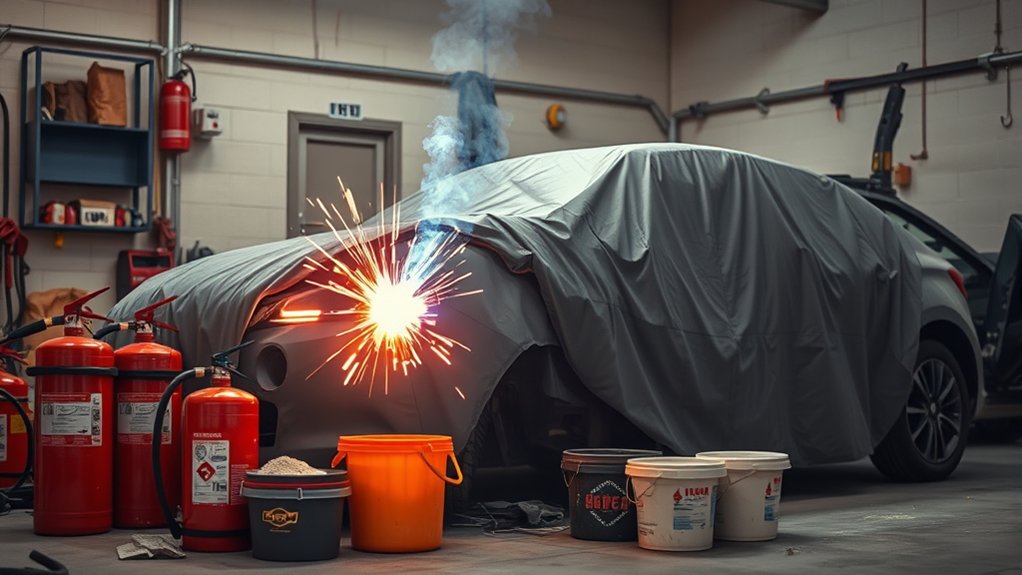
To prevent fire spread while welding, make the area fire safe before the first tack weld. Welding sparks can travel, molten metal can roll into seams, and heat can ignite materials on the opposite side of the panel.
- Move combustible materials away from the weld area or cover them with welding blankets or metal shields.
- Check the opposite side of the panel before welding on floors, rockers, quarter panels, pillars, firewalls, and trunk pans.
- Keep an ABC extinguisher within reach and make sure the gauge shows it is charged.
- Keep a clear path to an exit so you do not have to move toward the fire to escape.
- Disconnect the 12-volt battery using the correct service procedure before welding.
- Keep the welder ground clamp close to the work to reduce stray current through the vehicle.
- Stop welding if you smell fuel, see smoke from seam sealer, hear popping trim, or notice undercoating bubbling.
- Assign a fire watch when welding near trim, insulation, fuel lines, wiring, or enclosed cavities.
A proper fire watch does more than stand nearby. The person should watch the back side of the weld, check nearby cavities with a flashlight, know how to sound the alarm, and have fire extinguishing equipment ready. When the risk is more than minor, continue the watch for at least 30 minutes after welding because hidden smoldering can start a fire after the arc is off.
Special Vehicle Hazards That Make Welding Fires Worse
Vehicle welding is different from welding clean steel on a bench. Cars contain hidden fuel, plastics, adhesives, wiring, insulation, batteries, and coatings that can ignite or produce toxic smoke.
Fuel Tanks, Fuel Lines, and Vapors
Do not weld near a fuel tank, filler neck, vent line, fuel rail, or fuel hose unless the fuel system has been made safe by a qualified person. Gasoline vapor can ignite even when liquid fuel is not visible. If the job is near fuel, move the work, remove the tank when required, or have a professional handle it.
Undercoating, Seam Sealer, and Sound Deadener
Undercoating and seam sealer can smolder behind the weld and flare up after you think the job is finished. Scrape or grind coatings away from both sides of the weld zone when possible. Watch for smoke from seams, drain holes, rocker panels, and wheel wells.
Interior Trim and Wiring
Carpet padding, seat foam, trunk liners, dash insulation, and wire loom can catch fire quickly. Move wiring away from the weld zone and protect anything that cannot be removed. Do not rely on a thin metal panel to block heat from the other side.
Airbags, Pretensioners, Hybrids, and EVs
Late-model vehicles may have airbag inflators, seatbelt pretensioners, control modules, high-voltage cables, and battery packs near repair areas. Follow the manufacturer service information before welding. If you are not trained on hybrid or EV systems, do not weld near high-voltage parts.
What to Do After a Fire: Damage Assessment and Safety
After a fire incident, do not rush back into the repair. Confirm that the fire is fully out, the area is ventilated, and there is no heat, smoke, fuel smell, or crackling sound from hidden materials. If emergency services responded, wait until they say the area is safe.
Inspect the vehicle slowly. Check the weld area, the back side of the panel, adjacent cavities, wiring, brake lines, fuel lines, upholstery, sound deadener, seam sealer, and nearby plastic parts. Use a flashlight and your sense of smell, but do not touch hot metal, melted insulation, or damaged electrical parts with bare hands.
Do not reconnect the battery, start the vehicle, or move it indoors until you are sure no hidden smoldering remains. Dry chemical extinguisher residue can be corrosive, so clean it from bare metal, wiring connectors, painted areas, and mechanical parts after the area is safe. Photograph the damage before cleaning if insurance, customer approval, or shop records may be involved.
If the fire reached wiring harnesses, safety modules, fuel parts, brake parts, structural metal, or any hybrid or EV component, have the vehicle inspected by a qualified technician before continuing the repair.
Note: A small welding fire can still damage insulation, sensors, brake hoses, fuel vapor lines, or hidden harnesses. Treat any burned vehicle part as suspect until it has been inspected.
Frequently Asked Questions
Is it safe to weld on a vehicle?
It can be safe only when the repair area is prepared correctly. Remove or shield combustibles, disconnect the battery by the service procedure, protect fuel and wiring, keep the right extinguisher nearby, and use a fire watch when hidden materials or adjacent panels could ignite.
How long after welding can a fire start?
A fire can start within minutes, but hidden smoldering can also show up later in seam sealer, carpet padding, undercoating, insulation, or cavities. When fire risk exists, keep a fire watch for at least 30 minutes after welding and recheck the back side of the panel before leaving the area.
What should be done if a welding fire breaks out?
Stop welding, alert others, shut off power or gas only if safe, and use a properly rated extinguisher only on a small contained fire. Evacuate and call emergency services if the fire spreads, smoke builds, the extinguisher does not control it quickly, or the fire involves fuel, wiring, batteries, or hidden cavities.
What should you do before welding on a car?
Clear combustibles, expose both sides of the weld area, remove trim and insulation near the heat zone, shield anything that cannot be moved, disconnect the battery by the correct procedure, check for fuel and wiring hazards, place the ground clamp close to the weld, and keep a charged extinguisher nearby.
What type of extinguisher is best for welding on a car?
For most garage welding around vehicles, a charged ABC dry chemical extinguisher is the best baseline because it covers ordinary combustibles, flammable liquids, and energized electrical equipment. A CO2 extinguisher can be a useful secondary option for some electrical or liquid-fuel fires, but it is not ideal for deep-burning upholstery or insulation.
Can you use water on a welding fire?
Use water only when the fire is ordinary Class A material, such as paper or clean fabric, and there is no energized electricity, fuel, chemical, metal, or battery hazard. Do not use water on electrical equipment, fuel-fed flames, magnesium or metal dust, lithium battery hazards, or unknown shop chemicals.
Conclusion
A welding fire on a car can turn serious fast because flames may spread into fuel areas, wiring, upholstery, coatings, and hidden cavities. The safest response is simple: stop the heat, alert others, use the correct extinguisher only when the fire is small and you have an exit, and evacuate when the fire is beyond early control.
Prevention matters most. Clear and shield the area, inspect both sides of the panel, keep extinguishers ready, and use a fire watch during and after the job. Good welding is not just about the bead; it is also about controlling every spark after it leaves the arc.
Sources
- OSHA 1910.252, Welding, Cutting, and Brazing General Requirements — fire prevention, combustible clearance, fire watch, extinguisher readiness, and ventilation guidance.
- OSHA 1926.352, Fire Prevention — construction hot-work fire prevention, immediate fire equipment, and guarding against fire during and after welding.
- OSHA 1910.157, Portable Fire Extinguishers — extinguisher selection by fire class, accessibility, inspection, and employee training requirements.
- NFPA 51B, Standard for Fire Prevention During Welding, Cutting, and Other Hot Work — hot-work fire prevention framework.
- American Welding Society ANSI Z49.1 Safety in Welding, Cutting, and Allied Processes — welding safety standard referenced for safe welding practices.