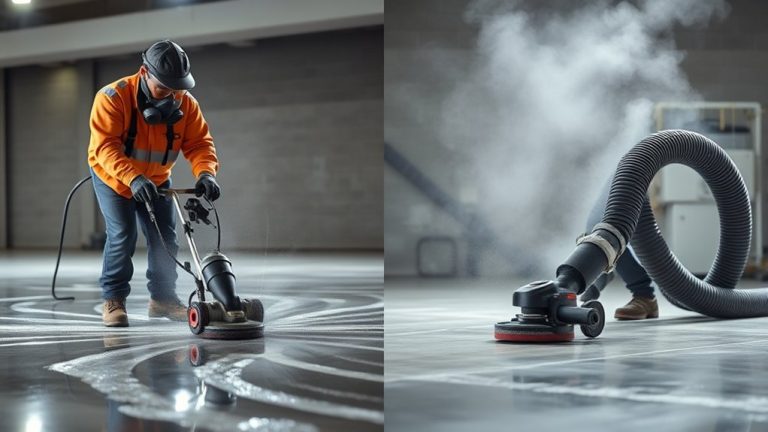
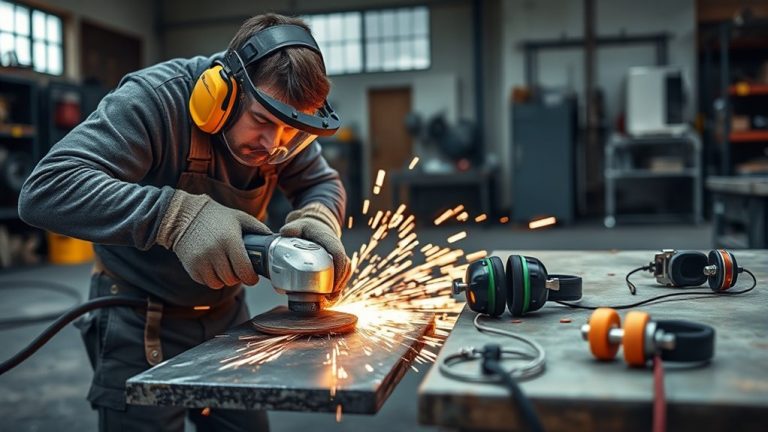
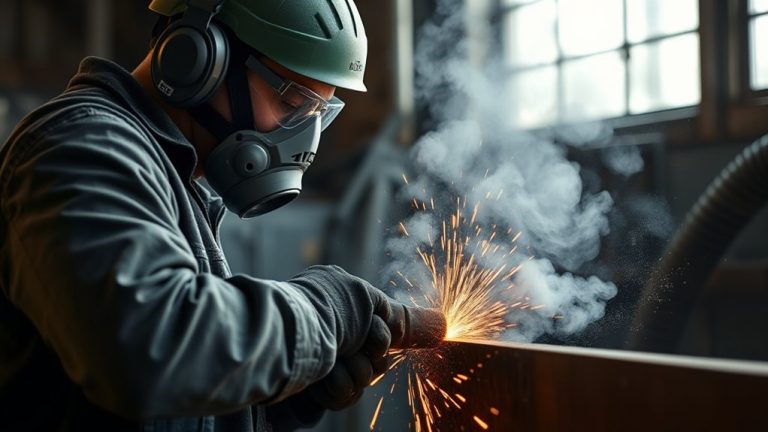
Using an angle grinder for precision tasks can lead to inefficiencies and get you in trouble. The sparks and noise can create hazards, and the tool’s size might not fit tight spaces. If you’re dealing with soft materials, they could warp from the heat. Always assess your task first. Choosing the right tool guarantees safety and effectiveness. By making informed decisions, you can enhance your setup and accomplish tasks more efficiently. Explore more insights for safer tool selection.
Common Risks Associated With Angle Grinder Use
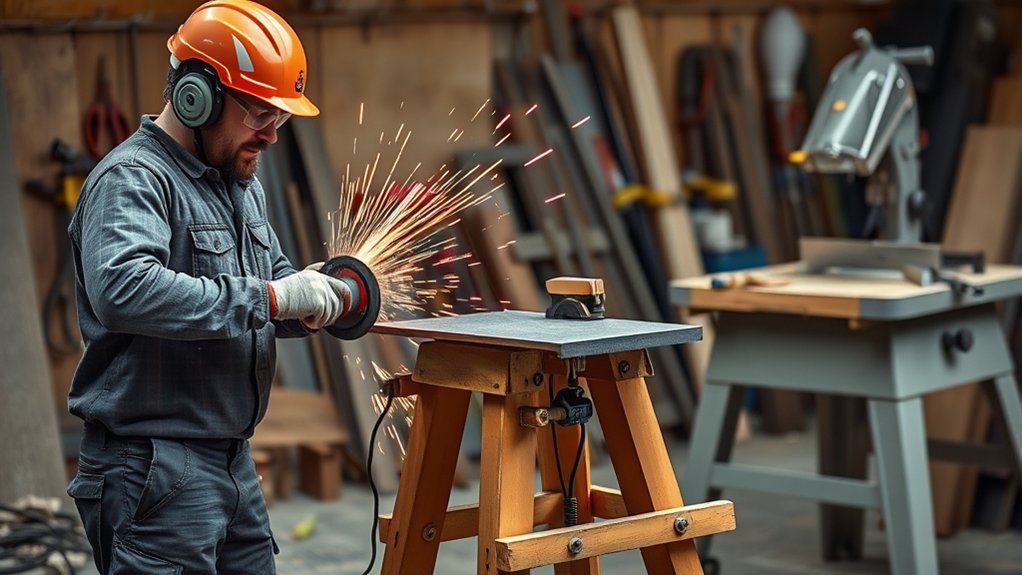
When using an angle grinder, it’s vital to recognize the common risks involved to guarantee your safety. This powerful tool can generate significant sparks and debris, heightening fire hazards, particularly in flammable environments. The excessive noise from pneumatic grinders can also lead to hearing damage, making hearing protection a non-negotiable.
Improperly secured workpieces can shift during operation, risking injury to you or damage to the material. Furthermore, using the incorrect disc type can result in tool failure, creating safety hazards and potentially causing flying debris. Regular maintenance is critical; neglecting this aspect increases the likelihood of malfunctions and accidents.
To secure safety, always assess whether the angle grinder is the correct tool for your task. Understand the specifications of your grinding wheel and adhere strictly to safety protocols. Being aware of these risks empowers you to work with confidence and freedom.
Identifying Tasks Unsuitable for Angle Grinders
When working on tasks that require precision cutting or involve soft materials and plastics, you should avoid using an angle grinder. Its high speed can easily damage delicate surfaces or compromise accuracy. Instead, consider tools specifically designed for finesse, especially in tight spaces and corners.
Tasks Requiring Precision Cutting
While angle grinders are versatile tools, they fall short in tasks requiring precision cutting. For intricate cuts in wood or metal, using the right tool is essential. Angle grinders’ high speed often results in burn marks and rough edges, making them unsuitable for finish work. Instead, consider tools designed for accuracy, like miter saws or laser cutters.
| Task Type | Recommended Tool | Reason |
|---|---|---|
| Intricate Cuts | Jigsaw | Finer control |
| Straight Cuts | Table Saw | Clean, straight edges |
| Thin Materials | Laser Cutter | Prevents warping |
| Finish Work | Band Saw | Guarantees smooth edges |
Be certain to choose wisely, especially when using compressed air for cleaner results.
Soft Materials and Plastics
Soft materials and plastics require careful handling to avoid damage, making angle grinders a poor choice for these tasks. The angle grinder limitations become evident when you consider that its high speeds and heat can easily melt or warp soft materials. Instead of achieving clean cuts, you risk tearing or chipping, compromising your workpiece’s integrity. Additionally, the abrasive discs are ill-suited for soft material considerations, creating excessive dust and debris that pose respiratory hazards. For effective cutting techniques, opt for rotary tools or fine-toothed saws, which offer better control and minimize damage. Always assess the material type and desired finish before choosing your tool, as the wrong selection can lead to inefficiencies and wasted time.
Tight Spaces and Corners
Choosing the right tool for specific tasks can greatly impact your efficiency and safety, especially in tight spaces and corners. Angle grinders often prove too large for these applications, where compact tools like smaller pneumatic grinders shine. Their extended neck design grants access in confined spaces where bulkier options struggle. In cramped environments, the weight of an angle grinder can lead to fatigue and reduced precision, making lighter alternatives more suitable. Furthermore, the application orientation in tight areas demands greater control, which smaller grinders provide. Using an angle grinder in such situations increases the risk of accidents due to limited visibility and movement. Prioritizing maneuverability advantages guarantees you tackle tasks safely and effectively.
Best Alternatives for Precision Work
When precision is key, relying on the right tools can make all the difference. Consider essential hand tools, specialized cutting equipment, and precision electric tools that provide cleaner cuts and greater control. Each option serves distinct purposes, enhancing your accuracy while minimizing the risk of damage to your materials.
Essential Hand Tools
Precision work demands the right tools to guarantee accuracy and prevent damage to delicate materials. Hand tools offer distinct advantages, enhancing precision craftsmanship while securing material compatibility. Here are some essential alternatives to contemplate:
| Hand Tool | Best Use |
|---|---|
| Chisel | Controlled material removal |
| Coping Saw | Intricate cuts and curves |
| Hand-held Rotary | Detailed sanding/engraving |
For stone or masonry, a hammer and chisel set allows for precision without the risks of an angle grinder. When working with metal, a die grinder or file provides fine-tuning without excessive power or noise. Choosing these tools guarantees a safer, more precise outcome for your projects.
Specialized Cutting Equipment
Specialized cutting equipment is essential for achieving accuracy in various materials while minimizing damage. For precision tool selection, consider using a band saw for smoother cuts that reduce chipping. If you’re tackling intricate curves, a jigsaw offers superior maneuverability in tight spaces where angle grinders falter. When dealing with larger sheets, a table saw provides stability and accuracy unmatched by grinders. For metal cutting, a cold cut saw produces cleaner edges and less heat, enhancing safety and efficiency. Ultimately, laser cutters excel in high precision and intricate designs without the risk of damage associated with traditional methods. Each of these specialized cutting techniques aligns with advanced material considerations, ensuring you choose the right tool for the job.
Precision Electric Tools
Choosing the right electric tool can greatly enhance your precision work, especially for intricate tasks. Electric tools like rotary tools and detail sanders provide superior control, minimizing material removal compared to angle grinders. They allow for delicate cutting at lower speeds, which reduces the risk of over-penetration. Consider these options:
- Rotary Tools: Perfect for detailed carving and grinding, optimizing speed settings for various tasks.
- Detail Sanders: Ideal for finishing touches, offering precision control techniques that prevent over-sanding.
- Electric Grinders: Lighter and quieter, they reduce operator fatigue and enhance comfort during extended use.
How to Pick the Best Power Source for Your Tools?
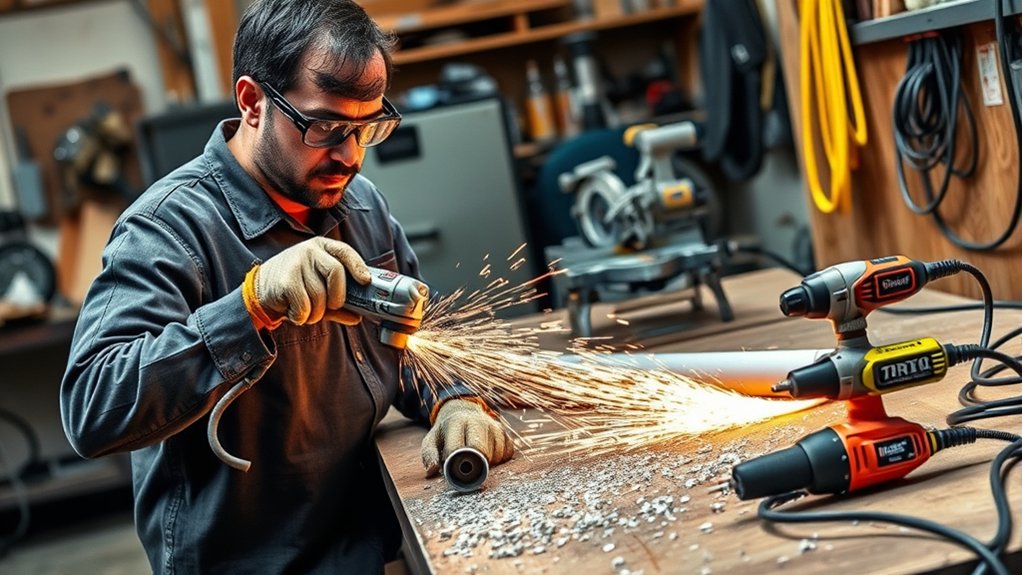
When determining the best power source for your tools, it’s crucial to evaluate both the environment and the specific tasks at hand. Start with a power source comparison: pneumatic grinders thrive in areas with consistent air supply, while electric grinders shine in locations lacking compressed air. Consider tool performance factors; pneumatic tools require a robust air hose to deliver power effectively, whereas electric models offer quieter operation and lighter weight, enhancing usability during extended periods.
Evaluate your workspace considerations as well. Larger pneumatic grinders are suited for open areas, allowing free movement and air access. Conversely, if you’re working in tight spaces, smaller electric grinders can maneuver easily without the hassle of air hoses. By aligning your choice of power source with both your environment and task needs, you can greatly impact efficiency and guarantee a safer working experience.
Maximize Ergonomics for Long Use
To enhance your comfort and efficiency during long tasks, focus on ergonomics when selecting tools. Prioritize using lighter pneumatic grinders over electric options, as they offer significant pneumatic grinder benefits by reducing joint strain and enhancing operator comfort. Confirm the grinder’s weight remains manageable, especially for vertical applications, to prevent fatigue.
Enhance comfort and efficiency by choosing lighter pneumatic grinders, reducing joint strain and preventing fatigue during long tasks.
Here are three key ergonomic design features to reflect on:
- Rubberized Grips: These minimize discomfort and enhance control during prolonged use.
- Weight Distribution: A well-balanced tool prevents excessive pressure on your joints, improving precision.
- Adjustable Handles: They allow for varied hand positions, reducing muscle fatigue over time.
Incorporating regular breaks also helps alleviate muscle fatigue and keeps you focused on safety and efficiency. By taking these factors into account, you can work longer without sacrificing comfort or effectiveness.
Choosing the Best Size for Your Workspace
Selecting the right size tool for your workspace can greatly influence both your efficiency and safety during tasks. Understanding grinder sizes in relation to your workspace layout is essential. Here’s a quick reference to help you choose the appropriate grinder:
| Grinder Size | Best Use Case | Benefits |
|---|---|---|
| 7” | Larger, open spaces | Maximizes efficiency, covers more area quickly |
| 4” or 5” | Tight corners or curves | More maneuverable, better control |
| Pneumatic | Confined areas | Lighter weight, reduces operator strain |
Assessing your workspace constraints will help you determine which grinder size enhances tool efficiency. For extensive tasks, a larger grinder might be ideal. Conversely, smaller grinders are better for intricate work. By choosing wisely, you’ll optimize your workspace and maintain safety while working.
Safety Tips for Using Angle Grinders
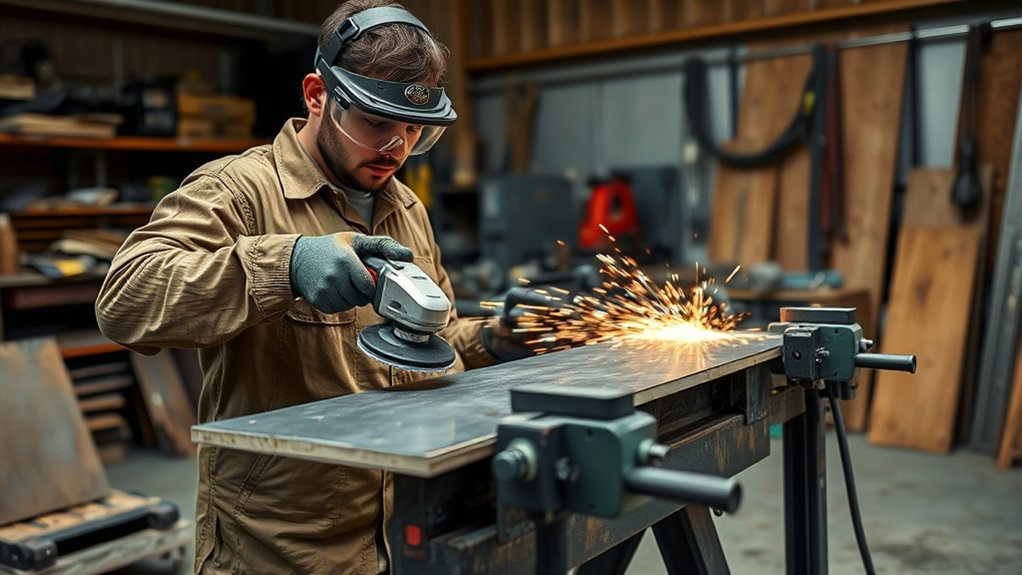
Using angle grinders can be efficient, but safety should always be your top priority. To minimize risks, adhere to these essential safety tips:
- Wear Personal Protective Equipment (PPE): Always don safety goggles, gloves, and hearing protection. These items shield you from flying debris and excessive noise.
- Maintain Workspace Organization: Keep your area tidy and free of obstructions. A clutter-free environment reduces the risk of tripping over cords or tools, allowing you to focus on the task.
- Follow Tool Maintenance Tips: Regularly inspect your angle grinder for wear and tear. Verify all components function correctly to prevent malfunctions during use.
Best Practices for Effective Tool Usage
After guaranteeing your safety while using angle grinders, it’s important to contemplate how to maximize their effectiveness. Start by evaluating the task’s specific requirements, including material type and workspace constraints. This helps you determine if an angle grinder is the right tool. When selecting attachments, make sure you have the correct disc type and size for the material to prevent damage and enhance performance.
Regular tool maintenance tips are essential; inspect your grinder for wear and tear on discs to confirm optimal functioning. Don’t overlook ergonomic considerations—choose tools that minimize strain, especially with larger grinders over extended use. Additionally, maintain a well-organized workspace to keep everything you need within reach, reducing distractions and hazards. Prioritize using proper safety gear, like hearing protection, to safeguard against injury. By following these best practices, you’ll not only improve your efficiency but also elevate your overall experience with angle grinders.
Frequently Asked Questions
What Are the Safety Rules When Using an Angle Grinder?
When using an angle grinder, prioritize protective equipment, guarantee workspace organization, and perform regular grinder maintenance. Secure your workpiece firmly, check for damage, and always follow the manufacturer’s guidelines for maximum safety.
How to Choose the Right Angle Grinder?
To choose the right angle grinder, evaluate grinder types, consider power ratings, and explore accessory options. Prioritize your specific tasks and workspace to guarantee efficient, safe operation while maximizing your freedom and capabilities.
Why Is It Important to Use the Right Tool for the Right Task?
Using the right tool’s essential for safety and efficiency. Task-specific tools guarantee precision, reducing risks and preventing damage. Poor tool selection complicates jobs, leading to frustration. Don’t let mistakes hinder your progress—choose wisely.
What Common Injuries Can Result From Not Using a Right Angle Grinder Properly?
Grinder misuse injuries often include lacerations, burns, and fractures. Wearing protective gear is essential, and practicing safe operating techniques can prevent these accidents, ensuring you work efficiently and safely without jeopardizing your well-being.
Conclusion
To sum up, while angle grinders are versatile, they’re not always the best choice for every task. You might think their convenience outweighs the risks, but using the right tool can greatly enhance precision and safety. By considering alternatives and prioritizing ergonomics, you not only protect yourself but also achieve better results. Don’t compromise quality for quick fixes; investing in the appropriate tools pays off in both safety and effectiveness. Choose wisely for ideal outcomes.