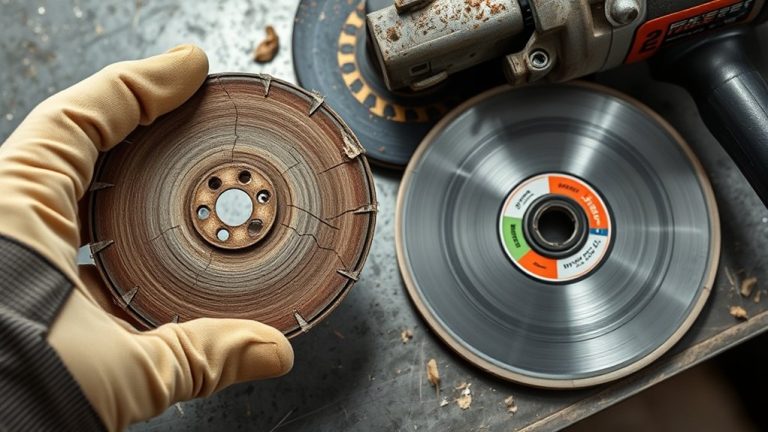
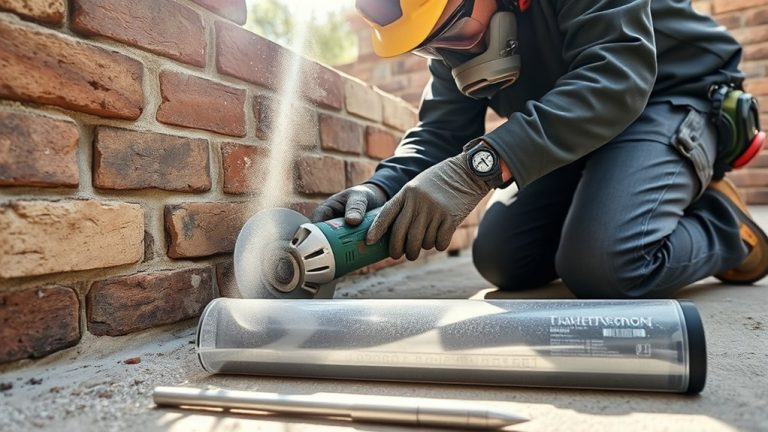
Using a diamond blade on your angle grinder is ideal for cutting tough materials like concrete or tile. Choose a blade that matches your material and maintain proper water cooling to prevent overheating. Always verify your grinder is unplugged while installing the blade, and wear appropriate safety gear. Take care to apply gentle pressure for smoother cuts, avoiding excessive force. If you follow these guidelines, you’ll enhance your cutting efficiency and avoid common pitfalls. More insights await you on optimizing your setup.
Understanding Diamond Blades: What Makes Them Effective?
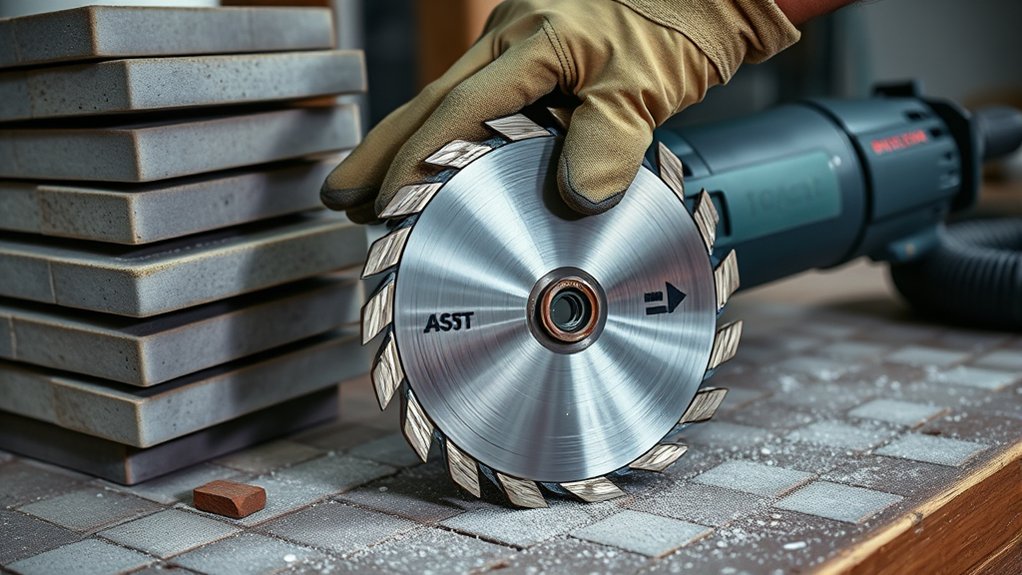
Diamond blades are renowned for their cutting prowess, thanks to their unique construction. They feature high-quality diamond particles embedded in a durable metal alloy binder, which enhances cutting efficiency through friction. The blade’s bonding matrix determines its hardness, speed, and heat resistance, guaranteeing peak performance on various cutting materials.
You’ll find that continuous rim blades provide smoother cuts, ideal for precision work, while segmented blades excel in delivering faster results on rougher materials. This versatility allows you to tackle diverse projects effectively. In fact, diamond blades can cut up to 2x faster than conventional methods and 10x faster than bonded abrasives in concrete, greatly boosting your productivity.
To maintain cutting quality and extend the blade’s lifespan, proper water cooling during operation is essential. This prevents overheating and assures that you get the most out of your diamond blades, making them a smart choice for anyone seeking efficiency and performance.
Choosing the Right Diamond Blade for Your Angle Grinder and Material
Choosing the right diamond blade is essential for effective cutting and safety. You need to match the blade type with the material you’re working on, ensuring compatibility for best performance. Additionally, make sure the blade’s diameter and RPM rating align with your angle grinder’s specifications to prevent damage and enhance safety.
Material Selection Importance
Selecting the right diamond blade is vital for achieving ideal results with your angle grinder. Different materials—like concrete, asphalt, or tile—require specific diamond blades to guarantee effective cutting and prevent damage. For instance, if you’re cutting glass, a continuous rim blade gives a smooth finish, while a segmented blade works best for tougher materials like concrete. It’s important to match the bond type of the blade with the material’s hardness; a firmer bond suits soft materials, and a softer bond is better for hard ones. Additionally, blade diameter affects cutting depth and performance, so verify it aligns with your angle grinder’s specifications. Always wear appropriate safety gear during the cutting process to protect yourself.
Blade Type Compatibility
When tackling a cutting project with an angle grinder, it’s essential to verify your blade type matches the material at hand. Choose material-specific blades, like continuous rim blades for glass and segmented blades for concrete, to guarantee peak results. Also, check the blade diameter—smaller blades fit standard grinders, while larger ones need more powerful models. Bond type consideration is key; softer bonds suit hard materials, while harder bonds work better for softer ones. Don’t forget RPM matching; confirm your diamond blade’s RPM rating aligns with your grinder’s specs to avoid damage. Finally, always look for safety features like blade guards and install the blade according to directional markings to minimize risks during operation.
Key Factors for Angle Grinder Use
Using a diamond blade on an angle grinder requires careful consideration of several key factors to guarantee efficiency and safety. First, check blade compatibility—confirm the diamond blade’s diameter matches your angle grinder’s specifications. Smaller blades (<180mm) fit standard models, while larger ones (180mm-230mm) need robust grinders. Always install the blade according to directional markings, and remember to unplug the grinder to avoid accidents.
Safety gear is essential; wear safety glasses, gloves, and a dust mask to shield yourself from debris and dust. Additionally, utilize cooling techniques like water or oil during cuts to prevent overheating, which can damage both the blade and the material. Finally, practice pressure control. Apply consistent, gentle pressure without forcing the blade to minimize fractures and wear. Prioritizing these factors will enhance your cutting experience and guarantee safer operations.
Proper Installation of Diamond Blades on Your Grinder
Making sure your angle grinder is ready for safe operation requires proper installation of diamond blades. First, always unplug your grinder before starting. Inspect the diamond blade for any visible damage, as defects can compromise safety and affect cutting speed. Next, remove the arbor nut with a wrench and install the blade according to the directional markings, confirming it rotates correctly. Tighten the blade securely to prevent loosening during operation, which could lead to accidents or damage.
Additionally, verify that the fastening plate is the right diameter, flat, and free of play. A stable blade enhances performance and prolongs blade life, allowing you to achieve the desired results. Remember, proper installation not only boosts efficiency but also guarantees a safer working environment. Take these steps seriously, and you’ll maximize your angle grinder’s potential while minimizing risks.
Essential Safety Precautions for Angle Grinder Use
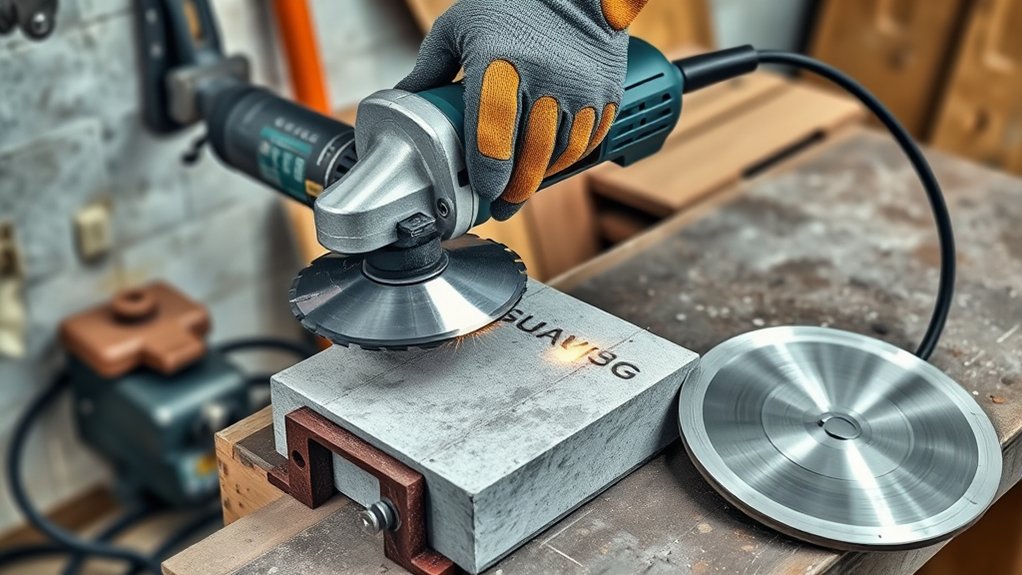
Five essential safety precautions can greatly reduce the risks associated with angle grinder use. Always wear appropriate personal protective equipment (PPE), including safety glasses, gloves, and dust masks, to shield yourself from debris. Before installing or changing the diamond blade, confirm the grinder is unplugged to prevent accidental startup. Regularly inspect the diamond blade for signs of wear or damage to guarantee effective cutting and safety.
Keep the saw blade guard in place to minimize flying debris and enhance user safety. Additionally, use both hands for better control and stability while operating the grinder.
| Precaution | Description |
|---|---|
| Safety Glasses | Protects eyes from flying debris |
| Inspect the Diamond Blade | Check for wear, cracks, or damage |
| Personal Protective Equipment | Use gloves and dust masks for added safety |
| Prevent Overheating | Allow cool down periods during extended use |
How to Cut Safely and Effectively With Diamond Blades?
To cut safely and effectively with diamond blades, you need to start with the right blade designed for your specific material. Don’t forget to wear essential safety gear like goggles and gloves to protect yourself from debris. By paying attention to these details, you’ll guarantee a smoother and safer cutting experience.
Proper Blade Selection
Selecting the right diamond blade is essential for effective and safe cutting. Start by choosing a blade based on your cutting materials; continuous rim blades excel with glass and tiles, while segmented diamond blades are ideal for concrete and masonry. Confirm the bond type matches the material’s hardness—harder bonds suit softer materials, and softer bonds work best for harder ones. Verify the blade diameter compatibility with your angle grinder, as smaller blades (<180mm) fit standard models, while larger blades require more powerful grinders. Utilize wet cutting with water or oil to prevent overheating and minimize dust. Finally, inspect your blade regularly for wear or damage, confirming it’s installed correctly to avoid accidents during operation.
Safety Gear Essentials
Using the right safety gear is essential when cutting with diamond blades on an angle grinder. Protect yourself by always wearing safety glasses and a face shield to guard against flying debris. Cut-resistant gloves are vital for shielding your hands from sharp edges and sparks. Since angle grinders can be loud, use hearing protection to prevent long-term damage. Fitted clothing is important, too; it stops loose garments from getting caught in the machine. Finally, employ a dust mask to reduce inhalation of fine particles from materials like concrete.
| Gear Type | Purpose | Importance |
|---|---|---|
| Safety Glasses | Protects eyes from debris | Essential for eye safety |
| Cut-Resistant Gloves | Shields hands from cuts and sparks | Prevents injury |
| Dust Mask | Minimizes inhalation of fine particles | Protects respiratory health |
Common Mistakes to Avoid When Using Diamond Blades
Many users make critical mistakes when working with diamond blades on an angle grinder, which can lead to poor performance and safety hazards. One common mistake is applying excessive pressure, which not only shortens the blade’s lifespan but also increases the risk of breakage. Using the wrong blade type for your material can cause chipping and severely impact cutting performance—segmented blades aren’t ideal for glass, for instance.
Neglecting adequate cooling during dry cuts can lead to overheating, risking thermal stress and damage to your blade. If you’re inexperienced, avoid using diamond blades without proper training; improper techniques can result in accidents and compromised cutting quality. Finally, ignoring regular inspections for cracks or wear can create unsafe cutting conditions. By steering clear of these mistakes, you can maximize your diamond blade’s efficiency and guarantee a safer working environment.
How to Keep Your Diamond Blade Sharp and Lasting Longer?
To keep your diamond blade sharp and extend its lifespan, regular inspections are vital. Check for cracks, wear, or loss of flatness to guarantee peak cutting performance. Using the right bond type is essential; a firm bond works best for soft materials, while a soft bond suits harder materials.
Always keep blades cool by using water or other coolants during cutting. This prevents overheating, which can dull the blade considerably. Avoid applying excessive force; let the cutting blade do the work for peak sharpness.
Regularly clean and maintain your blades with cleaning blocks to revive lost cutting power and remove debris. By following these practices, you can maintain your diamond blades’ efficiency and longevity, assuring that you get the best performance every time you use your angle grinder.
Troubleshooting: What to Do When Things Go Wrong
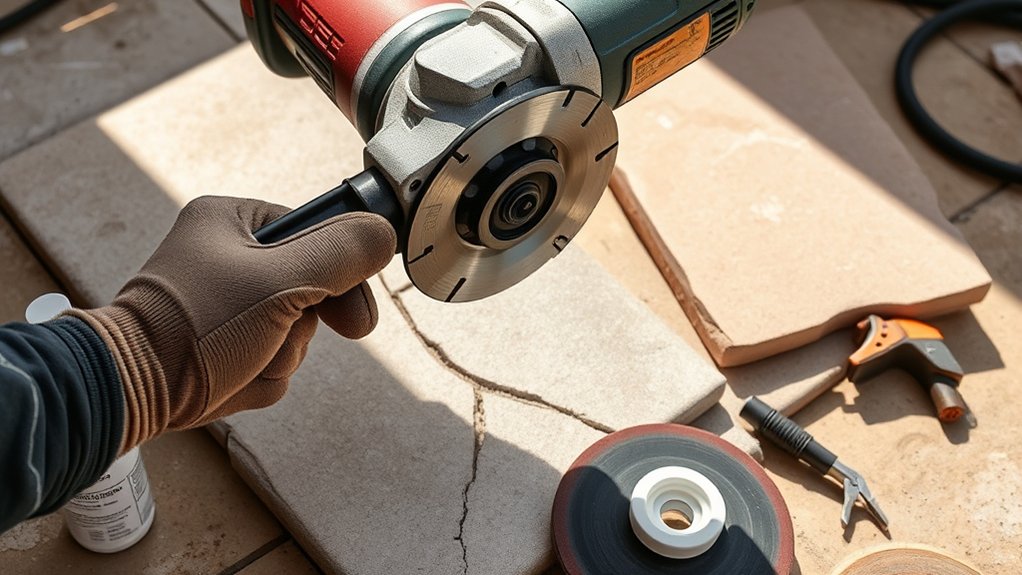
Even with proper care and maintenance, issues can arise while using a diamond blade on an angle grinder. If you notice overheating, immediately pause the operation to let it cool and guarantee adequate coolant application. This helps prevent thermal stress that could damage the blade. If your diamond blade shows signs of wear or cracks, stop using it right away and replace it to avoid safety hazards. For cuts that aren’t clean or produce excessive dust, verify you’re using the right blade type and applying coolant correctly. If the grinder vibrates too much, check the blade installation to ensure it’s securely fastened and compatible with your grinder’s specifications. Finally, if you experience kickback, stabilize the workpiece and maintain a firm grip with both hands for better control. Taking these steps will help you troubleshoot effectively and safely.
Frequently Asked Questions
When to Use a Diamond Blade?
You should use a diamond blade when cutting hard materials like concrete or granite. Remember to choose the right blade type, follow safety precautions, and maintain your equipment to avoid common mistakes and guarantee peak performance.
What Is a Diamond Blade Angle Grinder Used For?
A diamond blade on an angle grinder cuts through concrete, granite, and masonry with precision. Use the right blade type, follow safety protocols, and avoid common mistakes for effective results in your projects.
How Do I Choose the Right Grinder Disc?
To choose the right grinder disc, consider material compatibility, select appropriate blade size, and understand grinder disc types. Prioritize safety features, maintain equipment regularly, and match cutting speed with your project for best results.
What Material Cannot Be Cut by a Diamond Cutting Tool?
You can’t cut non-ferrous metals, soft woods, PVC pipes, tempered glass, rubber materials, or food products with a diamond cutting tool. These materials can damage the blade or lead to poor cutting results.
Conclusion
To summarize, using a diamond blade on your angle grinder can be a game changer for cutting tough materials, but safety is key. Remember, a well-prepared setup is like a sturdy bridge—essential for a smooth journey. By choosing the right blade, adhering to safety precautions, and maintaining your tools, you’ll not only enhance your efficiency but also guarantee a longer lifespan for your diamond blade. So gear up, stay cautious, and let your projects shine!