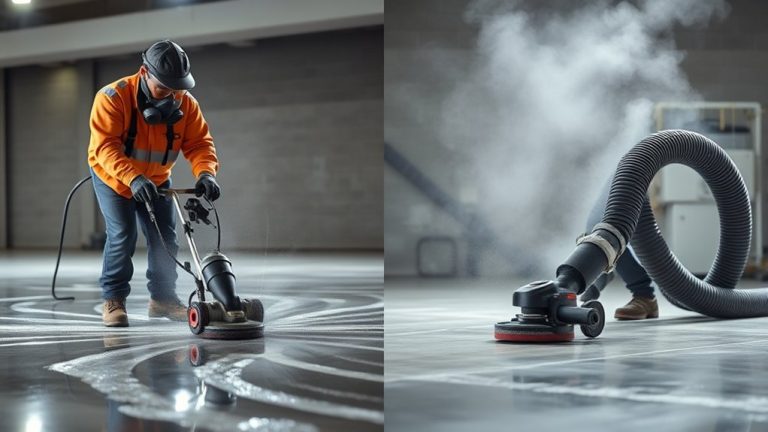
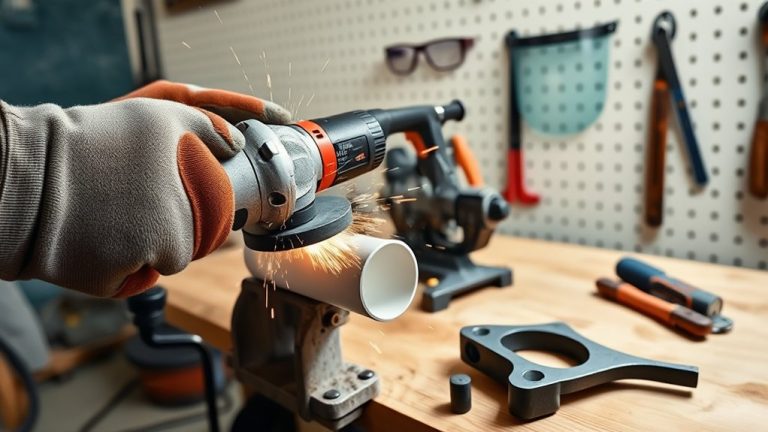
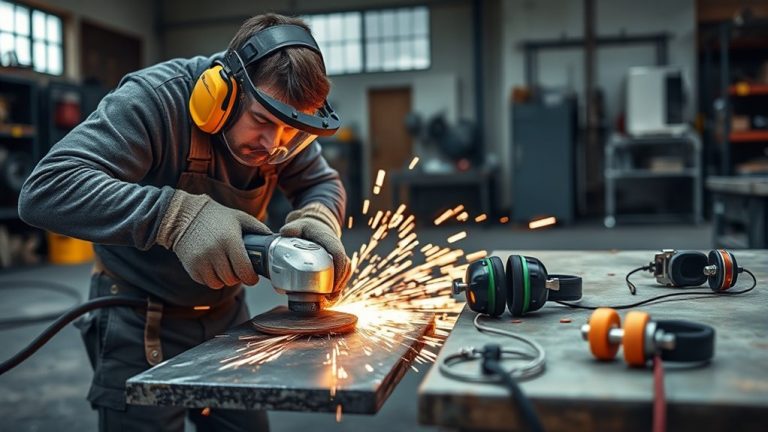
When using an angle grinder, you should always wear a face shield to protect yourself from flying debris and potential injuries. It’s essential during grinding operations, especially with metal or concrete. Pair your face shield with safety glasses for complete eye protection. To guarantee safety, choose a shield that fits well and meets ANSI Z87.1 standards. Regularly inspect it for damage and keep it clean. Stick around to find out more about maintaining your face shield and avoiding common mistakes.
The Importance of Face Shields in Grinding Operations
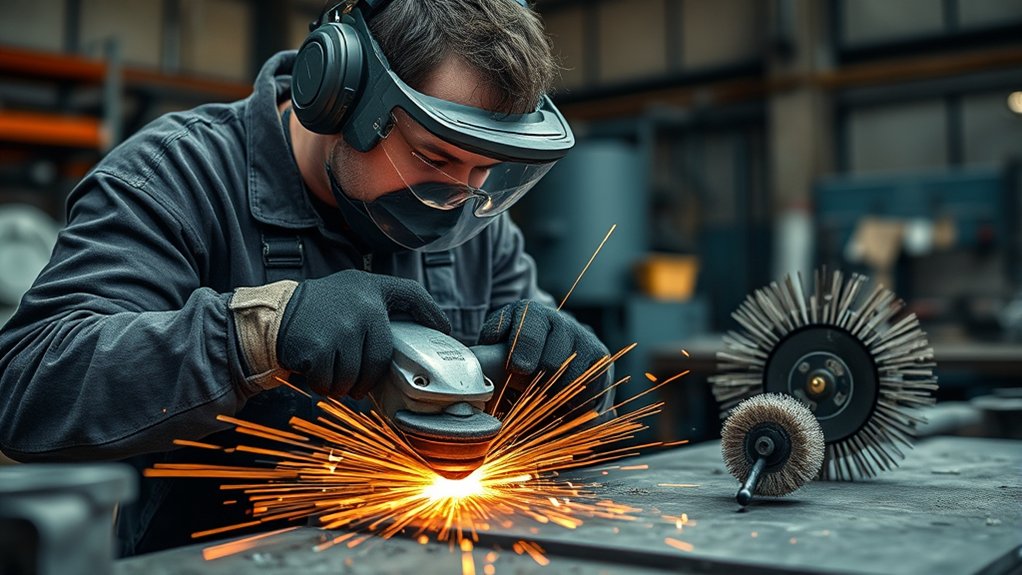
When you’re grinding, wearing a face shield isn’t just a good idea; it’s essential. A face shield provides vital protection against flying debris, sparks, and sharp fragments that high-speed angle grinders can generate. These tools operate at such high RPMs that they can shatter discs, sending dangerous shards flying across your workspace.
Pair your face shield with safety glasses for enhanced eye protection; this combination acts as a secondary defense against particles that might bypass your primary eyewear. The Occupational Safety and Health Administration (OSHA) strongly recommends face shields as part of Personal Protective Equipment (PPE) during grinding tasks to minimize injury risks.
When Are Face Shields Necessary for Grinding?
Face shields are essential during grinding operations, especially when using an angle grinder. They protect you from flying debris and sparks, preventing serious eye injuries and facial lacerations. Always use a face shield in high-risk situations, particularly with hazardous attachments like cutting discs that can shatter.
Here’s a quick reference to help you determine when a face shield is necessary:
| Situation | Face Shield Required |
|---|---|
| Grinding metal | Yes |
| Grinding concrete | Yes |
| Using cutting discs | Yes |
| Low-spark tasks | No |
| Combined with safety glasses | Yes |
Ensure your face shield meets ANSI Z87.1 standards for impact resistance. By following these guidelines, you can work more safely and protect yourself during grinding operations with an angle grinder.
How to Use Face Shields With Safety Glasses
When using an angle grinder, always combine a face shield with safety glasses for maximum protection. This layered approach not only guards your eyes but also shields your face and neck from flying debris. Make sure the face shield fits comfortably over your safety glasses without blocking your vision, enhancing both safety and visibility.
Proper Gear Combination
Using a full face shield along with safety glasses is vital for maximizing protection while operating an angle grinder. The face shield offers secondary protection against larger particles, complementing the safety glasses that shield your eyes from smaller debris. Verify the face shield fits securely over the safety glasses without blocking your vision, allowing both to work effectively together. Choose a face shield made from impact-resistant materials to withstand high-velocity impacts and provide thorough coverage. Regularly inspect your gear for cracks or damage to guarantee optimal protection. Remember, while safety glasses guard against small particles, combining them with a face shield is essential for complete face protection in high-risk environments. Stay safe and liberated!
Importance of Layered Protection
Wearing a face shield along with safety glasses is essential for enhancing your protection while operating an angle grinder. This combination provides layered protection against flying debris and sparks, markedly reducing the risk of eye and facial injuries. A full face shield acts as secondary protection, shielding you from larger fragments that safety glasses alone may not cover. It’s important that your face shield fits comfortably over your safety glasses without obstructing your vision, ensuring you remain aware of your surroundings. This is especially critical when grinding metal, where particles can cause serious harm. Consistent use of both safety glasses and a face shield fosters a safer working environment and promotes a culture of safety in skilled trades.
Ensuring Comfort and Visibility
To guarantee maximum comfort and visibility while operating an angle grinder, select a face shield that fits well over your safety glasses. Here’s how to secure both comfort and visibility:
- Choose a well-fitting face shield that doesn’t pinch or create pressure points.
- Opt for anti-fog features to maintain clear visibility, especially in humid conditions.
- Confirm the design allows for unobstructed sightlines to enhance precision during your grinding tasks.
- Regularly check for damage; a cracked or compromised shield can drastically reduce protection.
Picking the Right Face Shield for Your Grinder
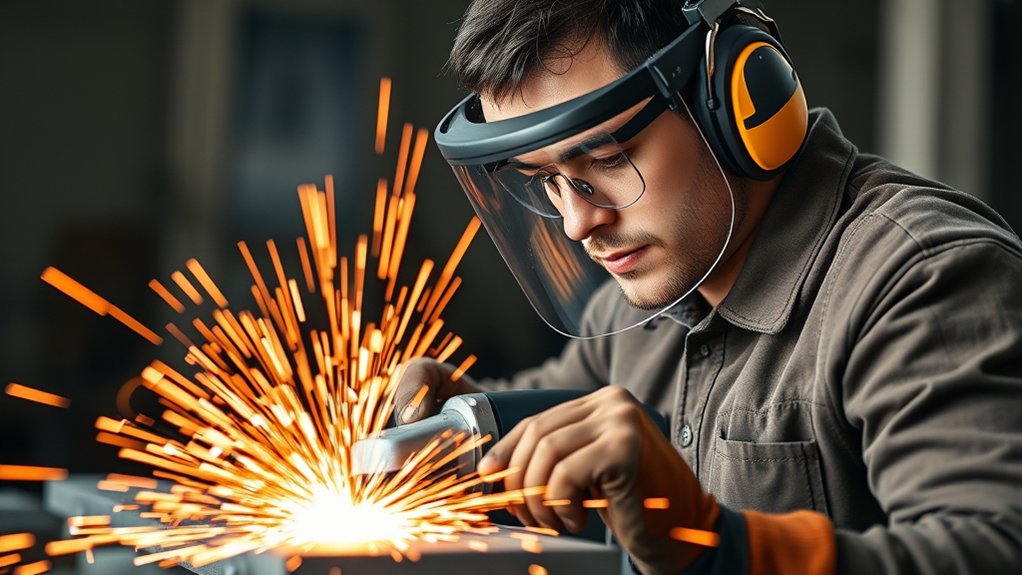
When picking a face shield for your angle grinder, focus on selecting materials that offer high impact resistance, like polycarbonate. Make certain the shield fits well, providing complete coverage without compromising comfort or visibility. A proper fit guarantees you stay protected while working efficiently.
Selecting Appropriate Materials
Selecting the right face shield for your angle grinder is essential for your safety. To guarantee the best protection, consider these factors:
- Material: Choose face shields made from polycarbonate or other impact-resistant materials for reliable defense against flying debris and sparks.
- ANSI Standards: Verify the shield meets ANSI Z87.1 safety standards for eye and face protection, safeguarding you from high-velocity impacts.
- Coverage: Opt for a full-face shield that works well with safety glasses, providing maximum coverage against potential eye injuries.
- Visibility: Select face shields with anti-fog features to maintain clear visibility, enhancing safety and efficiency during prolonged tasks.
Regularly inspect your face shield for scratches or cracks, as any damage can compromise its protective capabilities. Stay safe!
Ensuring Proper Fit
Finding the right fit for your face shield is vital for effective protection while using an angle grinder. Start by selecting a face shield that meets ANSI Z87.1 standards for impact resistance, guaranteeing it can withstand flying debris and sparks. Choose a design that comfortably fits over your safety glasses, maintaining visibility and comfort. Look for adjustable headbands to achieve a secure fit, preventing any slippage during grinding tasks. Opt for polycarbonate materials for added durability and heat resistance, important for high-speed operations. Finally, confirm the face shield covers from your forehead to your chin, providing thorough protection against particles. Prioritize a proper fit, and you’ll enhance your safety while enjoying the freedom of working with your grinder.
Top Mistakes That Compromise Face Shield Effectiveness
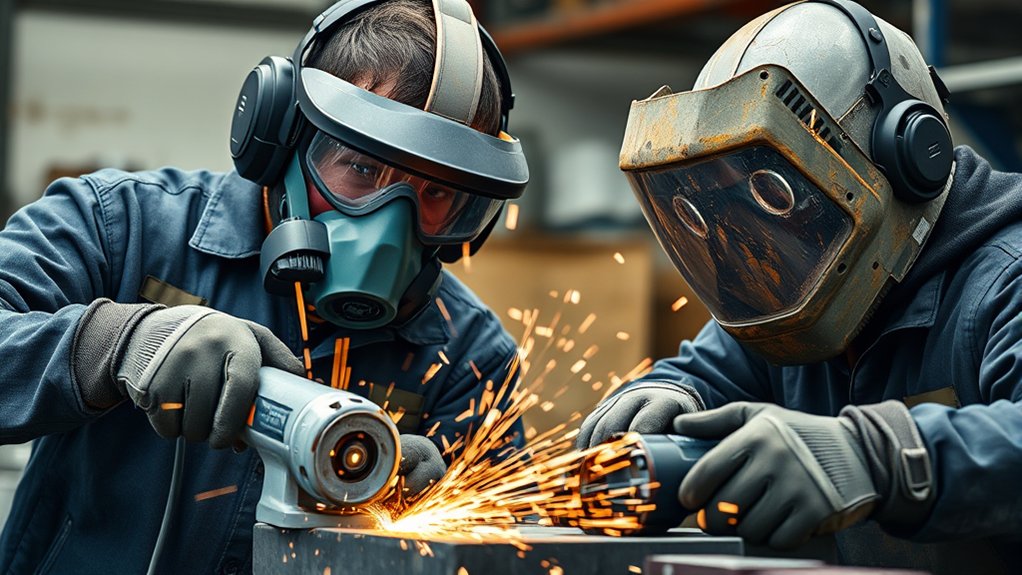
Many users unknowingly compromise the effectiveness of their face shields by making common mistakes. To guarantee you’re adequately protected, avoid these pitfalls:
- Neglecting Safety Glasses: Wearing only a face shield increases your risk of facial injuries from flying debris. Always pair it with safety glasses for full coverage.
- Using Damaged Shields: A scratched or poorly fitted face shield can impair your visibility and protection. Inspect it regularly for wear and tear.
- Ignoring Cleanliness: A dirty face shield reduces your awareness of serious hazards by obstructing your view. Keep it clean to ensure maximum visibility.
- Skipping ANSI Standards: Choosing a face shield that doesn’t meet ANSI standards exposes you to greater risks. Always opt for shields that adhere to these safety benchmarks.
Maintaining Your Face Shield for Optimal Protection
To guarantee your face shield provides maximum protection, regular maintenance is essential. Start by inspecting your face shield for cracks, scratches, or any signs of damage that could impair visibility and protection during grinding tasks. Clean it regularly with a mild soap solution and a soft cloth; avoid harsh chemicals that can degrade the material.
Confirm your face shield fits properly and is securely fastened, preventing it from shifting or falling off during use. If you notice discoloration, heavy scratches, or any damage, replace the shield immediately to maintain its protective capabilities.
Lastly, store your face shield in a cool, dry place, away from direct sunlight, to prevent material degradation over time. By following these steps, you’ll confirm your face shield remains a reliable barrier against hazards, empowering you to work confidently and safely.
Frequently Asked Questions
Should You Wear a Face Shield When Grinding?
Yes, you should wear a face shield when grinding. It protects against grinding hazards, reducing eye injuries and facial damage. Always pair it with safety glasses as part of your essential protective gear. Stay safe!
Which Types of Face and Eye Protection Are Recommended When Using Grinding Equipment?
When grinding, always wear wrap-around safety glasses and a full face shield. These protective gear options meet safety standards, minimizing eye injuries and ensuring your freedom to work confidently and safely. Regularly inspect for damage.
Should You Wear a Respirator When Using an Angle Grinder?
Yes, you should wear a respirator when using an angle grinder. Choose the right respirator types to protect against dust exposure and minimize health risks. Prioritize your safety for a liberated, worry-free work experience.
For Which Activities Is a Full Face Shield Required to Be Worn?
When you’re grinding metal, a full face shield’s essential for safety standards. It protects against grinding hazards and flying debris, especially if using brittle discs. Opt for durable face shield materials for maximum protection.
Conclusion
In the world of grinding, safety shouldn’t be an afterthought; it’s your best ally. By using a face shield, you’re not just protecting yourself—you’re investing in your future. Remember to pair it with safety glasses, choose the right shield, and avoid common mistakes. With proper care and awareness, you can guarantee that your grinding operations are both efficient and safe. So, gear up and grind smart; your face deserves it!