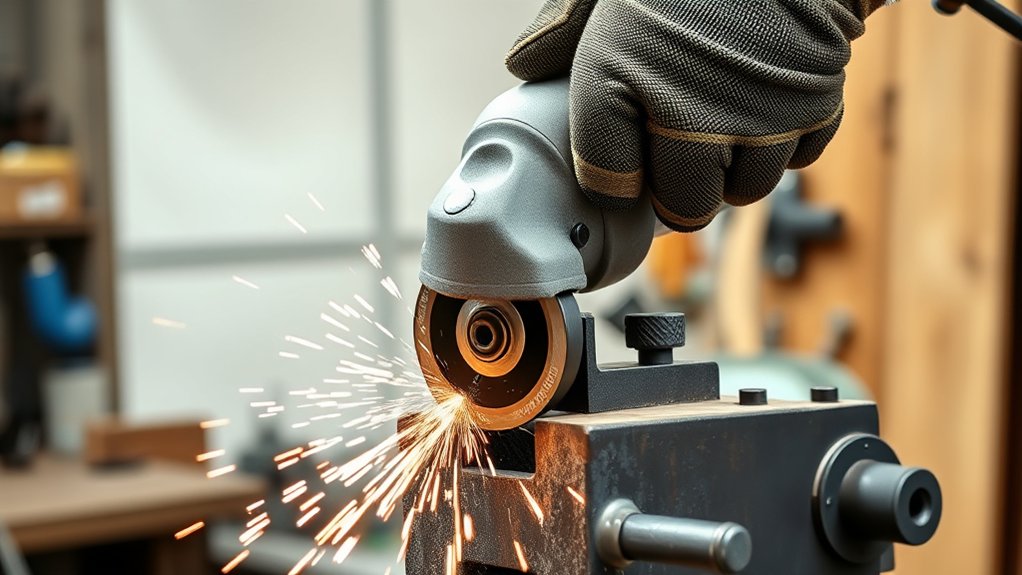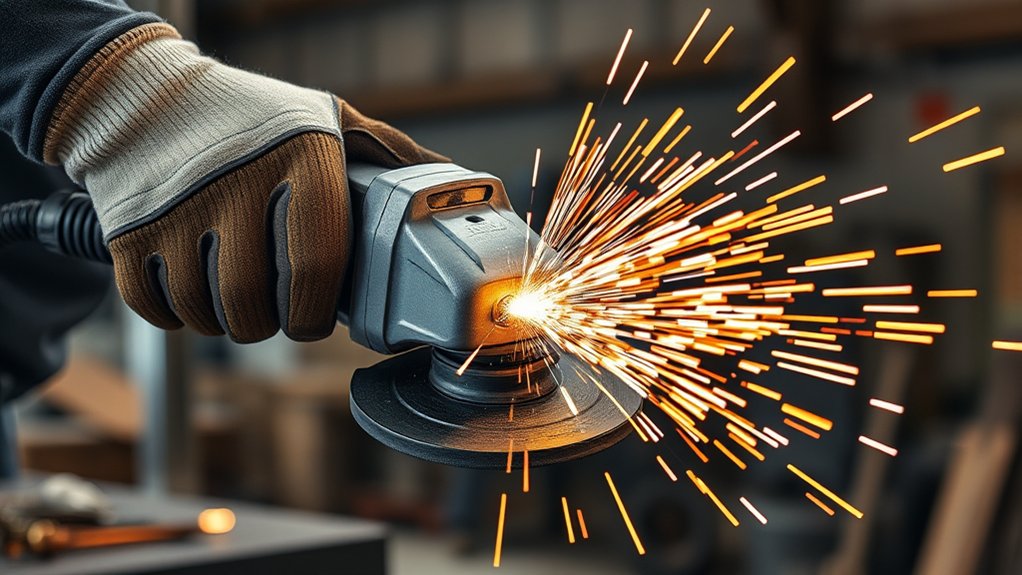
A damaged or misused grinding wheel can throw sparks, grit, wire fragments, or broken abrasive pieces toward you with little warning. A face shield adds important facial coverage, but it is only one part of safe angle-grinder use. You also need primary eye protection, the correct wheel and guard, and a work area prepared for sparks and dust.
Quick Answer
Yes. Wear an impact-rated face shield over safety glasses with side protection when grinding creates sparks or flying debris. Use appropriate goggles instead of glasses when fine dust can reach the eyes. A face shield is secondary protection; it does not replace eye protection, the grinder guard, or the correct wheel.
Key Takeaways
- Wear a face shield over impact-rated safety glasses or suitable goggles rather than relying on the shield alone.
- Select eye and face protection rated for the hazard and compatible with the latest ANSI/ISEA Z87.1 standard.
- Keep the correct guard installed and use a wheel that matches the grinder’s size, arbor, task, and maximum speed.
- Control concrete, masonry, coating, and metal dust at the source; a face shield provides no respiratory protection.
- Replace shields that are cracked, deeply scratched, chemically damaged, distorted, or too cloudy for a clear view.
At a Glance
| Time Required | About 2–5 minutes for a pre-use PPE, wheel, guard, and work-area check |
| Difficulty | Easy, but correct PPE and accessory selection require careful label and manual checks |
| Tools Needed | Rated safety glasses or goggles, impact-rated face shield, grinder guard, side handle, correct wheel, clamps, hearing protection, and dust controls as needed |
| Cost | No added cost when approved PPE is already available; otherwise the cost varies by the required rating and compatible equipment |
Why Face Shields Matter in Grinding Operations

Angle grinders rotate abrasive wheels, cutting discs, wire wheels, and other accessories at high speed. During use, they can release hot sparks, sharp metal chips, abrasive grit, wire bristles, coating particles, or pieces of a damaged wheel.
Impact-rated safety glasses protect the eyes but leave much of the forehead, cheeks, nose, mouth, and chin exposed. A properly selected face shield adds coverage over those areas. The shield should extend from the brow to at least below the chin and provide suitable side coverage without blocking your view of the wheel or workpiece.
OSHA’s eye and face protection standard requires appropriate protection when workers are exposed to hazards such as flying particles. The exact equipment required at a workplace must follow the employer’s hazard assessment, applicable regulations, site rules, and the tool and PPE manufacturers’ instructions.
A face shield reduces exposure to flying debris, but safe grinding still depends on the correct wheel, an installed guard, a secured workpiece, and proper operating technique.
Warning: Never use a face shield as a substitute for safety glasses or goggles. The open edges around a shield can allow small particles to reach the eyes, and no shield can guarantee protection from every fragment released during a catastrophic wheel failure.
When Do You Need a Face Shield for Grinding?
Wear a face shield over primary eye protection whenever an angle-grinding task can send sparks, chips, grit, bristles, or abrasive fragments toward your face. That includes common work on metal, welds, concrete, masonry, rust, paint, scale, and coatings.
For workplace tasks, the final PPE decision belongs to the hazard assessment and applicable rules. The table below gives practical minimum guidance, not a replacement for employer or manufacturer instructions.
| Situation | Recommended Protection | Why |
|---|---|---|
| Grinding metal or welds | Safety glasses with side protection plus a face shield | Hot sparks, scale, metal chips, and abrasive fragments may travel toward the face. |
| Grinding concrete or masonry | Suitable eye protection, face shield, and dust controls; respiratory protection when the hazard assessment requires it | Chips and grit can strike the face, while fine silica-containing dust can be inhaled. |
| Using an abrasive cutting disc | Safety glasses plus a face shield, with the correct cutting guard | Cutting discs are thin and can fail if damaged, twisted, pinched, or side-loaded. |
| Using a wire wheel or cup brush | Safety glasses plus a face shield | Individual wires can break loose and become high-speed projectiles. |
| A task that produces little visible sparking | Select protection from the actual impact and dust hazards, not spark level alone | A task may release chips or dust even when it produces few visible sparks. |
| Working near another person who is grinding | Eye protection and suitable screens or distance based on the hazard assessment | Sparks and fragments can travel beyond the immediate operator’s position. |
Do not base the decision only on the material or how many sparks you can see. Consider wheel-breakage risk, the direction of debris, fine dust, nearby workers, and whether the workpiece can move or trap the wheel.
How to Use a Face Shield With Safety Glasses
Put on your primary eye protection first. Then lower the face shield over it and confirm that both pieces stay in their intended positions when you turn your head, look down, and move into your working stance.
Products Worth Considering

EYE & FACE PROTECTION - Jackson Safety’s GPL500 Safety Goggles with a detachable flip-up face shield ensure your safety in the most demanding environments with indirect vents and anti-fog coating

SUPERIOR PROTECTION — Experience all-around face protection thanks to the curved design of this faceshield. The visor of this face guard is ANSI Z87+ certified, and up to 2x thicker for increased durability. Plus, you can comfortably wear your grinding face shield over prescription glasses.
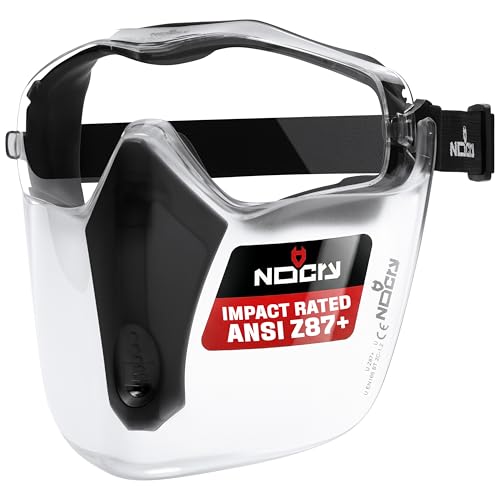
COMPLETE PROTECTION — Pairing anti-fog and scratch-resistant goggles with a tough polycarbonate torch face shield, this unbeatable duo has you covered from splashes, dust, and debris. And they are built to resist high-speed impacts, even in extreme temperatures.
Use the Right Gear Combination
For most metal-grinding impact hazards, use safety glasses with side protection beneath the face shield. Select goggles when the hazard assessment identifies fine airborne dust that can pass around ordinary glasses. Goggles must still be compatible with the face shield and rated for the specific impact or dust hazard.
Normal prescription glasses are not a substitute for safety eyewear unless they are specifically manufactured and marked as compliant protective eyewear. Use prescription safety glasses or approved over-the-glasses protection that does not disturb the position of either pair.
A full face shield works as secondary protection by covering areas that safety glasses do not. The complete shield assembly—including the window, headgear, carrier, and mounting hardware—must be suitable for grinding hazards.
Why Layered Protection Works Better
A face shield has openings around its sides and bottom. It can also lift, shift, or sit farther from the face when worn with other PPE. Primary eye protection helps protect the eyes when a small particle travels around the shield’s edge or when the shield is raised after the wheel stops.
Layered protection is especially important when using brittle abrasive wheels, wire brushes, or accessories that may release small fragments in unpredictable directions. The shield provides broader facial coverage while the glasses or goggles remain in position close to the eyes.
How to Keep Comfort and Visibility
Poor fit can tempt you to raise the shield or work from an unsafe angle. Complete this fit check before starting the grinder:
- Adjust the headgear so the shield stays centered without excessive pressure.
- Confirm that the shield does not push safety glasses, goggles, or prescription eyewear out of position.
- Check for interference with earmuffs, a hard hat, or respirator straps.
- Lower the shield fully and verify that it covers the brow, cheeks, mouth, and chin as intended.
- Look through the area you will use to view the wheel and workpiece; it should be clear and free of distortion.
- Use a compatible anti-fog design or manufacturer-approved treatment when heat, humidity, or respiratory PPE causes fogging.
- Replace a cracked, distorted, deeply scratched, or cloudy window before it affects your vision or coverage.
Note: A face shield that repeatedly strikes your respirator, earmuffs, or chest may not remain in its tested position. Use components that the manufacturers identify as compatible rather than forcing mismatched PPE together.
How to Pick the Right Face Shield for Your Grinder

Choose a face shield by its tested protection, complete assembly, coverage, fit, optical clarity, and compatibility—not by window thickness or material alone. Polycarbonate is common because it can combine impact resistance with low weight, but the product’s rating and instructions determine whether it is suitable for grinding.
Products Worth Considering

HIGH IMPACT FACE SHIELD - Sellstrom's Advantage Face Shield is ideal for various types of machinery, welding, cutting, grinding, woodworking, and other types of work that present potential hazards to the face

INTERNATIONAL STANDARDS — Meets ANSI Z87.1 (US), CE EN166 (Europe), CSA Z94.3 (Canada), UKCA (United Kindom)

MAXIMUM PROTECTION – Jackson Safety's Maxview Face Shield features an oversized window for maximum face coverage; Integrated side and chin guards protects against splashes and flying debris while an extended crown keeps you safe from overhead hazards
Choose Impact-Resistant Materials
Check these points before relying on a face shield:
- Hazard rating: Select a complete shield assembly identified by the manufacturer for high-impact work such as grinding.
- Current standard: Look for equipment represented as compliant with the applicable ANSI/ISEA Z87.1 eye and face protection standard. ANSI/ISEA Z87.1-2025 is the latest edition as of July 2026.
- Markings: Inspect the window and supporting components for the required manufacturer and protection markings. Do not rely on an unverified marketplace description.
- Coverage: Use a design that covers the forehead, cheeks, nose, mouth, and chin and provides suitable side coverage for the task.
- Visibility: Choose a clear, low-distortion window and an appropriate anti-fog option when your working conditions require it.
- Compatibility: Confirm that replacement windows are approved for the exact headgear or carrier rather than assuming similarly sized parts are interchangeable.
Inspect both the window and headgear before every grinding session. A clear replacement window installed on damaged, loose, or incompatible headgear does not restore the assembly to safe condition.
Check the Fit Before You Start
The headband should hold the shield securely without slipping forward, rotating to one side, or lifting when you bend. Adjust the shield-to-face distance and pivot tension only as the manufacturer permits.
Make sure safety glasses remain level and that their side protection is not displaced. When using goggles, check that the shield does not break the goggle seal. If a tight-fitting respirator is required, the shield and eyewear must not interfere with its fit, straps, or user seal check.
Do not grind with the shield partly raised to improve airflow or visibility. Correct the fogging, lighting, fit, or equipment-compatibility problem before restarting.
Top Mistakes That Reduce Face Shield Protection

A rated face shield cannot provide its intended protection when it is worn incorrectly, paired with unsuitable equipment, or used to compensate for an unsafe grinder setup. Avoid these common mistakes:
- Skipping safety glasses or goggles: A shield’s open edges can allow small particles to reach the eyes.
- Using ordinary prescription glasses: Everyday lenses and frames are not automatically impact-rated safety eyewear.
- Buying by appearance alone: A thick or clear plastic window is not proof that the complete assembly meets an impact standard.
- Mixing unapproved parts: A replacement window and headgear from different systems may not perform as a tested assembly.
- Working with a raised shield: The shield must be fully lowered before the wheel contacts the workpiece.
- Using a damaged or dirty window: Cracks, deep scratches, residue, and clouding reduce both visibility and confidence in the material.
- Ignoring the grinder guard: A face shield is not a replacement for the guard required for the wheel and operation.
- Standing in the wheel’s direct plane: Position yourself and the guard to reduce exposure if the wheel releases fragments.
- Using the wrong wheel: An accessory with the wrong diameter, arbor, task rating, or maximum speed can fail even when the operator wears full PPE.
Pro Tip: Keep an approved replacement window available, but label it for its compatible headgear. Replace the entire assembly when the carrier, pivots, adjustment system, or headband is damaged.
How to Maintain Your Face Shield for Safe Grinding
Inspect the face shield before each use and again after any impact. Look for cracks, chips, crazing, deep scratches, chemical damage, heat distortion, loose fasteners, worn pivots, damaged headgear, or a window that will not stay fully lowered.
Clean the shield according to its manufacturer’s instructions. Mild soap, clean water, and a soft nonabrasive cloth are suitable for many products, but coatings and plastics differ. Do not use solvents, harsh cleaners, scouring pads, or unapproved disinfectants that may weaken the window or damage an anti-fog coating.
Rinse away loose grit before wiping so embedded abrasive particles do not scratch the viewing area. Allow the components to dry completely before storage, and do not polish away deep damage that should trigger replacement.
Store the shield in a clean, dry location where the window cannot be crushed or rubbed against tools. Protect it from direct sunlight, excessive heat, welding spatter, chemicals, and sharp objects. Follow any manufacturer service-life or replacement instructions even when the damage is not obvious.
Extra Safety Steps Before You Start Grinding
Your face shield protects only one part of your body. Safe grinding also requires a suitable tool, accessory, workpiece setup, and work area. Review the grinder manual and an official manufacturer resource such as DEWALT’s abrasive safety guidance before using an unfamiliar wheel or attachment.
Inspect the Grinder, Wheel, and Guard
- Disconnect power: Unplug a corded grinder or remove its battery before installing, removing, or adjusting a wheel, guard, or accessory.
- Check the tool: Inspect the cord, plug, battery, switch, spindle, flange, side handle, and housing. Remove damaged equipment from service.
- Match the wheel: Verify the wheel type, diameter, thickness, arbor, and intended operation. Its maximum rated speed must be at least as high as the grinder’s no-load speed.
- Inspect the wheel: Do not use an accessory that is cracked, chipped, warped, expired, contaminated, dropped, water-damaged, or otherwise questionable.
- Use the correct guard: Keep the guard installed, select the guard intended for the wheel and operation, and position it between you and the exposed wheel.
- Install the side handle: Use the handle and hold the grinder with two hands unless the manufacturer provides different instructions for a specific tool.
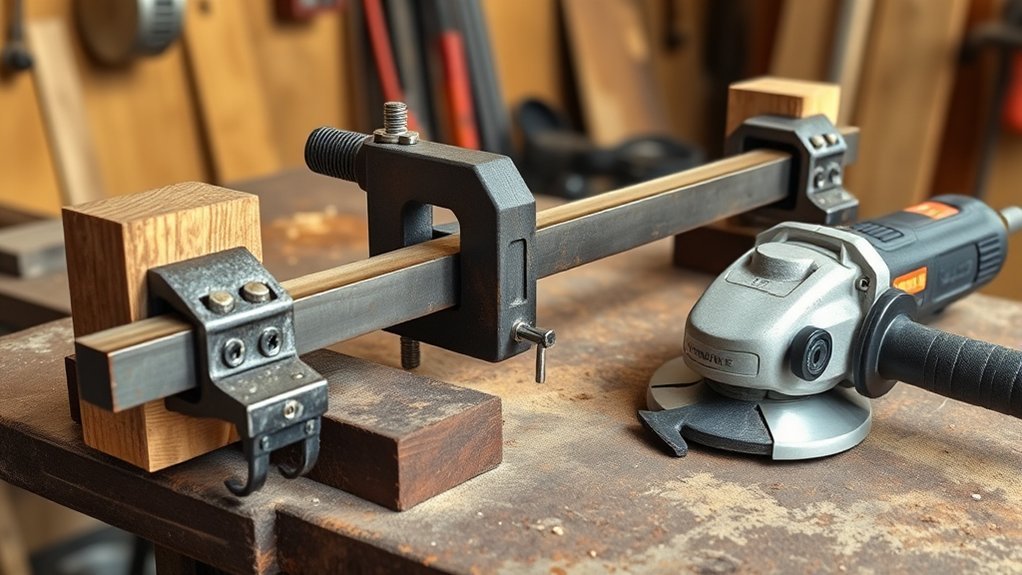
- Secure the workpiece: Clamp it so it cannot shift, spin, close on a cutting wheel, or pull your body toward the accessory.
- Test safely: After assembly, stand out of the wheel’s direct plane and run the grinder in a safe position before contacting the workpiece, following the manufacturer’s procedure.
OSHA’s portable-tool guarding requirements state that the guard on a right-angle or vertical portable grinder must be positioned between the operator and the wheel so fragments from an accidental break are directed away from the operator.
Warning: Do not use a thin cutting disc for side grinding unless the wheel manufacturer expressly rates it for that operation. Side pressure, twisting, binding, or forcing a cutting wheel can cause it to fracture.
Control Sparks, Fire, and Bystander Exposure
- Direct sparks away from your body, cords, hoses, vehicles, glass, finished surfaces, and other people.
- Remove flammable liquids, paper, sawdust, oily rags, gas cylinders, and other combustibles from the spark path.
- Do not grind where combustible dust or vapor may be present.
- Use suitable screens or barriers when sparks or fragments could reach nearby workers.
- Follow workplace hot-work permit, fire-watch, and post-work inspection rules when they apply.
- Keep both hands on the grinder and maintain balanced footing throughout the cut or grind.
- Wait for the wheel to stop completely before setting the tool down.
Control Dust and Fumes
A face shield does not filter air. Grinding concrete, brick, mortar, stone, coatings, or contaminated metal can release hazardous dust or fumes. Concrete and masonry tasks may generate respirable crystalline silica, while old coatings may contain lead or other hazardous substances.
Use engineering controls first. Depending on the tool, material, and applicable rules, these may include an integrated shroud connected to a suitable dust extractor, local exhaust ventilation, or a water-delivery system approved for the grinder and wheel. NIOSH guidance on controlling concrete-grinding dust describes local exhaust methods for reducing silica-containing dust.
When respiratory protection is required, use a properly selected NIOSH Approved respirator for the evaluated hazard. Workplace use may require medical evaluation, fit testing, training, cartridge or filter selection, maintenance, and a written respiratory-protection program. Do not select a respirator only by calling the material “dusty.”
Protect the Rest of Your Body
- Wear hearing protection selected for the measured or expected noise exposure.
- Wear close-fitting gloves suitable for sparks, sharp edges, and the work material without allowing loose cuffs near the rotating wheel.
- Use nonmelting, close-fitting clothing that covers exposed skin and does not have loose strings or hanging fabric.
- Wear suitable footwear and an apron or other body protection when the spark and fragment path requires it.
- Tie back long hair and remove jewelry or other items that could contact the wheel.
Note: Follow the grinder manual, wheel instructions, PPE instructions, and workplace rules whenever they require stricter controls. Do not defeat a guard or use an unapproved accessory because PPE appears to provide extra coverage.
Frequently Asked Questions
Should You Wear a Face Shield When Grinding?
Yes. Wear an impact-rated face shield over suitable safety glasses or goggles when grinding can produce sparks, chips, wire fragments, or abrasive debris. The exact workplace requirement must follow the hazard assessment, applicable regulations, and manufacturer instructions.
Which Face and Eye Protection Should You Use With Grinding Equipment?
For common impact hazards, use compliant safety glasses with side protection beneath a full face shield rated for the task. Use suitable goggles when fine dust can pass around glasses. Confirm that every item fits correctly and remains compatible with your hearing protection, respirator, hard hat, and prescription eyewear.
Should You Wear a Respirator When Using an Angle Grinder?
You may need one when grinding produces hazardous dust or fumes, including silica-containing dust from concrete and masonry or contaminants from coatings and metals. Use source controls first. When a respirator is required, it must be NIOSH Approved, selected for the evaluated hazard, fitted correctly, and used under applicable workplace respiratory-protection requirements.
Which Grinding Activities Need a Full Face Shield?
Use one for metal grinding, weld cleanup, abrasive cutting, wire brushing, concrete or masonry grinding, rust removal, and similar tasks that can send fragments toward the face. Low visible sparking does not prove that a task is free of impact or dust hazards.
Can You Use Only Safety Glasses When Grinding?
Safety glasses protect the eyes but leave much of the face exposed. For grinding that creates sparks or flying debris, add a suitable face shield over the glasses. A workplace hazard assessment or tool instruction may require goggles or other protection for a specific task.
Can You Grind With a Face Shield but No Safety Glasses?
No. A face shield has openings around its edges and may move during work. Keep compliant safety glasses with side protection or suitable goggles underneath it whenever eye hazards are present.
Do Prescription Glasses Count as Safety Glasses?
Ordinary prescription glasses do not count unless they are manufactured and marked as compliant protective eyewear. Use prescription safety glasses or approved over-the-glasses safety eyewear that fits without disturbing either pair of lenses.
Safety Disclaimer: This article provides general safety information, not a task-specific hazard assessment or substitute for training. Always follow the grinder, wheel, PPE, and dust-control manufacturers’ instructions, applicable regulations, and workplace rules. Stop work when equipment is damaged, incompatible, or unsuitable for the hazard.
Conclusion
A face shield provides important facial coverage during angle grinding, but it must be worn over suitable safety glasses or goggles. Choose a complete impact-rated assembly, keep the window clear and undamaged, and confirm that it works with your other PPE.
Before each job, inspect the grinder, wheel, guard, handle, workpiece, and spark path. Match the wheel to the tool and task, control dust at its source, and follow the manufacturer’s instructions and workplace hazard assessment. Layered PPE works best when the grinder itself is set up and operated safely.
Sources
- OSHA 29 CFR 1910.133 — Eye and Face Protection — requirements for protection from flying particles and side-impact hazards.
- OSHA 29 CFR 1910.243 — Guarding of Portable Powered Tools — guard positioning and portable abrasive-wheel requirements.
- International Safety Equipment Association — Eye and Face Protection — current ANSI/ISEA Z87.1-2025 standard information.
- NIOSH — Control of Hazardous Dust When Grinding Concrete — local exhaust and concrete-dust control guidance.
- NIOSH — Respirator Selection and Use — hazard-based selection, approval, fit, and respiratory-program guidance.
- DEWALT — Abrasive Safety — manufacturer guidance for abrasive wheels and grinder use.