When using an angle grinder, always wear hearing protection since noise levels can exceed 100 dB, risking irreversible hearing damage. Choose options like earplugs or earmuffs with a Noise Reduction Rating (NRR) of at least 25 dB for better safety. Assess your workspace regularly for noise levels and use a sound level meter to know when protection is necessary. Regular maintenance of your hearing gear guarantees it remains effective. You might find more tips on enhancing your safety while working.
Understanding Noise Levels and When Hearing Protection Is Necessary
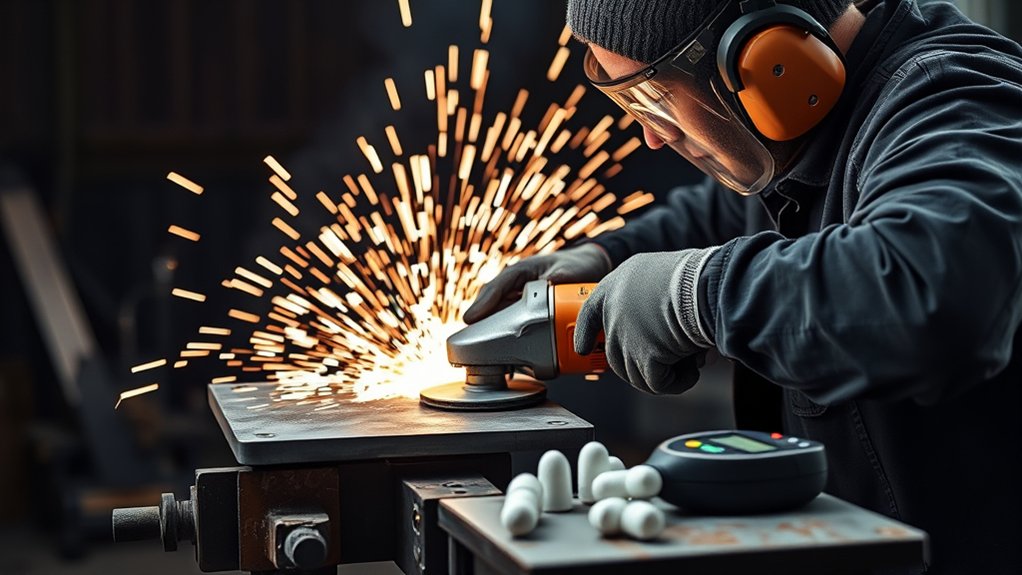
When you use an angle grinder, it’s important to understand that the noise levels can be dangerously high. Typically, these tools produce noise ranging from 85 dB to over 100 dB. Prolonged exposure to such noise can lead to irreversible hearing loss, especially when levels exceed 90 dB. This makes hearing protection a must. If you’re operating in environments where noise levels are consistently high, ear plugs or earmuffs become essential pieces of personal protective equipment. Many users underestimate the danger, so consider using a decibel meter to accurately assess noise levels. Remember, if you’re exposed to sounds above 85 dB, you should definitely wear hearing protection that offers at least 20 dB of noise reduction. Protecting your hearing is critical, allowing you to work freely without the fear of future hearing loss. Prioritize your safety and well-being while using an angle grinder.
Selecting Effective Hearing Protection Options
When using an angle grinder, choosing the right hearing protection is essential to safeguard your hearing. You can pick between earplugs and earmuffs, each offering different levels of noise reduction. Pay attention to the noise reduction rating (NRR) and make certain your chosen option fits well for maximum effectiveness.
Types of Hearing Protection
To protect your hearing while using an angle grinder, it’s important to choose the right type of hearing protection. Angle grinders can produce noise levels exceeding 85 dB, making effective hearing protection essential, especially during prolonged exposure. Common options include earplugs, earmuffs, and custom-molded devices, each offering different levels of noise reduction. When selecting, consider the Noise Reduction Rating (NRR); aim for at least 25 dB for optimal safety. Comfort and fit are critical, as poorly fitting devices can reduce effectiveness, increasing noise exposure. Additionally, make sure your hearing protection works well with other personal protective equipment (PPE), like safety glasses, to maintain overall safety without compromising comfort. Choose wisely for a safer, liberated working experience!
Noise Reduction Ratings (NRR)
Selecting effective hearing protection hinges on understanding Noise Reduction Ratings (NRR), as these ratings indicate how well a device can block harmful noise levels. For angle grinder use, you should aim for an NRR of at least 20 dB to adequately mitigate the excessive noise, which can exceed 100 dB. Proper fit is essential; choose earmuffs or earplugs that provide comfort and compatibility with other PPE, like safety helmets. Remember to regularly inspect and replace your hearing protection, since worn-out devices lose their effectiveness in sound attenuation. By following these safety precautions and selecting appropriate hearing protection based on NRR, you can greatly reduce the risk of hearing damage while using an angle grinder.
Minimize Noise Exposure in Your Workspace
To effectively minimize noise exposure in your workspace, start by evaluating the noise levels generated by your angle grinder. Once you know the decibel levels, you can choose effective hearing protection options that suit your environment. Additionally, consider implementing noise control methods to further reduce the impact on your hearing.
Noise Level Assessment
When operating an angle grinder, it’s vital to assess the noise levels in your workspace, since these tools can generate sounds exceeding 85 dB. Prolonged exposure can lead to permanent hearing loss, so regular monitoring is important. Here are three steps to effectively manage noise levels:
- Use a Sound Level Meter: Measure the noise levels produced by your angle grinder to determine when hearing protection is necessary.
- Wear Hearing Protection: Always use earplugs or earmuffs when grinding, especially in enclosed spaces, to safeguard your hearing.
- Create a Safe Workspace: Regularly evaluate and minimize noise exposure to enhance safety and comfort while working.
Effective Hearing Protection Options
While working with angle grinders, choosing the right hearing protection is vital for minimizing noise exposure and safeguarding your hearing. Noise level awareness is important, as these tools can exceed 85 dB, leading to potential long-term damage. Options like earplugs and earmuffs effectively reduce noise exposure, with noise reduction ratings (NRR) indicating their effectiveness. Prioritize comfort and fit; a proper seal guarantees maximum noise reduction during extended use. In extremely noisy environments, consider combining earplugs and earmuffs for cumulative noise reduction. Regularly assess effectiveness by checking for wear and tear, replacing any damaged gear to maintain protection. Taking these steps helps make sure you stay safe and liberated from hearing loss while you work.
Best Practices for Hearing Protection Maintenance
Maintaining your hearing protection is essential for guaranteeing it effectively reduces noise exposure. By following these best practices, you can enhance their longevity and performance:
Maintaining your hearing protection is crucial for effective noise reduction and prolonging its lifespan.
- Regular Inspections: Check your hearing protection for signs of wear and damage. If they don’t fit well or show significant deterioration, it’s time to replace them to guarantee maximum protection.
- Cleaning: Clean earplugs and earmuffs according to manufacturer guidelines. This prevents dirt and bacteria buildup, which can compromise their effectiveness and lifespan.
- Proper Storage: Store your hearing protection in a dry, cool place away from direct sunlight. This helps prevent material degradation and maintains their integrity over time.
What to Do in a Hearing Emergency?
Hearing protection can only do so much, and sometimes emergencies arise despite your best efforts. If you or someone else experiences a hearing emergency while grinding, immediately remove them from the noisy environment to prevent further exposure to hazardous noise levels above 85 dB. Assess the situation for signs of hearing loss, such as ringing in the ears (tinnitus) or difficulty hearing normal conversation. If acute hearing loss occurs, seek medical attention right away; early intervention can mitigate long-term damage.
Keep a detailed record of the incident, noting noise levels and any symptoms experienced, as this information may be crucial for evaluating exposure and potential claims related to work-related hearing loss. Additionally, consider implementing a hearing conservation program in your workplace, including regular check-ups and training on the importance of consistent hearing protection during high-noise activities.
Additional Resources for Angle Grinder Safety
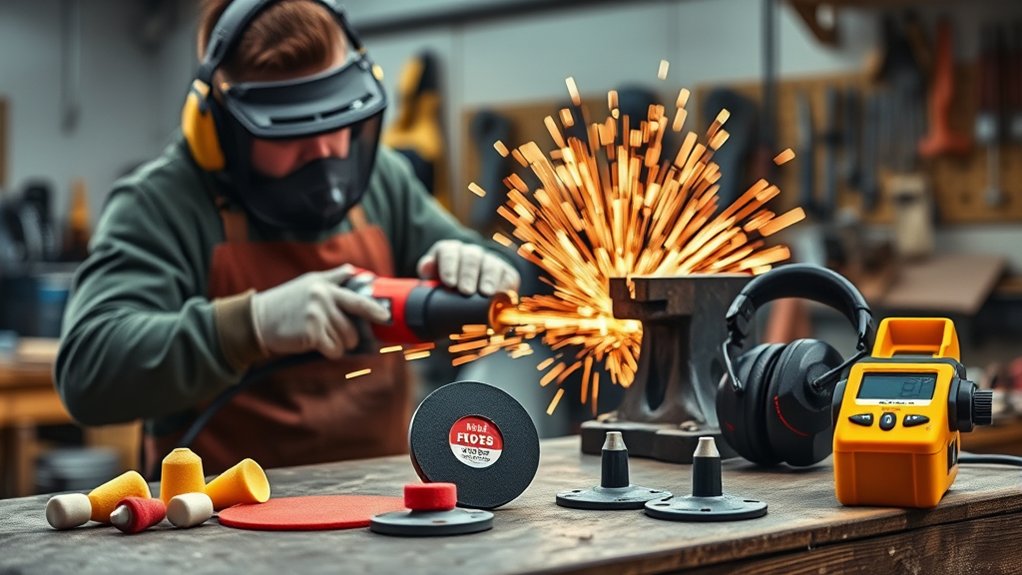
When using an angle grinder, having access to reliable safety resources is crucial for minimizing risks. Here are three key resources to keep in mind for ideal safety:
- Hearing Protection Guidelines: Make sure you understand the importance of wearing ear muffs or plugs when using grinders that exceed 85 dB. Prolonged exposure can lead to hearing damage.
- Training Programs: Participate in training that emphasizes the risks of noise exposure. Understanding the dangers can empower you to take proactive measures.
- Inspection Checklists: Regularly inspect your hearing protection for wear and damage. Replace them as necessary to maintain ideal effectiveness and make sure your comfort while working.
Frequently Asked Questions
Do You Need Ear Protection for an Angle Grinder?
Yes, you need ear protection for an angle grinder. High noise levels can lead to hearing loss, so choose effective protection types. Always check grinder specifications and prioritize workplace safety for your auditory health.
How to Choose the Right Angle Grinder?
To choose the right angle grinder, consider grinder types, power ratings, and weight. Evaluate handle designs, speed settings, and disc options. Compare brands to find one that suits your project needs and enhances your efficiency.
What Are the Key Safety Precautions to Take When Using an Angle Grinder?
Using an angle grinder’s like dancing with fire—be cautious. Prioritize personal protective gear, maintain your tool, master grinding techniques, manage vibration exposure, respect noise levels, guarantee operator training, and keep your workspace organized for safety.
What Are the OSHA Requirements for Angle Grinder Guards?
OSHA requires you to use appropriate guard types for angle grinders, guarantee equipment maintenance, conduct safety audits, and provide employee training. Don’t forget personal protective gear to manage noise levels and guarantee regulatory compliance.
Conclusion
To sum up, protecting your hearing while using an angle grinder isn’t just smart—it’s essential. Remember, “an ounce of prevention is worth a pound of cure.” By understanding noise levels, selecting the right protection, and maintaining it well, you can safeguard your hearing for years to come. Don’t take chances; prioritize your safety and create a quieter workspace. With the right setup, you can enjoy your projects without compromising your health.