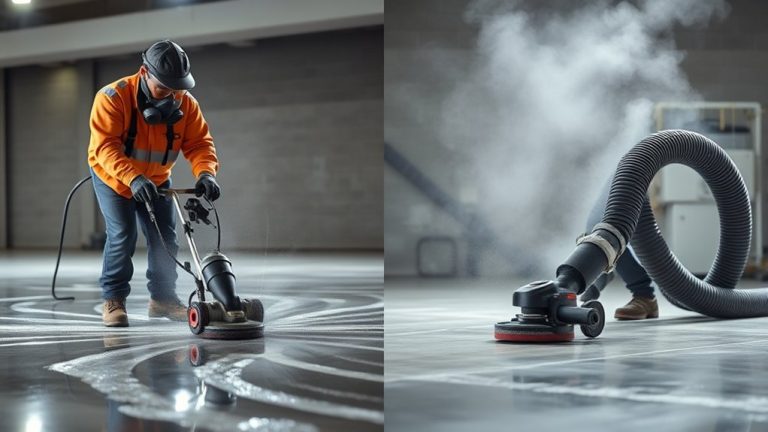
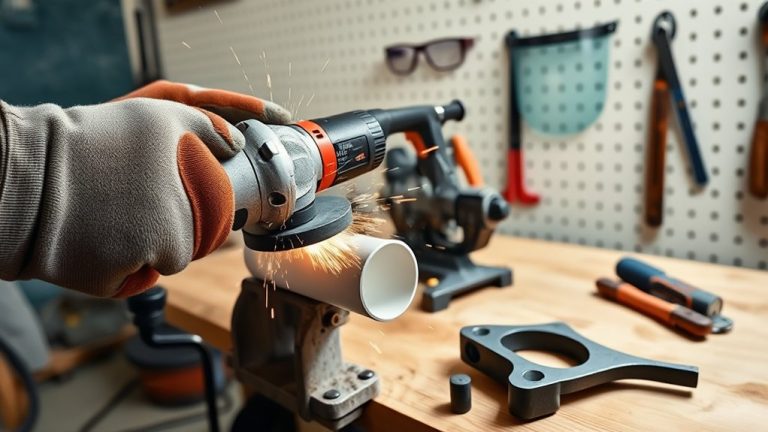
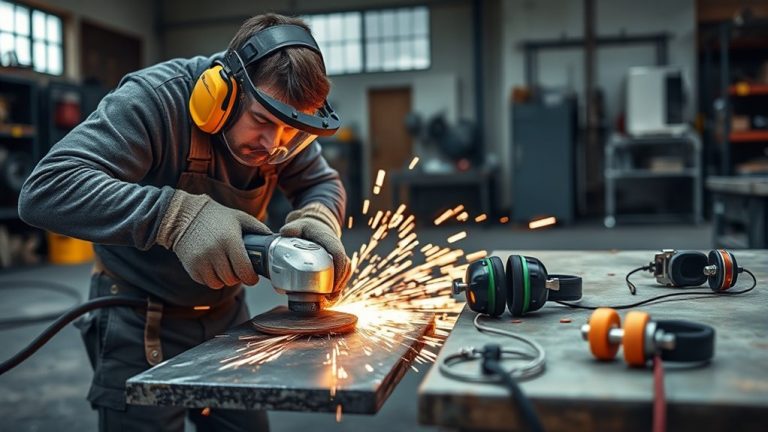
When using an angle grinder, you should wear a fitted half-face respirator with P2 filters to protect against harmful dust. This protection is essential during operations that create hazardous dust, which can lead to serious respiratory issues. Make sure the respirator fits properly and check it regularly for wear. Maintain dust control measures, like using industrial vacuums and shrouds, to enhance your protection. There’s more to take into account to maximize your safety and effectiveness.
Risks of Angle Grinder Dust
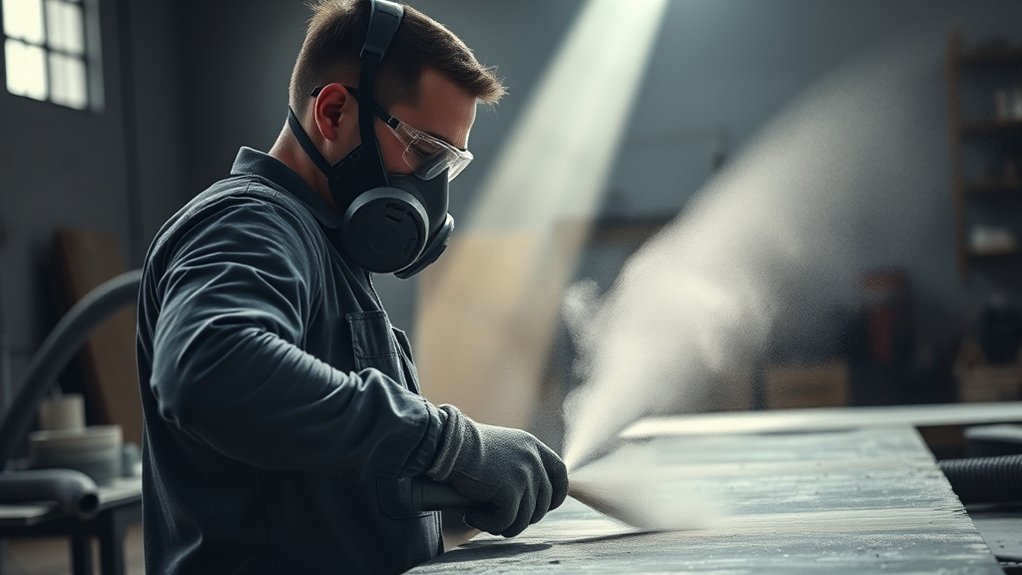
When using an angle grinder, it’s important to understand the risks associated with the dust generated during operation. Breathing in grinding dust can lead to serious respiratory issues, including chronic conditions like pneumoconiosis, which scars your lungs and reduces their function. Airborne particles can penetrate deep into your lungs and even enter your bloodstream, posing threats to essential organs like the liver and kidneys.
Metal dust exposure, especially from toxic substances such as silica and heavy metals, increases your risk of developing certain cancers with prolonged or repeated exposure. To safeguard your health, implementing proper grinder safety measures is imperative. Always wear a dust mask or, ideally, an FFP3 respirator to minimize inhalation of harmful particles. Prioritizing respiratory protection not only enhances your well-being but also empowers you to operate your angle grinder with confidence, free from the shackles of health risks.
When Is Respirator Protection Necessary?
Respirator protection is essential in any grinding operation that generates hazardous dust. When you’re grinding materials like metals, composites, rubber, or fiberglass, you expose yourself to serious respiratory health risks, including pneumoconiosis. For regular tasks involving these toxic materials, a fitted half-face respirator with P2 particulate filters is the minimum required under COSHH regulations. Dust masks fall short for fine particles and should only be used for infrequent grinding of non-toxic materials. If you’re grinding frequently, a respirator is a must. Guarantee proper fit testing and maintenance; a poorly fitted mask won’t protect you against harmful particles. Additionally, enhance your dust extraction efforts with shrouds and industrial vacuums to further reduce airborne contaminants. By prioritizing respirator protection, you safeguard your health and improve your working conditions during grinding operations.
Common Dust Types From Angle Grinding
When you grind materials, you’re exposing yourself to various types of dust, including metal particles from steel and aluminum, as well as composite materials. These dust types can pose significant health risks, such as respiratory issues and chronic conditions. Understanding the specific dust generated during grinding is essential for determining the necessary protective measures.
Types of Metal Dust
Metal dust generated during angle grinding consists of various particles, including steel, aluminum, and titanium. These fine particulates, often less than 10 micrometers in diameter, can penetrate deep into your lungs and contribute to serious respiratory conditions like pneumoconiosis. Inhalation of metal dust poses systemic health risks; particles can enter your bloodstream, potentially affecting essential organs such as the liver and kidneys. Regular exposure to these substances has been linked to chronic lung diseases and certain cancers. As a result, understanding the types of metal dust produced during grinding is imperative. Implementing effective dust control measures and using appropriate respirators can greatly mitigate these hazards, empowering you to work safely and protect your health.
Composite Material Dust Risks
As you grind composite materials, the dust generated can pose considerable health risks, particularly due to its composition of harmful fibers like carbon fiber, fiberglass, and resin. Inhaling composite material dust can lead to serious respiratory risks, similar to those caused by metal dust. Prolonged exposure might result in chronic lung diseases, emphasizing the importance of protection. To combat these risks, use respirators fitted with P3 filters, which effectively filter fine particles smaller than 0.5 microns. Additionally, make sure your workspace is well-ventilated and equipped with dust extraction systems to minimize airborne composite dust. By implementing these safety measures, you can greatly reduce the health hazards associated with grinding composite materials.
Health Impacts of Dust
Grinding operations produce various types of dust that pose considerable health risks. Breathing in this dust can lead to severe respiratory issues, including pneumoconiosis. Understanding these risks is essential for your safety.
- Metal dust can cause chronic lung diseases.
- Composite and rubber dust may lead to systemic health problems.
- Fiberglass particles can cause long-term damage to critical organs.
- Some metals are carcinogenic, increasing cancer risk.
To protect yourself, using respirators with proper filtration is necessary. Effective dust control measures greatly mitigate these health impacts, ensuring you’re not just working, but working safely. Don’t underestimate the dangers of grinding dust; your well-being depends on it.
Choosing the Right Respirator for Metal Grinding
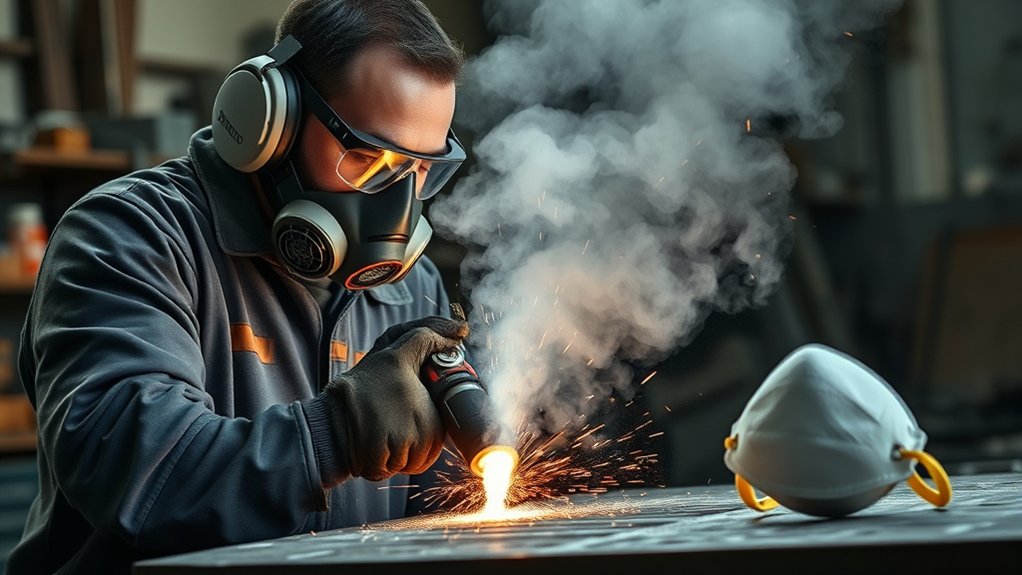
Choosing the right respirator for metal grinding is vital for maintaining your respiratory health. Start with a fitted half-face respirator equipped with P2 particulate filters, as this is the minimum recommendation to effectively filter harmful dust particles. Confirm proper fit testing; an ill-fitting respirator allows fine particles to bypass the filter, compromising your protection. Regular filter maintenance is essential—inspect and replace filters according to manufacturer guidelines to guarantee peak performance during grinding operations. For extended grinding tasks, consider air-supplied respirators, which offer superior protection against airborne contaminants. Finally, verify that your chosen respirator complies with COSHH regulations, as these mandate appropriate respiratory protective equipment when working with hazardous materials. By prioritizing these factors, you can greatly enhance your safety and health while engaging in metal grinding activities.
Essential Respirator Features for Metal Grinding
When selecting a respirator for metal grinding, it’s crucial to prioritize specific features that assure effective protection against harmful dust. A fitted half-face respirator with P2 particulate filters is the minimum standard for safeguarding your lungs during grinding operations. Consider these critical features:
Selecting a respirator for metal grinding is essential for lung protection; a fitted half-face model with P2 filters is the minimum standard.
- Secure Face Seal: Prevents fine metal dust from infiltrating.
- Regular Filter Changes: Guarantees optimal air quality and safety.
- Fit Check: Conduct this each time to confirm effectiveness.
- Air-Supplied Option: Provides enhanced protection in high dust concentrations.
How to Fit and Maintain Your Respirator
To guarantee maximum protection while using a respirator, you must achieve a proper fit through a fit test. Regular maintenance checks are essential; inspect for wear and replace filters as needed to maintain effectiveness. Cleaning your respirator after each use will also enhance its performance and longevity.
Proper Respirator Fit
Achieving a proper respirator fit is essential for effective protection against dust generated by angle grinders. To guarantee your respirator provides the best defense, follow these guidelines:
- Perform a fit test to check for air leaks around the edges.
- Stay clean-shaven; facial hair can compromise the fit.
- Regularly inspect for damage; verify straps are intact and filters aren’t clogged.
- Store the respirator in a clean, dry place when not in use.
Regular Maintenance Checks
Regular maintenance checks are essential for ensuring your respirator functions effectively against angle grinder dust. You should regularly inspect your respirator for wear and tear, confirming that straps, filters, and seals are intact. Replace filters according to the manufacturer’s guidelines, generally every 30 to 60 days, or sooner if you notice increased breathing resistance. Conduct a fit check each time you wear it by inhaling while covering the filters; a proper seal will cause the respirator to collapse slightly against your face. Clean your respirator after each use with mild soap and water, avoiding harsh chemicals. Finally, store it in a protective case to prevent dust accumulation and damage, ensuring it’s always ready for safe operation.
How Dust Control Measures Enhance Respirator Effectiveness
While using a respirator is essential for protecting against hazardous dust when operating an angle grinder, implementing effective dust control measures greatly boosts their effectiveness. By reducing airborne particulate levels, you enhance the respiratory protection offered by your respirator. Consider these critical strategies:
- Use shrouds and industrial vacuums to capture dust at the source.
- Equip your respirator and dust extraction systems with HEPA filters, capturing 99.97% of particles as small as 0.3 microns.
- Perform regular maintenance and filter changes to guarantee peak dust control.
- Monitor air quality with particulate monitors to adjust dust control measures proactively.
These combined approaches not only safeguard your health but also empower you to work confidently and efficiently. Remember, the right dust control measures amplify the protective capabilities of your respirators, minimizing your risk of respiratory illnesses associated with metal dust inhalation. Prioritize your safety and liberation in the workspace.
Best Practices for Using an Angle Grinder Safely
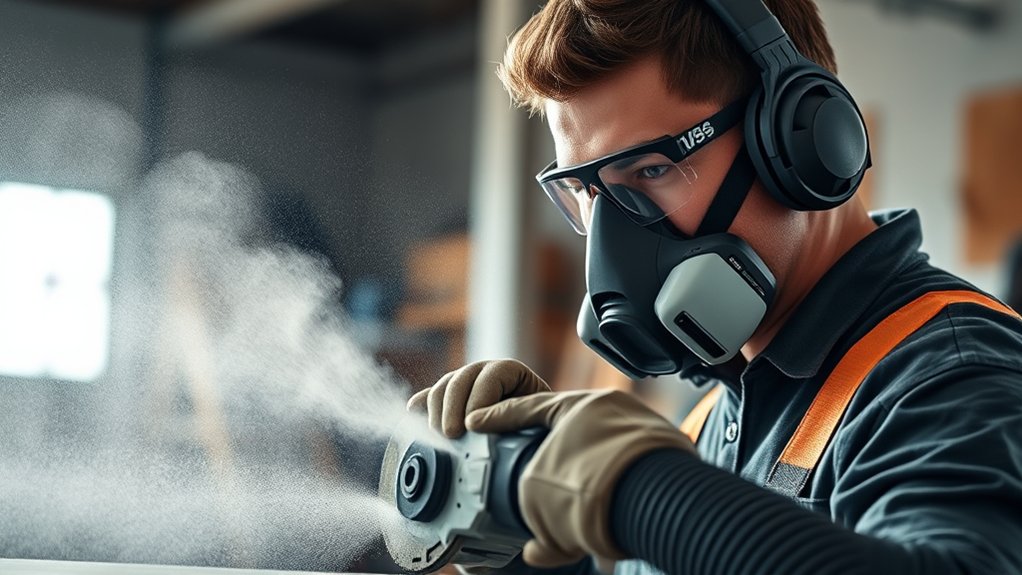
To guarantee safety while using an angle grinder, always wear a fitted half-face respirator with P2 particulate filters. Prepare your work area by inspecting the grinding disc and setting up a dust extraction system to reduce airborne particles. Maintaining a clean environment is essential; use an industrial vacuum for cleanup instead of sweeping, which can stir up harmful dust.
Safety Gear Essentials
Using an angle grinder requires essential safety gear to protect against hazards like metal dust and flying particles. A well-fitted respirator is vital for safe grinding. Here are some key practices to follow:
- Always wear a respirator with at least P2 particulate filters.
- Make certain it’s clean, well-maintained, and replace filters as needed.
- Opt for a half or full-face respirator when grinding toxic materials or in poorly ventilated spaces.
- Conduct a fit check each time to guarantee a tight seal.
Work Area Preparation Tips
Proper preparation of your work area is essential for safe angle grinding, as it greatly reduces the risk of accidents and exposure to harmful dust. Start by confirming proper ventilation, ideally using an air scrubber for air quality. Clear clutter and flammable materials to create a safe environment. Secure your workpiece with clamps or vices to minimize movement. Check lighting conditions for visibility, allowing for precise cuts. For effective dust collection, use industrial vacuums instead of sweeping or compressed air to prevent airborne particles.
| Task | Importance | Method |
|---|---|---|
| Ventilation | Reduces dust accumulation | Air scrubber |
| Workspace clearing | Minimizes hazards | Remove clutter |
| Securing workpiece | Enhances safety | Use clamps |
| Lighting check | Improves visibility | Confirm adequate light |
Indicators That Your Respirator Needs an Upgrade
A respirator’s effectiveness hinges on its condition, and several key indicators signal when an upgrade is necessary. Ignoring these signs may compromise your safety and freedom from harmful dust exposure.
- Visible wear: Cracks or tears in the facepiece compromise the seal.
- Clogged filters: Expired or ineffective filters drastically reduce protection.
- Breathing difficulties: Increased resistance indicates airflow issues that need addressing.
- Poor fit: Air leaks during fit tests mean it’s time for a tighter model.
If you notice any of these indicators, don’t hesitate to upgrade your respirator. The right setup is essential for maintaining your health while using an angle grinder or any similar equipment. Prioritize your safety; your lungs deserve reliable protection against hazardous dust.
Common Questions About Respirators in Dust Control
When should you reach for a respirator while grinding? If you’re using an angle grinder, especially on materials that generate fine metal dust or are hazardous, it’s essential to don a respirator. Standard dust masks won’t cut it; they lack the filtration needed for fine particles. For regular grinding tasks, a fitted half-face respirator with P2 particulate filters is your minimum requirement.
Don’t forget about fit testing—facial hair can compromise the seal, allowing harmful dust to enter. If you’re in a highly contaminated environment or grinding for extended periods, consider an air-supplied respirator for enhanced protection. Maintenance is key, too: regularly replace filters and clean your respirator to guarantee it works effectively. By prioritizing proper dust control with the right respirators, you safeguard your health and enhance your work environment, allowing you to grind with confidence.
Frequently Asked Questions
Do You Need a Respirator When Using an Angle Grinder?
Yes, you need a respirator when using an angle grinder. Protect your respiratory health by minimizing dust exposure. Guarantee you select proper safety equipment, like a fitted half-face respirator, to effectively shield against harmful particles.
Do You Need a p2 or P3 Mask for Sanding?
You’ll need a P2 mask for non-toxic sanding tasks, ensuring moderate dust filtration. For hazardous materials, opt for a P3 mask to enhance sanding safety, capturing 99.95% of airborne particles effectively. Prioritize your respiratory protection.
Do I Need a Dust Shroud for Angle Grinder?
Think of a dust shroud as your shield in the battle against harmful particles. You need one for effective dust collection, ensuring safety guidelines are met and providing essential respiratory protection while using an angle grinder.
Should I Use a Respirator When Grinding Metal?
Yes, you should use a respirator when grinding metal. Prioritize metalworking safety and respiratory protection to guarantee you’re shielded from harmful particles. Effective grinding techniques demand this essential gear for peak health and performance.
Conclusion
In the world of angle grinding, protecting your lungs is vital—think of it as wearing armor in battle. By understanding the risks and choosing the right respirator, you enhance your safety and efficiency. Remember, it’s not just about having a respirator; it’s about ensuring it meets essential features and is upgraded when necessary. Stay vigilant with dust control measures and best practices, and you’ll keep yourself safe while tackling your projects like a pro.