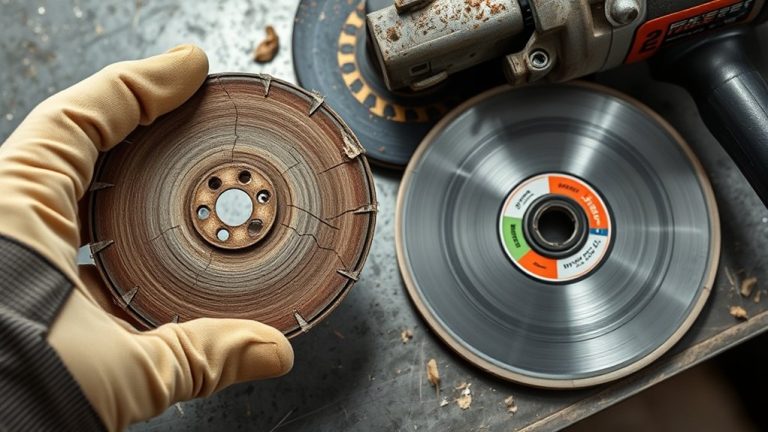
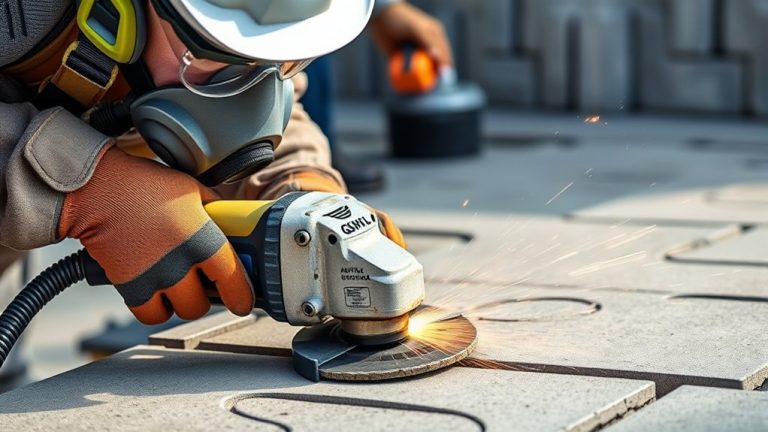
You should use a tuckpointing blade when you notice cracks larger than 1/4 inch, loose mortar, or signs of water damage. A dust shroud is essential for capturing dust and reducing cleanup, ensuring compliance with safety regulations. Choose a blade that matches your mortar joint size and consider segment height for efficiency. Always prioritize safety equipment and proper tool maintenance for best results. Learn about more tips to enhance your tuckpointing setup effectively.
Signs Your Mortar Needs Attention: When Should You Use a Tuckpointing Blade?
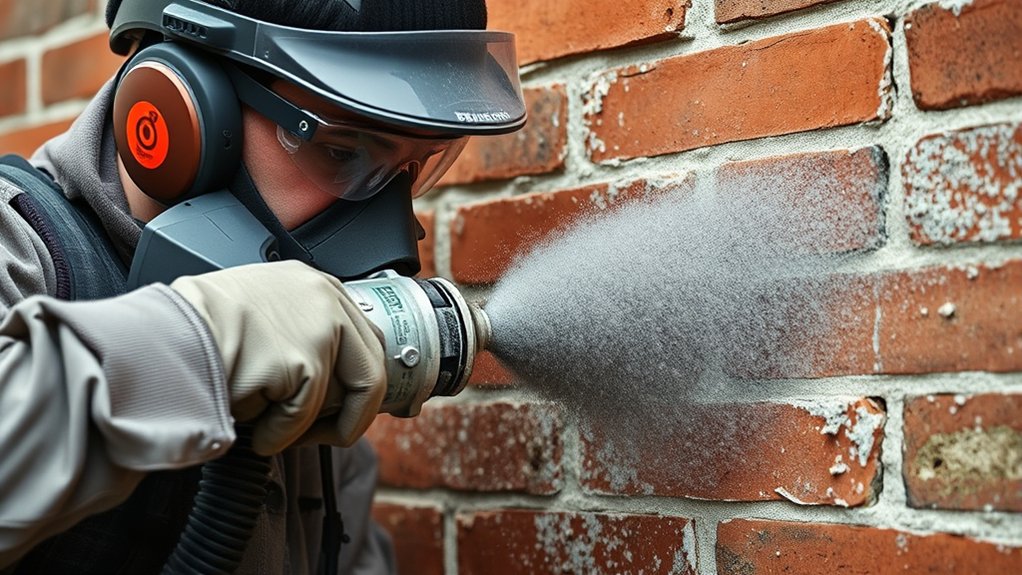
Have you noticed cracks in your mortar joints? If they’re greater than 1/4 inch, that’s a clear sign of damaged mortar needing immediate attention. Loose or crumbling mortar can compromise your masonry’s structural integrity, so you should act swiftly. Keep an eye out for signs of water damage, such as damp patches or mold growth inside your walls; these indicate water infiltration that tuckpointing can remedy.
Discoloration or efflorescence on bricks often suggests moisture issues. Regularly inspecting mortar joints, especially in humid climates, helps catch these problems early. If you see any of these warning signs, it’s time to contemplate using a tuckpointing blade. This tool is essential for removing old mortar effectively, ensuring your repairs restore both strength and durability. By addressing these issues promptly, you’ll maintain your masonry’s integrity and prevent costly repairs down the line.
Understanding Tuckpointing: Why It Matters for Masonry
Tuckpointing is an essential maintenance task for masonry that guarantees both structural integrity and aesthetic appeal. This process involves removing deteriorating mortar and replacing it with fresh mortar, effectively preventing water infiltration and damage to your brick structures.
- Preserves structural integrity
- Enhances aesthetic appeal
- Prevents moisture-related damage
- Utilizes specialized tools for efficiency
Regular tuckpointing is recommended every 25 to 30 years, or sooner in humid conditions, to address issues like cracks and crumbling mortar. By employing proper techniques, you can extend the lifespan of your masonry, blocking moisture and reducing freeze-thaw damage. Using specialized tools, such as tuckpointing blades and dust shrouds, guarantees precise mortar removal and minimizes dust exposure, making the process safer and more efficient. Investing time in tuckpointing not only protects your property but also maintains its visual charm for years to come.
How to Choose the Best Tuckpointing Blade for Your Project
Maintaining masonry’s structural integrity and aesthetic appeal hinges on choosing the right tools, particularly when it comes to tuckpointing blades. Start by selecting a tuckpointing blade that matches the mortar joint size; for narrow joints, opt for 1/4”, while 3/8” or 1/2” suits wider applications. This guarantees effective removal of old mortar. Consider using segmented diamond blades for durability and fast removal, or sandwich blades for thicker joints, tailoring your choice to your project needs.
Pay attention to the segment height; higher segments typically offer longer-lasting performance and better cutting efficiency. Confirm blade compatibility with your tools, such as angle grinders or tuckpointing machines, to avoid operational issues. Finally, prioritize professional-grade blades to enhance longevity and cutting speed, greatly improving the overall efficiency of your masonry restoration project. Choosing wisely will make your tuckpointing tasks more effective and satisfying.
Why a Dust Shroud Is Essential for Tuckpointing
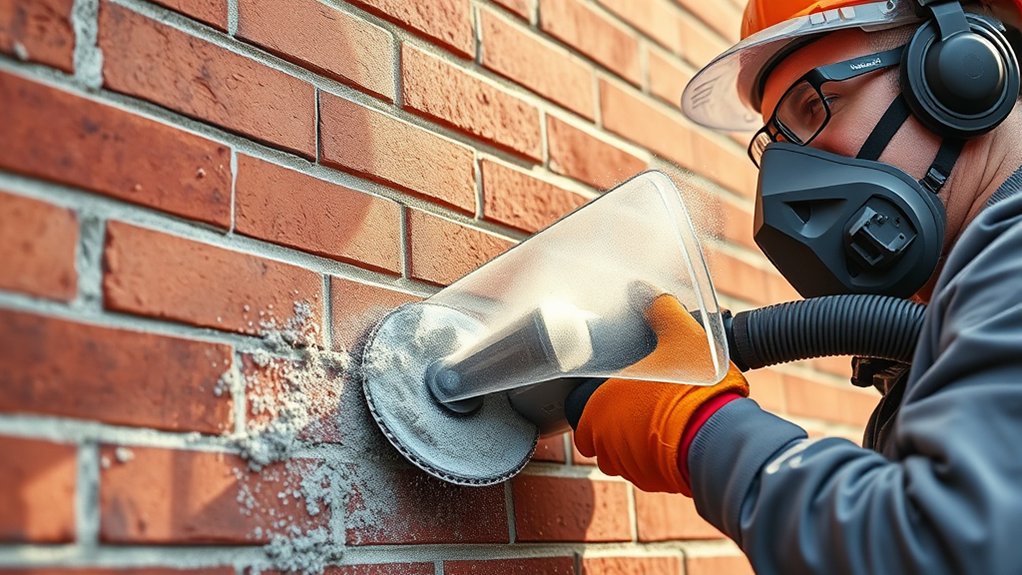
A dust shroud is an essential tool for guaranteeing a clean and safe working environment during tuckpointing. By using a dust shroud with your angle grinder, you not only enhance air quality but also considerably reduce residential hazards associated with silica dust exposure.
- Captures up to 95% of airborne dust
- Minimizes cleanup after tuckpointing jobs
- Fits standard angle grinders with no special equipment needed
- Complies with OSHA regulations for worker safety
These devices are designed for efficiency and precision, allowing for ideal dust capture tailored to blade type and joint size. Reducing airborne particles protects your health and that of your crew, while also streamlining your workflow. By incorporating a dust shroud, you guarantee a safer job site and improve overall productivity, making it a critical addition to your tuckpointing setup.
Step-by-Step: How to Safely Tuckpoint Your Masonry
Before you plunge into tuckpointing your masonry, make sure you’ve got the right tools and safety measures in place. Start by selecting a tuckpointing blade suited for your masonry joints—1/4” for narrow joints and up to 1/2” for wider ones. Next, attach a dust shroud to your angle grinder to minimize dust and enhance visibility, ensuring a clean environment.
Now, don your PPE: safety glasses, dust masks, and ear protection are essential during mortar removal. Begin the tuckpointing process by carefully cutting out the old mortar. Every 20-30 seconds, allow the blade to spin freely to keep it cool and effective.
Once you’ve cleared the joints, inspect and clean them thoroughly with a stiff brush and vacuum. This step is vital for achieving peak adhesion of the new mortar. Follow these steps diligently for a safe and successful tuckpointing project.
Common Tuckpointing Tool Mistakes to Avoid
When tackling tuckpointing, it’s essential to steer clear of common tool mistakes that can hinder your progress and compromise your results. Here are some pitfalls to avoid:
- Using the Wrong Blade Width: It can lead to inefficient removal of mortar and damage to surrounding bricks.
- Neglecting Dust Control: Failing to use a dust shroud exposes you to health risks and complicates cleanup.
- Overheating Blades: Not pausing every 20-30 seconds can reduce blade life and cutting performance due to thermal stress.
- Ignoring Safety Equipment: Skipping PPE, like safety glasses and dust masks, increases injury risk and long-term health issues.
Top Tips for Tuckpointing Tool Maintenance
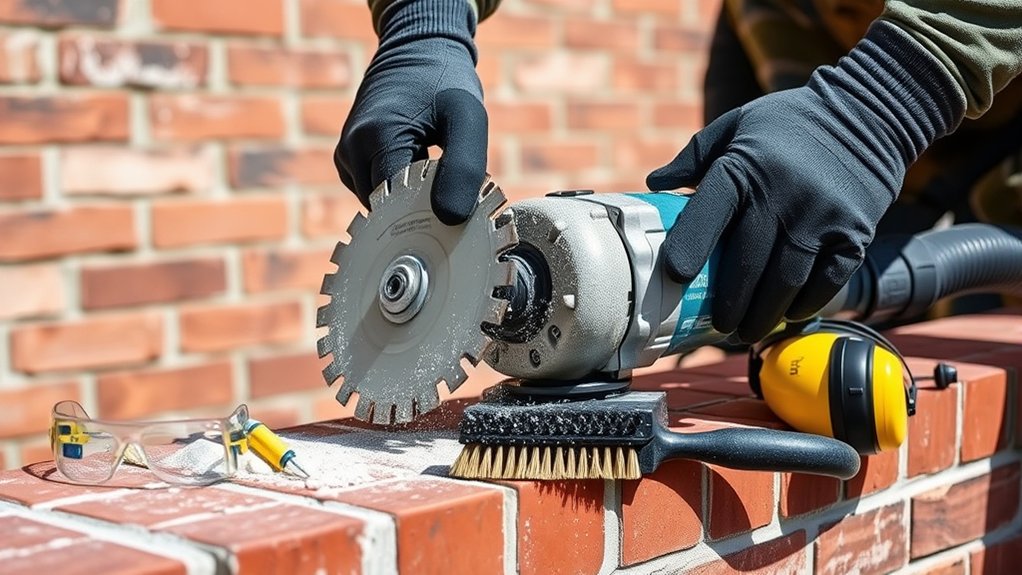
Maintaining your tuckpointing tools is essential for achieving ideal results and extending their lifespan. Regularly inspect your tuckpointing blades for signs of wear or damage; replace them when dull to maintain cutting efficiency and prevent damage to bricks. After each use, clean your dust shroud to avoid dust buildup that can hinder performance during future masonry work.
Store your tools in dry, cool conditions to prevent rust and deterioration, ensuring they remain effective for long-lasting repairs. Always lubricate moving parts according to the manufacturer’s recommendations to promote smooth operation and reduce wear over time.
Using protective gear, including safety glasses and dust masks, is vital during maintenance to safeguard your health while handling tools and materials. By following these tips, you’ll enhance the reliability and performance of your tuckpointing tools, leading to better results in your projects.
Frequently Asked Questions
What Are Tuck Point Blades Used For?
Tuck point blades are used for precise mortar removal in masonry repairs. You’ll need to evaluate blade materials, dust control measures, tool compatibility, and safety precautions to avoid common mistakes and manage project costs effectively.
What Is a Tuck Pointing Trowel Used For?
A tuck pointing trowel’s precision enhances tuck pointing projects, allowing you to shape mortar in joints effectively. With proper techniques and tools, you’ll guarantee tuck pointing benefits like improved aesthetics and increased structural integrity for your masonry.
How Often Should You Tuck Point?
You should tuck point every 25 to 30 years, but consider weather conditions and visible cracks. Follow a maintenance schedule, avoid common mistakes, and prioritize material selection and tool care for best results.
What’s the Difference Between Repointing and Tuck Pointing?
Repointing focuses on restoring structural integrity, while tuckpointing enhances aesthetics in masonry techniques. Think of it as patching a tire versus painting it—both serve a purpose, but their goals differ in brick maintenance and historical restoration.
Conclusion
In conclusion, using the right tuckpointing blade and dust shroud guarantees both effective repairs and your safety. For instance, consider a homeowner who faced crumbling mortar in their century-old brick home. By selecting the appropriate blade and employing a dust shroud, they not only restored the aesthetic appeal but also minimized health risks from dust inhalation. Remember, investing in the right tools and techniques can save you time, money, and headaches in the long run.