Using a wire cup brush on an angle grinder is ideal for rust removal and surface preparation. Always prioritize safety: wear eye protection, gloves, and a mask. Confirm your equipment is compatible and correctly installed to avoid accidents. Maintain a 5 to 15-degree angle for effective cleaning, and keep the brush moving to prevent overheating. Inspect the brush regularly for wear. You’ll discover more essential tips and best practices to enhance your experience with wire cup brushes.
How to Use Wire Cup Brushes Effectively
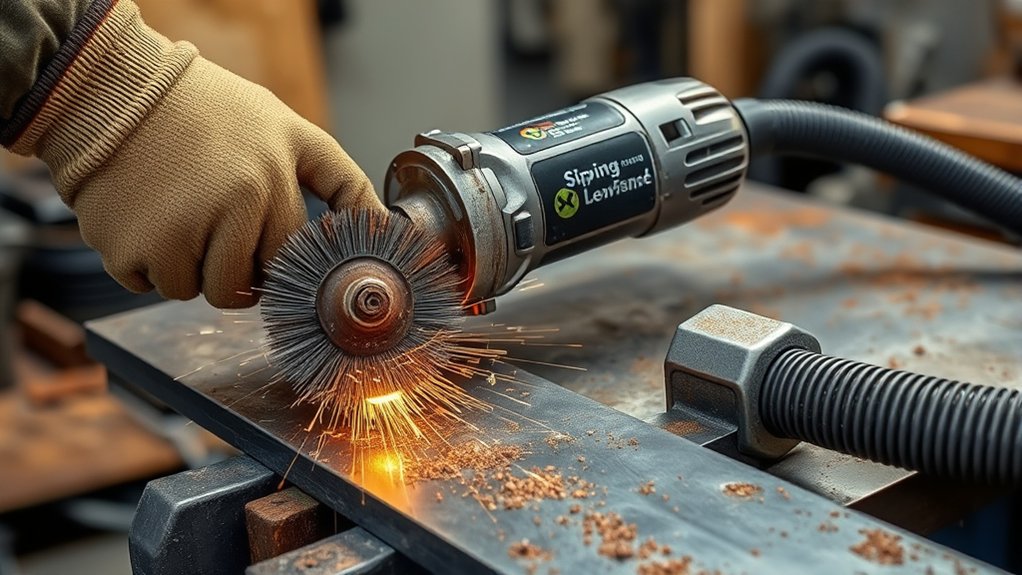
Using wire cup brushes effectively requires careful attention to safety and technique. Always wear appropriate eye protection, gloves, and a mask to shield yourself from debris and dust while working with an angle grinder. Start with a lower speed setting, gradually increasing the RPM to optimize cleaning without damaging the surface. Secure your workpiece with a vise or clamps to enhance stability and minimize vibrations, ensuring both safety and efficiency.
As you use the wire cup brush, move it continuously across the surface to prevent overheating and avoid applying excessive pressure; let the tool do the work. Regularly inspect the wire cup brush for wear and damage before use. Using a damaged brush not only compromises effectiveness but also poses significant safety hazards. By following these guidelines, you’ll maximize your results while maintaining a safe working environment.
Safety Gear and Precautions Before Using Wire Cup Brushes
Before you start using wire cup brushes with an angle grinder, it’s essential to prioritize your safety. Always wear eye protection and a face shield to guard against flying debris and wire bristles. Hearing protection is vital too, as angle grinders can produce noise levels that might harm your hearing over time.
Be certain to don long fire-retardant sleeves and gloves on both hands to protect your skin from sparks and potential burns during operation. Additionally, check that your angle grinder has a properly secured guard to minimize exposure to hazards.
Before diving into work, jog the tool for 60 seconds at full speed. This helps you spot any issues with the wire cup brush and guarantees safe operation. Taking these precautions will not only protect you but also enhance your confidence in using the equipment effectively.
Install Wire Cup Brushes on Your Angle Grinder
To install a wire cup brush on your angle grinder, first, verify the tool is unplugged to prevent any accidental starts. Use the spindle lock button to secure the grinder wheel, allowing you to safely remove the locking nut that holds the wire cup brush in place. Select the appropriate wire cup brush based on the material and task at hand; compatibility with your tool’s specifications is vital for safety and effectiveness.
Carefully position the wire cup brush onto the angle grinder’s spindle, making sure it’s aligned properly. After installation, tighten the anti-wire cover securely using a wrench to prevent it from loosening during operation. Once everything is in place, reconnect the power and test your setup for vibrations or wobbles. This step guarantees proper alignment and safe operation, empowering you to work effectively with your angle grinder.
Effective Cleaning Techniques With Wire Cup Brushes
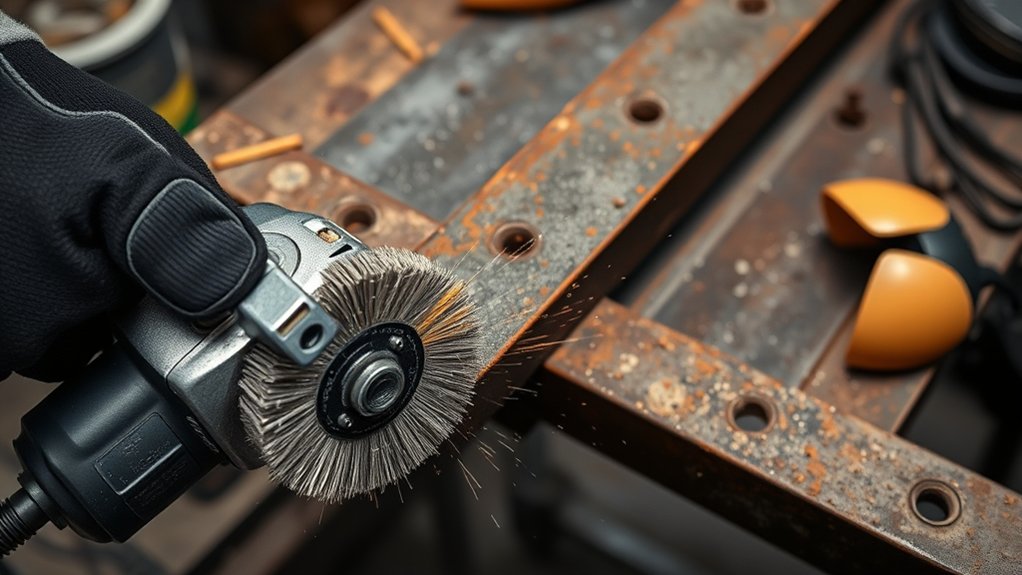
When using wire cup brushes, effective cleaning techniques are vital for achieving the best results. It’s important to wear appropriate safety gear and understand the specific applications of different brush types. By following these guidelines, you’ll enhance your cleaning process while ensuring safety.
Effective Techniques Overview
Effective cleaning with wire cup brushes demands careful technique to achieve best results. Start your angle grinder at a lower speed, then gradually increase it to prevent overheating the wire brushes and the workpiece. Move the brush continuously across the surface, which helps remove rust evenly and avoids damage from excessive pressure. For flexible cleaning on irregular surfaces, choose crimped wire cup brushes; for heavy-duty rust removal, opt for knotted brushes. Secure your workpiece firmly with a vise or clamps to minimize vibration and maintain control. Remember, effective cleaning requires attention to detail and the right tools to liberate your surfaces from debris and rust without compromising safety.
Safety Gear Essentials
Proper safety gear is essential for anyone using wire cup brushes with an angle grinder. Without it, you’re exposing yourself to serious risks. Here are some key items you shouldn’t skip:
- Eye Protection: Always wear safety glasses and a face shield to guard against flying debris.
- Hearing Protection: Use earplugs or earmuffs, as angle grinders can produce high noise levels that may damage your hearing.
- Cut-Resistant Gloves: Protect your hands from wire bristles that might break off during operation.
Additionally, opt for long sleeves and fire-retardant clothing to shield against sparks. Confirm all safety guards are in place on the angle grinder to minimize injury risk while using wire cup brushes. Prioritize your safety and enjoy your work!
What to Watch Out For When Using Wire Cup Brushes?

Using a wire cup brush with your angle grinder can be efficient, but it’s important to watch for several safety and performance factors. First, verify the wire brush matches your angle grinder’s RPM rating; mismatches can cause accidents or damage. Before use, check for any visible damage or wear on the brush, as compromised bristles can lead to injury and ineffective cleaning.
Always wear appropriate personal protective equipment (PPE), including eye protection and masks, to shield yourself from flying debris. Maintain a firm grip on the power tool and position the brush at a 90-degree angle for peak performance. Regularly inspect the brush during operation for bristle breakage or excessive wear, signaling the need for replacement. Staying vigilant about these factors will enhance safety and guarantee your wire cup brush operates effectively, allowing you to work confidently and liberate your creativity.
How to Maintain Your Wire Cup Brush for Longer Life
A well-maintained wire cup brush can greatly extend its lifespan and improve performance. To guarantee your brush stays effective, follow these maintenance tips:
- Inspect regularly: Check for damaged or worn bristles. Replace the brush if bristles are missing or considerably worn down to maintain safety and efficiency.
- Store properly: Keep your wire cup brush in a clean, dry place to prevent rust and corrosion, which can shorten its lifespan.
- Clean after use: Remove debris and contaminants to maintain bristle integrity and prolong functionality.
Additionally, minimize dwell time on workpieces to prevent overheating and bristle breakage. Always use the appropriate speed setting on your angle grinder, as excessive RPM can stress the bristles, leading to premature wear. By following these simple steps, you can enhance the longevity and performance of your wire cup brush.
Troubleshooting Issues With Wire Cup Brushes and Angle Grinders
Troubleshoot issues with your wire cup brush and angle grinder to guarantee peak performance and safety. First, verify the wire cup brush’s RPM rating matches or exceeds your angle grinder’s RPM. This helps prevent instability and potential damage. Regularly inspect the brush for wear, like broken or bent bristles, which can compromise effectiveness and increase injury risk.
If you notice excessive vibration, check the installation; the brush must be securely tightened to the spindle. Avoid using too much pressure while working, as this can lead to bristle breakage and less effective cleaning. If you struggle to achieve desired results, experiment with different brush types. Crimped wire brushes are ideal for light cleaning, while knotted brushes excel in more aggressive applications. By following these troubleshooting tips, you can enhance your cleaning efficiency and verify a safer working environment.
Conclusion: Keys to Successful Use of Wire Cup Brushes
To achieve successful results with wire cup brushes, selecting the right type for your specific task is essential. Whether you’re polishing or aggressively cleaning, the right brush makes all the difference. Here are key points to remember:
- Choose crimped brushes for flexibility and polishing small areas, and knotted brushes for tougher surfaces.
- Confirm the wire cup brush’s RPM rating meets or exceeds your angle grinder’s RPM to enhance safety.
- Maintain a 5 to 15-degree angle for peak cleaning efficiency, while securing your workpiece to minimize vibration.
Always prioritize your safety by wearing proper personal protective equipment (PPE), including eye protection and gloves. This safeguards you against debris and potential injuries. By following these guidelines, you can confidently use wire cup brushes and maximize the effectiveness of your angle grinder. Embrace your projects with the right knowledge and tools, and liberate your creative potential!
Frequently Asked Questions
When to Use a Wire Brush?
Use a wire brush when you’ve got rust, paint, or corrosion to tackle. Prioritize safety precautions, inspect brush materials for damage, and guarantee proper surface preparation to achieve the best results without compromising your safety.
What Is the Use of Wire Brush in Angle Grinder?
Using a wire brush on an angle grinder makes surface preparation a breeze. Despite safety concerns, you’ll find crimped and knotted types effective for rust removal. Just remember to wear protective gear and follow safety precautions.
How to Properly Use a Wire Brush?
To properly use a wire brush, maintain it by checking materials regularly, apply light pressure with appropriate techniques, and guarantee you’re controlling speed. This promotes safety, effectiveness, and extends your brush’s lifespan.
How to Choose the Right Angle Grinder?
To choose the right angle grinder, consider types and power ratings between 500 to 2,500 watts. Prioritize safety features like guards and spindle locks to guarantee a secure, efficient, and comfortable grinding experience.
Conclusion
In summary, using wire cup brushes on your angle grinder can seem intimidating, but with the right knowledge and precautions, you can achieve excellent results. Don’t let safety concerns hold you back; when you follow proper guidelines, you minimize risks considerably. Remember, effective cleaning and maintenance can extend the life of your brush and enhance performance. So, gear up, practice safe techniques, and enjoy the benefits of a well-maintained workspace!