Disclosure: As an Amazon Associate, we earn from qualifying purchases. If you click a link on this page and make a purchase, we may receive a small commission at no extra cost to you.
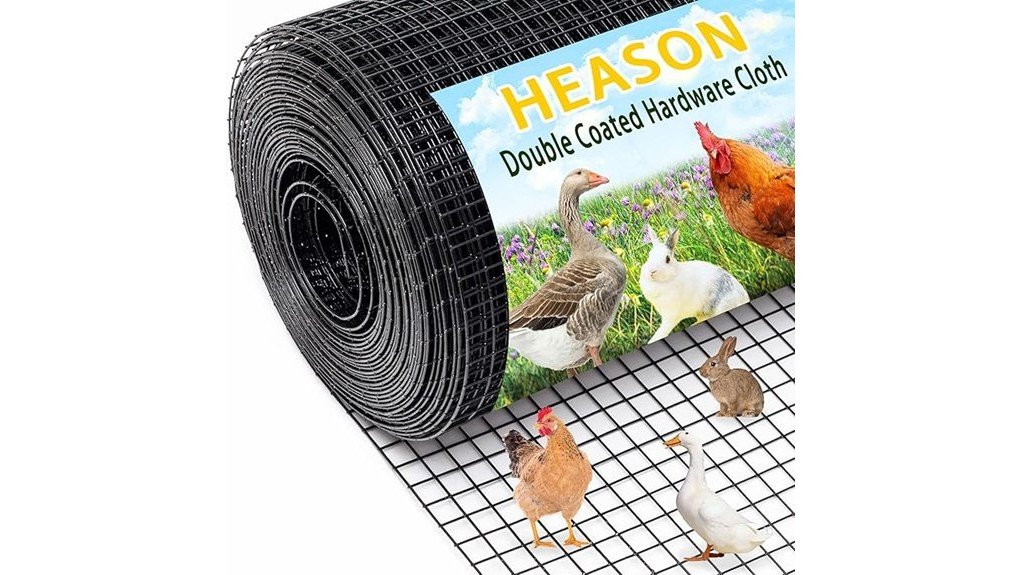
Keeping small animals safe and protecting a garden often comes down to the strength and opening size of your fencing material. This 48” x 50′ hardware cloth is made for buyers who need a flexible barrier for chicken coops, rabbit hutches, duck pens, garden fencing, and DIY outdoor enclosures. Its main strengths are the galvanized steel wire, 1/2 x 1/2 inch square mesh, and coating that supports rust resistance. The main tradeoff is that you still need proper cutting tools, secure fasteners, and careful installation to get the best protection.
Quick Verdict
Rating: 8/10
Best For: Chicken coops, rabbit hutches, vegetable gardens, duck pens, and small outdoor DIY fencing projects.
Bottom Line: This hardware cloth is a practical pick if you want a sturdy, cut-to-fit wire barrier with small mesh openings. It is not a finished enclosure by itself, so your results depend on careful measuring, safe cutting, and strong fastening.
| Specification | Detail |
|---|---|
| Product type | Hardware cloth / wire mesh fencing |
| Roll size | 48 inches x 50 feet |
| Mesh size | 1/2 x 1/2 inch square mesh |
| Material | Heavy-duty galvanized steel wire |
| Coating | Ethylene-based coating, according to the source article |
| Design | Flexible square mesh that can be cut and shaped for custom projects |
| Best use | Chicken coops, rabbit hutches, vegetable gardens, duck pens, and garden fencing |
| Safety note | Cut edges can be sharp and should be handled with gloves and secured properly |
What Is the 48” x 50′ Hardware Cloth?
The 48” x 50′ hardware cloth is a roll of galvanized steel wire mesh built for outdoor barrier projects. The 1/2 x 1/2 inch square openings make it useful when you need airflow and visibility while still limiting access by larger pests and predators.
You can use it as a protective layer around coop walls, hutch sides, raised garden beds, and small enclosure frames. The 48-inch width helps cover taller sections with fewer seams, while the 50-foot length gives you enough material for several small projects or one larger build.
The article describes the wire as heavy-duty galvanized steel with an ethylene-based coating for added rust resistance. That makes it better suited to outdoor use than plain untreated wire, but it still needs proper installation and periodic inspection in wet or high-wear areas.
Who Should Buy It?
Best For
- Chicken owners who need wire mesh for coop walls, runs, vents, or roof reinforcement.
- Gardeners who want to reduce animal damage around vegetable beds or small crop areas.
- DIY users who need a flexible roll that can be cut and shaped for custom outdoor projects.
Skip If
- You need a ready-made cage, gate, or complete enclosure kit.
- You do not have wire cutters, gloves, fasteners, or a frame to attach it to.
- You need verified food-contact material for direct contact with harvested produce.
Before You Buy: Hardware cloth protects best when it is tightly fastened to a solid frame and buried, bent, or reinforced where animals may dig or push. Do not rely on loose mesh alone for predator protection.
Materials and Build Quality
The main build feature is the heavy-duty galvanized steel wire. Galvanizing helps the wire resist corrosion better than bare steel, which matters when the mesh sits outside in rain, damp soil, or humid garden areas.
The ethylene-based coating described in the article adds another protective layer. This can help with rust resistance and handling, but it does not remove the need to check cut edges, corners, and high-contact areas over time.
The square mesh design also supports airflow. That is useful for coops and hutches because the barrier can help separate animals from threats without sealing off ventilation.
Mesh Size and Predator Protection
The 1/2 x 1/2 inch mesh is one of the most useful details for small-animal projects. Smaller openings can block many common gaps that larger fencing leaves behind, especially around vents, lower wall sections, and enclosure corners.
For chicken coops, rabbit hutches, and duck pens, the mesh can help reduce access by animals that try to reach through or squeeze into weak spots. It works best as part of a full enclosure plan, not as a quick patch over a weak frame.
You should also pay attention to seams. Any overlap, corner, or cut end can become the weakest part of the setup if you leave it loose or poorly fastened.
Advantages of Using 48” x 50′ Hardware Cloth
The biggest advantage is flexibility. You can cut the roll to fit flat panels, curved frames, raised beds, vents, or custom barrier shapes. That makes it more adaptable than many pre-sized fence panels.
The 48-inch height also helps when you want taller coverage without stacking multiple strips. Fewer horizontal seams can make a project cleaner and may reduce weak points when you install it correctly.
- Versatile use: Works for coops, hutches, vegetable gardens, duck pens, and many small outdoor barriers.
- Custom fit: Can be cut, bent, and shaped around frames, corners, and project edges.
- Outdoor-focused build: Galvanized steel and the listed coating support rust resistance in typical outdoor use.
Versatile Applications for Home and Garden
You can use this hardware cloth in several outdoor projects where visibility, airflow, and protection all matter. The best application depends on how you frame it, fasten it, and protect the edges.
| Application | Main Benefit | Installation Note |
|---|---|---|
| Chicken coops | Helps block predators while keeping airflow | Fasten tightly to wood or metal framing |
| Rabbit hutches | Creates a secure wire barrier for small animals | Cover sharp cut edges and check corners |
| Vegetable gardens | Helps reduce damage from common garden pests | Anchor the bottom edge so animals cannot lift it |
| Duck pens | Adds a flexible barrier around pen areas | Inspect wet or muddy areas more often |
| Garden fencing | Shapes around beds, borders, and custom layouts | Use posts or a frame for better stability |
How It Performs in Real Use
For Chicken Coops
This hardware cloth makes the most sense for coop walls, ventilation openings, and run sections where you need a stronger barrier than thin plastic netting. The 1/2 inch mesh can help close gaps that larger fencing may leave exposed.
For Rabbit Hutches
For rabbit hutches, the flexible mesh can be shaped around side panels and openings. You should cover or fold back sharp edges after cutting so animals do not rub against exposed wire ends.
For Vegetable Gardens
In a garden, the mesh can help protect seedlings and vegetables from animals that chew, dig, or step into beds. It works best when the bottom edge is pinned, buried slightly, or attached to a raised-bed frame.
For Long-Term Outdoor Use
The galvanized steel and coating support outdoor durability, but no wire mesh should be ignored after installation. Check for rust, loose staples, bent corners, and pulled seams, especially after storms or animal pressure.
Setup Tips Before First Use
Measure the project area before cutting the roll. Add a little extra length for overlaps, corners, folded edges, and fastening points, because a tight cut can leave weak gaps.
Use heavy-duty scissors or wire cutters to cut the mesh. Wear gloves and eye protection because fresh wire ends can be sharp and may spring back when the roll is opened.
Pro Tip: Fold cut edges inward before fastening when the mesh will sit near animals, walkways, or garden work areas. This helps reduce snags and sharp contact points.
For wood frames, use strong staples, screws with washers, or fencing fasteners that hold the mesh flat against the frame. For metal frames, wire ties can work, but they should be tight, weather-suitable, and checked often.
Compatibility and Safety
This hardware cloth is suitable for many outdoor barriers, but the article does not verify it as a food-contact surface. You can use it around vegetable gardens, but avoid treating it as a material meant for direct food handling unless the manufacturer confirms that use.
For animal enclosures, the material is only one part of the safety setup. You still need secure doors, proper latches, strong posts, and protected corners. Small predators may test weak spots, so focus on the full enclosure, not just the mesh rating.
Cut edges deserve special attention. Any exposed end can scratch skin, snag clothing, or injure animals. Fold, cover, or frame the edges after installation.
Pros and Cons
Pros
- 48” x 50′ roll size works for multiple garden, coop, and hutch projects.
- 1/2 x 1/2 inch square mesh gives better small-gap coverage than larger fencing.
- Galvanized steel wire supports outdoor durability and rust resistance.
- Flexible design can be cut and shaped for custom DIY layouts.
- Useful for ventilation areas where you still need a protective barrier.
Cons
- Requires cutting tools, gloves, fasteners, and a frame or support structure.
- Sharp cut edges need careful folding, covering, or framing after installation.
- Not a complete predator-proof enclosure unless installed with secure seams and anchoring.
Is It Worth the Price?
This hardware cloth is worth considering if you need a large roll for practical outdoor protection. The value comes from the combination of galvanized steel wire, 1/2 inch mesh, and enough length for several common home and garden projects.
It is a smart buy for everyday use if you plan to build or reinforce coops, hutches, pens, raised beds, or garden fencing. You get the most value when you already have a frame, posts, or structure ready for installation.
It is not the best fit if you want a finished cage, decorative fence panel, or tool-free setup. You should budget for fasteners, gloves, cutting tools, and possible edge protection if you do not already have them.
How It Compares to Alternatives
Compared with plastic garden netting, this galvanized steel hardware cloth should offer a stronger physical barrier for coops, hutches, and pest-prone garden areas. Plastic netting may be easier to handle, but it usually does not offer the same wire strength.
Compared with larger-opening welded wire fencing, the 1/2 inch mesh is better for smaller gaps and ventilation openings. Larger fencing may work for perimeter boundaries, while this hardware cloth makes more sense for close-contact protection around animals and garden beds.
Frequently Asked Questions
Is this hardware cloth good for chicken coops?
Yes, it can work well for chicken coop walls, runs, vents, and reinforcement areas. For best results, fasten it tightly to a strong frame and protect any loose seams or bottom edges.
Can it be used around vegetable gardens?
Yes, you can use it as a barrier around vegetable beds to help reduce animal damage. Do not assume it is safe for direct food contact unless the manufacturer specifically confirms that use.
What tools should you use to cut it?
Use heavy-duty scissors or wire cutters, depending on the thickness and your comfort level. Wear gloves and eye protection because cut wire ends can be sharp.
How should you fasten the hardware cloth?
You can use staples, screws with washers, wire ties, or other suitable fencing fasteners. The best choice depends on whether you are attaching it to wood, metal, posts, or a garden frame.
Can this hardware cloth be painted?
It may be paintable, but surface prep and paint choice matter. Use a coating that is suitable for metal and outdoor conditions, and avoid paint in areas where animals may chew unless the coating is appropriate for that use.
Does it replace a full enclosure kit?
No, this is wire mesh material, not a complete enclosure. You still need a frame, fasteners, doors, latches, and proper anchoring for a finished coop, hutch, pen, or fence.
Who should skip this product?
Skip it if you want a prebuilt cage, a decorative fence, or a no-tool installation. You may also want another option if you need verified food-contact material or a specific certified enclosure system.
The Bottom Line
The 48” x 50′ hardware cloth is a practical choice for buyers who need a strong, flexible mesh barrier for coops, hutches, gardens, and small outdoor fencing projects. Its best strengths are the 1/2 inch square mesh, galvanized steel wire, and cut-to-fit design, while its main limitation is that it requires careful installation and safe edge handling.
Buy it if you want a durable wire mesh roll for DIY protection work. Skip it if you need a complete ready-made enclosure or verified food-contact material.