Disclosure: As an Amazon Associate, we earn from qualifying purchases. If you click a link on this page and make a purchase, we may receive a small commission at no extra cost to you.
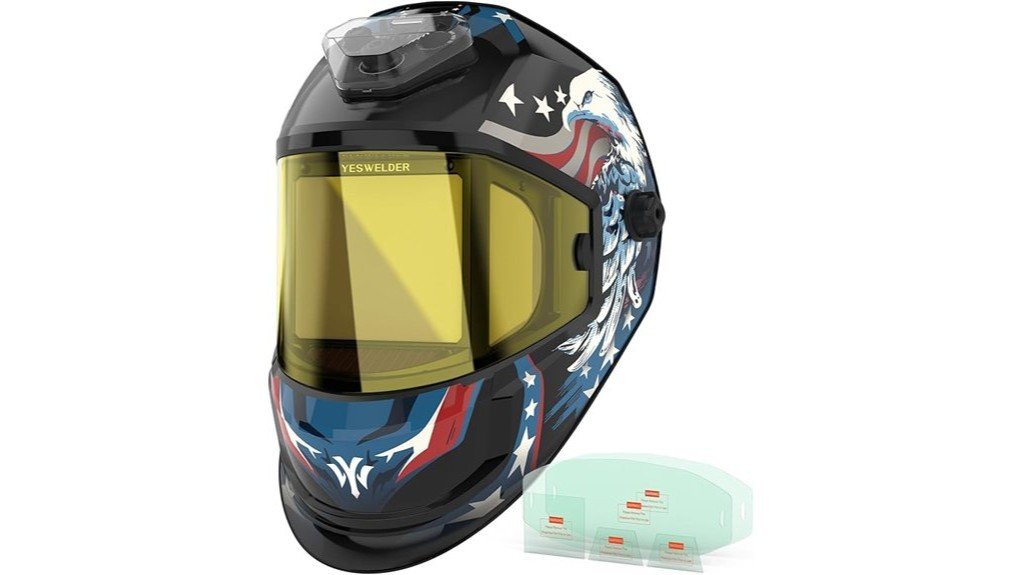
A narrow welding hood can force you to turn your head or lift the helmet just to check a clamp, joint, or nearby tool. The YESWELDER Panoramic Auto Darkening Welding Helmet LYG-1980GK-BE addresses that problem with a 4.31 x 3.82-inch main window, auto-darkening side lenses, six arc sensors, and true color optics. It also uses an integrated Type-C rechargeable battery with solar support. This review explains where the wider view helps, what the larger shell asks you to accept, and whether this model fits your MIG, TIG, stick, cutting, or grinding work.
Quick Verdict
Rating: 8.3/10, Recommended with caveats
Best For: Garage welders and fabricators who value a wide field of view, clear optics, and rechargeable power.
Bottom Line: The LYG-1980GK-BE gives you strong visibility through its large main lens, side windows, 1/1/1/1 optical rating, and six-sensor layout. The tradeoff is a bulkier panoramic shell and an integrated battery that you must remember to charge.
| Specification | Detail |
|---|---|
| Brand | YESWELDER |
| Model / style | LYG-1980GK-BE |
| Product type | Panoramic auto-darkening welding helmet |
| Listed size | Large |
| Viewing design | 180-degree panoramic layout with a main lens and auto-darkening side lenses |
| Main viewing area | 4.31 x 3.82 inches |
| Side-lens shade | DIN 5, auto-darkening |
| Optical clarity | 1/1/1/1 with true color technology |
| Arc sensors | 6 sensors |
| Switching-speed claim | 1/30000 second, according to the Amazon listing |
| Power | Integrated Type-C rechargeable battery with solar-panel support |
| Shell material | Upgraded PP material |
| Headgear | Adjustable ergonomic headgear with breathable padding |
| Included items | Helmet, 2 outer cover lenses, 3 inner cover lenses, Type-C cable, and storage bag |
| Supported tasks | TIG, MIG, stick welding, cutting, and grinding |
| Safety note | Set the correct shade, sensitivity, and delay for your process and amperage, then test the filter before welding. |
What Is the YESWELDER Welding Helmet?
The YESWELDER LYG-1980GK-BE is a large panoramic welding hood built around one main auto-darkening filter and two side viewing lenses. The main window measures 4.31 x 3.82 inches, while the side lenses are listed as DIN 5 auto-darkening panels. Together, they give you a wider view of the bench, workpiece, and nearby fixtures than a standard front-window helmet.
The main lens carries a 1/1/1/1 optical rating and uses true color technology. The helmet also has six arc sensors, an integrated rechargeable battery, a solar panel, adjustable headgear, and breathable padding. The included cover lenses, charging cable, and storage bag reduce the number of accessories you need to buy before first use.
This model makes the most sense when you weld regularly or work around clamps, jigs, tubing, and larger assemblies. A simpler hood may be easier to store and move in tight spaces, but it will not provide the same side awareness.
Who Should Buy It?
Best For
- Garage welders and fabricators who want better side awareness around tables, clamps, and fixtures.
- MIG, TIG, and stick users who value a large true color lens and six-sensor arc detection.
- Buyers who prefer USB Type-C charging and an included set of replacement cover lenses.
Skip If
- You want the smallest, lightest hood for occasional tack welds or work under tight clearances.
- You prefer a user-replaceable battery instead of an integrated rechargeable power system.
- You need confirmed compatibility with a hard hat, supplied-air respirator, or other specialized industrial system.
Before You Buy: Check that the selected style is LYG-1980GK-BE. Amazon may group several YESWELDER helmet styles on related pages, and replacement lenses or headgear for another model may not fit this shell.
Design and Build Quality
The shell uses upgraded PP material, and the Amazon listing describes it as thicker and more protective. PP keeps the shell practical for shop use, but the panoramic shape is physically larger than a compact front-view hood. That extra width matters when you work under a vehicle, inside a frame, or close to a wall.
The key design feature is the 180-degree viewing layout. The side lenses let you notice nearby objects and movement without turning your head as far. They do not replace direct forward vision when you place the torch or inspect the puddle, but they can reduce the boxed-in feeling common with narrow helmets.
The package includes two outer cover lenses and three inner cover lenses. That is useful because a scratched, pitted, or dirty cover lens can reduce clarity long before the auto-darkening filter itself wears out.
Optical Performance
The 1/1/1/1 rating covers four optical categories: optical class, light diffusion, variation in luminous transmittance, and angle dependence. A rating of 1 in each category is designed to reduce distortion, haze, uneven shading, and changes in darkness as your viewing angle shifts.
True color technology reduces the heavy green cast found in many older auto-darkening filters. That can make the joint line, filler metal, and surrounding work surface easier to distinguish. It does not let you use a lighter shade than your process requires, so correct shade selection remains essential.
The 4.31 x 3.82-inch main lens gives you room to track a longer seam and check fit-up without lifting the hood as often. The side lenses add awareness, but the main window is still where you should center your eyes for precise welding.
Auto-Darkening and Controls
Six arc sensors give the filter more detection points than many basic two- or four-sensor helmets. That can help when a glove, torch, workpiece, or fixture partly blocks one sensor. Sensor count does not eliminate setup errors, so keep the sensor area clean and adjust sensitivity for the process and lighting.
The Amazon listing claims a light-to-dark switching time of 1/30000 second. The side lenses are listed as DIN 5 auto-darkening panels, and the main filter supports welding, cutting, and grinding functions. Confirm the exact shade range and control positions in the manual supplied with your helmet before use.
Low-amperage TIG, outdoor sunlight, and awkward torch angles can challenge any auto-darkening filter. Test the helmet before striking an arc, and stop if the lens flickers, fails to darken, or returns to the light state while the arc is active.
Eye Protection and Safety
The outer lens is marketed with blue light blocking technology, while the auto-darkening filter provides the main variable-shade function. Treat blue light filtering as an added lens feature, not a substitute for the correct shade, clean cover lenses, and full face coverage.
A welding helmet is only one part of your protection. You may also need safety glasses under the hood, flame-resistant gloves and clothing, hearing protection, ventilation, and respiratory protection based on the process and material. Never watch an active arc through the side of the helmet or through a damaged lens.
Inspect the shell, front lens, side lenses, sensor windows, and headgear before each session. Replace cracked or badly pitted cover lenses, and do not use the helmet if the auto-darkening filter is damaged or behaves inconsistently.
Power Supply, Included Accessories, and Longevity
The LYG-1980GK-BE uses an integrated Type-C rechargeable battery with a solar panel on the front. The solar panel supports the circuit during use and helps conserve battery power, but it does not remove the need to charge the helmet before a long project.
The integrated design saves you from buying coin-cell batteries. The tradeoff is that the listing does not describe the battery as user-replaceable, so long-term service options may be more limited if the battery eventually loses capacity.
YESWELDER includes one Type-C cable, two outer cover lenses, three inner cover lenses, and a storage bag. Store the helmet in the bag after the shell and lenses are clean and dry. Keep it away from grinding dust, direct impact, extreme heat, and solvents that could damage the lens surfaces.
Pro Tip: Charge the helmet, clean all three viewing areas, and test the auto-darkening response before you set up the workpiece. Doing this first makes it easier to separate a helmet problem from a welding-machine or grounding problem.
Comfort and Usability
The adjustable headgear and breathable padding help you tune the fit around the crown and back of your head. A secure fit matters more on a panoramic helmet because the larger shell can shift if the rear band is loose or the tilt stops are not balanced.
Set the helmet so your eyes sit near the center of the main lens when the hood is down. Check that the shell clears your chest, shoulders, respirator, and prescription glasses through your full working range. A fit that feels fine while standing may bind when you kneel or weld overhead.
The wider shell can be comfortable for bench work because you turn your neck less. In tight spaces, however, that same width may contact nearby surfaces sooner than a compact hood.
How It Performs in Real Use
For Garage and DIY Fabrication
The large window helps when you line up brackets, tubing, sheet metal, or repair patches. The side view is most useful before and between welds, when you need to locate a clamp, lead, or tool without repeatedly lifting the hood.
For MIG and Stick Work
MIG and stick welding often place the gun, electrode holder, or workpiece between the arc and part of the helmet. Six sensors give the filter more chances to detect the arc when one sensor is partly blocked. You still need to keep the sensor windows clean and use the correct sensitivity.
For TIG Welding
TIG depends on a clear view of the tungsten, filler rod, joint, and puddle. The 1/1/1/1 optics and true color view are useful here, but low-amperage TIG is also where careful sensitivity testing matters most. Confirm stable darkening before beginning a long bead.
For Cutting and Grinding
One helmet that supports welding, cutting, and grinding can reduce gear changes during fabrication. Select the correct mode before starting, and never grind while the helmet remains in a welding shade that prevents you from seeing the wheel and work clearly.
Setup Tips Before First Use
- Charge it first: Use the included Type-C cable before the first welding session or a long project.
- Remove protective films: Check both sides of any new cover lens and remove shipping film before judging clarity.
- Center the headgear: Adjust the crown, rear band, tilt, and viewing distance so your eyes align with the main lens.
- Set the correct mode: Choose weld, cut, or grind, then set shade, sensitivity, and delay for your process.
- Test before welding: Use the manufacturer’s test procedure and verify that all lenses darken and recover normally.
- Check your other PPE: Make sure safety glasses, respirator, hearing protection, and clothing do not interfere with the helmet seal or movement.
Cleaning and Storage
Remove loose dust before wiping the lenses so grit does not scratch the surface. Use a clean, soft cloth and a mild lens-safe cleaner. Avoid abrasive pads, harsh solvents, and soaking the auto-darkening filter or charging port.
Replace cover lenses when scratches, spatter, or pitting interfere with your view. Store the helmet in the supplied bag with the headgear relaxed, and keep heavy tools from resting on the shell or side lenses.
Compatibility and Safety
The helmet is listed for TIG, MIG, stick welding, cutting, and grinding. It is not confirmed as compatible with every hard hat, supplied-air respirator, magnifying lens, or third-party headgear system. Verify specialized compatibility before buying parts or using the helmet in an industrial program.
Do not assume one shade works for every process. Welding current, arc type, material, and viewing distance can change the shade you need. Follow the helmet manual, your welding equipment instructions, and the safety requirements that apply to your workplace.
YESWELDER’s current U.S. warranty policy lists one year of limited coverage for eligible auto-darkening welding helmets. Marketplace purchases can have seller- or channel-specific claim procedures, and normal-wear items such as cover lenses and headgear may be excluded.
Pros and Cons
Pros
- 4.31 x 3.82-inch main viewing area gives you a broad forward view.
- Auto-darkening side lenses improve awareness around fixtures and work surfaces.
- 1/1/1/1 true color optics support a clearer view of the joint and puddle.
- Six arc sensors help when the torch or workpiece blocks part of the filter.
- Type-C charging, spare cover lenses, and a storage bag are included.
Cons
- The panoramic shell takes more clearance than a compact front-view helmet.
- The integrated rechargeable battery is not listed as user-replaceable.
- Hard-hat, supplied-air, and other specialized compatibility are not confirmed.
Is It Worth the Price?
The LYG-1980GK-BE sits above a basic entry-level hood because you are paying for panoramic visibility, six sensors, 1/1/1/1 optics, rechargeable power, and a useful accessory package. It offers strong value for the price when those features reduce how often you lift the hood or reposition your head.
You get the most value if you weld often, switch among welding, cutting, and grinding, or work around larger fixtures. A lower-cost compact helmet may be the smarter buy when you only make occasional short welds and do not need side visibility.
Also consider long-term battery preference. The integrated rechargeable design is convenient, but buyers who want a quickly replaceable coin-cell battery may prefer another model.
How It Compares to Alternatives
The YESWELDER LYG-Q800D is worth comparing if you want a simpler panoramic helmet with replaceable batteries and a lower-profile feature set. The LYG-1980GK-BE is the better fit when Type-C charging, six sensors, and the included replacement-lens package matter more.
The Miller Digital Infinity and Lincoln Electric VIKING 3350 target professional buyers with different optics, controls, headgear, and support ecosystems. They may be better for demanding industrial use, while the YESWELDER makes more sense when you want a wide view and strong feature coverage without moving into a premium helmet tier.
Frequently Asked Questions
Is the YESWELDER LYG-1980GK-BE good for beginners?
Yes, the large main lens and side view can help a beginner see the joint and surrounding work area. You still need training on shade selection, sensitivity, delay, PPE, ventilation, and safe welding technique.
Do the side lenses auto-darken?
The Amazon listing describes the side view as DIN 5 and auto-darkening. Use the main lens for precise arc viewing, and inspect all side covers for damage before each session.
Can it fit over prescription glasses?
The adjustable headgear may provide enough room for many glasses, but frame size and face shape vary. Test the fit with the hood down and make sure the frames do not press into your face or block the viewing angle.
What comes in the package?
The listing includes one welding helmet, two outer cover lenses, three inner cover lenses, one Type-C charging cable, and one storage bag. Check the package when it arrives and report missing or damaged parts before welding.
Does the solar panel eliminate charging?
No. The solar panel supports the circuit and helps conserve the integrated battery, but the helmet still has a Type-C charging port. Charge it before long jobs instead of relying on shop light alone.
Can you use it for low-amperage TIG?
The helmet is listed for TIG, and six sensors can help with arc detection. Low-amperage TIG can be demanding for any auto-darkening filter, so test sensitivity and lens stability at your actual settings before welding a full joint.
How do you clean and store the helmet?
Remove loose dust, then use a soft cloth and a mild lens-safe cleaner. Do not use abrasive pads or harsh solvents, and store the clean, dry helmet in the supplied bag away from heat and impact.
What warranty coverage applies?
YESWELDER’s current U.S. policy lists one year of limited warranty coverage for eligible auto-darkening helmets. Amazon or other marketplace purchases may follow channel-specific claim procedures, and wear items such as cover lenses or headgear may not be covered.
The Bottom Line
The YESWELDER LYG-1980GK-BE is recommended with caveats for welders who want panoramic visibility, six-sensor detection, 1/1/1/1 true color optics, and rechargeable power. Buy it for regular garage or fabrication work where the wide view helps; skip it if tight-clearance size, a user-replaceable battery, or confirmed industrial-system compatibility matters more.
Ready to Buy?
Check the current seller, style, package contents, and product details before you decide.