Cracked edges, drifting cuts, and clouds of tile dust usually come from the wrong blade, poor support, or a grinder that is difficult to control. For tile work, a standard 4-1/2-inch angle grinder is most useful for curves, fixture notches, edge trimming, and grout or mortar cleanup. A wet tile saw remains the better choice for long, straight, repeatable cuts.
Affiliate disclosure: This article contains Amazon affiliate links. We may earn a commission from qualifying purchases at no extra cost to you.
Quick Verdict
Best Overall: Bosch GWS8-45 for its verified 7.5-Amp motor, 11,000 no-load RPM, 4.2-pound body, slim grip, and Service Minder brushes.
Best Value: AVID POWER 7.5A for its standard 4-1/2-inch platform and useful starter accessory set.
Best Heavy-Duty Corded: DongCheng DSM17-115P for its 9.2-Amp motor, no-lock paddle switch, tool-free guard, and 11,800 no-load RPM.
How we chose: We compared wheel size, verified motor ratings, no-load speed, switch type, guard design, weight where consistently listed, included accessories, serviceability, and suitability for use with a compatible diamond tile blade. This is an editorial comparison based on available product information, not a claim of hands-on testing.
Important: The included abrasive wheels in many kits are designed for metal or general grinding. Plan to buy a separate diamond blade approved for your tile type and rated above the grinder’s maximum RPM.
Top Picks
| Category | Product | Best For |
|---|---|---|
| Best Overall | Bosch GWS8-45 | Control and long-term serviceability |
| Best Value | AVID POWER 7.5A | Budget DIY and starter kit |
| Best Heavy-Duty Corded | DongCheng DSM17-115P | Frequent tile and masonry work |
| Most Powerful | Avhrit 10A | High-output mixed-material work |
| Best Compact Corded | AVID POWER 750W | Lightweight control |
| Best Beginner-Friendly Switch | DongCheng DSM14-115 | New users and controlled cuts |
| Best Accessory Kit | SHALL 7.5A | Hobbyists who want accessories |
| Best High-Power Kit | DCK KSM17-115B | High-power kit buyers |
| Best Ready-to-Use Kit | DCK KSM09-115S | General DIY and finish work |
Before You Buy
- Choose the right tool for the cut: Use an angle grinder for curves, corners, notches, and edge cleanup. Use a wet tile saw for long straight cuts.
- Match the blade: Check wheel diameter, arbor or spindle setup, blade thickness, dry- or wet-use rating, and maximum RPM.
- Keep the guard installed: Never remove the guard to fit an oversized blade.
- Control silica dust: For dry cutting, use a compatible dust shroud and effective dust extraction. Work in a suitable area and wear eye, hearing, and respiratory protection appropriate to the exposure.
- Do not add water to a dry-use grinder: Use water only when the complete tool-and-blade system is specifically designed and approved for wet cutting.
- Support the tile: Clamp or stabilize it, score the cut first, and make several shallow passes rather than forcing one deep pass.
Safety Note
Tile, mortar, concrete, and many masonry products can release respirable crystalline silica when cut or ground. Follow the tool, blade, and dust-control manufacturers’ instructions. Keep both hands on the grinder, stand out of the blade’s line, inspect the blade before use, and stop if the blade binds, cracks, or vibrates abnormally.
Detailed Reviews
This AVID POWER model is the easiest value pick to understand. You get a standard 4-1/2-inch platform, a useful starter accessory set, and corded power for repeated trimming and notch work. It suits a homeowner who wants one grinder for tile touch-ups, mortar cleanup, and occasional metal projects.
Buyer Feedback Snapshot
The original review summary emphasized strong power for the cost, a comfortable body, and the convenience of the included accessories. It also noted occasional complaints about the switch and spindle lock. Marketplace feedback changes over time, so check recent reviews for recurring durability issues before ordering.

Why It Works for Tile
Use it with a compatible 4-1/2-inch diamond blade for ceramic or porcelain tile. The listing’s no-load speed is not presented consistently across regional pages, so confirm the current listing and tool nameplate before selecting a blade.
Pros: Useful starter kit, steady corded power, and broad 4-1/2-inch blade availability.
Cons: Check recent feedback for switch and spindle-lock durability. The included abrasive wheels are not tile blades.
Pick this if: You want an affordable, ready-to-use corded grinder for occasional tile repairs and general DIY work.
Skip this if: You need a daily-use professional tool with a stronger service network and longer verified track record.
The Bosch GWS8-45 is the strongest all-around recommendation because its advantages are easy to verify. Its slim grip, manageable weight, two-position handle, and maintenance shutoff system are especially useful when guiding a cut along a fragile tile edge.
Buyer Feedback Snapshot
The source review summary highlighted the narrow grip, balanced feel, and dependable power delivery. It also mentioned occasional packaging or missing-accessory complaints. Check the current listing contents because a diamond tile blade is normally a separate purchase.

Why It Works for Tile
Its 11,000 no-load RPM and standard 5/8-11 spindle make blade matching straightforward, but you must still confirm the blade’s diameter, arbor setup, and maximum RPM before use.
Pros: Slim 4.2-pound body, Service Minder brushes, directed airflow, and a burst-protection guard.
Cons: A tile-rated blade is normally separate, and the grinder does not have variable speed.
Pick this if: You want the best balance of control, verified specifications, serviceability, and professional ergonomics.
Skip this if: Your main priority is receiving the largest possible accessory bundle.
The SHALL is a practical kit for hobbyists who want a grinder plus several general-purpose accessories. This ASIN is fixed-speed, not variable-speed, so control comes from blade choice, shallow passes, and steady hand pressure rather than a speed dial.
Buyer Feedback Snapshot
The source review summary praised the accessory bundle and comfortable handle while noting occasional vibration or guard-fit complaints. Included wheel packages can change, so check the current box contents.

Why It Works for Tile
Add a compatible diamond blade rated above 12,000 RPM. The included metal-cutting wheels and flap discs are useful for other jobs but are not dedicated tile blades.
Pros: Two guards, broad starter kit, standard wheel size, and replacement carbon brushes.
Cons: Fixed-speed operation and a supplied accessory set aimed mainly at metal and surface work.
Pick this if: You want a broad general-purpose kit and are comfortable buying the correct diamond blade separately.
Skip this if: Adjustable speed is a must-have feature.
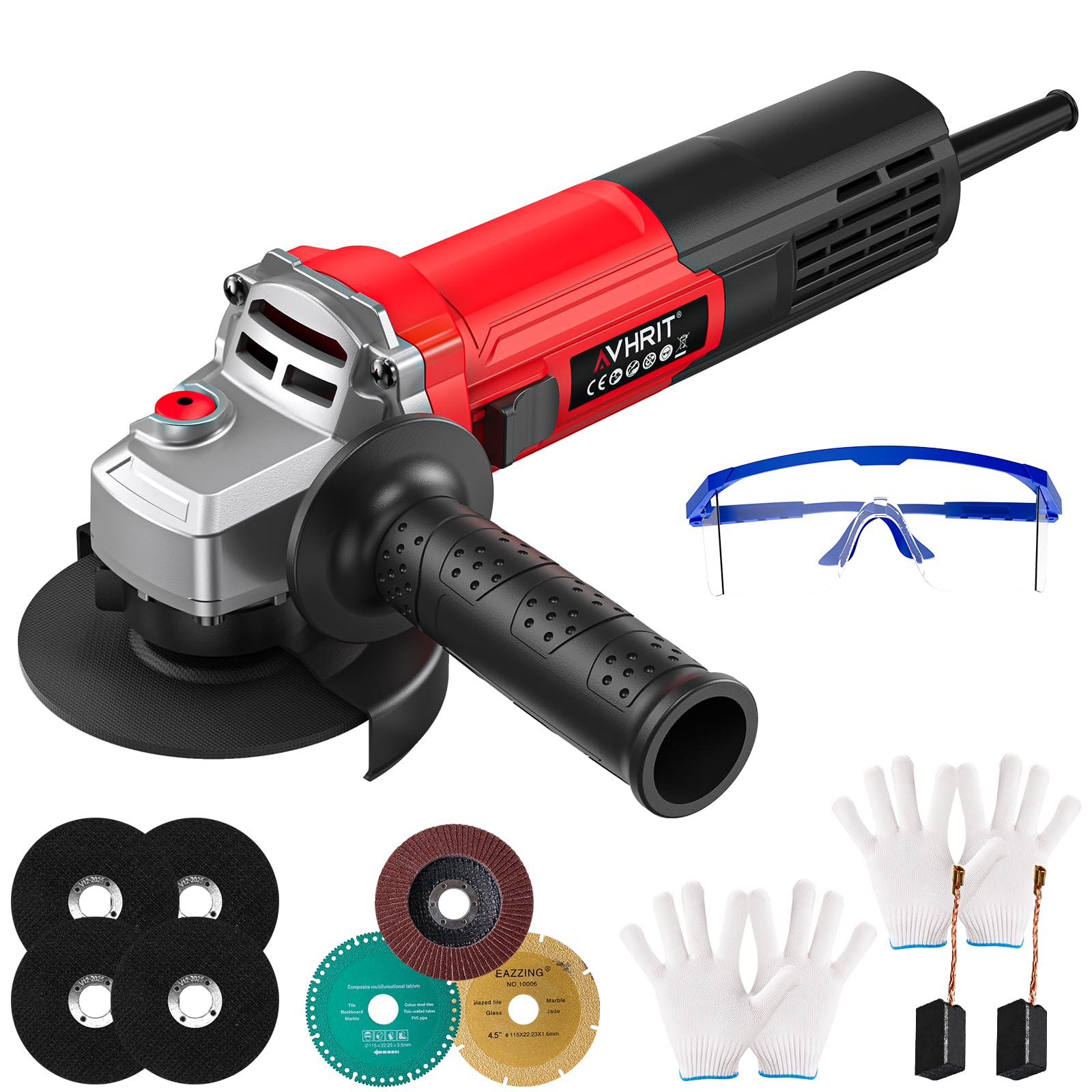
The Avhrit is the high-output option in this lineup. Its 10-Amp motor and listed speed of up to 13,000 RPM can cut quickly, but high speed is not automatically better for tile. A blade that is not rated for the grinder’s maximum RPM is unsafe, and aggressive pressure can increase chipping.
Buyer Feedback Snapshot
The source review summary focused on strong power and included accessories, but it also acknowledged that the model has a shorter public track record than established professional brands. Check recent feedback for switch quality, vibration, and long-session heat.

Why It Works for Tile
This model makes the most sense for thicker material and mixed renovation work. For fragile porcelain edges, use a high-quality diamond blade, let the blade do the work, and make shallow passes.
Pros: Highest listed amperage and RPM in the roundup, standard wheel size, and a broad accessory set.
Cons: High speed makes correct blade matching critical, and long-term service support is less established than Bosch.
Pick this if: You want maximum listed output for mixed tile, masonry, and metal renovation tasks.
Skip this if: You prefer a lighter-touch tool with a longer service history.
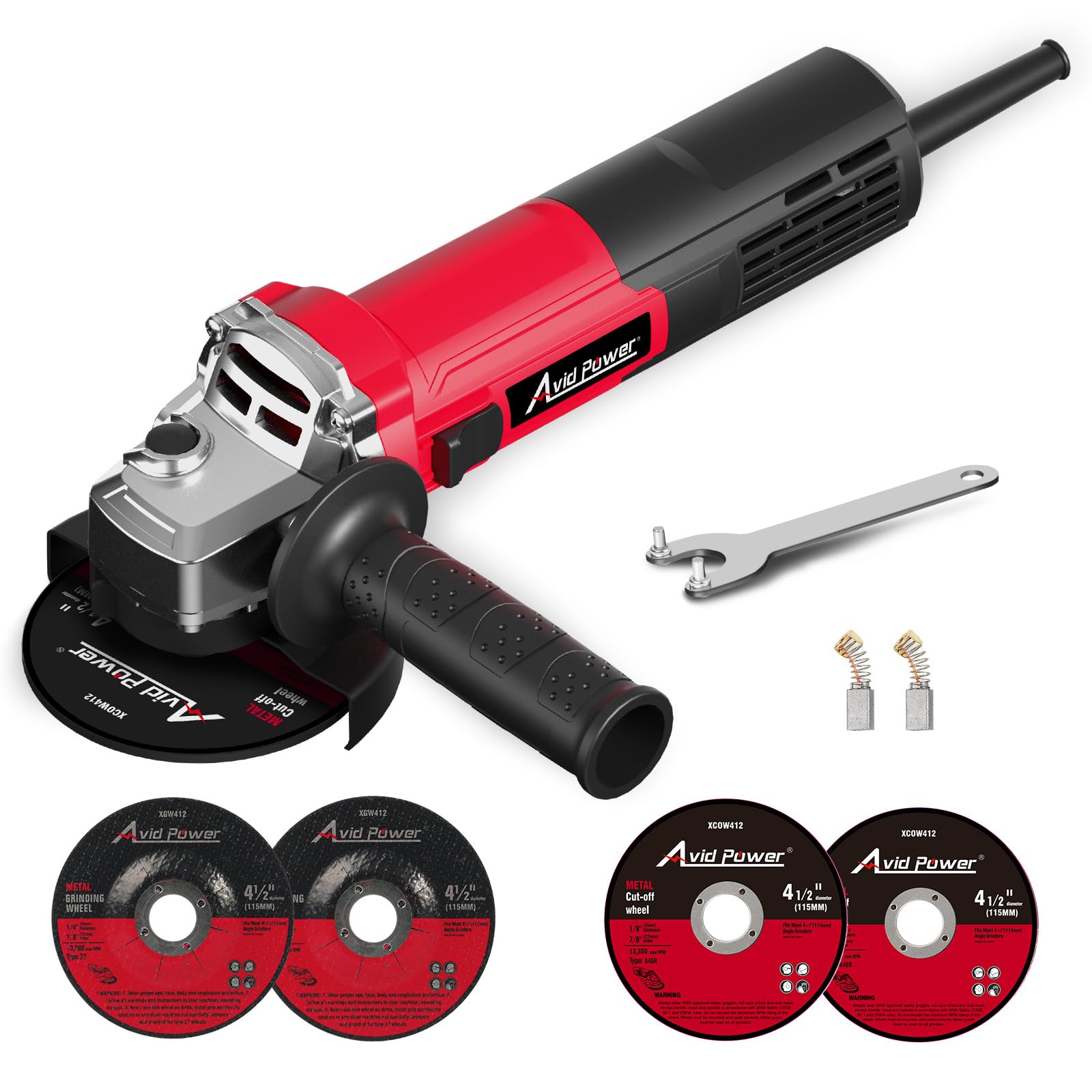
This compact AVID POWER model is easier to manage when your main jobs are edge cleanup, small notches, and short cuts. The listed 3.2-pound weight and narrow body reduce the effort needed to hold a consistent line, although the lower power rating is less suited to aggressive masonry cutting.
Buyer Feedback Snapshot
The source review summary praised the balance of size and power and noted that the included wheels make the tool easy to start using. It also mentioned occasional spindle-lock or disc-change frustration.

Why It Works for Tile
Pair it with a 4-1/2-inch diamond blade rated for at least 11,500 RPM. Its lighter body can help with control, but a stable work surface and several shallow passes still matter more than tool weight alone.
Pros: Low listed weight, compact handling, and sufficient output for occasional trimming and finish work.
Cons: Less motor headroom than higher-amperage models and a less refined spindle-lock system.
Pick this if: You prioritize a light, compact corded grinder for short, controlled tile cuts.
Skip this if: You regularly cut dense pavers, thick masonry, or large batches of porcelain.
The DongCheng DSM14-115 stands out for its no-lock paddle switch. Releasing the paddle stops the motor, which can feel more intuitive than a slide switch when you are learning to control a grinder. The 6.7-Amp motor is best viewed as a light- to medium-duty choice.
Buyer Feedback Snapshot
The source review summary highlighted a balanced feel and useful included accessories while noting some long-term switch and durability concerns. Check recent buyer feedback to see whether those issues remain common.

Why It Works for Tile
The standard 4-1/2-inch size and 11,800 RPM rating make blade selection straightforward. Choose a blade with a maximum RPM above the tool rating and keep both hands on the grinder.
Pros: No-lock paddle switch, two-position handle, and enough power for normal tile trimming and notches.
Cons: Less headroom for heavy masonry and the usual mobility limits of a corded tool.
Pick this if: You value a no-lock paddle switch and want a manageable first full-size angle grinder.
Skip this if: Your work is mainly thick masonry or long production cuts.
This higher-amperage DongCheng is the better fit when you expect repeated cuts, mortar removal, or mixed tile and masonry work. The tool-free guard and no-lock paddle switch are useful workflow and control features.
Buyer Feedback Snapshot
The source review summary described the grinder as solid and capable, with the extra weight helping stability for some users. People who mainly do light finish work may prefer a smaller model.

Why It Works for Tile
The 5/8-11 spindle and 11,800 RPM rating support common 4-1/2-inch diamond blades. Its extra power is useful when the cut is demanding, but clean tile work still requires shallow passes and low side pressure.
Pros: Strong 9.2-Amp motor, tool-free guard, no-lock paddle switch, and shock-reducing handle.
Cons: More tool than a small backsplash repair requires, and the accessory kit is not its main selling point.
Pick this if: You are a serious DIYer or contractor who wants more power without moving to a larger wheel size.
Skip this if: Your work is limited to a few small edge trims.
The DCK KSM17-115B combines higher motor output with a fuller accessory package than most heavy-duty picks. The original article called it variable-speed and the best-warranty choice, but those claims are not supported by the verified product information used for this update.
Buyer Feedback Snapshot
The source review summary emphasized solid power, simple disc changes, and stable handling. It also noted that the grinder feels heavier than compact alternatives.

Why It Works for Tile
The 11,800 RPM rating and 4-1/2-inch wheel size fit the normal tile-grinder category. Add a proper diamond blade because the included abrasive discs are intended for general cutting, grinding, and flap-disc work.
Pros: Strong 9.0-Amp output, two guards, six general-purpose discs, and broad blade compatibility.
Cons: It is not verified as variable-speed, and warranty terms should be checked rather than assumed.
Pick this if: You want a high-power corded grinder with a broad general-purpose kit.
Skip this if: You specifically need adjustable speed or confirmed long-term warranty coverage.
The DCK KSM09-115S is a balanced light- to medium-duty option. Its two guards and six-piece disc set make it convenient for mixed workshop tasks, while the listed 3.5-pound weight is easier to steer than many higher-amperage grinders.
Buyer Feedback Snapshot
The source review summary described dependable performance for the size and appreciated the included accessories. It also compared the weight with mini grinders, although a mini grinder is not a direct alternative to a full-size 4-1/2-inch tool.

Why It Works for Tile
It has the correct wheel class and speed range for common tile-rated diamond blades. Its main limitation is motor headroom, so avoid forcing it through dense material.
Pros: Two guards, six general-purpose discs, manageable listed weight, and standard diamond-blade compatibility.
Cons: The 6.7-Amp motor is less suited to sustained heavy masonry, and the included discs are not dedicated porcelain blades.
Pick this if: You want a manageable full-size grinder with a broad starter kit.
Skip this if: Your projects regularly involve thick pavers or long production cuts.
How to Choose an Angle Grinder for Tile
Start With a 4-1/2-Inch Platform
A 4-1/2-inch grinder gives you broad blade availability and enough cutting depth for common ceramic and porcelain tile. A mini 3-inch grinder may be useful for light metal or craft work, but it is not a direct substitute for the full-size tools compared here.
Check No-Load RPM and Blade Rating
The blade’s maximum RPM must meet or exceed the grinder’s no-load RPM. This is especially important on 12,000- to 13,000-RPM models. Never assume a blade fits safely just because its diameter and arbor appear correct.
Choose a Switch Style You Can Control
A no-lock paddle switch stops when released and can be reassuring for short, precise cuts. A lock-on slide switch can reduce hand strain during longer work, but it requires deliberate shutdown and careful handling. Neither design replaces a guard, auxiliary handle, and two-handed grip.
Do Not Confuse Included Discs With Tile Blades
Many grinder kits include metal cut-off wheels, grinding wheels, and flap discs. Those accessories add value for general workshop use, but you still need a diamond blade made for ceramic, porcelain, stone, or masonry.
Consider a Wet Tile Saw for Long Straight Cuts
An angle grinder is flexible but unguided. A wet tile saw supports the tile on a table, follows a fence, and controls dust and heat with a purpose-built water system. For repeated straight cuts, the saw normally gives more consistent results.
FAQ
Can an Angle Grinder Cut Porcelain Tile?
Yes. Use a tile-rated diamond blade that matches the grinder’s wheel diameter, arbor setup, and maximum RPM. Make shallow passes and support the tile to reduce chipping.
Which Blade Is Best for Cutting Tile With an Angle Grinder?
A continuous-rim diamond blade usually gives the cleanest edge on porcelain and ceramic tile. A turbo rim cuts faster but can leave a rougher edge. Always follow the blade manufacturer’s dry- or wet-use instructions.
Should You Use Water With a Corded Angle Grinder?
Do not spray or drip water onto a standard dry-use corded grinder. Use water only with a tool and blade system specifically designed and approved for wet cutting. For dry cutting, use a compatible shroud and dust extraction system.
How Do You Reduce Chipping When Cutting Tile?
Mark the cut clearly, support the tile, use a sharp continuous-rim diamond blade, score the surface first, make several shallow passes, and avoid twisting or forcing the blade. Painter’s tape can make the cut line easier to see, but it does not replace correct technique.
Is an Angle Grinder Better Than a Wet Tile Saw?
An angle grinder is better for curves, small notches, and edge trimming. A wet tile saw is usually better for long, straight, repeatable cuts because it offers a guided table and built-in water control.
Detailed Comparison
| Product | Image | Tier | Best For | Power | No-Load RPM | Link |
|---|---|---|---|---|---|---|
| AVID POWER 7.5A |
 |
Value | Budget DIY and starter kit | 7.5A / 900W max | Confirm listing | Check Price |
| Bosch GWS8-45 |
 |
Premium | Control and long-term serviceability | 7.5A | 11,000 | Check Price |
| SHALL 7.5A |
 |
Value | Hobbyists who want accessories | 7.5A / 900W | 12,000 | Check Price |
| Avhrit 10A |
 |
Mid-range | High-output mixed-material work | 10A / 1,200W | Up to 13,000 | Check Price |
| AVID POWER 750W |
 |
Value | Lightweight control | 6.5A / 750W | 11,500 | Check Price |
| DongCheng DSM14-115 |
 |
Value | New users and controlled cuts | 6.7A / 800W | 11,800 | Check Price |
| DongCheng DSM17-115P |
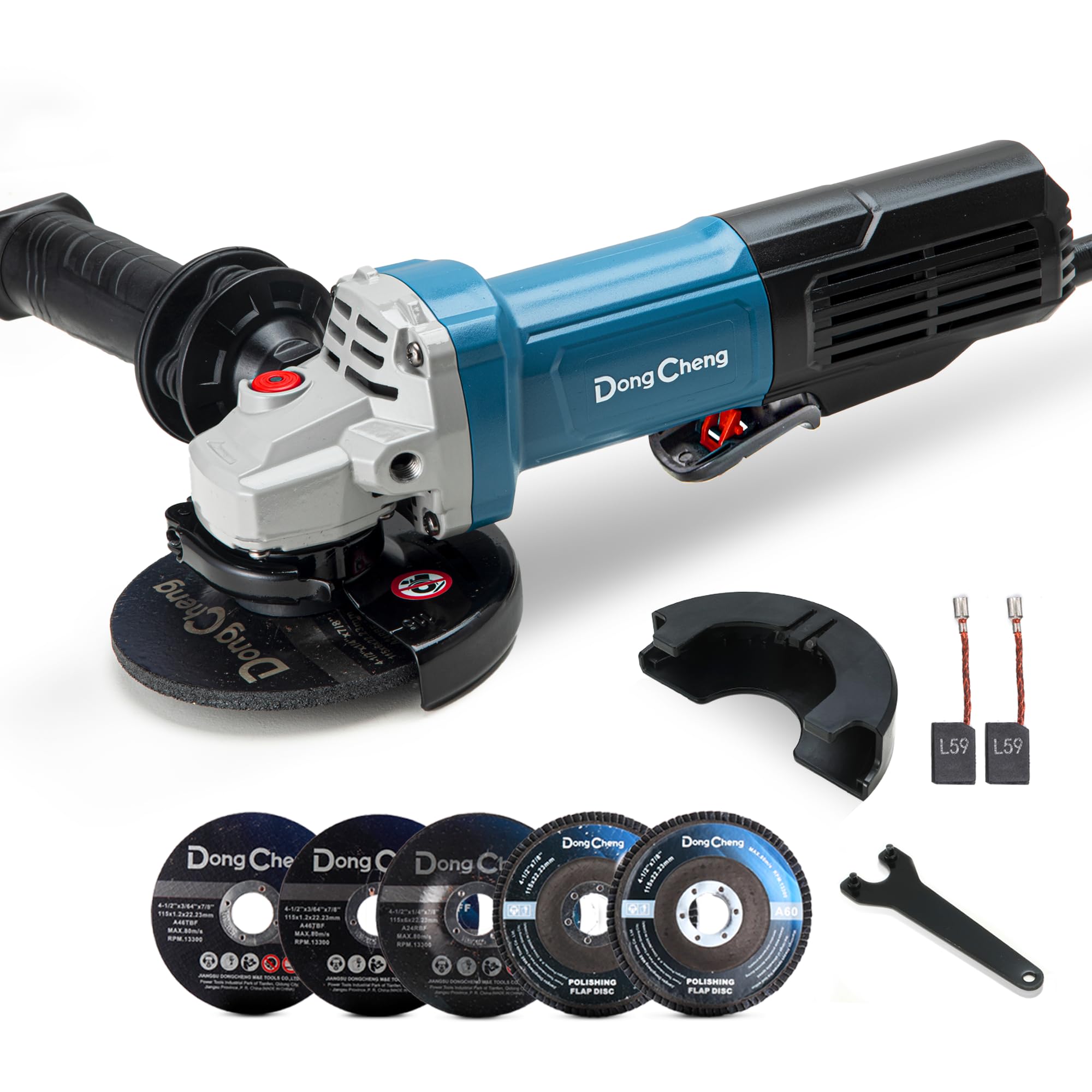 |
Mid-range | Frequent tile and masonry work | 9.2A | 11,800 | Check Price |
| DCK KSM17-115B |
 |
Mid-range | High-power kit buyers | 9.0A / 1,100W | 11,800 | Check Price |
| DCK KSM09-115S |
 |
Value | General DIY and finish work | 6.7A / 800W | 11,800 | Check Price |
Final Recommendation
Choose the Bosch GWS8-45 when control, low weight, serviceability, and verified specifications matter most.
Choose the AVID POWER 7.5A when you want a lower-cost grinder with a useful starter kit for occasional projects.
Choose the DongCheng DSM17-115P when you expect frequent tile, mortar, and masonry work and want more motor headroom.
Wrapping Up
The best angle grinder for tile is not simply the model with the highest amperage or RPM. Control, guard design, switch type, weight, blade compatibility, and dust management matter just as much. For most buyers, the Bosch GWS8-45 offers the most balanced package. Budget-focused DIYers can start with the AVID POWER 7.5A, while heavier renovation work favors the DongCheng DSM17-115P.
Whichever grinder you choose, buy the correct diamond blade separately, verify its maximum RPM, keep the guard installed, support the tile, and use several shallow passes. For long straight cuts, use a wet tile saw instead of forcing an angle grinder to do a guided saw’s job.
This roundup is reader-supported. When you click an affiliate link, we may earn a commission on qualifying purchases.