Choosing the right ER70S-6 TIG welding rod matters when you want clean beads, steady puddle control, and fewer porosity problems on mild steel. The best choice depends on your metal thickness, workspace, and whether you prefer short 16-inch rods for control or 36-inch rods for longer shop runs.
As an Amazon Associate I earn from qualifying purchases. Buying through these links costs you nothing extra.
This roundup compares 10 ER70S-6 TIG filler rod options by diameter, length, pack size, storage, and likely use case, so you can quickly choose the rod that fits your next repair, practice session, or fabrication job.
|
Fast Recommendation |
Pick |
Best For |
|---|---|---|
|
Best all-around short rod |
General mild steel repairs and hobby TIG welding |
|
|
Best fine-control option |
Thin steel, detailed welds, and cramped joints |
|
|
Best bulk shop supply |
Regular shop use and higher-volume welding |
Top ER70S-6 TIG Welding Rod Picks
|
Category |
Product |
Best Use |
|---|---|---|
|
Best Overall |
Everyday mild steel TIG repairs |
|
|
Best For Precision |
Thin steel and small fillets |
|
|
Best Value |
Versatile light-to-medium work |
|
|
Most Reliable |
Routine repairs and repeatable beads |
|
|
Best Packaging |
Storage, transport, and thin steel |
|
|
Best For Thick Steel |
Faster buildup on thicker mild steel |
|
|
Best For Tight Spots |
Confined joints and delicate filler control |
|
|
Best Starter Pack |
Trying 3/32 rods without buying 5 lb |
|
|
Best Bulk Value |
Higher-volume fabrication and shop stock |
|
|
Best For Long Runs |
Full-length rods and longer beads |
How We Chose These Rods
You want filler rods that match the job and your workflow, so we weighed several practical factors. We checked diameter and length to match common welding thicknesses and working space, looked for clean manufacturing and consistent alloy chemistry to avoid inclusions and porosity, and evaluated packaging and storage to protect rods from moisture.
Price per pound and pack size were considered so you can balance upfront cost against waste. The result is a mix of trial packs, shop-sized spools and short-length rods to suit hobbyists and pros alike.
How To Choose The Right ER70S-6 TIG Rod
Start with diameter. Choose 1/16" rods for thin sheet, tight joints, and delicate filler control. Choose 3/32" rods when you want one versatile size for common mild steel repairs and practice. Choose 1/8" rods when you need more filler and faster buildup on thicker material.
Then choose length and pack size. Short 16" rods are easier to control in cramped positions, while 36" rods reduce changeovers during longer welds. A 1 lb pack is useful for testing a diameter; 5 lb packs suit hobby and small-shop use; 10 lb packs make more sense if you weld often.
|
Rod Diameter |
Best Match |
Buyer Note |
|---|---|---|
|
1/16" |
Thin mild steel, small fillets, detailed control |
Good when burn-through is a concern. |
|
3/32" |
General repairs, hobby welding, light-to-medium fabrication |
The safest all-around size for many TIG users. |
|
1/8" |
Thicker mild steel, brackets, faster buildup |
Requires more heat and better puddle control. |

Pros and Cons
- Pros: Versatile 3/32″ diameter, short length for control, useful 5 lb pack.
- Cons: Short sticks can create more changeovers.

Pros and Cons
- Pros: Fine 1/16″ control, protective storage sleeve, strong fit for detailed work.
- Cons: Not the fastest choice for thicker joints or long continuous welds.

Pros and Cons
- Pros: Good all-around diameter, easy handling, useful for learning.
- Cons: Short 16″ length is less efficient for long production-style runs.

Pros and Cons
- Pros: Versatile size, protective sleeve, steady puddle behavior.
- Cons: Short rods may not suit long beads, the 5 lb pack may be more than a casual beginner needs.

Pros and Cons
- Pros: Water-resistant tube, fine 1/16″ control, convenient for field storage, useful for thin steel.
- Cons: 1/16″ rods are not ideal for heavy buildup.

Pros and Cons
- Pros: Faster buildup, useful for brackets and medium fabrication, predictable puddle behavior, 5 lb shop-friendly pack.
- Cons: Requires more heat and hand control than smaller diameters, short rods may interrupt long runs.

Pros and Cons
- Pros: Fine control, short length for tight positions, good for thin panels.
- Cons: Less efficient on thicker parts and long beads than 3/32″ or 1/8″ rods.
Pros and Cons
- Pros: Low-commitment pack size, practical for quick repairs, easy to store, useful for trying a diameter.
- Cons: the 1 lb quantity can run out quickly.

Pros and Cons
- Pros: Bulk quantity, convenient storage tube, useful for high-volume mild steel work.
- Cons: More upfront material than casual users need, current diameter choice should be verified before buying.

Pros and Cons
- Pros: Full 36″ length, 10 lb supply, versatile 3/32″ diameter, useful for practice and longer beads.
- Cons: See the listing for details.
Related guides: a diameter-by-diameter ER70S-6 filler rod guide, TIG filler rod selection chart, TIG filler rod types for automotive welding, ER70S-2 rods for dirtier steel.
FAQ
Which Rod Size Should I Choose?
Pick the diameter to match the steel you’re welding and how much filler you need. For thin sheet metal you’ll usually go with 1/16″ for finer control, 3/32″ is a good all-around choice for light to medium repairs, and 1/8″ works better when you need faster build-up on thicker pieces.
Remember ER70S-6 is for mild steel, so match the rod to the base metal and the joint design rather than guessing based on appearance alone.
Are Short Rods Better For My Work?
Short 16″ sticks are easier to manage in tight spots and can make feeding less awkward when you’re learning or working in cramped positions, but they mean more changeovers and more little nubs to deal with. Full-length 36″ rods cut down on interruptions and waste for long runs and shop work, so choose short rods for accessibility and practice and full-length rods when you want fewer swaps and better economy for continuous welding.
How Should I Store And Prep Rods?
Keep rods clean and dry so they weld predictably: store them in a sealed tube or box with a desiccant if possible and inspect for rust before use. Give rods a quick wipe with acetone if they look oily or dusty, avoid using visibly corroded pieces for critical work, and reseal the container after each session to preserve the batch for future jobs.
Can I Use ER70S-6 Rods On Stainless Steel Or Aluminum?
No. ER70S-6 is intended for mild steel. Use a filler metal that matches the base metal and the welding procedure for stainless steel, aluminum, or other alloys.
What Should I Check Before Buying TIG Filler Rods?
Check the rod diameter, length, pack weight, base-metal compatibility, storage packaging, and whether the product page shows the exact size you need. Also verify the current rating, review count, price, and availability before ordering.
Short or Full-Length: Which Rod Fits Your Work
When you’re choosing between ER70S-6 TIG rods, start with the workpiece. Thin sheet and detailed fillets usually point toward 1/16″, general mild steel repair often fits 3/32″, and heavier brackets or buildup work may justify 1/8″. After that, decide whether short 16″ sticks are worth the added control or whether full-length 36″ rods make more sense for longer shop runs.
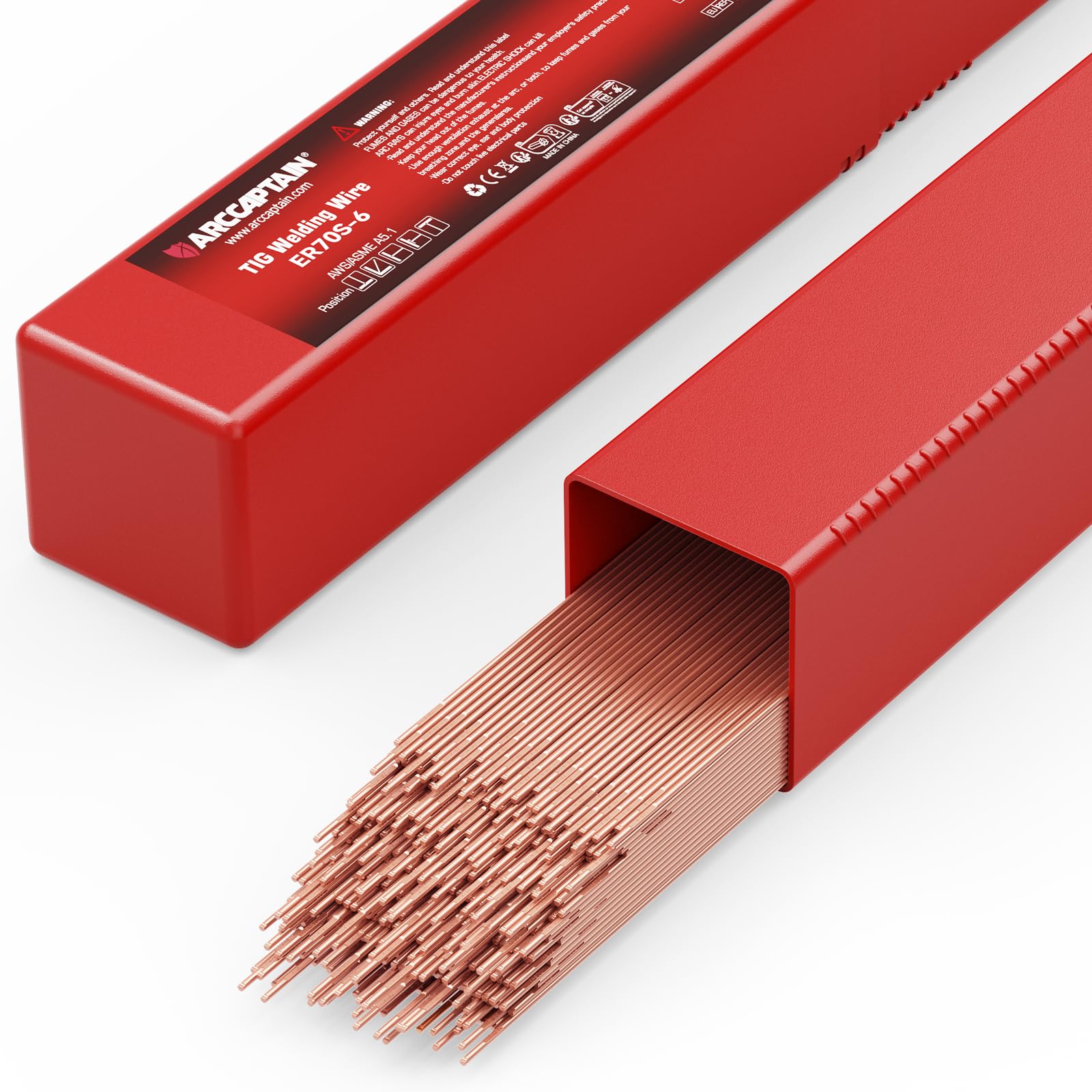
That is why ARCCAPTAIN 1/16 is a strong fine-control pick, YESWELDER 3/32 works as a reliable all-rounder, TOOLIOM 3/32 is a practical everyday value option, and HYW 10lb makes sense for welders who want a larger shop supply.
Wrapping Up
Pick the rod that matches how you actually weld. For most mild steel repairs, a 3/32″ ER70S-6 rod is the easiest starting point. For thin panels and tight joints, move down to 1/16″. For thicker brackets or faster buildup, consider 1/8″.
If you weld professionally or in volume, full-length 36″ rods and 10 lb packs can reduce interruptions and lower the practical cost per job. If you are learning or need to access tight joints, smaller diameters and trial packs let you practice without committing to a heavy supply. Match the diameter to the material thickness, keep rods clean and dry, and verify the current Amazon listing before you buy.
Side-by-Side Comparison
Use this table to compare size, pack weight, material description, and the Amazon product page for each ER70S-6 TIG welding rod.