Disclosure: As an Amazon Associate, we earn from qualifying purchases. Product details can change, so confirm the current size, pack quantity, and included packaging on Amazon before ordering.
Editorially reviewed July 2026
Choosing the wrong TIG filler-rod diameter can make puddle control harder and leave you with more unused material than you expected. This guide compares ER70S-6 mild-steel TIG filler rods in 1/16-inch, 3/32-inch, and 1/8-inch diameters, with pack sizes ranging from 1 to 5 pounds.
Use the quick comparison to match diameter, pack quantity, and storage format to your work. Rod diameter affects how quickly you add filler metal, but weld penetration and joint strength still depend on joint preparation, fit-up, heat input, shielding gas, and technique.
Top Picks
| Category | Product | Size / Pack | Best For | CTA |
|---|---|---|---|---|
| Best Overall | YESWELDER 1/16 | 1/16" × 16" 5 lb |
Thin sheet, practice, and general light fabrication | Check Amazon |
| Best Bulk Value | ARCCAPTAIN 1/16 | 1/16" × 16" 5 lb |
Regular garage use with a storage sleeve | Check Amazon |
| Best Starter Pack | Blulu 1/16 | 1/16" × 16" 2 lb |
Learning, occasional repairs, and lower-volume use | Check Amazon |
| Best 3/32 Bulk Pack | ARCCAPTAIN 3/32 | 3/32" × 16" 5 lb |
General fabrication and medium-size joints | Check Amazon |
| Best Small 3/32 Pack | Blulu 3/32 | 3/32" × 16" 2 lb |
Occasional medium-joint repairs and mixed hobby work | Check Amazon |
| Best 1/8 Bulk Option | YESWELDER 1/8 | 1/8" × 16" 5 lb |
Larger joints that need faster filler addition | Check Amazon |
| Best Packaging | SONNLER 1/16 | 1/16" × 16" Check listing |
Users who prioritize a reusable storage tube | Check Amazon |
| Best Value Alternative | TOOLIOM 1/16 | 1/16" × 16" 5 lb |
General light fabrication and practice | Check Amazon |
| Best 1 lb Pack | UNIFAMILY 1/16 | 1/16" × 16" 1 lb |
Small jobs, practice, and infrequent use | Check Amazon |
| Best Alternative 1/8 Pack | ARCCAPTAIN 1/8 | 1/8" × 16" 5 lb |
Larger joint volumes and frequent shop use | Check Amazon |
How We Compared These TIG Filler Rods
Every product in the supplied article is presented as an ER70S-6 mild-steel TIG filler rod, so all 10 products match the core buyer intent and remain in the roundup. The comparison prioritizes diameter, rod length, pack quantity, storage format, and the type of user each option suits.
Exact Amazon ratings, review counts, package dimensions, and scored rankings were removed because they can change and were not independently verified. Product-specific performance claims were also softened where the original copy treated rod diameter as a guarantee of penetration or weld strength.
A practical 1/16-inch ER70S-6 option when you want controlled filler addition on lighter mild-steel work. The 16-inch rods are easier to handle in confined areas, while the 5-pound pack suits repeat workshop use.
Why You’ll Like It
- Fine diameter supports controlled dabbing on smaller joints
- Five-pound pack reduces frequent reordering
- Short rods are manageable in tight work areas
Who Should Avoid It
Choose a different diameter when your joint design or welding procedure calls for more filler per addition. The 16-inch length also means more rod changes during long runs.
Reported Customer Themes
The supplied article reports positive comments about clean feeding and consistent handling, with mixed feedback about packaging and the efficiency of shorter rods.
This chart is retained from the supplied article and is not live Amazon rating data.

Check Product Details on Amazon
This 1/16-inch ER70S-6 pack is aimed at users who want a larger supply plus a protective sleeve. It fits light fabrication, practice, and repair work where a smaller filler diameter gives you more control over deposition.
Why You’ll Like It
- Five-pound quantity for repeat projects
- Protective sleeve helps organization
- Straight 16-inch rods are easy to position
Who Should Avoid It
The supplied listing information does not establish that the sleeve is airtight. Store the rods in a clean, dry location and verify current package contents before ordering.
Reported Customer Themes
The supplied article highlights straightness, clean handling, and convenient storage. It also notes that short rods may be less efficient for long continuous work.
This chart is retained from the supplied article and is not live Amazon rating data.

Check Product Details on Amazon
The smaller 2-pound pack lowers the commitment for new TIG welders, occasional users, or anyone who wants to try 1/16-inch ER70S-6 before buying a larger quantity.
Why You’ll Like It
- Smaller pack suits occasional use
- Fine diameter works well for controlled filler addition
- Useful for practice and light repair work
Who Should Avoid It
The original article describes basic cardboard packaging, so plan on a cleaner, more protective storage tube if the rods will sit for long periods.
Reported Customer Themes
The supplied article reports dependable general performance and good value, while packaging is the most common limitation mentioned.
This chart is retained from the supplied article and is not live Amazon rating data.

Check Product Details on Amazon
A 3/32-inch rod adds more filler per dab than a 1/16-inch rod, making it a useful middle size for many general fabrication joints. Joint strength and penetration still depend on base-metal preparation, heat input, fit-up, and technique rather than rod diameter alone.
Why You’ll Like It
- Versatile middle diameter
- Five-pound supply for repeated shop work
- Short length can improve control in limited space
Who Should Avoid It
It may add filler too quickly on very small joints. Confirm the diameter against your welding procedure, material thickness, and preferred puddle control.
Reported Customer Themes
The supplied article emphasizes straight rods, predictable feeding, and useful packaging, while noting the tradeoff of more frequent rod changes.
This chart is retained from the supplied article and is not live Amazon rating data.

Check Product Details on Amazon
This 2-pound 3/32-inch option is easier to justify when you need a medium-size filler rod only occasionally. It offers more filler volume per addition than 1/16-inch rod without committing to a 5-pound pack.
Why You’ll Like It
- Lower-quantity 3/32-inch option
- Useful middle diameter for varied repair work
- Sixteen-inch length is easy to position
Who Should Avoid It
The original article reports basic packaging. Transfer unused rods to a clean, dry container and verify the current pack description on Amazon.
Reported Customer Themes
The supplied article reports smooth filler flow and reliable general use. Packaging and long-term storage are the main cautions.
This chart is retained from the supplied article and is not live Amazon rating data.

Check Product Details on Amazon
The 1/8-inch diameter is intended for jobs where you need to add more filler metal per dab. It can suit larger joint volumes, but it does not automatically create deeper penetration or a stronger weld; those outcomes depend on the complete welding procedure.
Why You’ll Like It
- Adds filler faster than smaller diameters
- Five-pound pack suits repeat use
- Short length remains manageable in confined areas
Who Should Avoid It
Not the best choice for fine work or small puddles. Make sure your amperage, joint size, and technique can properly melt and place this larger filler rod.
Reported Customer Themes
The supplied article reports consistent handling and useful performance on larger work, with the usual drawback of shorter 16-inch rods during long runs.
This chart is retained from the supplied article and is not live Amazon rating data.

Check Product Details on Amazon
The main differentiator is the supplied plastic tube, which can make storage and transport more convenient. The source gives conflicting detail about pack quantity, so confirm the current Amazon listing before buying.
Why You’ll Like It
- Reusable tube supports cleaner organization
- Fine diameter for controlled filler addition
- Convenient for transporting rods between work areas
Who Should Avoid It
Do not rely on the article for the current pack weight. The original “low-spatter” and “corrosion-resistant finish” wording was removed because it was not adequately supported.
Reported Customer Themes
The supplied article focuses on the storage tube and generally predictable handling. It also mentions occasional shipping damage to the container.
This chart is retained from the supplied article and is not live Amazon rating data.

Check Product Details on Amazon
A straightforward 5-pound, 1/16-inch ER70S-6 option for practice, smaller joints, and routine mild-steel fabrication. Its appeal is simple sizing and quantity rather than a unique performance claim.
Why You’ll Like It
- Five-pound supply for regular use
- Fine diameter helps control filler volume
- Suitable for practice and smaller mild-steel joints
Who Should Avoid It
The article does not independently verify storage quality or current package condition. Short rods also require more changes during long welds.
Reported Customer Themes
The supplied article reports predictable feeding and solid value, while package condition and short rod length receive mixed feedback.
This chart is retained from the supplied article and is not live Amazon rating data.

Check Product Details on Amazon
The 1-pound pack is the lowest-commitment option in this roundup. It makes sense for practice, occasional touch-ups, or users who do not want a larger quantity sitting in storage.
Why You’ll Like It
- Small pack reduces unused inventory
- Fine diameter for controlled additions
- Convenient for occasional users
Who Should Avoid It
The original “low-spatter” and “corrosion-resistant finish” claims were not supported and have been removed. Use a suitable dry container if the supplied packaging is not durable.
Reported Customer Themes
The supplied article describes straightforward performance and convenience for small jobs, with storage protection as the main limitation.
This chart is retained from the supplied article and is not live Amazon rating data.

Check Product Details on Amazon
Another 1/8-inch, 5-pound choice for welders who need faster filler addition on larger joints. Like every larger filler rod, it must match the puddle size and procedure; diameter alone does not determine penetration or final weld strength.
Why You’ll Like It
- Larger diameter adds filler efficiently
- Five-pound pack for regular use
- Protective sleeve is listed in the supplied article
Who Should Avoid It
Too large for many fine-joint applications. Verify current package contents and choose it only when your joint design and heat input support a 1/8-inch filler.
Reported Customer Themes
The supplied article reports consistent handling, straight rods, and a useful sleeve, while shorter rod length remains the main tradeoff.
This chart is retained from the supplied article and is not live Amazon rating data.

Check Product Details on Amazon
How to Choose ER70S-6 TIG Filler Rod
Choose Diameter by Puddle and Joint Size
A smaller rod adds less filler per dab and can be easier to control on small joints. A larger rod adds more filler per dab and may suit larger joint volumes. Do not select diameter from base-metal thickness alone; consider joint design, amperage, travel speed, fit-up, and the procedure you are following.
Choose a Pack Size You Can Store Properly
A 1- or 2-pound pack can make sense for occasional use, while a 5-pound pack may offer better convenience for regular work. Larger packs only provide value when you can keep the rods clean, dry, straight, and protected from shop contamination.
Confirm Length and Packaging
All products in this roundup are listed as 16-inch rods. That length is convenient in confined spaces but requires more rod changes than longer filler rods. Sleeves and tubes help with organization, but you should still confirm whether the current package is sealed, reusable, and included with the exact variation you select.
Check Material Compatibility
ER70S-6 is commonly sold for carbon- and mild-steel welding applications, but the correct filler metal depends on the base metal, service conditions, code requirements, and welding procedure. Do not use this roundup as a substitute for a qualified welding specification.
FAQ
Is 1/16-inch, 3/32-inch, or 1/8-inch TIG rod best?
There is no single best diameter. A 1/16-inch rod adds filler slowly for finer control, 3/32 inch is a useful middle size, and 1/8 inch adds filler faster for larger puddles. Match the rod to the joint, amperage, technique, and procedure rather than assuming a larger rod automatically produces more penetration or strength.
Are 16-inch TIG rods practical?
Yes. They are easy to position in tight areas and convenient for practice or repair work. Their main drawback is more frequent rod changes during long welds. Do not join filler-rod offcuts together unless an approved procedure specifically allows it.
How should ER70S-6 rods be stored?
Keep them dry, clean, straight, and protected from dust, oil, moisture, and grinding debris. A clean tube or covered container is useful when the original package is flimsy. Follow the rod manufacturer’s storage guidance and your shop’s welding procedure.
Should TIG filler rods be cleaned before use?
Use clean rods and follow the filler-metal and cleaner manufacturers’ instructions. When cleaning is required, use only an approved product, follow its safety data sheet, keep it away from ignition sources, and allow it to evaporate fully before welding.
Does a thicker filler rod make a stronger weld?
Not by itself. Rod diameter changes how much filler you add per dab. Weld strength depends on correct filler classification, joint design, base-metal preparation, heat input, shielding, fusion, and technique.
What Customers Prefer
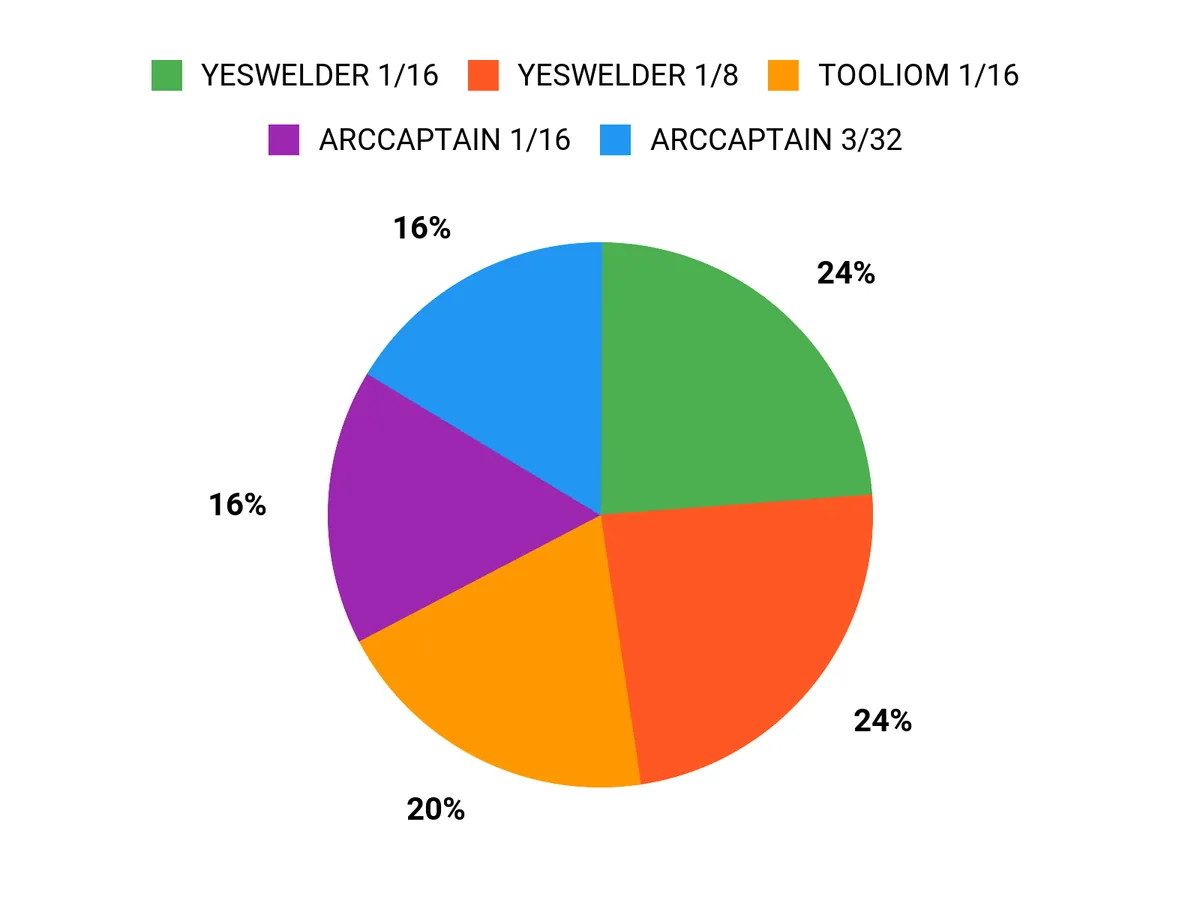
The supplied review summaries consistently emphasize three practical factors: straight rods, predictable handling, and packaging that protects the filler metal. Buyers should still verify current listing details because package quantity, included sleeves, and review data can change.
Final Recommendation
Best all-around starting point: Choose the YESWELDER 1/16 when you need a fine-diameter, 5-pound pack for regular light fabrication and practice. Choose Blulu 1/16 or UNIFAMILY 1/16 when you want a smaller quantity. Move to 3/32 inch or 1/8 inch only when the larger filler addition matches your joint and procedure.
Full Product Comparison
| Product | Image | Diameter × Length | Pack | Best For | CTA |
|---|---|---|---|---|---|
| YESWELDER 1/16 |
 |
1/16" × 16" | 5 lb | Thin sheet, practice, and general light fabrication | View on Amazon |
| ARCCAPTAIN 1/16 |
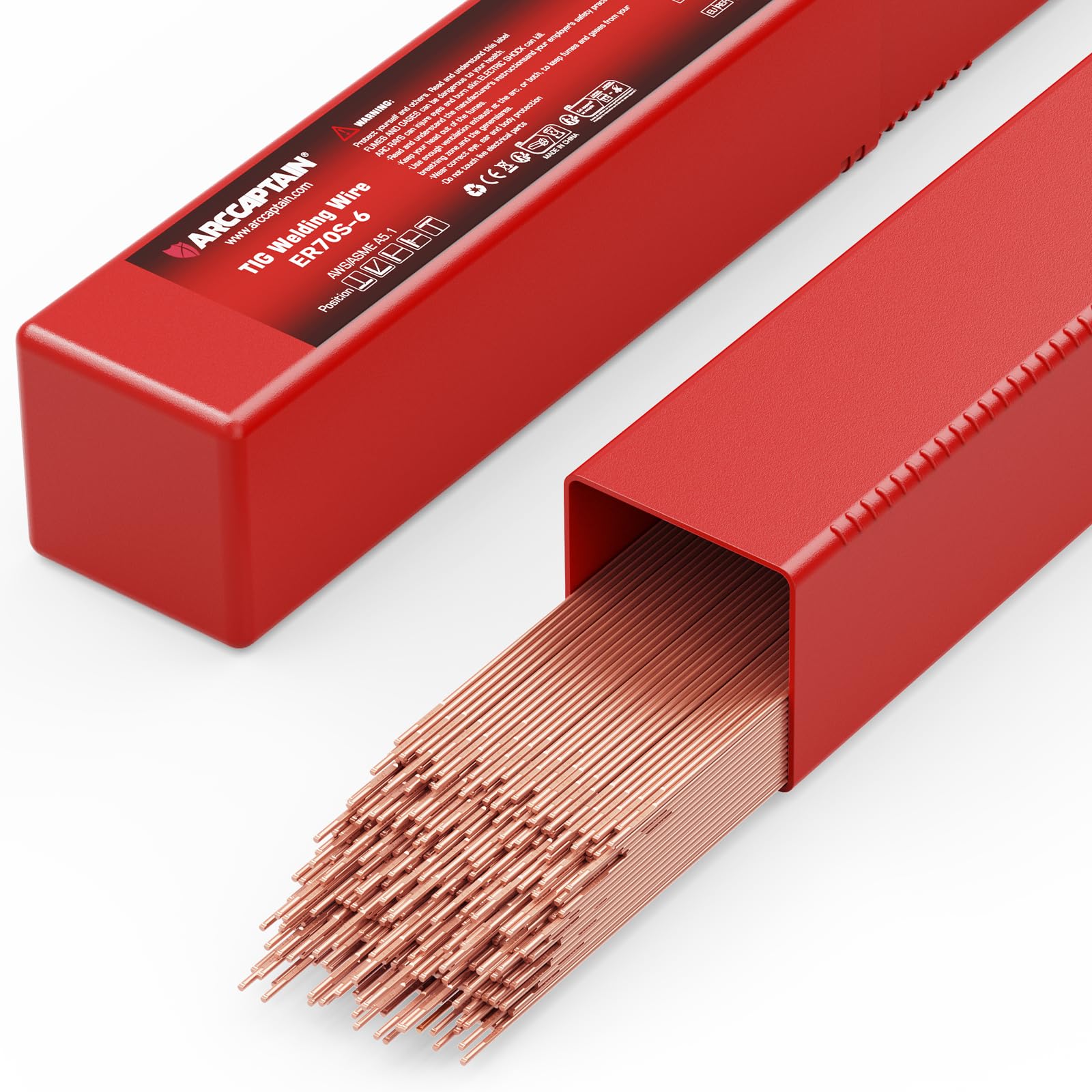 |
1/16" × 16" | 5 lb | Regular garage use with a storage sleeve | View on Amazon |
| Blulu 1/16 |
 |
1/16" × 16" | 2 lb | Learning, occasional repairs, and lower-volume use | View on Amazon |
| ARCCAPTAIN 3/32 |
 |
3/32" × 16" | 5 lb | General fabrication and medium-size joints | View on Amazon |
| Blulu 3/32 |
|
3/32" × 16" | 2 lb | Occasional medium-joint repairs and mixed hobby work | View on Amazon |
| YESWELDER 1/8 |
 |
1/8" × 16" | 5 lb | Larger joints that need faster filler addition | View on Amazon |
| SONNLER 1/16 |
 |
1/16" × 16" | Check listing | Users who prioritize a reusable storage tube | View on Amazon |
| TOOLIOM 1/16 |
 |
1/16" × 16" | 5 lb | General light fabrication and practice | View on Amazon |
| UNIFAMILY 1/16 |
 |
1/16" × 16" | 1 lb | Small jobs, practice, and infrequent use | View on Amazon |
| ARCCAPTAIN 1/8 |
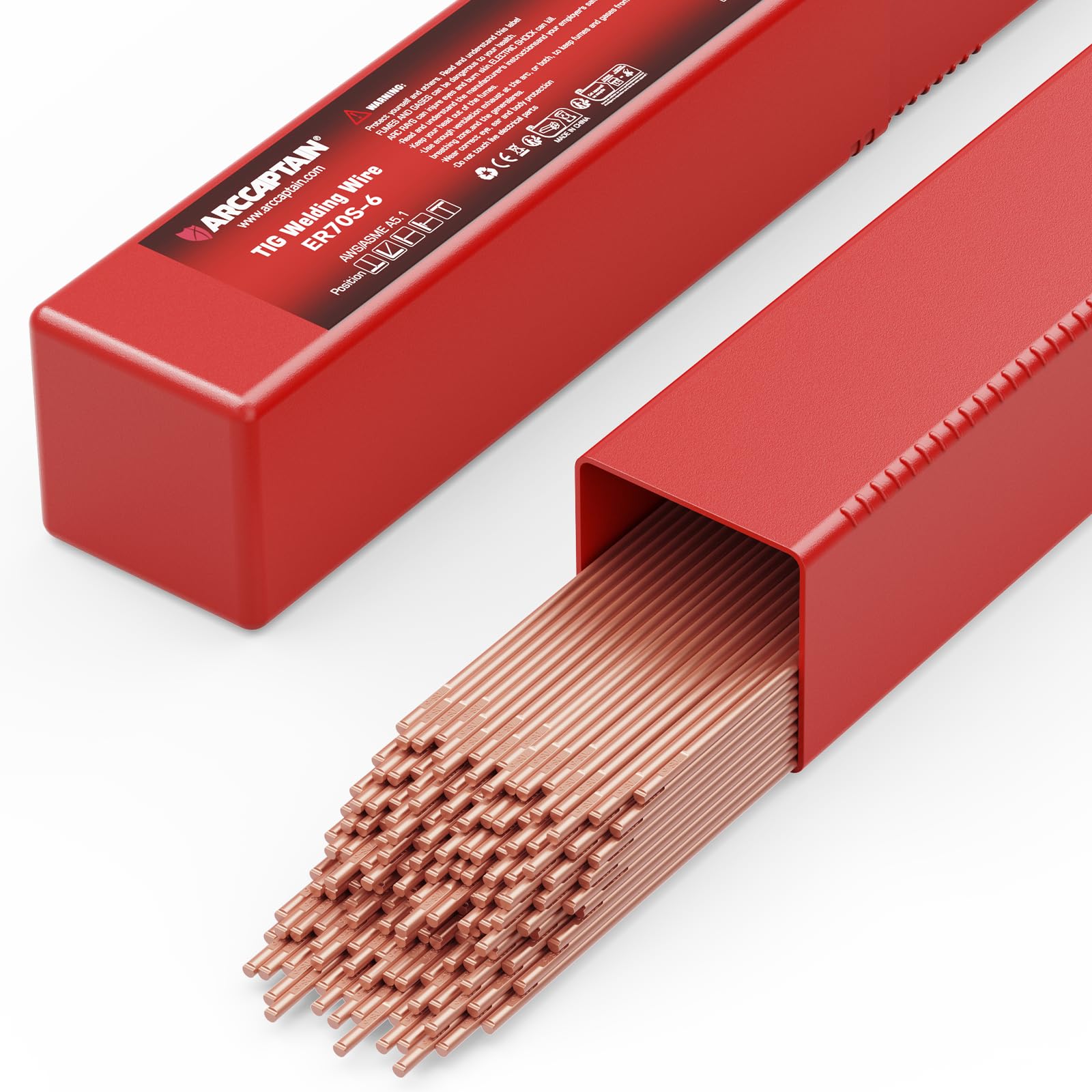 |
1/8" × 16" | 5 lb | Larger joint volumes and frequent shop use | View on Amazon |
This roundup is reader-supported. When you click Amazon links, we may earn a commission from qualifying purchases at no extra cost to you.