Disclosure: As an Amazon Associate, we earn from qualifying purchases. If you click a link on this page and make a purchase, we may receive a small commission at no extra cost to you.
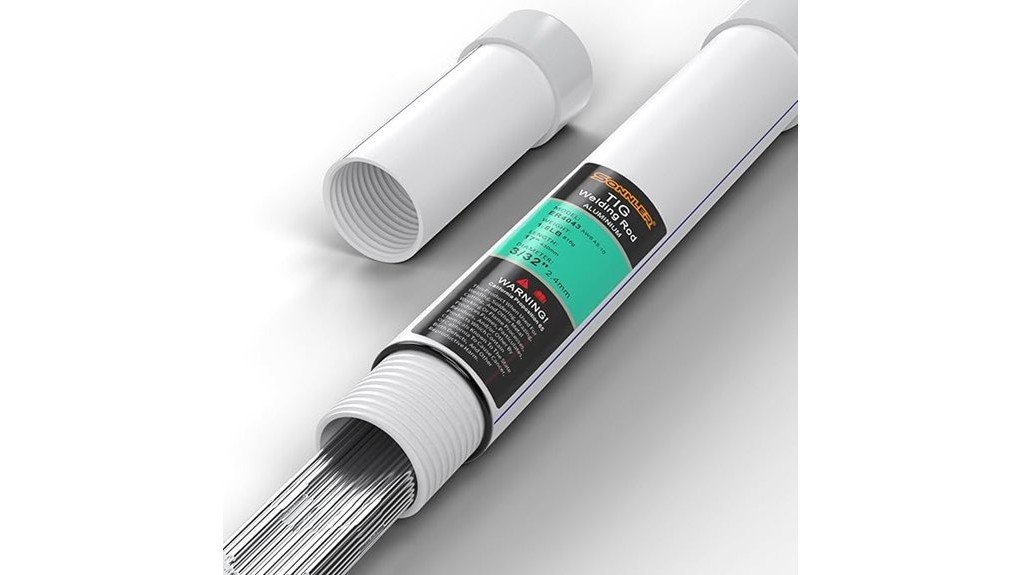
Aluminum TIG welding can be frustrating when the filler rod does not flow cleanly, match the base alloy, or protect the joint from cracking. The Aluminum TIG Welding Rod reviewed here is an ER4043 filler rod in a 3/32″ x 16″ size, with a 1.8LB package weight listed in the source article. It is best suited for welders who need a silicon-bearing aluminum filler for common alloys such as 3003, 5052, 6061, and 6063. This review helps you decide whether this rod fits your aluminum repair, fabrication, or decorative welding work, while also covering its limits.
Quick Verdict
Rating: 8.2/10
Best For: TIG welders who need ER4043 aluminum filler rod for clean flow on compatible aluminum alloys.
Bottom Line: This aluminum TIG rod is a practical choice if you want 3/32″ ER4043 filler with good puddle flow and low cracking risk on supported alloys. It is not the right pick for every aluminum alloy, underwater welding, or jobs that require a different filler classification.
| Specification | Detail |
|---|---|
| Product type | Aluminum TIG welding filler rod |
| Filler classification | ER4043 |
| Rod size | 3/32″ x 16″ |
| Package weight listed | 1.8LB |
| Composition note | Article states 5% added silicon for improved melt pool liquidity |
| Supported alloys mentioned | 3003, 3004, 5052, 6061, 6063, and casing alloys such as 43, 355, 356, and 214 |
| Shielding gas | 100% Argon, with Argon/Helium mix noted as an option for arc behavior |
| Suggested flow rate | 15 to 20 CFH, based on the source article |
| Best use | Aluminum repair, fabrication, structural work where compatible, and decorative welds |
| Storage note | Keep sealed, clean, and dry, with the article suggesting 50°F to 80°F and low humidity |
What Is the Aluminum TIG Welding Rod?
The Aluminum TIG Welding Rod is a filler rod for TIG welding aluminum. The article identifies it as an ER4043 rod with a 3/32″ diameter, 16″ length, and 1.8LB package weight. ER4043 is commonly chosen when you want a fluid weld puddle and a smoother bead on compatible aluminum alloys.
The key detail is the 5% silicon content noted in the article. That silicon helps the filler metal flow more easily, which can make puddle control less harsh than some stiffer-feeling aluminum fillers. This can help when you are working on aluminum repairs, light fabrication, brackets, panels, or decorative joints where bead appearance matters.
This is not a universal aluminum rod. You still need to match the filler to the base metal, clean the aluminum well, and use the right shielding gas. If your project has load-bearing, code, marine, aviation, pressure, or safety-critical requirements, confirm the filler choice with the project specification or a qualified welding professional.
Before You Buy: This rod is article-supported as ER4043, not a one-size-fits-all aluminum filler. Check your base alloy and project requirements before ordering, especially if the weld is structural or safety-critical.
Who Should Buy It?
Best For
- TIG welders working with compatible aluminum alloys such as 3003, 5052, 6061, or 6063.
- Buyers who want a 3/32″ filler rod for common aluminum repair and fabrication tasks.
- Welders who value a more fluid puddle and smoother bead profile from an ER4043-style filler.
Skip If
- Your welding procedure calls for a different filler alloy, such as an ER5356-type rod.
- You need a verified brand, certification, or test documentation before purchase.
- You plan to weld underwater or in a setting that requires specialized welding equipment and procedures.
Key Features of the Aluminum TIG Welding Rod
The most useful feature is the ER4043 filler composition described in the article. The added silicon helps improve melt pool liquidity, which can make it easier to wet the joint edges and form a smoother bead. For many welders, that means less struggle when trying to keep the puddle consistent on clean aluminum.
The 3/32″ diameter is a practical middle size for many TIG jobs. It gives you more filler volume than thinner rods while still allowing controlled feeding. That size can be helpful when you are working on aluminum pieces that need steady filler addition without overwhelming the puddle.
The article also notes a stable arc and low spatter. In TIG welding, clean technique matters more than the rod alone, but a suitable filler can support cleaner bead formation when your tungsten, amperage, gas coverage, and surface prep are set correctly.
Fit and Alloy Compatibility
This rod is described as suitable for aluminum alloys including 3003, 3004, 5052, 6061, and 6063. It is also listed as compatible with casing alloys such as 43, 355, 356, and 214. That gives it a broad use range for common aluminum fabrication and repair tasks.
The main buyer concern is alloy matching. Aluminum filler choice affects crack resistance, color match after anodizing, ductility, and strength. ER4043 is often chosen for its flow and crack resistance on compatible aluminum, but it may not be the best answer for every project.
Weld Pool Flow and Bead Control
The 5% silicon content mentioned in the article is the reason this rod is positioned as easier-flowing. A more fluid puddle can help you tie into both sides of the joint and avoid a cold, uneven bead. This is useful when appearance matters or when you are learning to control aluminum heat input.
That same flow can take practice. If you add too much filler too quickly, the puddle can spread wider than you expect. Start with clean material, a steady torch angle, and small filler additions until you know how the rod responds.
Pro Tip: Clean aluminum just before welding, keep the rod dry, and wipe the filler if it has been handled often. Contamination on the base metal or rod can cause porosity even when the shielding gas setting is correct.
Shielding Gas Requirements and Considerations
For this rod, the article recommends 100% Argon as the main shielding gas. It also notes that Argon mixed with Helium may improve arc behavior in some situations. For most everyday TIG aluminum work, Argon is the simpler starting point because it is widely used and easier to dial in.
The article gives a typical gas flow range of 15 to 20 CFH. Too little coverage can allow air into the weld zone, causing porosity and weak, dirty welds. Too much flow can also create turbulence, which may pull air into the shielding zone.
Use your TIG machine manual, torch setup, cup size, and shop conditions to adjust the final flow. Drafts, fans, outdoor work, or a long tungsten stick-out can all change how well the gas protects the puddle.
Storage and Rod Maintenance
Aluminum filler rods should stay clean and dry. The original article notes that proper sealing can help preserve rod quality for several years, while humidity and exposure can reduce performance. Store the rods in a closed tube, sleeve, or dry cabinet when you are not using them.
The article also gives a recommended storage temperature range of 50°F to 80°F with low humidity. That is a practical target for most shops and garages. Avoid leaving the rods where they can collect dust, grinding debris, oil mist, or moisture.
Safety and Handling Notes
Welding aluminum requires proper personal protective equipment. Wear welding gloves, a suitable welding helmet, long sleeves, and eye protection when needed. Keep your work area ventilated and avoid breathing welding fumes.
This rod is not ideal for underwater welding. Underwater welding requires special equipment, training, and safety procedures. Do not use a standard aluminum TIG filler rod as a substitute for a qualified underwater welding setup.
Preheating can be useful in some aluminum jobs because it may reduce thermal shock and help the joint come up to temperature more evenly. The article notes that a heat gun or torch may be used for preparation, but the correct preheat depends on the alloy, thickness, and job requirements.
How It Performs in Real Use
For Aluminum Repair Work
For compatible aluminum repairs, this ER4043 rod makes sense when you want good flow and a lower risk of cracking compared with a poorly matched filler. It can be useful for fixing small cracks, brackets, tabs, or light-duty aluminum parts, as long as the base alloy is suitable.
For Fabrication Projects
In fabrication, the 3/32″ size gives you enough filler for steady bead building without feeling oversized for many shop projects. It is a sensible choice for welders making frames, panels, small fixtures, or aluminum assemblies where ER4043 is an approved filler.
For Decorative Welds
The smoother puddle behavior can help when bead appearance matters. You still need good cleaning and steady torch control, but the silicon-bearing filler can help the bead wet out more cleanly on supported alloys.
For Thicker Aluminum
The source article notes that some buyers may question performance on thicker materials. For thicker aluminum, your machine capacity, joint design, preheat, travel speed, and filler size matter. This rod may still be useful, but it is not a shortcut for an underpowered machine or poor joint prep.
How to Use It Correctly
Start by confirming that ER4043 is suitable for your base aluminum. Clean the joint area thoroughly before welding. Aluminum oxide, grease, and shop dust can all interfere with puddle quality and increase the risk of porosity.
Set your shielding gas before striking an arc. The article-supported range is 15 to 20 CFH, but your torch cup and work area may require adjustment. Keep the torch close enough to protect the puddle and avoid welding in a strong draft.
Feed the rod into the leading edge of the puddle rather than melting it high in the arc. This helps reduce contamination and gives you better control over bead size. After welding, let the part cool safely before handling or cleaning it.
Pros and Cons
Pros
- ER4043 composition is useful for many common aluminum TIG welding jobs.
- 3/32″ x 16″ rod size fits a wide range of repair and fabrication work.
- 5% silicon content, as stated in the article, supports smoother melt pool flow.
- Compatible alloys listed include 3003, 3004, 5052, 6061, and 6063.
- Works with 100% Argon shielding gas, which is a common TIG aluminum setup.
Cons
- Brand, certification, warranty, and full manufacturer details were not confirmed from the source article.
- Not suitable for every aluminum alloy or every welding procedure.
- Requires clean storage, correct gas coverage, and proper surface prep to perform well.
Is It Worth the Price?
This aluminum TIG welding rod can be a strong value for the price if you need ER4043 filler in a practical 3/32″ size. You get a rod type that is useful across several common aluminum alloys and suited to both repair and fabrication work.
The most value goes to buyers who already know ER4043 matches their project. If you are still unsure about your base alloy, the rod size you need, or whether your job requires a different filler, check those details first. This is not the best fit if you need verified documentation, a specific brand certification, or a filler rod for a specialized welding code.
How It Compares to Alternatives
Compared with ER5356 filler, ER4043 is often chosen when you want a more fluid puddle and better crack resistance on compatible aluminum alloys. ER5356 may be worth comparing when your project requires different strength, color, or alloy-matching characteristics.
If you are comparing rod diameters, thinner rods can offer more control on very light material, while larger rods can add filler faster on heavier parts. This 3/32″ rod makes the most sense when you want a balanced size for general TIG aluminum work.
Frequently Asked Questions
What is this Aluminum TIG Welding Rod best used for?
It is best used for TIG welding compatible aluminum alloys where ER4043 filler is appropriate. The article lists 3003, 3004, 5052, 6061, 6063, and certain casing alloys as supported uses.
What size is the rod?
The article lists the rod size as 3/32″ x 16″. That is a common middle-ground size for TIG aluminum work, but you should still match rod diameter to material thickness and weld joint size.
Does it require Argon shielding gas?
Yes, the article recommends 100% Argon for this rod. It also notes that Argon mixed with Helium may help arc stability in some situations, but your TIG machine, torch, and job requirements should guide the final setup.
What gas flow rate should you use?
The source article gives a typical range of 15 to 20 CFH. Adjust as needed for your cup size, torch setup, stick-out, and drafts in the work area.
Is preheating necessary before using this rod?
Preheating is not always required, but the article notes that it can help improve joint integrity and reduce cracking risk in some aluminum jobs. Use the correct preheat for your alloy, thickness, and welding procedure.
Can this rod be used for underwater welding?
No. The article says this rod is not ideal for underwater applications. Underwater welding requires specialized equipment, procedures, and safety training.
How should you store the rods?
Store them sealed, dry, and clean. The article suggests 50°F to 80°F with low humidity to help protect rod quality and reduce contamination.
Who should skip this Aluminum TIG Welding Rod?
Skip it if your welding procedure calls for another filler alloy, if you need verified brand documentation, or if you are working on a safety-critical project without a confirmed filler specification. It is also not suitable for underwater welding.
The Bottom Line
The Aluminum TIG Welding Rod is worth considering if you need an ER4043 3/32″ filler rod for compatible aluminum TIG welding. Its main strength is the smoother puddle flow from the silicon-bearing composition noted in the article, while its main limitation is that it is not the correct filler for every alloy or procedure. Buy it if ER4043 matches your project, and skip it if you need a different filler classification, verified documentation, or specialized welding use.