Disclosure: As an Amazon Associate, we earn from qualifying purchases. If you click a link on this page and make a purchase, we may receive a small commission at no extra cost to you.
Aluminum repair work can be frustrating when the filler metal cracks, runs too hot, or leaves a messy bead. The E4043 aluminum welding rods are made for welders who want a lower-melting aluminum-silicon rod for small repairs, fabrication practice, and light aluminum projects. This review helps you decide where these rods make sense, where they have limits, and what to check before you use them on a critical part.
Quick Verdict
Rating: 8.2/10, Recommended with caveats
Best For: DIY aluminum repairs, light fabrication, practice welds, and non-critical shop projects.
Bottom Line: E4043 rods are useful when you want a smooth-running aluminum rod with good puddle control and lower cracking risk. They are not the right choice for every alloy, every welding process, or safety-critical work.
| Specification | Detail |
|---|---|
| Product type | Aluminum welding rods |
| Classification | AWS A5.3 Class E4043, based on the source article |
| Alloy type | Aluminum-silicon alloy |
| Diameter | 1/8 inch |
| Length | 14 inches |
| Performance focus | Puddle control, stable arc behavior, reduced spatter, and crack-resistant welds |
| Best use | Automotive aluminum repairs, marine equipment repair, shop projects, and DIY fabrication |
| Storage note | Keep rods dry and clean, away from moisture and contaminants |
| Safety note | Use proper welding PPE, ventilation, and the settings on the product label or welding procedure. |
Key Takeaways
- E4043 rods use an aluminum-silicon alloy that can help reduce cracking risk compared with harder-to-control aluminum filler choices.
- The 1/8-inch diameter and 14-inch length make them practical for many small shop and repair tasks.
- The lower melting behavior can help you control the puddle, but aluminum still requires clean prep and correct heat control.
- They suit light aluminum repair and fabrication work, but they are not ideal for every aluminum alloy or safety-critical part.
- You should confirm machine settings, polarity, storage needs, and process compatibility on the package before welding.
What Are E4043 Aluminum Welding Rods?
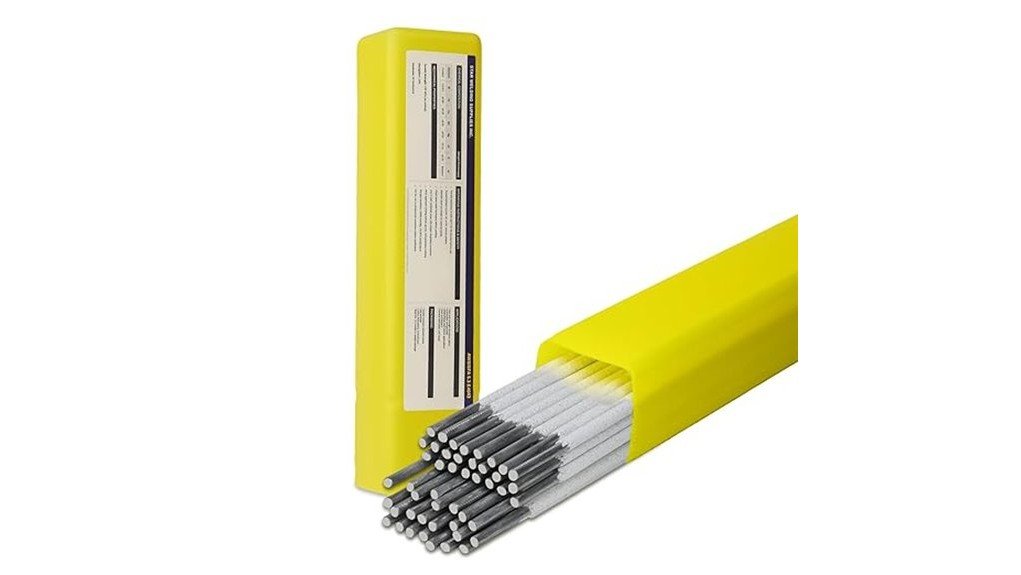
E4043 Aluminum Welding Rods are aluminum-silicon rods used for welding aluminum parts where good flow and crack resistance matter. The source article identifies them as AWS A5.3 Class E4043 rods with a 1/8-inch diameter and 14-inch length.
The E4043 alloy family is common in aluminum welding because silicon improves fluidity and helps the puddle wet into the joint. That makes these rods useful for light repair work, practice beads, and jobs where you need a cleaner aluminum weld than a generic rod can provide.
The main tradeoff is compatibility. E4043 is not a universal fix for every aluminum alloy, and flux-coated stick rods are not the same as bare ER4043 TIG or MIG filler wire.
Before You Buy: Confirm that your welding process, base aluminum alloy, rod size, and machine settings match the package directions. Do not use these rods on load-bearing or safety-critical parts unless a qualified welding procedure approves them.
Who Should Buy It?
Best For
- DIY users repairing small aluminum parts, brackets, panels, or shop items.
- Welders who want an aluminum-silicon rod with easier puddle control.
- Hobbyists practicing aluminum welding before moving to more demanding projects.
Skip If
- You need bare TIG or MIG filler wire, such as ER4043, rather than stick-style rods.
- Your project uses an aluminum alloy that calls for a different filler, such as 5356.
- You are welding structural, pressure, vehicle safety, or marine safety parts without a qualified procedure.
Key Features and Performance
Aluminum-Silicon Alloy
The aluminum-silicon composition is the biggest reason to consider E4043 rods. Silicon helps the molten metal flow better, which can make it easier to fill a joint without fighting a stiff puddle.
This matters most when you work on thin or small aluminum parts. You still need clean metal, tight fit-up, and steady travel speed, but the rod can feel more forgiving than some stronger but less fluid filler choices.
Puddle Control and Arc Behavior
The original article highlights stable arc characteristics, minimal spatter, and improved puddle control. Those traits help you keep the bead cleaner and reduce grinding time after the weld cools.
Aluminum transfers heat quickly, so control still depends on your machine settings and joint prep. Too much heat can wash out the joint, while too little heat can leave poor fusion.
Size and Handling
At 1/8 inch by 14 inches, these rods fit common light repair and shop use. The size gives you enough rod length for short beads while keeping the rod manageable for tight areas.
The 1/8-inch diameter may not suit every machine or every thickness of aluminum. Check the product label for the recommended amperage range, polarity, and base-metal thickness before you start.
Crack Resistance
E4043 is often chosen because it can produce crack-resistant aluminum welds when used with compatible base metals. That benefit matters for repairs that see vibration, heat cycles, or regular handling.
Crack resistance does not mean the weld is automatically structural. Joint design, base alloy, cleaning, heat input, and skill all affect the final strength.
Applications and Use Cases
E4043 rods work best when the project matches the alloy and process. You can use them for many non-critical aluminum repairs, but you should avoid treating them as an all-purpose solution.
- Automotive aluminum repairs: Useful for light brackets, covers, panels, and small non-safety repairs when the base metal is compatible.
- Marine equipment repairs: Helpful for small aluminum hardware or non-critical parts, as long as the repair is not safety-related.
- Shop fabrication: Practical for carts, fixtures, practice coupons, and simple aluminum projects.
- DIY repair work: A good option for hobbyists who need a rod that is easier to control than many general aluminum choices.
Pro Tip: Clean the aluminum until it is bright, dry, and free of oxide, oil, paint, and coating. Dirty aluminum is one of the fastest ways to get porosity, weak fusion, and an uneven bead.
How It Performs in Real Use
For Small Automotive Repairs
For light aluminum brackets, tabs, and non-safety parts, these rods can provide a workable balance of flow and control. They make the most sense when you can remove the part, clean it well, and weld in a stable position.
For Marine and Outdoor Equipment
For small aluminum marine equipment, E4043 can be useful when the part is compatible and the repair is not structural. Salt, coatings, and corrosion can contaminate the joint, so cleaning and inspection matter before and after welding.
For Shop and DIY Projects
These rods are a practical fit for welding practice, repair coupons, small fixtures, and basic aluminum projects. They give you a chance to learn puddle control without jumping straight into more demanding filler choices.
For Long-Term Reliability
Long-term results depend more on preparation and compatibility than the rod alone. Store rods dry, keep them clean, and do not weld over paint, grease, anodizing, or heavy oxidation.
How to Use E4043 Rods Correctly
Start by confirming that the rods match your welding process and machine. If the package lists polarity, amperage, storage, or preheat guidance, follow those instructions instead of guessing.
Prepare the joint with a stainless brush dedicated to aluminum, then remove oil or residue with a suitable cleaner before welding. Fit the pieces tightly, because large gaps make aluminum harder to control.
Practice on scrap from the same material before working on the final part. This helps you tune heat, travel speed, arc length, and bead shape without risking the repair piece.
Compatibility and Safety
E4043 rods are not the same as ER4043 filler wire used for TIG or MIG welding. If your job calls for TIG or MIG, choose the correct bare filler wire and diameter for that process.
You also need to match the filler to the base aluminum alloy. Some aluminum alloys perform better with 5356 or another filler, so check the parent metal, service condition, and weld procedure before you buy.
Wear welding gloves, eye protection, a proper welding helmet, and protective clothing. Use ventilation and avoid welding coated, painted, or unknown metal unless you understand the coating and can remove hazardous contamination safely.
Pros and Cons
Pros
- Aluminum-silicon alloy helps improve puddle flow and bead control.
- 1/8-inch by 14-inch size suits many light repair and shop projects.
- Good choice for compatible aluminum repairs where crack resistance matters.
- Useful for automotive, marine, and DIY applications when the part is non-critical.
- Lower melting behavior can make small aluminum repairs easier to manage.
Cons
- Not a universal match for every aluminum alloy or welding process.
- Requires clean aluminum, dry rods, and correct settings for good results.
- Not suitable for safety-critical work without a qualified welding procedure.
Is It Worth the Price?
E4043 aluminum welding rods are worth considering if you need a practical rod for light aluminum repair, hobby fabrication, or practice work. They offer strong value for the price when your job calls for this alloy type and rod size.
The best value comes from using them on compatible base metals and small projects where clean flow and crack resistance matter more than maximum strength. They are not the best fit if your work needs a certified structural weld, a different filler alloy, or bare TIG/MIG wire.
How It Compares to Alternatives
Compared with ER4043 TIG or MIG filler wire, E4043 rods are aimed at a different welding setup. Choose ER4043 when your process calls for bare filler wire, and choose E4043 rods only when your equipment and package directions support that rod type.
Compared with 5356 aluminum filler, 4043 usually offers smoother flow and easier puddle behavior, while 5356 may suit projects that need higher as-welded strength or better compatibility with certain magnesium-bearing aluminum alloys. The right choice depends on the base metal and the job, not just the label on the rod.
Frequently Asked Questions
Can E4043 rods be used for TIG welding?
Do not assume that flux-coated E4043 rods are TIG filler. TIG welding normally uses bare filler wire, such as ER4043, so check the product label and your welding process before buying.
What aluminum can you weld with E4043 rods?
E4043 can work with many compatible aluminum parts, but the base alloy matters. Check the parent metal and welding procedure before using it on automotive, marine, or structural parts.
Do these rods need special storage?
Keep the rods dry, clean, and protected from shop dirt. Moisture and contamination can hurt arc behavior and increase the chance of porosity.
Are E4043 rods good for outdoor welding?
Outdoor welding can work only when wind, moisture, and contamination are controlled. Clean the part, protect the weld area, and follow the rod and machine settings closely.
Can you paint aluminum after welding with E4043?
Yes, but the surface needs proper cleaning and preparation first. Remove residue, smooth the area as needed, and use a primer and coating system made for aluminum.
Who should skip these rods?
Skip them if your project needs TIG wire, MIG wire, a different aluminum filler alloy, or certified structural welding. They are also not ideal if you cannot clean the base metal properly.
What is the most common mistake when using aluminum rods?
The most common mistake is welding over oxide, oil, paint, or moisture. Aluminum needs clean prep, correct heat, and the right filler choice to produce a sound weld.
The Bottom Line
E4043 aluminum welding rods are a smart buy for light aluminum repair, practice work, and compatible DIY fabrication when you want better puddle control and crack resistance. Skip them if your project needs TIG/MIG filler wire, a different alloy, or a certified structural repair.