Disclosure: As an Amazon Associate, we earn from qualifying purchases. If you click a link on this page and make a purchase, we may receive a small commission at no extra cost to you.
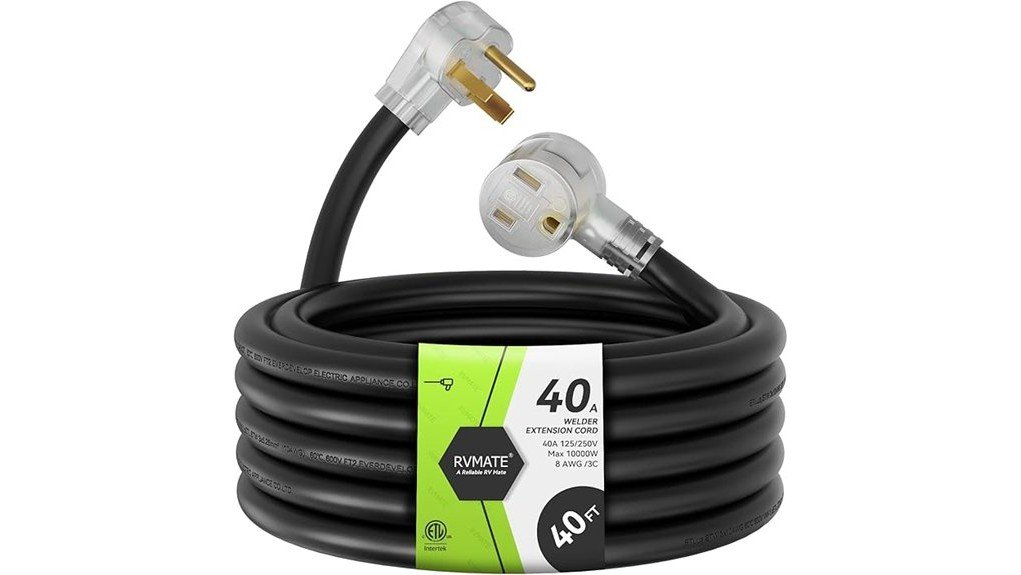
Running a welder too far from the outlet can create setup problems, especially when the cord is too light for the load. The RVMATE 250V Welder Extension Cord is built for welders who need a longer reach with 8 AWG all-copper wiring, a 40-foot length, and a 40A / 250V rating. It gives you more room to work around vehicles, frames, gates, and shop projects without moving the welding machine every few minutes. The main tradeoff is handling, because a heavy 8 AWG cord is thicker and less flexible than lighter-duty options.
Quick Verdict
Rating: 8/10
Best For: MIG welder owners using compatible 250V machines in garages, workshops, and fabrication spaces
Bottom Line: The RVMATE cord makes sense when you need a 40-foot welding extension cord with 8 AWG copper conductors and 40A support. Skip it if you need a light, flexible cord for a small space or a standard household outlet.
Key Specifications
| Specification | Detail |
|---|---|
| Brand | RVMATE |
| Product Type | Welder extension cord |
| Length | 40 feet |
| Wire Gauge | 8 AWG all-copper |
| Voltage Rating | 250V |
| Amp Rating | 40A |
| Primary Use | 250V welding equipment |
| Key Feature | Lighted receptacle power indicator |
| Jacket | Oil and abrasion-resistant outer jacket |
| Safety Listing | ETL-certified design, as stated in the product description |
| Compatibility | Select Miller Millermatic and Lincoln Power MIG series machines using compatible 250V input |
| Best Use | Garage welding, fabrication shops, automotive work, and jobsite setups |
| Important Limit | Not for standard household outlets or light-duty appliances |
What Is the RVMATE 250V Welder Extension Cord?
The RVMATE 250V Welder Extension Cord is a heavy-duty power extension made for welding machines that need high-amperage input. Its 8 AWG all-copper construction supports steady current flow better than thinner light-duty cords when you run welding equipment over a longer distance.
The 40-foot length helps when your outlet is fixed on one wall and your workpiece sits across the garage or shop. Instead of moving the welder, the table, or the project, you can keep the machine connected while giving yourself more working room.
This cord is not a general-purpose extension cord. It is made for compatible 250V welding setups, so you still need to match the cord to your welder, outlet, breaker, and plug configuration before use.
Who Should Buy It?
Best For
- Garage welders who need a 40-foot reach from a compatible 250V outlet
- MIG welder owners using machines that match the cord’s 40A rating and connector setup
- Fabrication, repair, and automotive work where moving the welder is inconvenient
Skip If
- You need a cord for standard household outlets or light-duty appliances
- Your welder, outlet, or plug style does not match this cord
- You work in a very tight space where a thick 8 AWG cord is hard to route
Key Features That Matter in Real Use
8 AWG All-Copper Wiring
The main reason to choose this cord is the 8 AWG all-copper build. A thicker copper conductor helps support higher welding loads and reduces the problems you may see with lighter cords under heavy demand.
That matters most when you weld for longer sessions or need to position the machine farther from the outlet. The benefit is steadier power delivery, while the tradeoff is more weight and less flexibility.
40A / 250V Welding Support
The 40A / 250V rating makes this cord suitable for compatible welding equipment rather than small tools or household devices. Before buying, check your welder’s input requirements and confirm that your electrical setup supports the load.
You should also make sure your breaker, receptacle, and plug configuration match the cord and machine. A cord with the right amp rating still needs the right outlet and safe installation.
Before You Buy: This cord is not designed for household outlets or light-duty appliances. Confirm your welder input rating, outlet type, breaker capacity, and plug fit before ordering.
40-Foot Reach
The 40-foot length gives you more freedom in a garage, barn, workshop, or fabrication space. It helps when the outlet sits far from your workbench, lift, vehicle, or welding table.
The extra reach also reduces the need to drag the welder around the floor. However, you should still route the cord carefully so it does not cross sharp edges, hot metal, puddles, doorways, or high-traffic walk paths.
Lighted Receptacle Power Indicator
The lighted receptacle gives you a quick visual cue that power is present at the cord end. That can help during setup when you want to confirm the cord is connected before checking the machine.
This feature does not replace normal electrical safety checks. You should still turn equipment off before connecting or disconnecting and follow your welder’s manual.
Safety and Build Quality
The cord uses an oil and abrasion-resistant outer jacket, which suits workshop floors better than many light-duty cords. This matters if the cord may contact oil spots, rough concrete, or normal shop debris during welding work.
The product description states an ETL-certified design, which is useful to note, but you should confirm the current listing and packaging before relying on any certification claim. For any 250V welding setup, safe use depends on the full electrical system, not only the cord.
The molded plug design helps keep the connection more secure during normal shop use. Still, you should inspect the plug, receptacle, and jacket before each session and stop using the cord if you see cracks, exposed wire, heat damage, or loose connections.
Compatibility and Setup Notes
This RVMATE cord is listed for use with select Miller Millermatic and Lincoln Power MIG series machines, but compatibility depends on more than the brand name. Your welder must match the voltage, amp needs, and connector style.
Do not assume every Miller or Lincoln welder will fit. Compare the plug shape, receptacle style, welder input label, and manual before you buy. If you are unsure, ask a qualified electrician or the welder manufacturer before using any high-amperage extension cord.
How It Performs in Real Use
For Daily Workshop Use
In regular welding sessions, the 8 AWG copper core is the main advantage. It supports steadier current delivery than thinner cords when your welder needs higher input power.
This makes the cord a strong fit for shops where the welder often sits away from the outlet. The heavier build may take more effort to move, but that is the cost of the thicker conductor.
For Garage or Home Fabrication
The 40-foot reach helps when you work around frames, trailers, gates, or automotive projects. You can position the welder where it is convenient instead of limiting every project to the wall outlet area.
For small home shops, the same length can also create clutter if you do not route and store it well. Keep unused length clear of the work area and avoid creating trip hazards.
For Jobsite Work
On jobsites, the oil and abrasion-resistant jacket helps protect the cord from normal dragging and floor contact. It is still not a reason to abuse the cable or run it through unsafe areas.
Keep the cord dry, visible, and away from vehicle traffic whenever possible. If the cord must cross a walkway, use safe routing and avoid pinch points that can damage the jacket.
For Tight Spaces
The thick 8 AWG build improves load handling, but it also makes the cord harder to bend, coil, and route. That can matter in a packed garage or a small corner welding station.
If your outlet is close to your welder, a shorter or lighter compatible cord may be easier to manage. Choose this RVMATE cord when reach and current support matter more than compact storage.
Placement and Usage Tips
Use this cord as part of a safe welding setup, not as a workaround for an undersized outlet or mismatched electrical system. Before each session, inspect the jacket, plug ends, and receptacle for damage or looseness.
- Uncoil the full cord before welding so heat does not build up in tight loops.
- Keep the cord away from sharp metal edges, hot workpieces, and grinding areas.
- Route it along a wall or low-traffic path when possible to reduce trip risk.
- Do not use the cord if the plug feels loose, the jacket feels soft from heat, or the connection shows signs of damage.
- Store it in broad loops rather than tight bends to reduce strain on the jacket and plug ends.
Pro Tip: Uncoil the full cord before welding and route it where you can see it. A visible, fully uncoiled cord is easier to inspect and less likely to become a trip or heat-buildup problem.
Care and Storage
A heavy welding cord lasts longer when you store it clean, dry, and loosely coiled. Wipe off oil or debris after use, then check both ends before putting it away.
Avoid tight bends near the molded plug ends because repeated stress can weaken the connection area. If you weld often, hang the cord on a wide hook or cord reel that does not pinch the jacket.
Pros and Cons
Pros
- 8 AWG all-copper wire supports high 40A welding loads
- 40-foot length improves reach in garages, shops, and fabrication spaces
- Lighted receptacle makes power status easier to confirm during setup
- Oil and abrasion-resistant jacket suits normal workshop conditions
- Useful for compatible Miller Millermatic and Lincoln Power MIG series setups
Cons
- Thicker 8 AWG cable is less flexible in tight spaces
- Not compatible with standard household outlets or light-duty appliances
- Requires careful plug, outlet, breaker, and welder compatibility checks
Need a longer welding setup?
Is It Worth the Price?
This extension cord sits in the mid-to-premium range for welding accessories because it uses thicker 8 AWG copper wiring and targets 40A / 250V welding setups. It is better for buyers who care about reach, current support, and workshop durability.
You get the most value if your welder often needs to sit far from the outlet. The 40-foot length can save time in garages and fabrication spaces where moving the machine is inconvenient.
It is not the best fit if you only weld occasionally, have a nearby outlet, or need a very flexible cord. In those cases, a shorter compatible cord may be easier to handle and store.
How It Compares to Alternatives
Compared with lighter 10 AWG or 12 AWG cords, the RVMATE model offers stronger current-handling support for compatible welding loads. Those lighter cords are easier to coil and move, but they may not suit the same high-amperage welding needs.
Against similar 8 AWG welding cords, the main buying differences usually come down to length, jacket durability, lighted-end design, connector fit, and storage feel. The RVMATE cord makes the most sense if you want a 40-foot reach and can manage the heavier cable.
Frequently Asked Questions
Is the RVMATE 250V Welder Extension Cord safe for MIG welders?
Yes, it is intended for compatible 250V welding equipment, including MIG welders that match the cord’s 40A rating. Always confirm your welder’s input requirements, outlet type, and plug fit before use.
Can this cord plug into a normal household outlet?
No. This cord is made for 250V welding equipment, not standard household outlets or light-duty appliances. Do not use adapters or improvised wiring to force a connection.
Does the 8 AWG copper wire reduce power loss?
The 8 AWG copper construction helps limit voltage drop compared with thinner cords under similar welding loads. That can support more stable performance when your welder sits farther from the outlet.
Is the 40-foot length too long for a small garage?
It may be more length than you need if your outlet sits close to the welder. The extra reach is useful for larger work areas, but you should keep unused length fully uncoiled and safely routed.
Can it be used outdoors or on a jobsite?
The oil and abrasion-resistant jacket helps with rougher work areas, but you should still protect the cord from water, vehicle traffic, sharp edges, and heat. Follow your welder’s manual and use safe electrical practices.
What welders is it compatible with?
The article-supported compatibility notes include select Miller Millermatic and Lincoln Power MIG series machines using 250V input. You still need to confirm the exact plug style, amp requirement, and outlet match for your specific machine.
Will it overheat during long welding sessions?
It is designed for 40A welding support when used with a properly matched setup. To reduce heat risk, use the cord within its rating, uncoil it fully, inspect it before use, and stop if any connection feels hot or loose.
Who should skip this cord?
Skip it if you need a lightweight cord, a household extension cord, or a product for a welder with a different plug or input requirement. It is also less ideal if your workspace is cramped and the outlet is already close to your machine.
The Bottom Line
The RVMATE 250V Welder Extension Cord is a strong choice if you need a 40-foot, 8 AWG copper cord for a compatible 40A / 250V welding setup. Its best strengths are reach, heavy-duty current support, and workshop-focused durability.
You should skip it if you need a light-duty cord, a standard household outlet cord, or maximum flexibility in a tight space. For the right welder and outlet setup, it earns its 8/10 rating as a practical shop upgrade with clear compatibility limits.