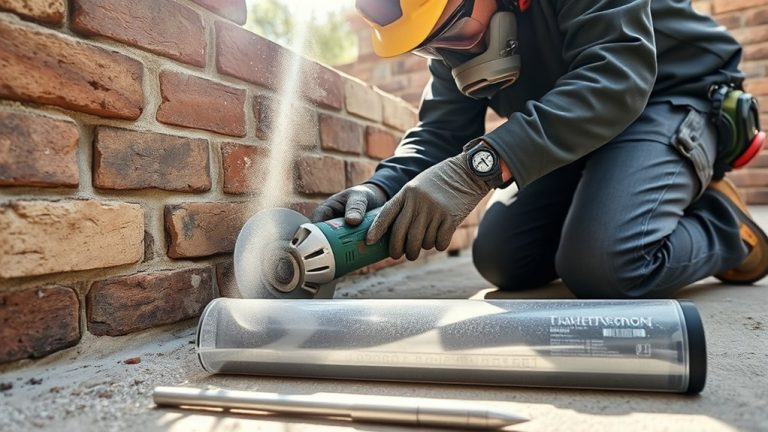
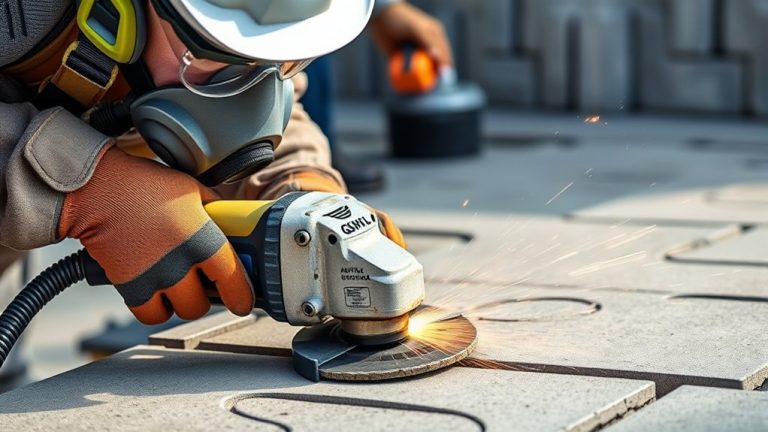
Maintaining proper airflow and cooling vents is essential for your angle grinder’s performance and longevity. Insufficient airflow can cause overheating, leading to motor burnout. Regularly inspect and clean the cooling vents to prevent blockages that restrict air circulation. Verify your grinder operates at the recommended air pressure and avoid covering vents during use. By following best practices for airflow management, you can boost efficiency and extend your tool’s lifespan. Discover more tips to keep your grinder running smoothly.
Why Airflow Matters in Angle Grinders
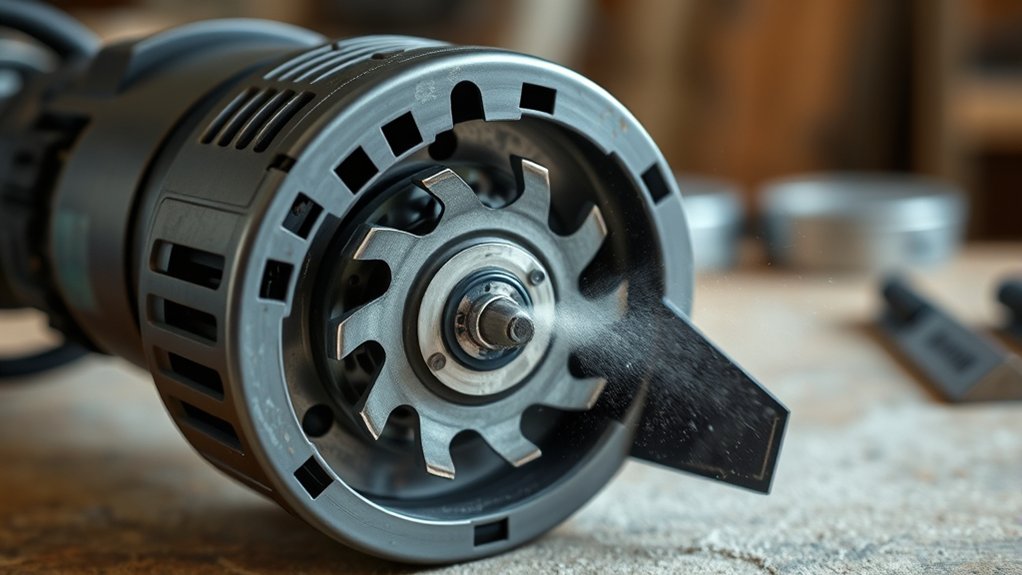
Airflow is fundamental in angle grinders because it directly impacts the tool’s performance and lifespan. Effective airflow guarantees that air tools can maintain ideal operating temperatures, preventing overheating during prolonged use. With some models reaching up to 11,000 RPM, the generated heat must dissipate efficiently. Insufficient airflow can lead to motor burnout, greatly decreasing performance. That’s why regular inspection and cleaning of vents are essential to avoid dust accumulation.
Moreover, proper air pressure enhances tool efficiency and improves user safety by minimizing the risk of burns from overheated components. A well-ventilated workspace further supports unobstructed airflow around your grinder, ensuring it operates at peak efficiency. By prioritizing airflow, you not only extend your tool’s life but also enhance your overall experience. Essentially, maintaining airflow in your angle grinder is a critical step towards achieving liberation in your workspace.
What Cooling Vents Do in Your Grinder?
Cooling vents in your angle grinder play an essential role in managing airflow, which helps prevent overheating during prolonged use. By facilitating efficient air exchange, these vents allow your grinder to maintain peak performance and avoid damage, even at high speeds. Regular maintenance of these vents guarantees they remain unobstructed, ultimately extending the lifespan of your tool.
Airflow Management Benefits
When you’re using an angle grinder for extended periods, effective airflow management becomes essential to prevent overheating. Cooling vents play a vital role in this process, facilitating proper airflow that enhances your tool’s longevity. With well-designed cooling vents, your air angle grinder can maintain peak performance, operating at speeds up to 10,000 RPM without compromising safety. This efficient ventilation dissipates heat generated from friction, keeping critical components like bearings and gears in good condition. Regularly checking and maintaining these airflow pathways guarantees dust and debris won’t obstruct cooling vents, preserving your grinder’s functionality. Ultimately, mastering airflow management not only boosts performance but also extends the service life of your tool, empowering you to work with confidence.
Preventing Overheating Issues
While operating an angle grinder, you’ll find that cooling vents play an important role in preventing overheating. These vents facilitate airflow, dissipating heat generated during operation. Proper ventilation keeps internal components at ideal temperatures, enhancing performance and extending your tool’s lifespan. Regular inspection and cleaning of cooling vents are vital; dust and debris can obstruct airflow, leading to overheating issues. For best operation, aim for an air consumption of 4.2 to 6 CFM at 90 PSI, guaranteeing your grinder runs cool during intensive tasks. Additionally, maintaining the maximum rotational speed of 10,000 to 11,000 RPM while effectively utilizing cooling vents minimizes thermal damage.
| Aspect | Importance | Tips |
|---|---|---|
| Airflow | Prevents overheating | Regularly clean vents |
| Ideal RPM | Maintains performance | Monitor speed consistently |
| Air Consumption | Guarantees efficient operation | Check CFM regularly |
Signs of Poor Airflow and Cooling Issues
Insufficient airflow can lead to noticeable performance issues with your angle grinder, signaling potential cooling problems. If you notice excessive heat buildup on the grinder’s body, it’s a sign that airflow is compromised. Operating at high RPMs, like 10,000 RPM, can exacerbate overheating, causing your tool to shut down or malfunction. A decrease in performance—such as slower speeds or reduced grinding efficiency—often accompanies these symptoms.
Blocked or dirty cooling vents are common culprits, greatly reducing air circulation. Regularly inspecting and cleaning these vents with compressed air is essential for maintaining ideal airflow. Additionally, verify that your air inlet is clean and that hose connections are secure to maintain consistent airflow, especially when using air tools at 90 PSI. By addressing these signs promptly, you can extend the lifespan of your angle grinder and maintain its effectiveness, regardless of wheel size.
Best Practices for Maintaining Airflow and Cooling Vents
To keep your angle grinder operating efficiently, it’s important to prioritize the maintenance of airflow and cooling vents. Start with vent maintenance tips: regularly inspect and clean the air intake and cooling vents using compressed air. This removes dust and debris, which are common airflow obstruction causes that lead to overheating. Always operate your grinder at the recommended air pressure of 90 PSI to guarantee ideal airflow for cooling and performance. Avoid covering the vents during use; adequate ventilation is vital for dissipating heat generated while grinding or cutting. After each use, wipe down the grinder and check for any signs of wear on the cooling vents to maintain their functionality. Implementing these cooling efficiency techniques not only enhances performance but also extends the life of your tool, making sure it remains a reliable part of your toolkit for years to come.
Common Mistakes That Block Airflow
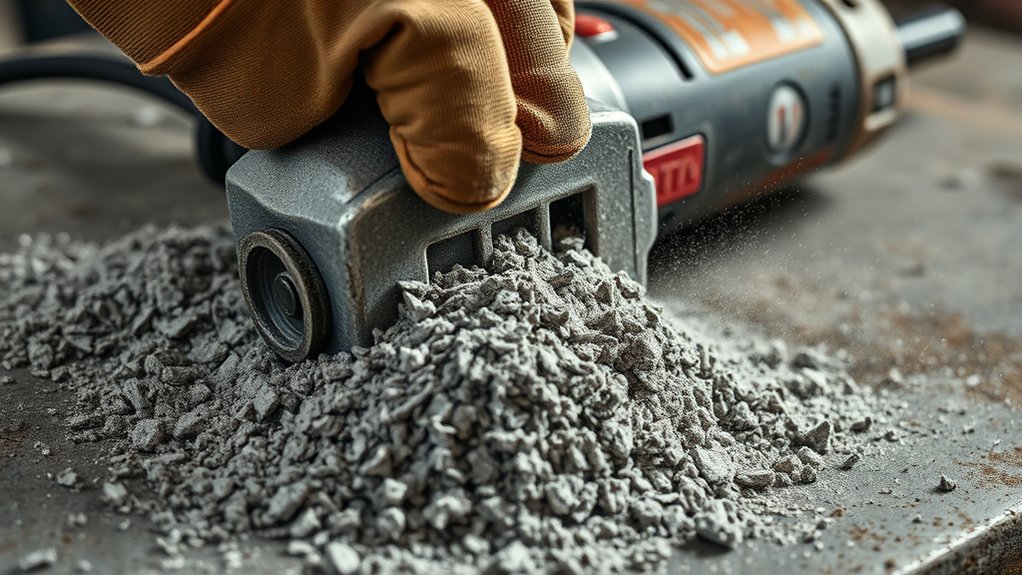
Neglecting to check the air intake and exhaust vents on your pneumatic angle grinder can lead to significant airflow blockages. Blocked vents severely hinder airflow maintenance, increasing the risk of overheating and reducing grinder longevity. After each use, make it a habit to inspect and clean these vents, using compressed air to blow out any dust or debris. Working in poorly ventilated areas only exacerbates airflow issues, so choose your workspace wisely. Additionally, guarantee your air compressor and hoses are free of kinks and obstructions—restricted airflow from the compressor can negatively impact performance. Finally, verify that all attachments fit properly; loose or incompatible parts can create turbulence, further disrupting cooling. By avoiding these common mistakes, you can maintain ideal airflow and keep your tool running smoothly.
How Overheating Impacts Grinder Performance?
When your angle grinder overheats, you’re likely to notice a marked decline in its performance. Excessive heat can drastically reduce cutting efficiency, making your tasks take longer and requiring more effort. Prolonged high temperatures lead to premature wear on vital components like bearings and gears, which can shorten your tool’s lifespan and result in costly repairs. Additionally, overheating can warp grinding discs, compromising their integrity and stability. This not only impacts your grinder’s effectiveness but also raises the risk of accidents during operation. To combat these issues, it’s essential to guarantee unobstructed airflow by regularly checking and clearing cooling vents. Maintaining ideal airflow allows your angle grinder to operate at its maximum rotational speed of 10,000 RPM, enhancing overall performance and safeguarding against component damage. By being proactive, you can keep your tool alive and performing at its best.
Best Environments for Using an Angle Grinder
When using an angle grinder, you need to guarantee you’re in a well-ventilated and spacious environment to prevent overheating and maintain safety. Avoid clutter around your workspace to minimize the risk of accidents from flying debris. Additionally, steer clear of explosive areas, as the sparks generated can ignite flammable materials, making proper environment selection critical.
Optimal Workspace Conditions
Creating ideal workspace conditions is essential for safely and effectively using an angle grinder. Start with lighting considerations; make sure your area is well-lit to spot workpieces and hazards clearly. Follow workspace organization tips to maintain a clean, clutter-free environment, allowing for unobstructed movement and quick access to tools. Position the grinder to direct debris away from you, minimizing injury risks from flying particles. Securing workpieces safely is vital; use clamps or other methods to hold materials firmly, enhancing control and stability while grinding. Finally, guarantee adequate ventilation to dissipate heat generated during operation, prolonging the tool’s lifespan and maintaining peak performance. These conditions empower you to work confidently and efficiently.
Safety Precautions Required
Maintaining safety while using an angle grinder starts with the right environment. Always operate in well-ventilated areas to promote airflow, reducing the risk of overheating. A clean, organized workspace is vital for preventing accidents and ensuring peak performance. Use your grinder in dry conditions to avoid electrical hazards, as moisture can disrupt the pneumatic system. Keep a safe distance from flammable materials, directing the tool away from yourself and others to prevent injuries from sparks and debris. Regularly inspect and clean the cooling vents to prevent dust buildup, maintaining efficient airflow. Finally, don’t forget your safety gear—gloves, goggles, and face shields are essential for fire prevention and personal protection while you work.
Essential Accessories for Improving Airflow
To enhance the airflow of pneumatic angle grinders, you should consider several important accessories that maximize performance and prolong tool lifespan. First, airflow regulators guarantee a consistent supply of clean, dry air at 90 PSI, preventing overheating during operation. Incorporating high-quality air filters is also essential; they block moisture and debris, maintaining peak performance.
Insulated hoses play a critical role by keeping the compressed air at a stable temperature, preventing heat buildup that can damage internal components. Additionally, exhaust attachments improve air circulation around the grinder, enhancing cooling efficiency and making sure the tool operates effectively at high RPMs. Regularly inspecting and cleaning cooling vents is key to avoiding blockages that lead to overheating. By integrating these accessories, you can greatly improve airflow and extend the life of your pneumatic angle grinder, allowing you to work with confidence and freedom.
Troubleshooting Airflow Problems in Your Angle Grinder
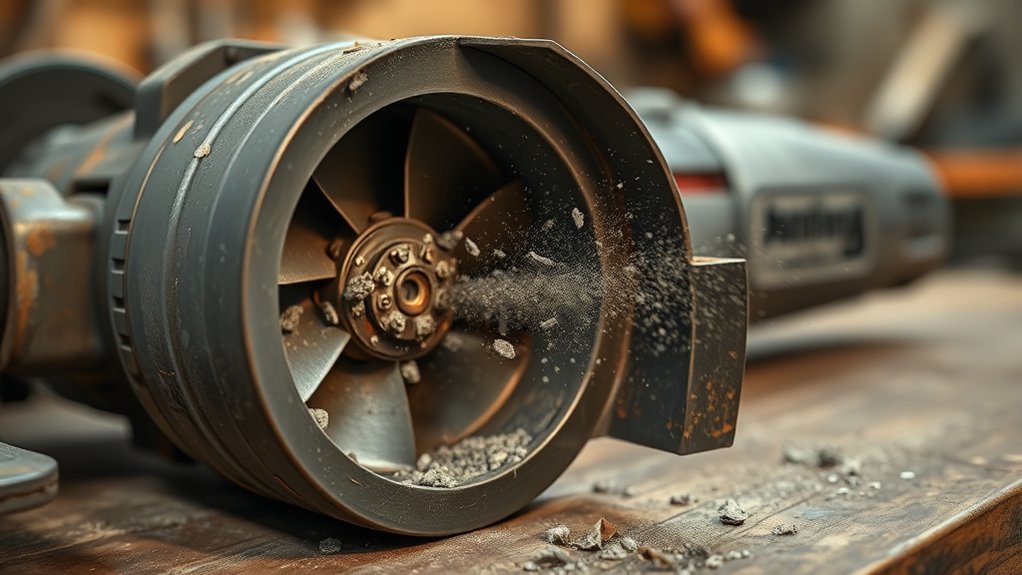
While troubleshooting airflow problems in your angle grinder, it’s important to start by making sure your air compressor supplies clean, dry air at the required pressure of 90 PSI. Inadequate airflow can lead to overheating and reduced performance. Regularly inspect and clean the cooling vents and air filters to prevent airflow obstructions caused by dust and debris buildup. This maintenance routine is vital for maintaining cooling efficiency.
Additionally, use appropriately sized hoses and fittings to avoid restrictions that can diminish airflow. If you notice your angle grinder becoming excessively hot during use, pause operation to allow it to cool down, preventing potential damage. Familiarize yourself with the grinder’s specifications, including average air consumption—typically around 6 CFM—to confirm your setup meets the necessary airflow requirements. By following these steps, you can effectively troubleshoot airflow issues and enhance the lifespan of your angle grinder.
Frequently Asked Questions
Will a 20 Gallon Air Compressor Run a Die Grinder?
Yes, a 20-gallon air compressor can run a die grinder effectively. Its capacity aligns with die grinder performance, ensuring tool longevity during intermittent use. Just monitor the duty cycle to prevent overheating or wear.
Why Are 9 Inch Grinders Banned?
Nine-inch grinders are banned due to safety regulations that prioritize tool efficiency and vibration reduction. Their size increases kickback risks, making them dangerous, especially for inexperienced users, and often leading to serious injuries in confined spaces.
How Many Cfm for Angle Grinder?
Think of your angle grinder as a race car; it needs ideal CFM ratings—around 4.2 to 6—to guarantee airflow efficiency. Proper cooling vent designs keep it performing at its best without overheating.
Should You Wear a Respirator When Using an Angle Grinder?
Yes, you should wear a respirator when using an angle grinder. Respirator types with P100 filters effectively reduce dust exposure, enhancing grinder safety. Prioritize your health to guarantee a safe, productive working environment.
Conclusion
By prioritizing proper airflow and cooling in your angle grinder, you’ll guarantee peak operation and longevity. Maintaining these essential components not only enhances performance but also prevents premature failure. Remember, a well-ventilated grinder is a dependable grinder. So, stay savvy about airflow, sidestep common mistakes, and safeguard your tool. With diligent care, your angle grinder can continue to serve you reliably, delivering dazzling results for many projects to come.