When using an angle grinder, understanding arbor sizes—typically 5/8 and 7/8 inches—is essential for ensuring proper disc fit and compatibility. A correct fit prevents misalignment, reducing the risk of injury and improving performance. Always verify that the wheel matches your grinder’s arbor size and confirm secure installation for safety. Regular checks for wear and compatibility are vital. There’s more to learn about maximizing the efficiency and safety of your angle grinder.
Understanding Angle Grinder Arbor Sizes
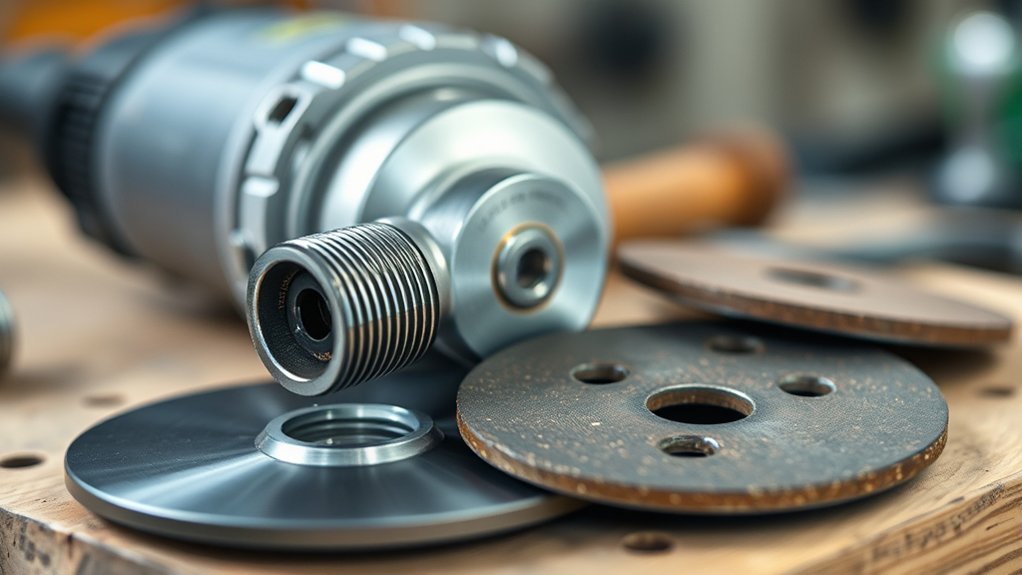
When you’re working with an angle grinder, understanding arbor sizes is crucial for safe and effective operation. Most angle grinders feature a 5/8 arbor, which is designed to secure various grinding and cutoff wheels. However, it’s important to note that a 5/8 arbor doesn’t properly accommodate 5/8 cut-off discs due to design differences. Instead, you’ll typically need a 7/8-inch arbor diameter for proper compatibility and secure fitting.
A well-fitted grinding wheel engages with the hub circle, allowing the nut to tighten effectively and ensuring stability during operation. Regularly inspecting your arbor size and wheel compatibility is critical. Doing so helps maintain safety and prevents damage during grinding tasks. By paying attention to these details, you empower yourself to work more efficiently and safely, achieving the liberation you seek in your projects.
Why Arbor Compatibility Matters for Safety
Ensuring proper arbor compatibility is essential for safe wheel placement and effective disc selection. If the disc doesn’t fit correctly, it can lead to misalignment, increasing the risk of breakage and potential injury. Regularly checking your wheels and nuts for compatibility and wear will help maintain a safe grinding environment.
Safe Wheel Placement
Proper wheel placement is critical for the safe operation of an angle grinder, as arbor compatibility directly impacts stability and performance. Next time you’re preparing to use your angle grinder, make sure you’re selecting the correct arbor size for your wheel. Using an incompatible size can lead to off-center placement, increasing the risk of accidents. For instance, a 5/8 threaded arbor won’t properly hold 5/8 cut-off discs, creating unsafe conditions. Additionally, the design of the nut is essential; it must securely position the wheel to prevent damage. Always engage the hub circle during installation, and regularly inspect your wheels and nuts for wear. This diligence guarantees you maintain safe working conditions and peak performance while grinding.
Proper Disc Selection
Choosing the right disc for your angle grinder is essential for maintaining safety and efficiency during operation. Disc material selection greatly impacts cutting performance factors; make sure you choose a material suited for your specific task. Wheel thickness considerations are equally important—thicker wheels can handle more demanding jobs, but they also require proper alignment on the arbor. A 7/8 arbor cut-off wheel can fit securely on a 5/8 threaded arbor grinder, enhancing safety during use. Remember, the lip on the nut can affect wheel positioning, so always check compatibility to prevent off-center placement. Regularly inspect wheels and nuts to avoid unsafe conditions and prolong your equipment’s lifespan. Proper installation techniques, like engaging the hub circle, further guarantee stable operation.
What Wheel Types Fit Your Angle Grinder?
When working with an angle grinder, it is vital to know which wheel types fit your specific model. Using the wrong wheel can lead to safety hazards and inefficient performance. Here’s a quick wheel types comparison for your 5/8 threaded arbor:
- 7/8 Arbor Cut-Off Wheels: Ideal for cutting applications.
- Grinding Wheels: Perfect for material removal and surface preparation.
- Flap Discs: Great for blending and finishing surfaces.
- Diamond Blades: Best for cutting hard materials like tile or concrete.
Always verify your chosen wheels match the arbor size to avoid off-center placement, which can compromise disc performance factors. The nut design is also essential for secure attachment, preventing damage during use. By carefully selecting compatible materials, you’ll enhance your angle grinder’s efficiency and safety. Check both wheel diameter and arbor size before starting your project!
How to Properly Install Wheels on Your Angle Grinder
To properly install wheels on your angle grinder, start by verifying the arbor size to confirm compatibility. Make sure the wheel’s hub circle engages fully with the grinder for secure positioning. Finally, tighten the nut firmly to prevent wobbling and maintain safe operation.
Verify Arbor Size
Before you install any wheels on your angle grinder, it is crucial to verify the arbor size to confirm compatibility. A 5/8 threaded arbor requires specific discs to guarantee safe operation. Here are some key installation tips:
- Use 7/8 arbor cut-off wheels with a 5/8 arbor grinder for a secure fit.
- Engage the hub circle of the wheel for stability and to prevent damage.
- Flip the nut when installing flap discs for ideal flat surface contact.
- Regularly inspect wheels and nuts for wear to maintain safe operational conditions.
Engage Hub Circle
Engaging the hub circle properly is essential for guaranteeing stability and safety during angle grinder operation. To achieve the best hub circle engagement, make sure the wheel’s hub is fully seated on the spindle. Flipping the nut for flat surface contact prevents wheel damage and maintains proper alignment. Remember, wheel stability is important; a loose wheel can lead to dangerous vibrations, risking both your safety and the quality of your work. Position flap discs flush against the grinder to avoid uneven wear. Regularly check the hub circle engagement and nut condition to enhance safety and extend the life of your grinding wheels. By applying these vibration reduction techniques, you’ll create a safer, more efficient grinding experience.
Secure Nut Positioning
Properly installing wheels on your angle grinder is essential for achieving peak performance and safety. Follow these steps to guarantee secure nut positioning:
- Engage the hub circle of the wheel with the grinder’s arbor for a tight fit.
- Flip the nut when using flap discs to maximize surface contact and stability.
- Tighten the nut firmly, using the correct torque, to prevent any movement during operation.
- Check for compatibility between the wheel’s arbor size and your grinder’s threaded arbor.
Understanding nut types comparison and applying effective installation techniques will greatly enhance your grinding experience. Utilizing proper securing methods not only guarantees safety but also prolongs wheel life. Always prioritize these practices for best results.
Common Installation Mistakes to Avoid
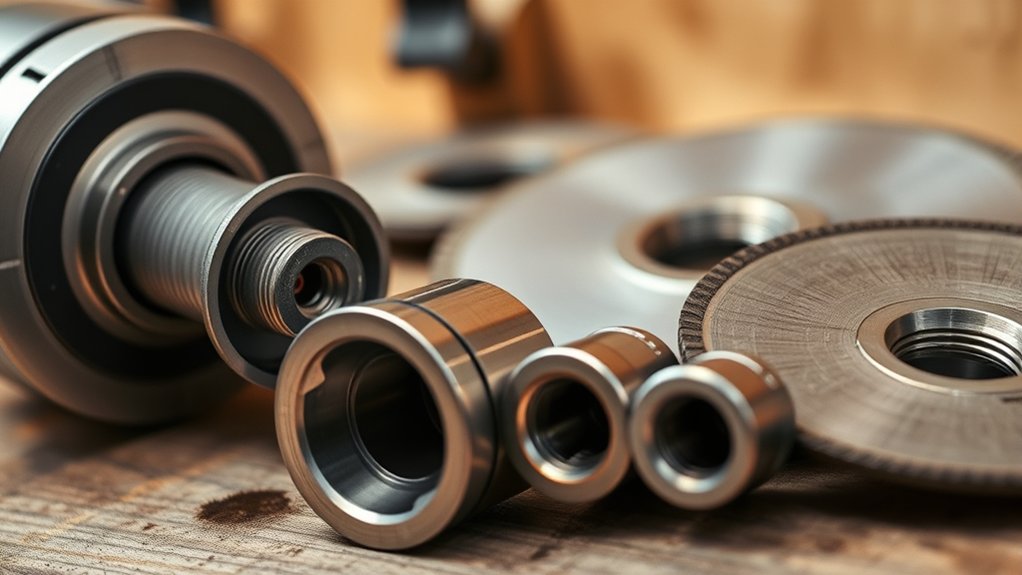
While installing wheels on an angle grinder, it’s easy to overlook common mistakes that can lead to unsafe operation. One frequent error is using a 5/8 cut-off disc on a 5/8 arbor grinder, which can result in improper fitting and off-center placement. Always engage the hub circle during installation to prevent unstable operation and potential wheel damage. Don’t forget to flip the nut for flat surface contact; neglecting this can cause uneven tightening, risking both safety and performance. Confirm flap discs are positioned correctly, as misalignment can create hazardous conditions. Regularly check the compatibility of wheels and nuts, and inspect for wear and damage as part of your wheel maintenance routine. Adhering to sound installation techniques and strict safety protocols is essential in promoting a safer working environment while using your angle grinder.
Ensuring Proper Wheel Alignment
Ensuring proper wheel alignment on your angle grinder is essential for maintaining safety and performance. An off-center wheel can cause vibrations, leading to accidents and uneven wear. Follow these wheel stability tips to optimize your grinding experience:
- Always engage the hub circle of the wheel during installation for even seating on the arbor.
- Use alignment checking methods to confirm that flap discs sit flat against the surface.
- Flip the nut for flat surface contact, enhancing wheel stability and alignment.
- Regularly inspect the wheel’s alignment and tightness to prevent damage.
How to Maintain Your Angle Grinder and Wheels for Longevity
Maintaining your angle grinder and its wheels is essential for achieving maximum performance and longevity. Start with regular inspections of your grinder and wheels, checking for cracks or chips. This guarantees safe operation and prevents accidents. Clean the arbor and nut before attaching new wheels to eliminate debris that can compromise fit and stability. Store your angle grinder and wheels in a dry, cool environment; this minimizes moisture exposure, reducing the risk of rust and corrosion. Always adhere to the manufacturer’s guidelines regarding maximum RPM ratings to avoid overloading your grinder, which can lead to premature wear. Additionally, periodically check the tightness of the wheel nut to confirm it remains secure during operation. Loose fittings can result in wheel dislodgment, jeopardizing safety. By implementing these maintenance tips and longevity strategies, you’ll enhance your grinder care and guarantee efficient, reliable performance for years to come.
Safety Best Practices for Using Angle Grinders Effectively
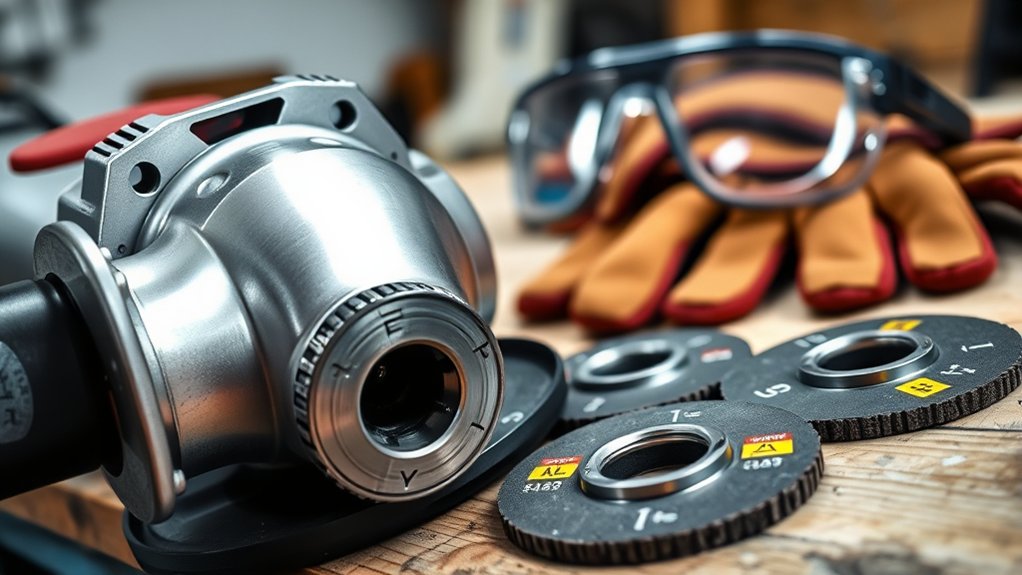
When using an angle grinder, understanding and adhering to safety best practices can considerably reduce the risk of accidents and injuries. To guarantee your safety, consider the following essential practices:
- Always wear appropriate safety gear, including goggles, gloves, and a face shield.
- Organize your workspace effectively to eliminate hazards and guarantee a clear area for operation.
- Regularly inspect wheels and nuts for wear or damage before use.
- Familiarize yourself with emergency procedures in case of an accident.
Additionally, verify the arbor size of your grinder to guarantee compatibility with the discs. Use 7/8 arbor discs for 5/8 arbor grinders to maintain stability. Properly engage the hub circle during installation, and tighten the wheel according to manufacturer specifications to avoid operational hazards. By integrating these practices into your routine, you’ll enhance both your safety and the effectiveness of your angle grinder.
Troubleshooting Common Angle Grinder Issues
Even with safety best practices in place, issues can still arise while using an angle grinder. First, always check the compatibility of the wheel with your grinder’s 5/8 threaded arbor. An incorrect fit can cause misalignment, leading to vibration and potential damage. Regularly inspect wheel wear indicators to catch any signs of deterioration early. If you notice unusual vibrations or noises, it might be due to improper wheel installation or a mismatch in arbor size. Tightening the wheel securely against the hub circle is essential; any off-center operation can lead to accidents. Additionally, inspect the nut for wear, as a damaged nut compromises wheel stability. Utilizing effective noise troubleshooting techniques can help you identify issues quickly, ensuring your grinder operates safely and efficiently. By addressing these common problems, you can maintain your angle grinder’s performance and longevity.
Frequently Asked Questions
What Size Thread Is an Angle Grinder Arbor?
An angle grinder arbor typically features a 5/8-inch threaded size. To avoid compatibility issues, you should measure arbor thread types carefully, ensuring you select appropriate wheels that fit securely and safely for peak performance.
What Does Arbor Size 5 8 11 Mean?
Arbor size 5/8-11 means your angle grinder has a 5/8 inch diameter with 11 threads per inch. Understanding arbor size importance guarantees proper thread compatibility, enhancing disc mounting techniques for safe, efficient operation.
Can I Use a 7/8 Arbor on a 5/8 Grinder?
You can’t use a 7/8 arbor on a 5/8 grinder due to arbor size compatibility issues. Thread gauge differences affect grinder attachment options, risking safety and performance. Always match sizes for best results.
What Size Is a Grinder Arbor?
A grinder arbor typically measures 5/8 inches in diameter. Ensuring grinder disc compatibility is essential; even slight thread pitch differences can lead to unsafe conditions. Choose wisely for effective performance and safety during use.
Conclusion
In the world of angle grinders, understanding arbor sizes is your safety net, ensuring that every wheel fits like a glove. By following proper installation techniques and regular maintenance, you can extend the life of your tools and enhance their performance. Remember, a well-maintained grinder is like a trusty companion—always ready to help you tackle tough jobs. Stay informed, practice safety, and you’ll wield your angle grinder with confidence and precision.