Angle grinder backing pads are essential for ideal tool performance, enhancing disc flexibility and ensuring a uniform finish. They come in various types, such as hook and loop or PSA, each serving specific applications. Proper installation involves matching the pad size with the sanding disc and securing it correctly on the grinder’s spindle. Regular maintenance, including inspections and cleaning, helps extend their lifespan. Keep exploring to understand their applications, installation process, and troubleshooting tips for best results.
How Angle Grinder Backing Pads Enhance Performance
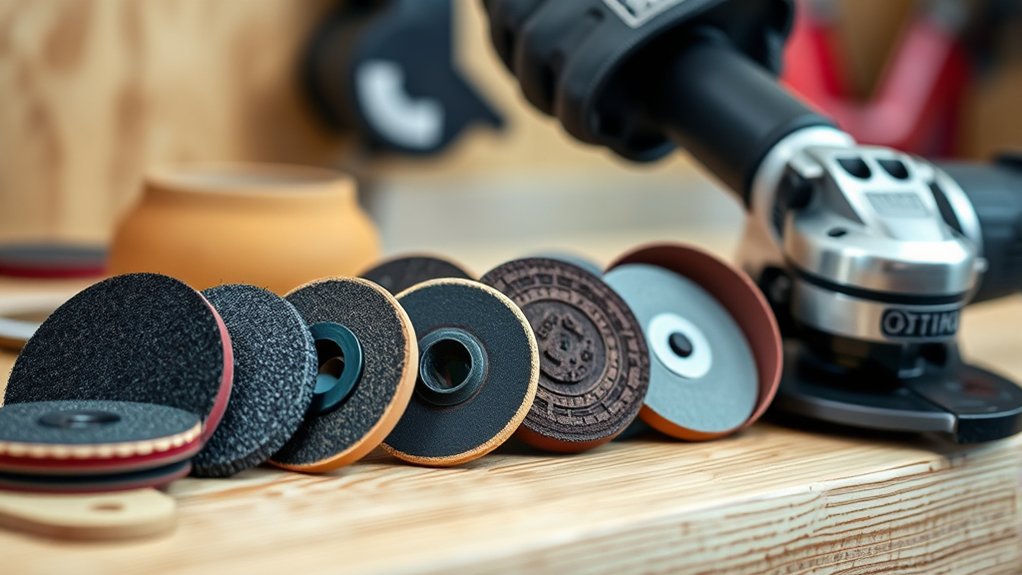
When you use an angle grinder, the choice of backing pad greatly impacts performance. Backing pads enhance disc flexibility, allowing abrasive discs to conform better to rounded edges and contours, resulting in a uniform finish. This adaptability guarantees even pressure distribution across the sanding disc, which is vital for achieving consistent, high-quality results.
Moreover, backing pads absorb vibrations, greatly improving user comfort and reducing the risk of ergonomic injuries during extended use. By selecting the correct backing pad type and size for your specific tasks, you optimize performance efficiency. Mismatched pads can hinder performance and compromise the grinding process.
Additionally, backing pads can extend the lifespan of both sanding discs and your angle grinder by minimizing wear and tear. Confirming correct installation of these pads is essential to maximize their benefits, ultimately leading to a more effective and safer grinding experience.
Key Features of Backing Pads
Backing pads are crucial components that greatly influence the effectiveness of your angle grinder. They enhance disc flexibility, allowing better conformity to rounded edges and contours during sanding or grinding tasks. Available in various types, including hook and loop and pressure-sensitive adhesive (PSA), backing pads cater to specific applications. Their material and thickness play a significant role in overall performance; for instance, cloth offers flexibility, while paper provides rigidity, and fiber guarantees durability for heavy-duty tasks.
When using backing pads, it’s essential to verify proper installation by matching the diameter with the sanding disc size. This ensures even pressure distribution across the sanding surface, which not only guarantees a uniform finish but also reduces vibration and lowers the risk of ergonomic injuries. Always adhere to the recommended RPM limits for peak performance and safety, maximizing the benefits your backing pads can provide.
Different Types of Backing Pads and Their Applications
Understanding the different types of backing pads is essential for maximizing your angle grinder’s performance. Each type serves specific applications, enhancing effectiveness and safety during your projects.
| Type of Backing Pad | Application |
|---|---|
| Hook and Loop | Quick disc changes |
| PSA Pads | Direct adhesion |
| Thicker Backing Pads | Prominent contours |
| Thinner Pads | High-pressure tasks |
| High-Performance Pads | Heavy-duty applications |
| Pads with Heat-Dissipating Holes | Prevent overheating |
Hook and Loop pads facilitate easy sanding disc changes, while PSA pads provide direct adhesion for consistent performance. Thicker backing pads are ideal for prominent contours, whereas thinner pads excel in high-pressure applications. For maximum coverage, verify the pad matches the sanding disc size. High-performance pads are designed for demanding tasks, and those with heat-dissipating holes help prevent overheating, improving both performance and safety. Choose wisely based on your specific needs.
How to Properly Install an Angle Grinder Backing Pad
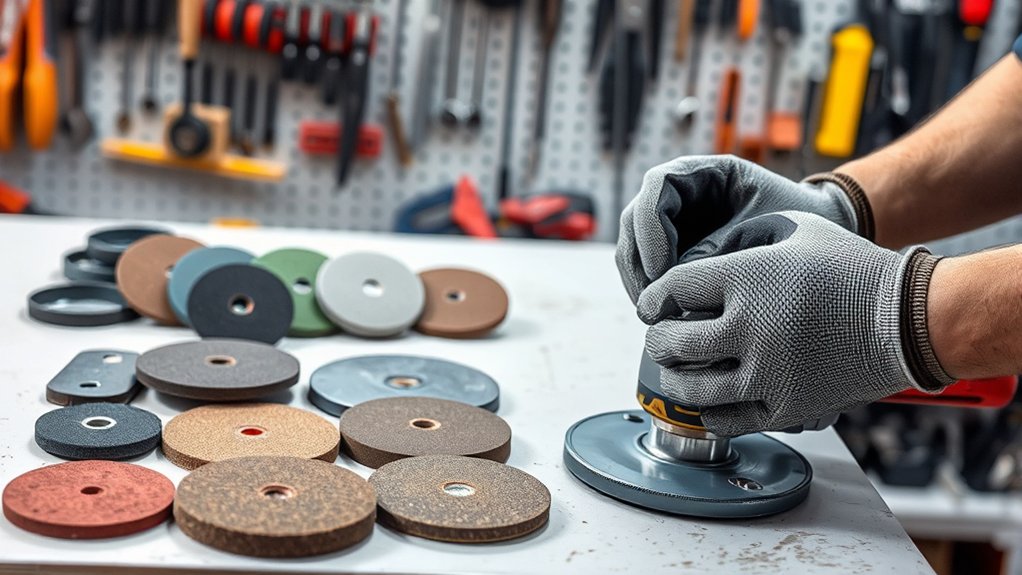
To properly install an angle grinder backing pad, you must first choose the correct pad that matches the diameter of your sanding disc. Begin the installation process by following a step-by-step guide to guarantee safety and effectiveness. This will help you achieve peak performance and maintain the longevity of your equipment.
Choosing Correct Backing Pad
Choosing the right backing pad for your angle grinder is essential for achieving ideal results during sanding or grinding tasks. To guarantee maximum coverage, always match the backing pad’s diameter to your sanding disc. Here’s a quick reference for types of backing pads and their applications:
| Type | Application |
|---|---|
| Hook and Loop | Quick disc changes |
| PSA (Pressure Sensitive Adhesive) | Strong adhesion for aggressive sanding |
| Foam | Contoured surfaces |
| Rigid | Heavy-duty grinding |
Before installation, unplug your angle grinder and follow the manufacturer’s instructions. Use the correct fastening method to secure the backing pad, guaranteeing it stays tight and doesn’t loosen during operation. Regularly inspect for wear and replace as necessary to maintain safety and efficiency.
Step-By-Step Installation Guide
Installing an angle grinder backing pad correctly is essential for safe and effective operation. First, verify your grinder is unplugged to prevent accidental activation. Next, select a backing pad that matches the diameter of your sanding disc, typically between 4.5” (115mm) and 9” (230mm). Align the backing pad with the angle grinder’s spindle, pressing down firmly to secure it in place. Engage any fasteners or locking mechanisms before tightening the backing pad with the appropriate wrench. Confirm it’s securely fastened, but avoid over-tightening to prevent damage. Finally, conduct a quick visual inspection to check for proper alignment and attachment. Once confirmed, plug in the angle grinder and you’re ready to start your operation safely.
How to Maintain Your Backing Pad for Best Performance
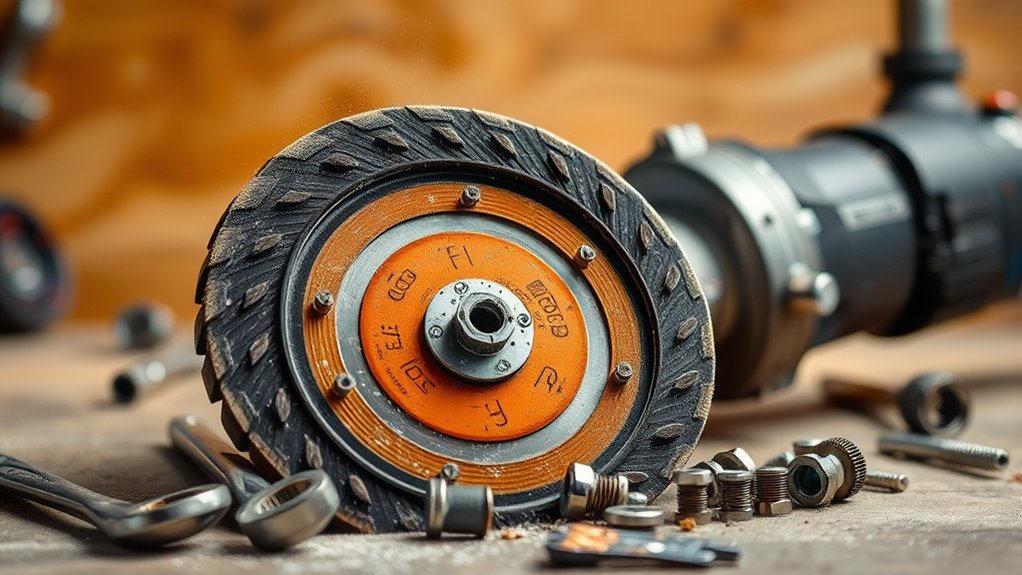
Maintaining your backing pad is essential for achieving ideal performance and guaranteeing the longevity of both the pad and your sanding discs. Regularly inspect your backing pad for signs of wear, such as cracks or uneven surfaces, to prevent damage to your sanding discs and guarantee peak performance. After each use, clean the pad to remove dust and debris; this improves adhesion and extends the lifespan of both the pad and discs. When you notice significant wear or deformation, it’s time for a replacement—compromised pads can lead to poor results and potential safety hazards. Store your backing pads in a cool, dry place away from direct sunlight and extreme temperatures to avoid material degradation. Finally, periodically check the attachment system, whether it’s hook and loop or PSA, to guarantee tightness and functionality, keeping your sanding discs securely attached during operation.
Choose the Right Size for Your Angle Grinder Backing Pad
Choosing the right size for your angle grinder backing pad is essential for ideal performance. You need to match the disc diameter precisely with your grinder’s specifications, keeping RPM limitations in mind. Additionally, consider your application requirements to select the most effective pad thickness for your task.
Matching Disc Diameter Precisely
Selecting the right size backing pad for your angle grinder is essential for achieving ideal sanding performance. Matching the backing pad diameter to the disc size guarantees maximum coverage and stability. Common sizes range from 4.5 inches (115mm) to 9 inches (230mm), depending on your application. Using a backing pad that’s too small can cause uneven sanding and damage your disc and workpiece. Always consult the manufacturer’s specifications to select the correct backing pad size. This precision enhances stability, reduces vibration, and contributes to a uniform finish.
| Disc Size | Backing Pad Diameter | Result |
|---|---|---|
| 4.5 in | 4.5 in | Maximum Coverage |
| 7 in | 7 in | Stability |
| 9 in | 9 in | Uniform Finish |
Understanding RPM Limitations
When you’ve matched the disc diameter with the backing pad size, you also need to take into account RPM limitations. The backing pad’s RPM must align with the angle grinder’s maximum RPM rating to safeguard safety and prevent excessive wear. Selecting the correct size is essential for peak performance; mismatched sizes can lead to vibration issues and uneven pressure, compromising the finish quality. Always consult the manufacturer’s specifications for both the angle grinder and backing pad to verify compatibility. Regular inspections for wear or damage are important, as a compromised pad can exceed RPM limits, posing significant safety risks during operation. Adhering to these guidelines guarantees a safer, more efficient grinding experience.
Considering Application Requirements
To achieve ideal results in your grinding tasks, it is crucial to match the backing pad size to both the sanding disc and the angle grinder. Typically, sizes range from 4.5” to 9” for common applications. For detailed work in tighter spaces, opt for smaller backing pads (4.5” to 5”). In contrast, larger pads (7” to 9”) are better for heavy-duty tasks.
| Backing Pad Size | Application Type |
|---|---|
| 4.5” – 5” | Detailed work, tighter spaces |
| 7” – 9” | Heavy-duty tasks, broader surfaces |
| Thicker Pads | Better contour support |
| Thinner Pads | Precision for high-pressure tasks |
Ensure attachment type is compatible and follow the manufacturer’s RPM recommendations for safe, secure use.
How to Match Backing Pad Types With Your Angle Grinder
Matching the right backing pad type with your angle grinder is essential for ideal performance and safety. First, verify the backing pad diameter matches your grinding disc, typically ranging from 4.5” to 9” for standard models. Choose between different types: hook and loop pads offer quick changes, while PSA pads guarantee a strong adhesive bond. Check the RPM rating of the backing pad; it must align with your angle grinder’s maximum speed to avoid accidents. The thickness and material also matter—thinner pads are suitable for fine work, while thicker options excel on uneven surfaces. Always adhere to the installation instructions provided by the manufacturer. Unplug your grinder before replacing pads, and securely fasten all components to guarantee safe operation. By following these guidelines, you’ll optimize your angle grinder’s performance, assuring both efficiency and safety in your projects.
Understanding the Role of Pad Protectors
Selecting the appropriate backing pad is just the beginning; understanding the role of pad protectors can greatly enhance your angle grinder’s performance. Pad protectors are essential for preventing excessive wear on backing pads, thereby extending their lifespan and maintaining peak performance. They provide a sturdy attachment point for the sanding disc, ensuring a secure fit during operation. Positioned between the backing pad and sanding disc, these protectors absorb vibrations, reducing the risk of ergonomic injuries while you work. By evenly distributing pressure, pad protectors improve overall sanding efficiency and enhance the quality of your finished surface. Regularly replacing them, while not necessary for every application, is vital for maintaining effectiveness and maximizing performance. Incorporating pad protectors into your setup not only safeguards your tools but also elevates your sanding experience, allowing for a smoother, more efficient workflow.
Troubleshooting Common Backing Pad Issues
While using your angle grinder, you may encounter several common issues with the backing pad that can affect performance. Addressing these problems promptly can guarantee ideal results and safety. Here are three key issues to troubleshoot:
While using an angle grinder, be aware of backing pad issues that can impact safety and efficiency.
- Disc Detachment: Regularly check for signs of wear or damage on the backing pad. A worn pad can lead to uneven sanding and potential disc detachment.
- Adhesion Problems: If the sanding disc isn’t adhering properly, dust or debris might be on the backing pad surface. Clean it before reattaching to enhance adhesion.
- Excessive Vibration: If you notice excessive vibration, verify that the backing pad is securely attached and the disc is properly mounted. Also, confirm your backing pad’s RPM rating is not exceeded to prevent overheating.
Frequently Asked Questions
What Is the Difference Between Type 1 and Type 27 Cutting Discs?
Type 1 cutting discs are thinner for fast cuts, while Type 27 discs are thicker for grinding. Consider application suitability, disc material comparison, and grinding efficiency factors when choosing between the two for best performance.
What Size Arbor Do Most Angle Grinders Have?
Most angle grinders sport a standard arbor size of 5/8 inch (M14), ensuring compatibility across various disc mounting options. It’s essential to check specifications for safety and ideal performance when choosing the right grinder.
What Is a Type 27 Flap Disc?
A Type 27 flap disc is a versatile tool with overlapping abrasive flaps, suitable for various materials. It offers durability, blends surfaces effectively, and is compatible with standard grinders, available in different grits for diverse applications.
Why Are 9 Inch Angle Grinders Banned?
Nine-inch angle grinders are banned due to safety regulations; their weight distribution and power requirements hinder tool performance, risking user experience and equipment lifespan. Alternative tools offer better vibration control, aligning with industry standards for safer operations.
Conclusion
In conclusion, selecting the right backing pad for your angle grinder is essential for peak performance. Just like a knight wouldn’t head into battle without their trusty shield, you shouldn’t overlook the importance of proper installation and maintenance. By understanding the various types, sizes, and applications of backing pads, you’ll enhance your grinding efficiency and prolong tool life. So, gear up and make sure your backing pad is always in top shape for the best results.