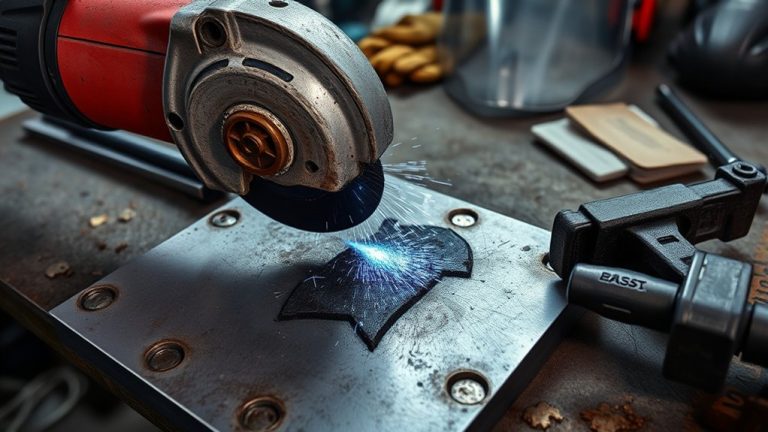
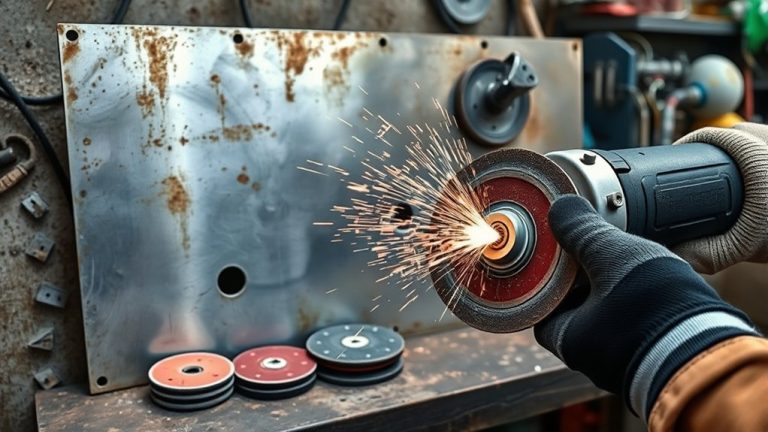
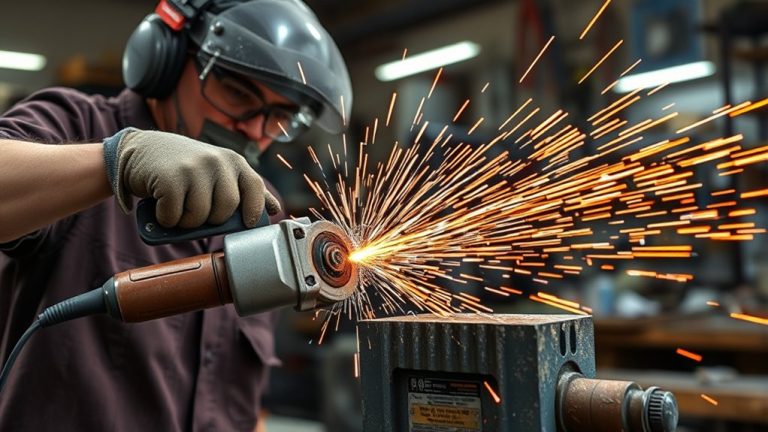
If your angle grinder binds during cuts, it’s likely due to misalignment, a dull blade, or insufficient feed pressure. Begin by checking that the blade is properly matched to the material and securely mounted. Always inspect the power cord and safety guard before use. To prevent binding, maintain a steady feed rate and keep the blade clean. If issues persist, there’s more valuable information to contemplate for effective troubleshooting and maintenance.
Common Causes of Angle Grinder Binding During Cuts
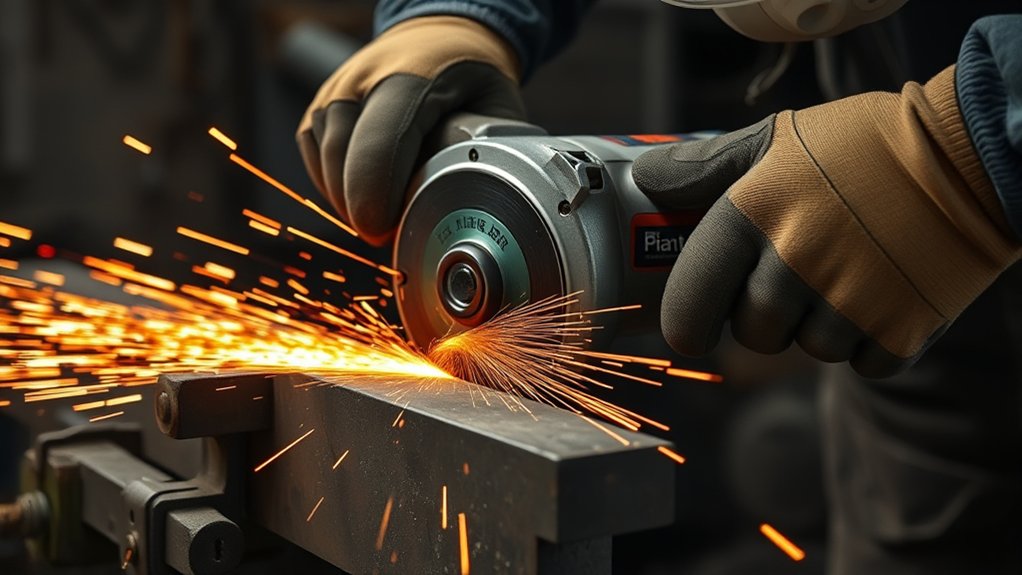
When you use an angle grinder, binding can occur for several reasons, often leading to frustrating interruptions. One common cause is misalignment; if the blade isn’t perpendicular to the workpiece, it can bind, disrupting your work. Additionally, using a dull blade can severely impact cutting efficiency, as it struggles to penetrate the material effectively. Insufficient feed pressure can also lead to binding; applying too little force causes the blade to overheat and seize. Furthermore, improper blade selection, such as using a blade that’s too large for the material thickness, can result in similar issues. To minimize binding, regularly clean the blade and guarantee proper lubrication. By addressing these factors, you can enhance your cutting efficiency and reduce the risk of binding, making your angle grinder experience smoother and more productive. Always conduct safety checks to maintain peak performance.
Key Safety Checks for Your Angle Grinder
Before using your angle grinder, conducting key safety checks is essential to confirm safe and efficient operation. Neglecting these checks can lead to serious accidents. Here’s what you should inspect:
Before operating your angle grinder, ensure vital safety checks are completed to prevent serious accidents and ensure efficient use.
- Visual Damage: Examine the power cord and grinder body for any visible damage or wear.
- Correct Disc: Verify the right disc size and type is securely mounted to prevent wobbling.
- Safety Guard: Check that the safety guard is properly positioned to shield you from sparks and debris.
- Workspace: Clear your workspace of flammable materials and debris to enhance safety during operation.
Always wear appropriate personal protective equipment (PPE), like safety goggles and gloves, to minimize injury risks. Regular maintenance of your angle grinder not only prolongs its life but also confirms your safety while operating. Keep these checks in mind to maintain a safe working environment.
Proven Techniques to Avoid Angle Grinder Binding
Proper safety checks set the stage for effective operation, but knowing how to avoid angle grinder binding is equally important. First, verify you’re using the correct blade for the material; an inappropriate blade can cause the angle grinder to fail. Maintain a consistent, steady feed rate while grinding—excessive pressure is a common issue that leads to binding. Regularly inspect your blade for signs of wear and clean it to prevent debris buildup, which can hinder performance. Additionally, adjust the grinder’s angle for proper alignment with the workpiece; misalignment increases the risk of binding. Finally, employ appropriate lubrication and cooling techniques, especially when cutting metal, to reduce friction and prolong blade life. By following these techniques, you can verify peak performance and considerably reduce the chances of your angle grinder binding during operation.
What to Do When Your Grinder Binds?
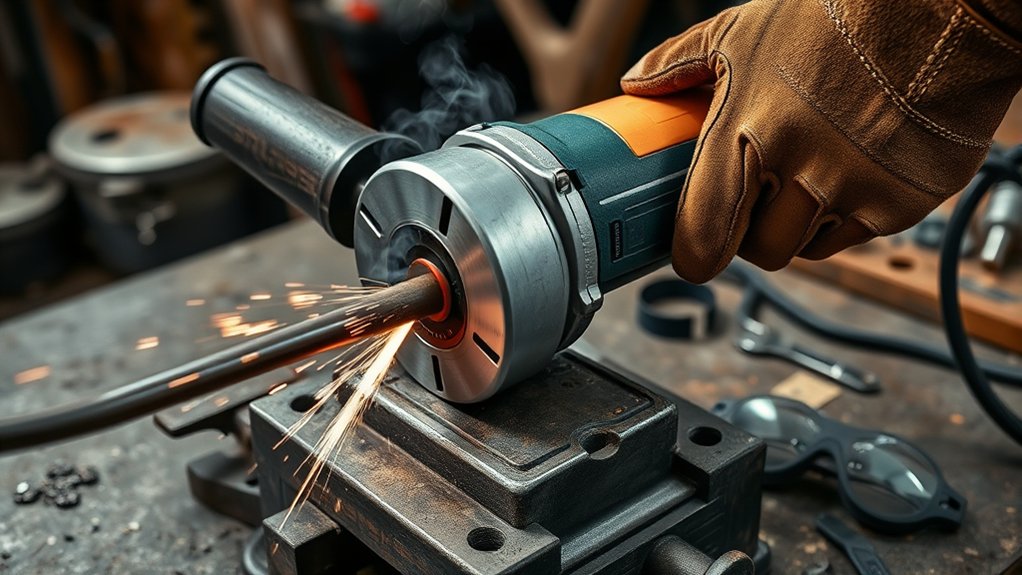
If your angle grinder binds during a cut, stop the tool immediately to prevent injury or further damage. Disconnect it from the power source. Next, inspect the cutting area for any debris or binding material that could be causing blade jams. Here’s what to do:
If your angle grinder binds, stop immediately, disconnect power, and check for debris causing jams. Safety first!
- Check the blade: Verify you’re using the correct blade type and size for the material.
- Observe pressure: Maintain steady, controlled pressure while cutting; excessive force can lead to binding.
- Inspect wear: Regularly check the grinder and blade for wear and replace them if they’re dull or damaged.
- Wear safety goggles: Always protect your eyes during troubleshooting.
Addressing these factors will enhance your grinder’s peak functionality and reduce the likelihood of future binding issues. Remember, maintaining your tools is key to safety and efficiency.
Maintenance Tips to Prevent Future Binding Issues
Regular maintenance is crucial to prevent binding issues with your angle grinder. Start by regularly inspecting and cleaning the blade to remove debris that can lead to binding during cuts. This guarantees peak performance and reduces friction. Always use the correct blade type and size for the material being cut; mismatched blades can generate excessive pressure, heightening the risk of binding.
Maintain proper alignment of the grinder and blade, as misalignment can cause the blade to bind in the material. Additionally, confirm the grinder’s speed settings are appropriate for the task at hand—using a speed that’s too high or too low can also increase binding chances. Finally, store blades properly in a dry environment to prevent warping or damage, which could lead to future binding issues during operation. By following these maintenance tips, you’ll enhance your grinder’s reliability and effectiveness.
Signs You Need Professional Help With Your Angle Grinder
Even with diligent maintenance, signs of trouble can emerge with your angle grinder. If you notice any of the following issues, it’s time to seek professional help:
- Frequent overheating or smoke emissions: This usually indicates severe internal damage, risking personal injury.
- Unusual noises: Grinding or rattling sounds may signal internal components that need expert evaluation.
- Persistent vibration or wobbling: Even after adjustments, this often points to misalignment or wear, compromising safety and performance.
- Power loss: If your grinder fails to maintain consistent speed, it could be a sign of electrical issues or worn components.
Ignoring these signs can lead to more significant tool issues and potential hazards. Make sure you address any concerns promptly to maintain both performance and safety in your work. Don’t hesitate to consult a qualified technician for a thorough inspection.
How to Select the Right Grinding Disc for Your Project
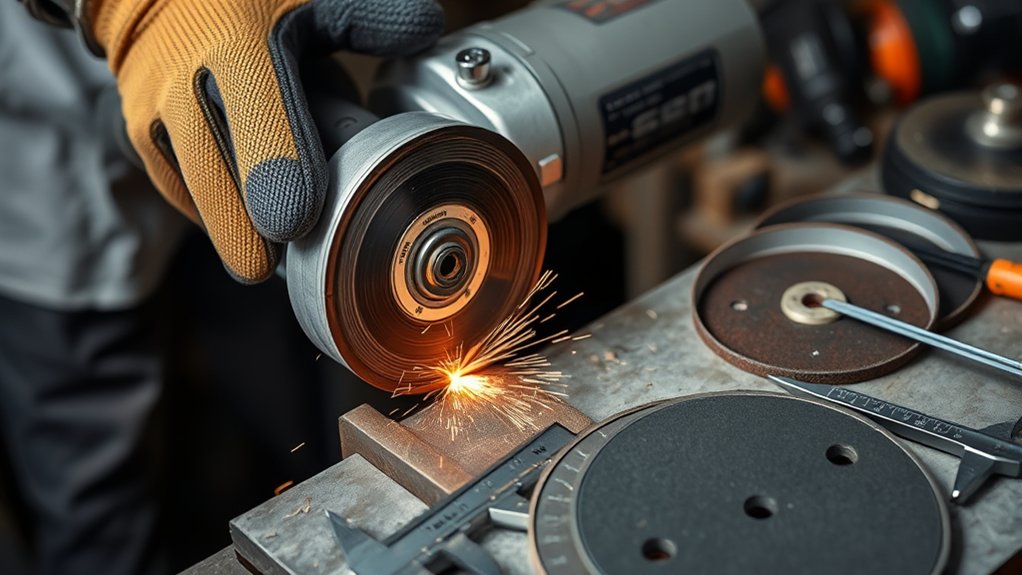
Choosing the right grinding disc for your project can greatly impact both efficiency and safety. Start by ensuring material compatibility; select a disc designed for metal, concrete, or masonry to achieve peak performance. Consider disc thickness: thinner discs excel at cutting tasks, while thicker ones are better for grinding and heavy material removal.
Next, focus on grain type. Use aluminum oxide discs for ferrous metals and zirconia discs for tougher materials to enhance wear resistance. Always check the RPM rating—make sure it matches or exceeds your angle grinder’s speed to prevent breakage. Finally, choose the appropriate bond type, whether resin, vitrified, or metal, as this directly affects durability and cutting ability.
Frequently Asked Questions
Why Does My Grinder Keep Jamming?
Your grinder keeps jamming due to improper grinding speed, poor wheel quality, unsuitable material type, or inadequate operator technique. Regular maintenance and dust buildup management, plus ensuring a stable power supply, can prevent these issues.
What Are the Two Common Faults That Occur With Grinding Wheels?
Two common faults with grinding wheels are excessive wear due to improper mounting and wheel imbalance from using incompatible grinding wheel types. Always match material compatibility and adhere to safety standards to guarantee peak performance.
Why Does My Angle Grinder Keep Stopping?
Your angle grinder keeps stopping due to motor overheating issues, power supply problems, or excessive pressure application. Regularly check for bearing wear signs, inspect the cord for damage, and verify proper wheel selection for peak performance.
How to Prevent Angle Grinder Kickback?
To prevent kickback, you’ve gotta master safety techniques: maintain a proper grip, choose the right material, organize your workspace, and prioritize tool maintenance. Training’s key—are you ready to take control of your cutting experience?
Conclusion
Just like steering a ship through stormy waters, using an angle grinder requires skill and vigilance. By understanding the causes of binding and implementing safety checks, you steer clear of potential hazards. Employing proven techniques and regular maintenance guarantees your tool runs smoothly, much like a well-tuned engine. If the storm doesn’t pass, seeking professional help can prevent further damage. Choose the right grinding disc, and your journey will be efficient and safe, guiding you to successful projects.