A cut-off wheel can slice through metal quickly, but a mismatched or poorly mounted wheel can bind, fracture, or throw dangerous debris. Before cutting, confirm the wheel’s shape, diameter, arbor, material rating, maximum RPM, guard requirements, and permitted use. This guide explains how to select and use angle grinder cut-off wheels with better control and safer habits.
Quick Answer
Choose a wheel whose diameter, arbor, material rating, shape, and maximum RPM match your grinder and job. Use a flat Type 1/41 or depressed-center Type 27/42 cut-off wheel only with the guard specified by the grinder manufacturer. Cut at 90 degrees with light pressure, two hands, and a secured workpiece.
Key Takeaways
- Treat Type 1/41 as the common flat cut-off shape and Type 27/42 as the common depressed-center cut-off shape, but always confirm the wheel label and grinder manual.
- The wheel’s marked maximum RPM must equal or exceed the grinder’s maximum no-load spindle speed.
- Thin wheels cut with a narrow kerf, but they are easily damaged by twisting, bending, jamming, or side pressure.
- Use the manufacturer-specified cutting guard, which may be a closed two-sided guard or an approved clip-on guard conversion.
- Clamp the workpiece and support both sides so the kerf cannot close and pinch the wheel.
- Control sparks, metal fumes, and masonry dust before starting. Cutting silica-containing material may require a shroud, dust extractor, water control, and respiratory protection.
At a Glance
| Time Required | About 5–15 minutes for inspection and setup, plus cutting time |
| Difficulty | Moderate; training and firm two-handed control are required |
| Tools Needed | Compatible angle grinder, approved cut-off wheel, cutting guard, side handle, clamps, work supports, and marking tool |
| Cost | Usually low for one wheel; higher if you need a cutting guard, clamps, fire protection, or dust-control equipment |
What’s in This Article
- Understanding Cut-Off Wheel Types and Uses
- How Abrasive Grain Affects Performance
- Matching the Wheel to the Material
- Choosing Cut-Off Wheel Thickness
- How to Read a Cut-Off Wheel Label
- Angle Grinder Cut-Off Wheel Safety
- How to Install and Use a Cut-Off Wheel
- Mistakes to Avoid
- Best Cutting Practices
- Troubleshooting Common Problems
- Accessories and Tool Setup
- Storage and Replacement
- Frequently Asked Questions
- Conclusion
- Sources
Understanding Cut-Off Wheels: Types and Their Uses
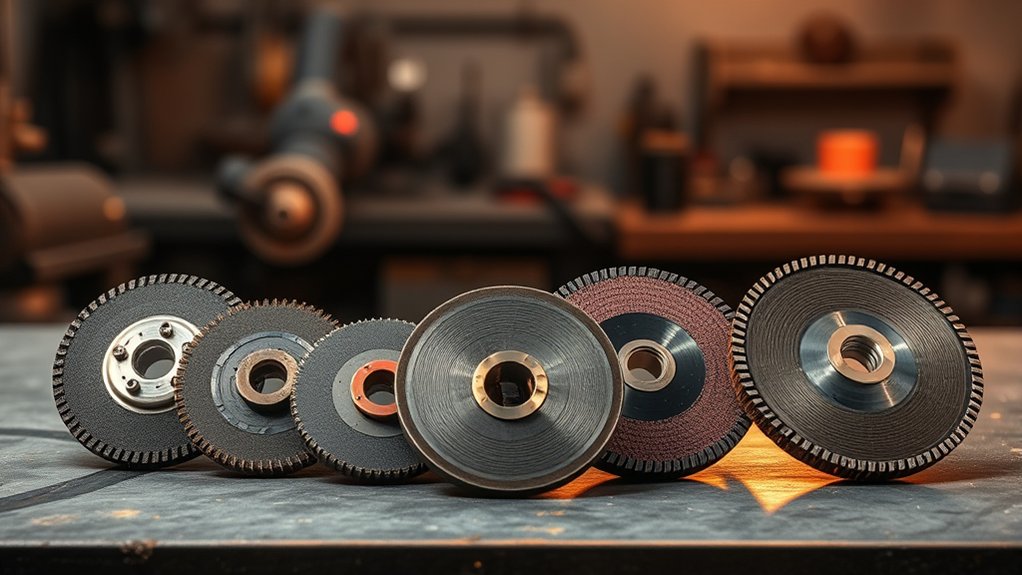
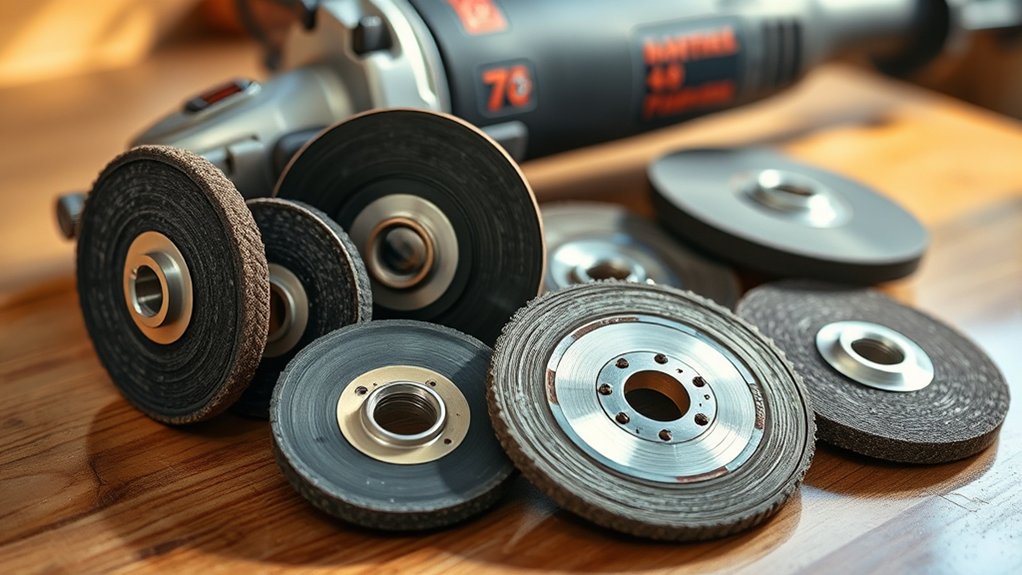
Cut-off wheel type numbers describe the wheel’s shape and intended mounting arrangement. The terminology can vary between standards, regions, and manufacturers, so you should read the complete label rather than depend on one number.
| Common Label | Shape | Typical Use | Important Check |
|---|---|---|---|
| Type 1 or Type 41 | Flat or straight | Straight edge cutting with a narrow kerf | Use the required closed cutting guard and correct flanges. |
| Type 27 or Type 42 cut-off wheel | Depressed center or raised hub | Cutting where added hub clearance improves access | The wheel must be specifically marked for cutting; many Type 27 wheels are grinding wheels. |
| Combination wheel | Varies | Cutting and limited grinding when expressly approved | Do not assume combination use from thickness or shape. Read the permitted-use markings. |
A flat Type 1/41 wheel works well for straight, general-purpose cutting when the grinder, flange set, and guard support that wheel. A depressed-center Type 27/42 cut-off wheel can provide better access in some positions, but the raised center also limits how deeply the wheel can enter a cut.
Do not confuse a depressed-center cut-off wheel with a thicker Type 27 grinding wheel. A grinding wheel may be designed for face pressure, while a thin cutting wheel is normally designed for radial pressure along its edge. Current manufacturer guidance shows why the wheel, flange, and guard must be treated as one approved system. See the DeWalt angle grinder accessory and guard chart for an example.
A wheel is compatible only when its size, arbor, maximum RPM, material rating, permitted use, flanges, and guard all match the grinder.
The Impact of Grain Type on Cutting Performance
Abrasive grain affects cutting speed, heat, durability, and wheel life. However, grain is only one part of the wheel. The bond, reinforcement, hardness, thickness, and material-specific formulation also affect performance.
Grain Types Overview
Ceramic abrasive can cut hard alloys quickly because the grain continually exposes sharp cutting points as it wears. Premium shaped-ceramic products may require less pressure and maintain their cutting rate longer than conventional grains.
Zirconia alumina is durable and often used for demanding metalwork. Aluminum oxide remains common for steel and general-purpose metal cutting because it offers a useful balance of cost and performance. Silicon carbide is sharp and is often used in wheels formulated for masonry or selected non-ferrous materials.
These descriptions are not substitutes for the wheel’s application label. For example, an aluminum-rated wheel may use aluminum oxide with a special bond that resists loading, while a different aluminum-oxide wheel may be intended only for steel.
Performance Comparison Among Grains
| Grain Family | General Character | Common Applications | Selection Note |
|---|---|---|---|
| Ceramic | Fast, cool cutting with premium formulations | Hard alloys, stainless steel, and production cutting | Performance varies widely by grain design and bond. |
| Zirconia alumina | Tough grain with good wear life | Heavy-duty steel fabrication | Works best when the complete wheel is rated for the workpiece. |
| Aluminum oxide | Balanced performance and cost | Steel, stainless, or aluminum when specifically formulated | Do not assume one aluminum-oxide wheel cuts every metal. |
| Silicon carbide | Sharp, comparatively brittle grain | Masonry and selected non-ferrous applications | Confirm the exact material and tool rating. |
Manufacturers such as 3M publish complete application and material specifications for their cut-off wheels. Use those specifications instead of selecting a wheel by grain name alone.
Selecting the Right Grain Type
Start with the workpiece material and the wheel manufacturer’s application chart. A ceramic or zirconia wheel may be useful for demanding steel or stainless work where cut rate and wheel life matter. Aluminum oxide can be a practical choice for general metal cutting when the wheel is labeled for that metal.
Grit size affects how aggressively a wheel cuts, but users usually purchase a complete cut-off wheel specification rather than independently selecting grain, grit, bond, and reinforcement. A lower grit number is generally coarser, while a higher number is finer. The manufacturer’s recommended wheel is more important than grit alone.
Matching Your Wheel to the Material Being Cut
The wrong wheel can load, glaze, overheat, wear quickly, contaminate the workpiece, or fail. Match the complete wheel specification to the material before starting.
| Material | Wheel Selection | What to Watch |
|---|---|---|
| Carbon or mild steel | Metal-rated reinforced cut-off wheel | Choose a thickness suited to the stock and cut depth. |
| Stainless steel | Stainless or INOX-rated wheel | Use a clean wheel approved for stainless to reduce contamination and staining. |
| Aluminum and soft non-ferrous metal | Wheel specifically marked for aluminum or the named alloy | A generic steel wheel may load with soft metal and create excess heat. |
| Concrete, brick, stone, mortar, or tile | Compatible masonry abrasive wheel or diamond blade | Use only a blade and guard approved for the grinder; control silica-containing dust. |
For thin aluminum sheet, use a wheel specifically rated for aluminum to reduce loading and heat buildup. The same rule applies to thicker aluminum: use an aluminum-rated abrasive wheel and avoid forcing the cut. Norton’s aluminum cut-off wheel specifications show how a wheel’s bond and material rating are tailored to soft non-ferrous metal.
Warning: Cutting concrete, stone, brick, mortar, and similar materials can release respirable crystalline silica. Follow the tool and accessory instructions and applicable OSHA silica-control requirements. Depending on the task, this may require a compatible shroud and dust extractor, an approved water-delivery system, exposure assessment, and properly selected respiratory protection.
Products Worth Considering

“ 4 1/2 GRINDING WHEELS: Benchmark Abrasives cutoff wheels featuring a 4-1/2" diameter and 7/8" arbor, are Ideal for cutting aluminum, copper, zinc, magnesium, other non-ferrous materials, and much more abrasive operations. Achieve clean, precise cuts for general metal fabrication with our cut-off wheels.


▲[Universal Size]-The cutting wheel 4-1/2 x 7/8 Inch is perfectly compatible for all 4-1/2 inch(115mm) angle grinders with 7/8 inch(22.23mm) arbor,Thickness:0.04 inch(1.0mm). Operating up to 13,300 RPM 80M/S.
Choosing the Right Cut-Off Wheel Thickness for Your Needs
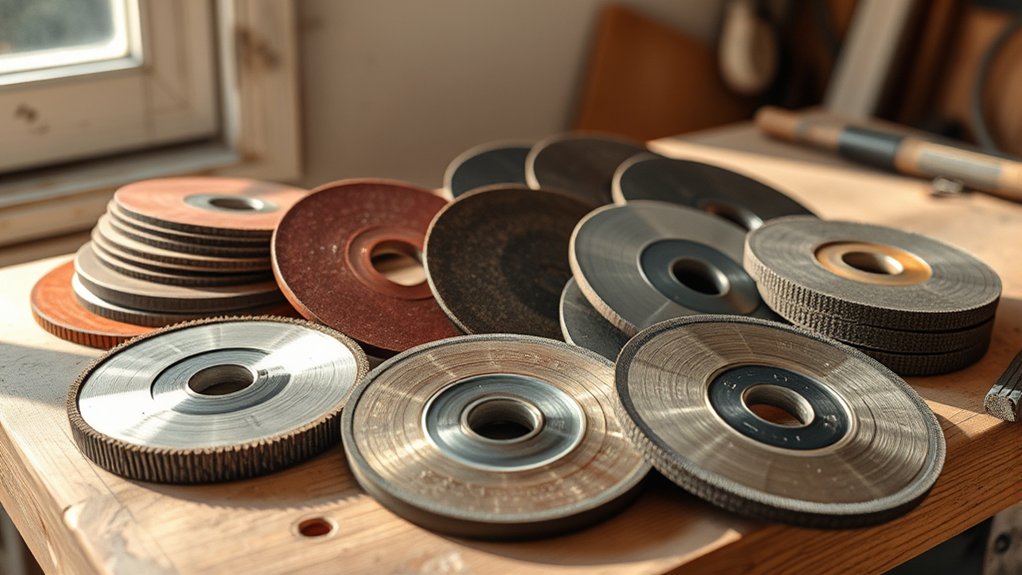
Wheel thickness affects cutting speed, kerf width, strength, heat, and control. Thin wheels, often around 0.040 to 0.045 inches for common small angle-grinder sizes, can cut sheet metal, tube, and thin stock quickly with little material loss. Their narrow cross-section also makes them sensitive to twisting and side pressure.
A 0.045-inch wheel is a common choice for precise metal cutting, but it is not automatically the best wheel for every grinder or material. A thicker wheel around 0.060 inch may provide more edge durability for rougher work, while still being intended only for cutting. Very thick wheels remove more material and may cut more slowly.
| Thickness Category | Advantages | Tradeoffs |
|---|---|---|
| Ultra-thin | Fast cutting, narrow kerf, less material loss | Least tolerant of twisting, jamming, and rough handling |
| General thin cut-off wheel | Useful balance of speed and edge durability | Still unsuitable for side grinding unless marked for it |
| Thicker cutting or combination wheel | Greater edge strength for approved applications | Wider kerf, slower cutting, and more heat or material loss |
Wheel diameter also limits cutting depth. A wheel that is worn down or too small for the required depth may tempt you to tilt the grinder or push the hub into the work. Select a wheel and tool that can complete the cut without contacting the flange, hub, spindle, or guard.
How to Read a Cut-Off Wheel Label
Check every item below before mounting a wheel:
- Diameter: The wheel must not exceed the grinder’s approved diameter.
- Thickness: The wheel must fit the approved flanges and cutting guard.
- Arbor or bore: It must fit freely on the spindle or approved mounting flange without being forced.
- Maximum RPM: The marked wheel RPM must equal or exceed the grinder’s maximum no-load RPM.
- Wheel type: Confirm whether it is Type 1/41, Type 27/42, or another approved shape.
- Permitted operation: Look for cutting-only or combination cutting-and-grinding markings.
- Material: Confirm steel, stainless, aluminum, masonry, tile, or another specific application.
- Direction marking: If the accessory or tool specifies a rotation direction, install it accordingly.
- Condition and traceability: Do not use a wheel with an unreadable label, cracks, edge damage, distortion, moisture damage, or signs of contamination.
Note: A wheel’s type number does not override the grinder manual. The tool manufacturer may prohibit certain wheel shapes or require a separate guard, flange, shroud, or clip-on conversion.
Stay Safe: Tips for Using Your Angle Grinder Cut-Off Wheels
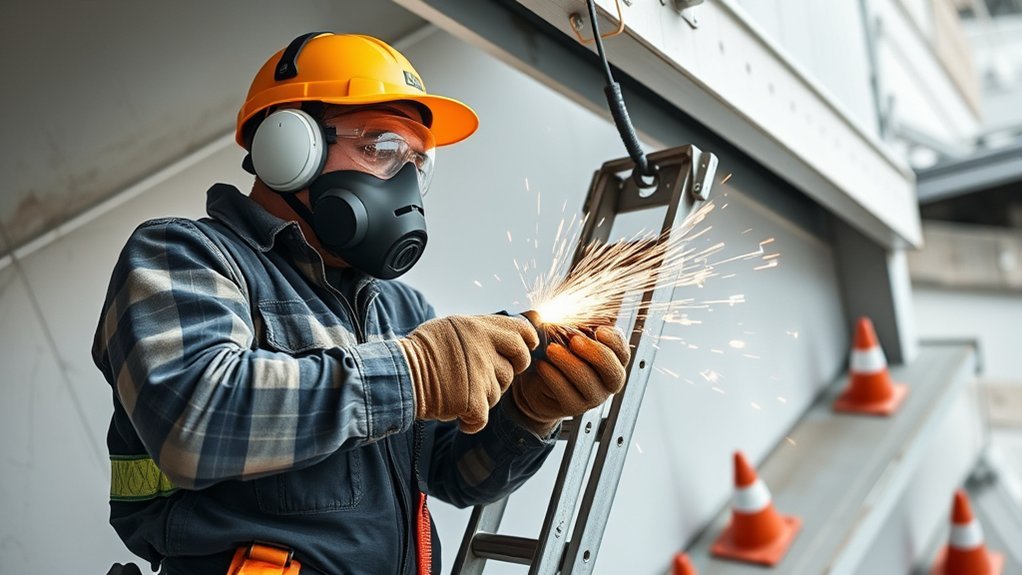
An angle grinder can throw sparks, sharp fragments, hot metal, and hazardous dust. It can also kick back if the wheel is pinched or jammed. Reduce these risks before the wheel touches the workpiece.
- Wear impact-rated safety glasses or goggles and a face shield. The face shield supplements primary eye protection; it does not replace it.
- Wear hearing protection, snug work clothing, sturdy footwear, and suitable gloves.
- Tie back long hair and remove jewelry, hoodie strings, and loose clothing that could reach the wheel.
- Use respiratory protection when required by the material, dust-control method, workplace assessment, or product instructions.
- Install the side handle and hold the grinder with both hands.
- Use the exact guard required for the wheel. Never remove or defeat it to gain cutting depth.
- Keep your body outside the wheel’s plane of rotation and out of the likely kickback path.
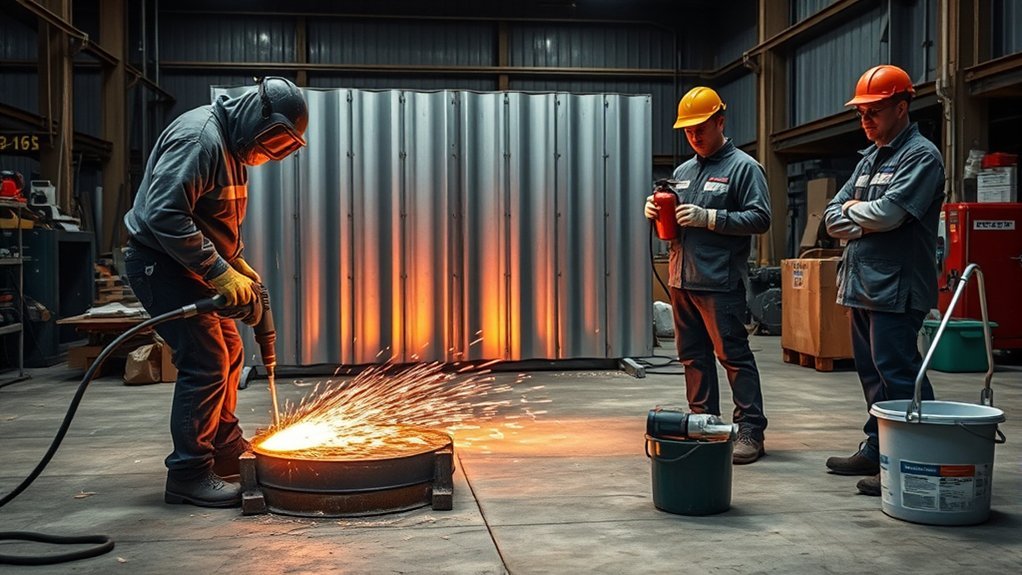
- Direct sparks away from yourself, other people, hoses, cords, vehicles, glass, and combustible material.
- Keep bystanders outside the work area and use screens where sparks or fragments could reach them.
Warning: Sparks can ignite paper, sawdust, fuel, solvents, insulation, dry vegetation, combustible dust, and hidden material inside walls or floors. Clear the area, check the opposite side of the cut, and keep suitable fire protection nearby. Follow workplace hot-work and fire-watch rules when they apply.
The OSHA angle grinder safety guide advises using the correct wheel for the tool’s size, speed, and task; keeping the guard in place; securing the workpiece; using two hands; and avoiding side grinding with a cutting disc.
How to Install and Use a Cut-Off Wheel
- Disconnect the power. Unplug a corded grinder or remove the battery before changing the wheel, guard, or flange.
- Confirm compatibility. Match the wheel diameter, thickness, arbor, maximum RPM, shape, material rating, flanges, and permitted application to the grinder manual.
- Inspect the grinder. Check the switch, cord or battery, spindle, flanges, side handle, and guard. Do not use damaged or modified parts.
- Inspect the wheel. Discard a wheel that is cracked, chipped, warped, damp, contaminated, badly worn, dropped, or missing readable markings. Perform a ring test only when the wheel manufacturer says that test is appropriate for that wheel.
- Install the cutting guard. Fit the closed two-sided guard, Type 1/41 guard, approved clip-on conversion, or other guard named in the grinder manual. Position it to shield you from the wheel and likely fragment path.
- Mount the wheel correctly. Use only the specified backing and locking flanges. The wheel should fit freely without forcing. Tighten the nut only as directed by the manufacturer.
- Secure and support the workpiece. Place supports so the kerf stays open as the cut finishes. The offcut should not fall inward and clamp the wheel.
- Prepare the area and PPE. Remove combustibles, manage dust, protect bystanders, mark the cut, and put on eye, face, hearing, hand, foot, and respiratory protection as required.
- Test at no load. Hold the grinder so no one is in the wheel’s plane, start it, and let it reach full speed. Stop immediately if it vibrates, wobbles, rubs the guard, or sounds abnormal. Follow the manual’s specified test duration.
- Begin the cut at 90 degrees. Bring the wheel edge squarely into the work. Use minimum steady pressure and let wheel speed perform the cutting.
- Keep the grinder aligned. Do not twist, bend, pry, jam, or use the side of a cutting-only wheel. Avoid changing direction while the wheel is deep in the kerf.
- Finish safely. Ease pressure as the cut completes, keep control of the tool, release the switch, and wait for the wheel to stop before setting the grinder down. Treat the wheel and workpiece as hot.
Pro Tip: Mark the line clearly and make a light scoring pass before deepening the cut. The shallow groove helps guide the wheel, but it does not replace correct support and two-handed control.
Mistakes to Avoid With Cut-Off Wheels
Most cut-off wheel problems begin with an incompatible wheel, incorrect guard, unstable workpiece, damaged accessory, or excessive force.
Choosing the Wrong Wheel Type
Check the wheel label before mounting it. Confirm all of the following:
- Diameter and arbor: Both must match the grinder and approved flange system.
- Thickness: Choose a cutting thickness that fits the guard and the work.
- Material rating: Use a wheel marked for the material being cut.
- Maximum RPM: The wheel rating must equal or exceed the grinder’s maximum no-load speed.
- Wheel shape: Match Type 1/41 or Type 27/42 to the grinder and guard.
- Permitted use: Never side-grind with a cutting-only wheel.
Do not mount toothed wood-cutting blades, chain-style carving discs, or other accessories that the angle grinder manufacturer has not approved. High-speed kickback or accessory failure can cause severe injury.
Ignoring Safety Gear
Skipping safety gear exposes your eyes, face, hearing, lungs, hands, and feet to preventable hazards. Put on PPE before connecting power.
| Protection | Purpose |
|---|---|
| Impact-rated safety glasses or goggles | Primary protection from flying particles |
| Face shield | Additional face coverage over safety glasses or goggles |
| Hearing protection | Reduces exposure to grinder and cutting noise |
| Snug gloves and work clothing | Helps protect against sharp edges, sparks, and hot metal without leaving loose material near the wheel |
| Sturdy footwear | Helps protect against falling offcuts and sharp scrap |
| Respiratory protection | Used when required after dust, fume, coating, or material hazards are assessed |
Applying Excessive Pressure
Heavy pressure can slow the grinder, increase heat, damage the workpiece, and overload the wheel. Use light radial pressure and keep the wheel aligned with the kerf.
- Thin wheels can fracture when twisted, bent, or forced sideways.
- Excess pressure can cause heat discoloration, loading, edge damage, and shorter wheel life.
- A wheel that repeatedly slows may be too hard, too thick, worn, glazed, or mismatched to the material.
- If progress stops, release the trigger and investigate rather than pushing harder.
Allowing the Cut to Pinch the Wheel
A cut can close when the workpiece bends, settles, or loses support. The closing kerf may trap the wheel and drive the grinder backward or upward.
- Support long stock on both sides of the cut.
- Arrange supports so the offcut moves away from the wheel rather than toward it.
- Do not let pipe, tube, sheet, or plate collapse under its own weight.
- Stop and reposition the supports if the kerf begins to close.
- Never try to pull a spinning wheel sideways out of a pinched cut.
Best Practices for Using Cut-Off Wheels Effectively
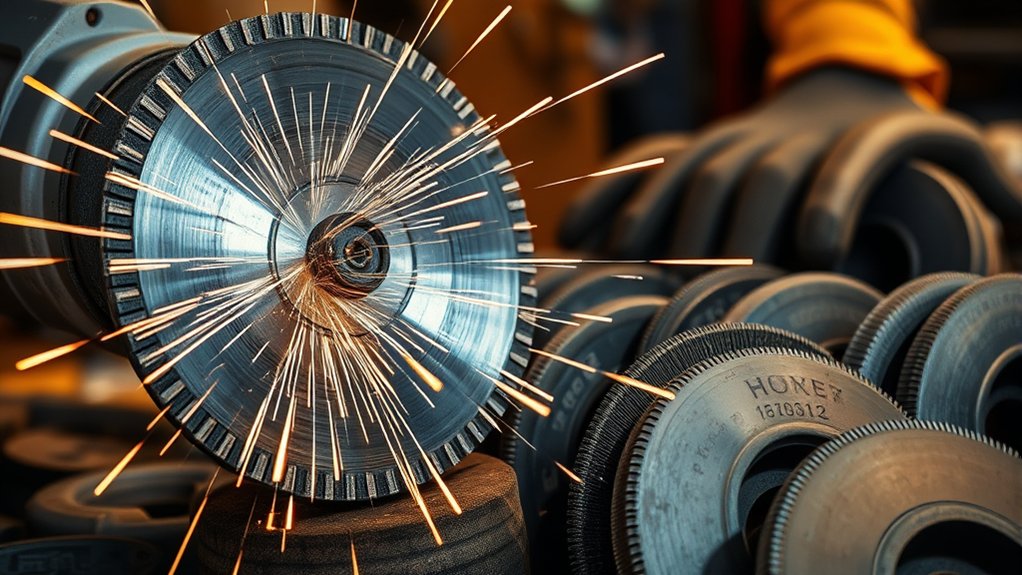
Good cutting starts before the wheel touches the workpiece. Select the correct disc type, thickness, abrasive formulation, diameter, arbor, and maximum RPM. Check the wheel, flanges, side handle, guard, power source, and work support before every cut.
During the cut, hold the grinder with both hands and keep your body outside the wheel’s direct plane. Bring the wheel into the material squarely and use minimum steady pressure. Forcing the cut can slow the grinder, overheat the workpiece, damage the wheel, and leave a rough edge.
Support the work so the cut line remains stable from start to finish. A free offcut must not drop onto the wheel. When cutting pipe or tube, consider how the remaining material will move as the wall separates.
Plan the spark path before starting. Sparks can travel farther than expected, bounce from hard surfaces, damage finished glass or paint, and ignite hidden combustibles. Move cords, hoses, batteries, fuel containers, and other vulnerable items out of that path.
Pro Tip: When a long cut is required, make several controlled passes rather than burying an ultra-thin wheel to maximum depth and dragging it through the material.
Troubleshooting Cut-Off Wheel Problems
| Problem | Likely Causes | Safe Correction |
|---|---|---|
| Wheel cuts slowly | Wrong material rating, glazed wheel, wheel too thick or hard, grinder losing speed | Stop and use a wheel recommended for the material and grinder. Do not compensate with heavy pressure. |
| Blue or burned cut edge | Excess pressure, slow progress, loaded wheel, unsuitable abrasive | Reduce pressure, maintain wheel speed, and switch to a correctly rated wheel. |
| Wheel edge crumbles | Side pressure, twisting, moving workpiece, damaged wheel, incorrect flanges | Discard the wheel, inspect the tool and flanges, secure the work, and keep the next wheel square to the cut. |
| Vibration or wobble | Damaged wheel, dirt on flanges, poor seating, bent spindle, incompatible accessory | Stop immediately. Disconnect power and inspect every mounting surface and component. |
| Wheel binds in the kerf | Closing cut, unsupported stock, misalignment, turning within the cut | Release the switch, hold the tool still until it stops, then correct the support and cutting path. |
| Aluminum sticks to the wheel | Wheel not formulated for aluminum or excessive heat | Stop and replace it with an aluminum-rated wheel. Do not attempt to clean a spinning wheel. |
Warning: Stop using the grinder immediately if the wheel cracks, chips, wobbles, rubs the guard, produces unusual vibration, or changes sound. Disconnect power before inspection. Never test a questionable wheel by continuing the cut.
Choosing the Right Accessories and Tools for Better Performance
Cut-off wheel performance depends on the entire system: grinder, wheel, guard, flanges, handle, clamps, supports, and dust or spark controls. A Type 1/41 wheel can make straight cuts when the grinder and closed cutting guard support it. A Type 27/42 cut-off wheel may improve access, but it must be specifically marked for cutting and paired with the approved guard.
Check these details before starting:
- Grinder size and speed: The machine must accept the wheel diameter and must not exceed the wheel’s maximum RPM.
- Cutting guard: Use the closed or converted guard named in the manual. A normal open grinding guard may not provide the required coverage.
- Flanges: Use the matching backing and locking flanges in the correct orientation.
- Side handle: Install it in the position that provides the strongest control and keeps your hands away from the wheel.
- Clamps and supports: Keep the work from rotating, falling, vibrating, or closing on the wheel.
- Dust control: Use a compatible shroud and extraction system when the task produces hazardous dust.
- Fire protection: Keep the spark path clear and have suitable fire-control equipment available.
Norton explains that using a straight Type 41 cut-off wheel with a guard intended only for Type 27 grinding wheels provides inadequate fragment protection. Review the manufacturer’s wheel-guard guidance before converting a grinder from grinding to cutting.
Products Worth Considering
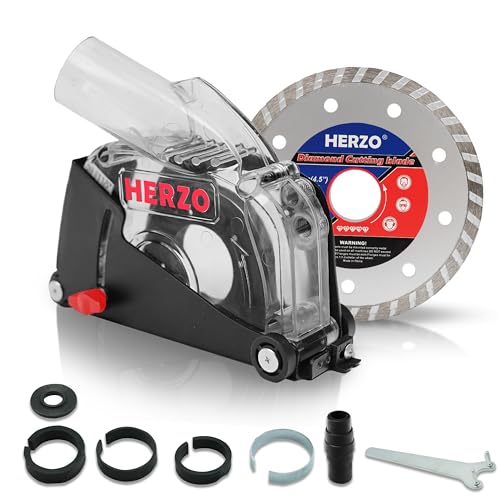
Widely Adapt:Suitable for 80% Main Brand 4-1/2 and 5 inch Angle Grinder
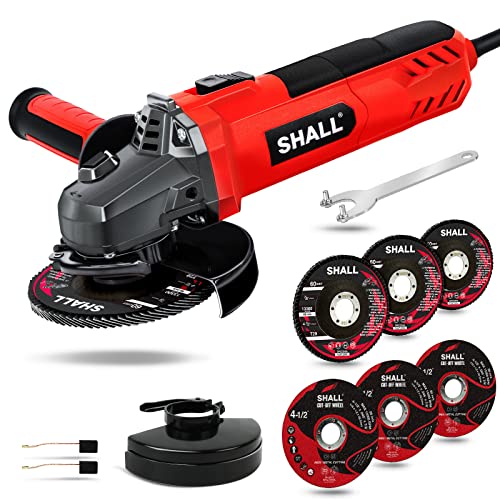
Note: There are 3 cutting discs wrapped in the clear plastic film, pls tear off the film to take them out.

Included: (1) DeWalt N441218 Angle Grinder Guard Replacement for Angle Grinder DCG414B
Storing and Replacing Cut-Off Wheels
Cut-off wheels can be damaged before they ever reach the grinder. Store them in their original packaging in a dry area away from water, extreme heat, freezing conditions, chemicals, impacts, and heavy objects.
- Keep wheels flat or in the storage position recommended by the manufacturer.
- Do not toss loose wheels into a toolbox where their edges can be chipped.
- Do not use a wheel that has been dropped unless the manufacturer’s inspection process confirms it is safe.
- Discard wheels with cracks, deep chips, warping, soft or damp areas, damaged reinforcement, unreadable labels, or enlarged arbor holes.
- Replace a wheel when wear prevents safe cutting depth or brings the flange, hub, spindle, or guard too close to the work.
- Never attempt to repair, reshape, drill, or enlarge an abrasive wheel.
Before mounting any wheel, inspect it closely. OSHA’s portable-tool rule also requires checking that the machine spindle speed does not exceed the maximum operating speed marked on the wheel. See 29 CFR 1910.243.
Frequently Asked Questions
What is the best thickness for a cut-off wheel?
The best thickness depends on the material, wheel diameter, cut depth, and grinder. Thin wheels around 0.040 to 0.045 inches are common for fast, narrow metal cuts, while a somewhat thicker cutting wheel may provide more edge durability. Use only a thickness approved for the grinder, guard, and flanges.
What is the difference between Type 1 and Type 41 cut-off wheels?
Type 1 and Type 41 commonly describe the same basic flat or straight cut-off wheel shape under different labeling systems. Check the complete wheel label, grinder manual, flange arrangement, and cutting-guard requirement instead of relying only on the number.
What is the difference between Type 27 and Type 42 cut-off wheels?
Type 27 and Type 42 may both be used to describe a depressed-center cut-off shape, depending on the manufacturer and standard. However, many Type 27 products are grinding wheels. Use one for cutting only when the label and grinder manual expressly permit cutting.
What does the type number mean on a cut-off wheel?
The type number identifies the wheel’s shape and mounting category. It affects the required guard, flange arrangement, cutting position, and possible cut depth. It does not by itself confirm the material rating or whether side grinding is allowed.
Are thicker or thinner cutting discs better?
Neither is best for every job. A thin disc cuts quickly and leaves a narrow kerf but is less tolerant of twisting and side pressure. A thicker cutting wheel may provide more edge durability but removes more material and can cut more slowly.
Can you use a cut-off wheel for grinding?
Do not use a cutting-only wheel for side grinding. Thin cut-off wheels are designed mainly for radial edge pressure and can break under side loading. Limited grinding is acceptable only when the wheel is expressly marked for combination cutting and grinding and the grinder setup supports that use.
Can an angle grinder cut aluminum?
Yes, when the grinder is fitted with a wheel specifically rated for aluminum or the named non-ferrous alloy. A generic steel wheel can load with soft aluminum and create excess heat. Stop if material begins sticking to the wheel.
Why does a cut-off wheel bind?
Binding usually happens when the kerf closes, the workpiece moves, the wheel is turned inside the cut, or the grinder drifts out of alignment. Release the switch, hold the tool still until the wheel stops, and correct the work support before continuing.
When should you replace a cut-off wheel?
Replace it if it is cracked, chipped, warped, wet, contaminated, dropped, vibrating, missing readable markings, or worn too small to complete the cut without bringing the flanges or guard close to the work. Never continue using a wheel that behaves abnormally.
Safety Disclaimer: This article provides general information, not task-specific training. Always follow the grinder manual, wheel label, accessory instructions, workplace rules, hazard assessment, and applicable safety requirements. Stop work when the correct wheel, guard, PPE, support, or dust control is unavailable.
Conclusion
The right angle grinder cut-off wheel must match more than the material. Its diameter, arbor, thickness, shape, maximum RPM, permitted use, flanges, and guard must all be compatible with the grinder. Inspect the system, secure and support the workpiece, control sparks and dust, and cut at 90 degrees with light pressure and two-handed control. Stop immediately if the wheel binds, vibrates, chips, or sounds abnormal.
Sources
- OSHA Angle Grinder Safety — wheel-speed matching, guards, wheel inspection, PPE, spark control, and two-handed operation
- OSHA 29 CFR 1910.243: Guarding of Portable Powered Tools — abrasive-wheel guarding, inspection, flanges, and maximum operating speed
- OSHA 29 CFR 1926.1153: Respirable Crystalline Silica — controls for cutting and grinding silica-containing materials
- DeWalt DCG407/DCG408 Instruction Manual — wheel, flange, closed cutting-guard, and accessory compatibility
- Norton: What You Should Know About Grinding Wheel Guards — differences between grinding and cutting guards
- 3M Cut-Off Wheels and Application Guidance — abrasive and material-selection information