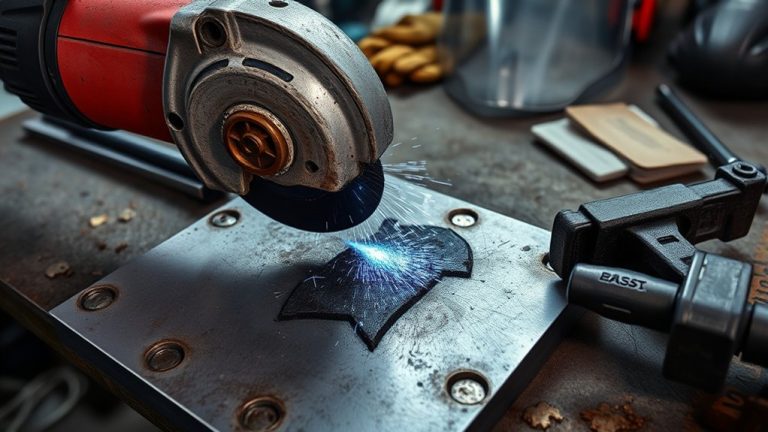
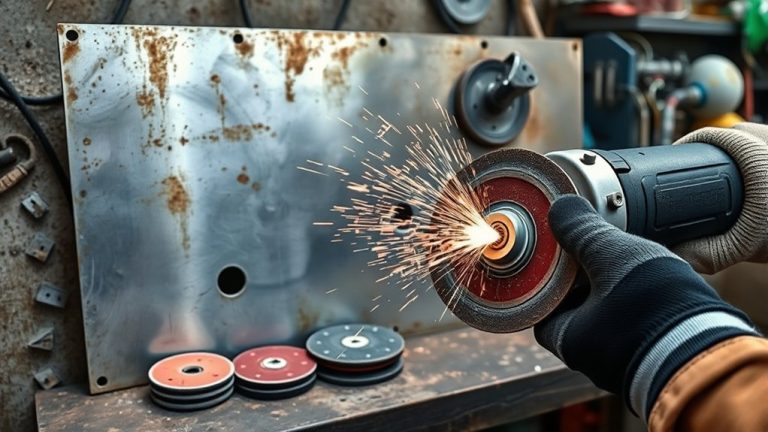
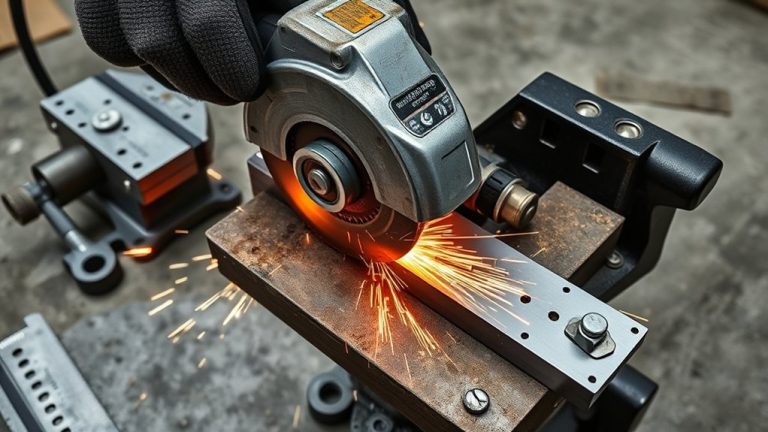
Angle grinder cutoff wheels shatter primarily due to exceeding RPM limits, using poor-quality abrasives, or incorrect mounting. Regular inspections for cracks, chips, and wear can help prevent accidents. Always verify your wheel matches the tool’s RPM rating and store it properly. Prioritize personal protective equipment and confirm safety guards are in place. By following best practices and maintaining your equipment, you can greatly reduce risks. Explore more tips for safe operation to enhance your cutting experience.
Why Do Angle Grinder Cutoff Wheels Shatter?
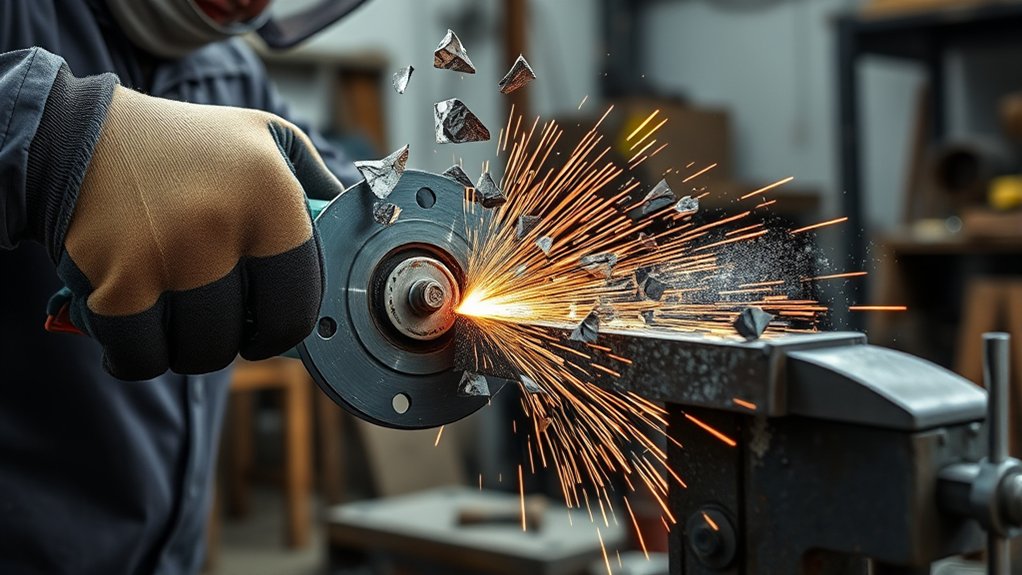
Angle grinder cutoff wheels shatter primarily when you exceed their specified RPM limits, putting excessive stress on the wheel material. This failure often stems from using poor-quality abrasives, which may contain fillers and weak bonding agents. You also increase the risk of injury if you neglect to inspect cutting wheels for signs of wear, like cracks or chips, before use. Proper mounting is essential; using incorrect flanges can create uneven pressure, making shattering more likely. Regular wear and tear can’t be ignored—worn-out wheels should be replaced promptly to maintain safety. Always prioritize proper safety measures and wear appropriate safety gear, like goggles and gloves, to protect yourself. By choosing high-quality grinding wheels and staying vigilant, you can greatly reduce the chances of catastrophic failures while enjoying the liberation of power tools.
How to Inspect and Maintain Your Cutting Wheels for Safety
To keep your cutting wheels safe and effective, regular inspection and maintenance are essential. Start by inspecting each wheel for visible cracks, chips, or excessive wear. These flaws can lead to shattering during operation. Always check the RPM rating of the wheel against your tool’s specifications to guarantee compatibility and avoid exceeding safe speeds.
Proper storage is vital; keep cutting wheels away from moisture and extreme temperatures to maintain their integrity. Additionally, verify wheels are mounted correctly, with the stamped metal ring facing the spindle for a secure fit. This reduces the risk of wheel failure during use.
If you notice signs of glazing or loading, replace the cutting wheels immediately. These conditions can cause overheating, increasing the risk of breakage. Regular maintenance isn’t just about performance; it’s about your safety.
Best Practices for Safe Operation of Angle Grinders
Using an angle grinder safely involves understanding and implementing best practices that protect you and enhance your work efficiency. Always wear appropriate personal protective equipment (PPE) like safety goggles, ear protection, and gloves to shield against injuries. Confirm safety guards are in place and functional to protect against debris and accidental contact with the grinding wheel.
Before use, regularly check cutting wheels for signs of wear, damage, or cracks to minimize the risk of shattering during operation. Always choose high-quality wheels that meet specific RPM ratings to enhance safety. Maintain a clean and organized workspace to reduce hazards, and confirm all operators are trained in safe handling practices.
Preventing Common Angle Grinder Accidents
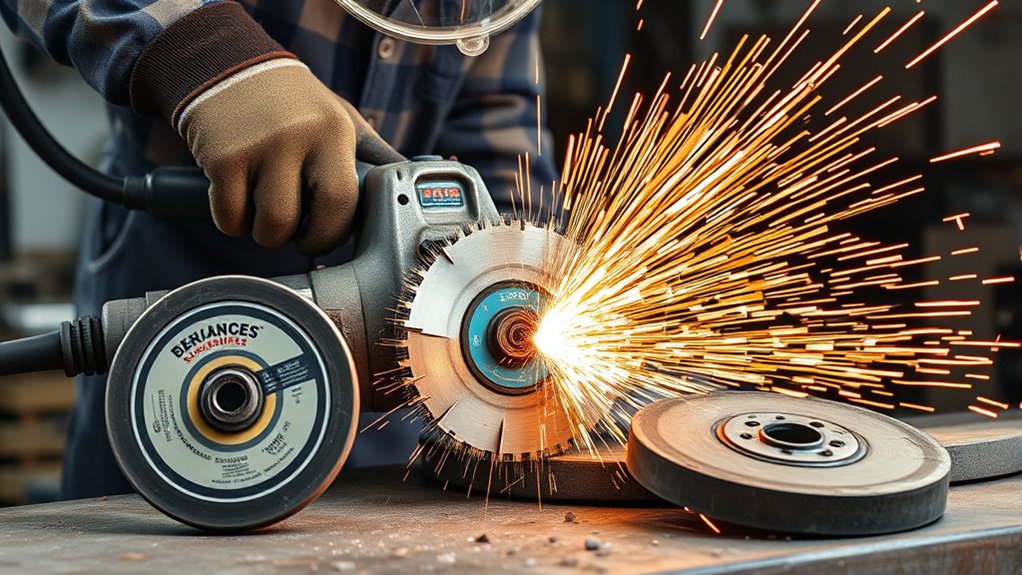
To prevent common angle grinder accidents, start by selecting the right cutting wheel for your task. Always wear appropriate safety gear, like goggles and gloves, to protect yourself from potential hazards. Remember, taking these precautions can greatly reduce your risk of injury.
Proper Wheel Selection
Selecting the right cutting wheel is essential for safe and effective angle grinder use. Proper wheel selection minimizes the risk of shattering and guarantees a smooth cutting experience.
- Choose high-quality cutting wheels designed for your angle grinder’s RPM range.
- Always verify the wheel’s specifications match the material you’re cutting.
- Avoid low-cost wheels with fillers and weak bonding agents.
- Regularly inspect for visible damage or wear before use.
- Ascertain proper mounting, with the stamped metal ring facing the spindle.
Safety Gear Usage
While operating an angle grinder, wearing the right safety gear is essential to preventing accidents and injuries. Always don safety glasses or a face shield to shield your eyes and face from flying debris and sparks. Don’t forget ear protection—ear plugs or muffs are important for safeguarding your hearing against high noise levels. Choose gloves that fit well, offering a good grip and made from durable materials resistant to abrasives. Flame-resistant clothing is critical to protect against burns from sparks and hot debris. Finally, make sure you wear safety boots with steel toes to guard your feet from heavy objects that might fall. A dust mask can also be beneficial for respiratory protection. Equip yourself wisely!
Dealing With Angle Grinder Cutoff Wheel Shattering
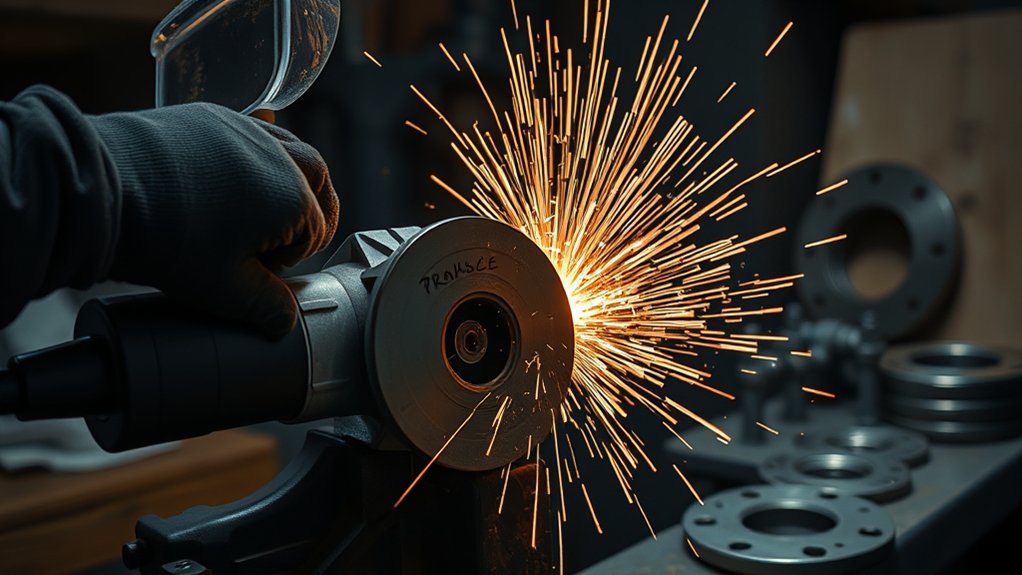
Angle grinder cutoff wheel shattering can be a dangerous issue, often stemming from exceeding RPM limits. To guarantee your safety and effectiveness while cutting, keep these key points in mind:
- Always adhere to the maximum speed recommended by the manufacturer.
- Invest in high-quality abrasive products to reduce the risk of shattering.
- Regularly inspect your cutting wheel for cracks and damage before use.
- Confirm proper mounting by placing the stamped metal ring against the spindle for a flush fit.
- Maintain a clean workspace and secure your workpiece to prevent kickback.
Using personal protective equipment (PPE) is essential, but being proactive about these practices will greatly minimize risks associated with angle grinder operations. By prioritizing quality and safety, you can liberate yourself from unnecessary dangers while achieving effective cutting results.
Resources for Learning About Abrasive Safety and Equipment
To guarantee your safety while using angle grinders, check out essential safety guides like the United Abrasives Technical Info & Safety Guide. You can also enhance your skills through online training resources and webinars focused on abrasive safety. Staying informed about industry best practices will help you operate equipment more safely and effectively.
Recommended Safety Guides
Understanding the safety protocols for using cutoff wheels is essential for anyone operating an angle grinder. To guarantee you’re working safely and efficiently, follow these recommended guides:
- Refer to the United Abrasives Technical Info & Safety Guide for specifications on cutting wheels.
- Consult A&M Industrial Safety Specialists for expert advice on selecting appropriate wheels.
- Confirm all operators receive thorough training in safe handling, including mounting and inspecting abrasive wheels.
- Access resources on choosing cutting wheels tailored for various materials, like aluminum and stainless steel.
- Download guides on personal protective equipment (PPE) to protect against dust, sparks, and projectiles.
Online Training Resources
When it comes to mastering abrasive safety, online training resources provide invaluable knowledge and skills. These platforms often feature thorough modules on the proper selection and usage of cutting wheels, helping you prevent shattering and accidents. Interactive courses emphasize adhering to RPM specifications and checking for wheel defects before use. Additionally, webinars and video tutorials demonstrate best practices for securely mounting grinding wheels, minimizing risks of failure during operation. You can also access downloadable safety guides and technical documents, offering detailed charts on maintenance and inspection protocols. Engaging with online forums and communities enhances your understanding, allowing you to share experiences and solutions related to abrasive tool safety, ultimately fostering a culture of safety and confidence.
Industry Best Practices
While traversing the world of abrasive safety, it’s essential to adopt industry best practices that enhance your knowledge and skills. By implementing these strategies, you can greatly improve safety and performance when using angle grinders and abrasive wheels.
- Use high-quality abrasive solutions from reputable manufacturers.
- Regularly consult thorough safety guides, like the United Abrasives Technical Info & Safety Guide.
- Attend specialized training sessions to master proper handling techniques.
- Conduct routine inspections of abrasive wheels to check for cracks and wear.
- Maintain a clean workspace, free from flammable materials.
Frequently Asked Questions
What Is the Main Cause of Wheel Breakage When Using an Abrasive Wheel?
Wheel breakage often stems from improper operator technique, excessive pressure, and unsuitable wheel material. Additionally, high wheel speed, poor maintenance practices, and environmental factors can exacerbate risks, especially if wheels aren’t stored correctly.
What Could Cause an Abrasive Cutting Wheel to Fail?
An abrasive cutting wheel can fail due to poor wheel composition, excessive cutting speed, improper storage, misalignment issues, or operator technique. Environmental factors and applying excessive force also greatly increase the risk of failure.
What Type of Guard Should Be Used for Cut-Off Wheels?
You should use a guard designed for cut-off wheels, ensuring it matches wheel sizes and material compatibility. Prioritize safety features, follow correct installation methods, adhere to usage guidelines, and conduct regular maintenance checks for ideal protection.
What Is the Cause for Faulty Wheel Dressing?
“Measure twice, cut once.” Faulty wheel dressing often stems from improper alignment, excessive pressure, and incorrect speed. Guarantee wheel balance, consider material compatibility, and refine operator technique to prevent wheel degradation and guarantee safety.
Conclusion
In the blink of an eye, a shattering cutoff wheel can turn your workspace into chaos. By understanding the causes and following best practices, you can keep your projects safe and smooth. Picture a clean, quiet workshop where every cut is precise and every tool is in its place. Prioritize inspection and maintenance, and you’ll not only enhance your safety but also enjoy the satisfaction of flawless cuts. Stay informed, stay safe, and let your creativity flow.