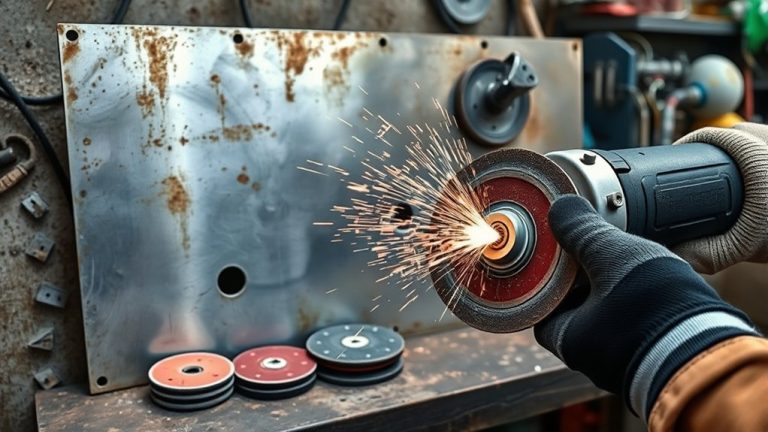
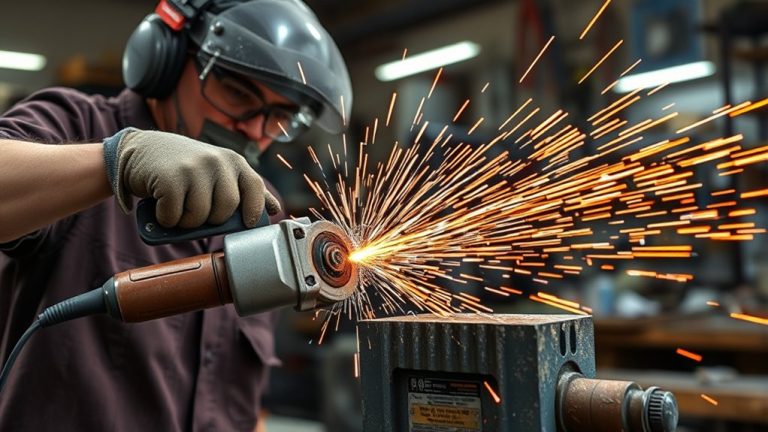
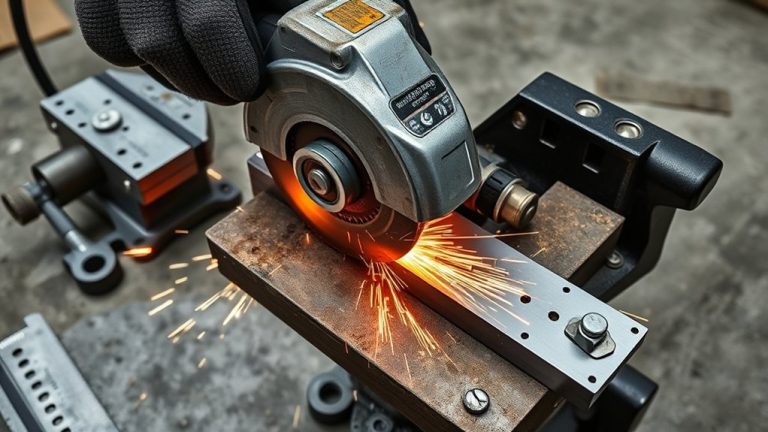
If your angle grinder gouges the workpiece, check for improper wheel selection, unbalanced wheels, and excessive pressure. Confirm you’re using the right wheel for the material and maintain consistent pressure to avoid digging. Regularly inspect for wheel damage and replace worn wheels promptly. Always perform safety checks, including verifying component integrity and matching RPM ratings. These steps can enhance performance and safety. You’ll uncover more essential techniques and tips as you explore further.
Identify Common Causes and Solutions for Gouging in Angle Grinders
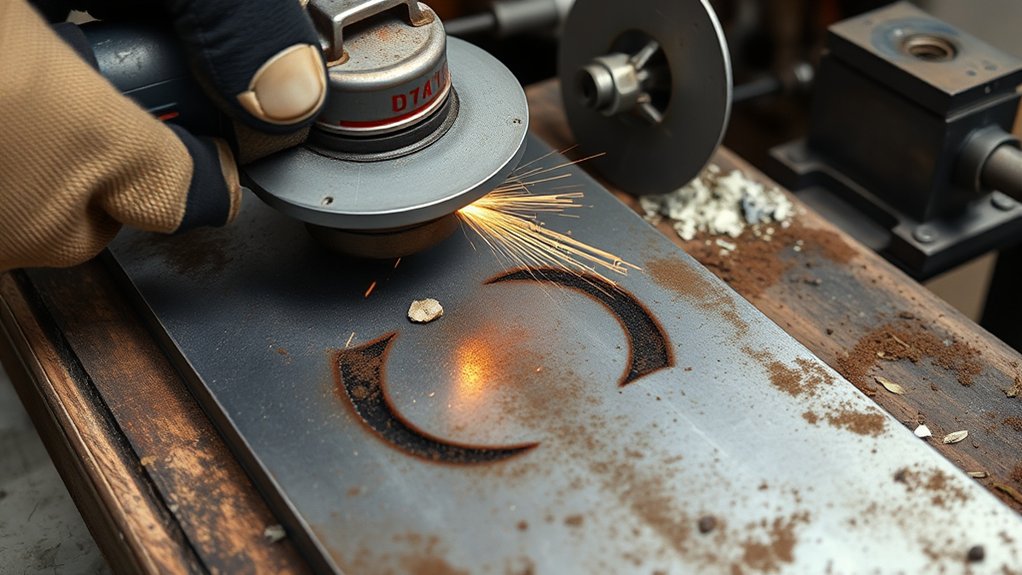
When you’re using an angle grinder, gouging can be a frustrating issue that not only damages your workpiece but can also compromise the integrity of the tool itself. One common cause is improper wheel selection; verify the grinding wheel‘s grit matches the material to avoid excessive cutting depth. An unbalanced or misaligned wheel can also lead to gouging, so regularly check and adjust wheel alignment for precision. Excessive pressure is another culprit; use a lighter touch and let the grinder do its job. Additionally, insufficient coolant can cause overheating and material fusion, resulting in gouges; maintain proper coolant flow and direction. Finally, regularly inspect and dress the grinding wheel to prevent loading and glazing, which exacerbate gouging issues. By addressing these common issues, you can enhance your grinding operations and maintain both tool integrity and workpiece quality.
Choosing the Right Wheel for Your Material
Selecting the right grinding wheel for your material is crucial for achieving the best results and minimizing damage. Choosing incorrectly can lead to gouging or inefficient performance. Here are key factors to take into account:
- Material Compatibility: Use a wheel specifically designed for your material to optimize performance.
- Grit Size Selection: Apply coarser grit wheels for quick removal on soft metals, while finer grit is best for hard materials.
- Bond Type Consideration: Opt for the right bond type (vitrified or resin) to enhance wear resistance and cutting efficiency.
- Wheel Thickness: Thinner wheels excel in precision tasks, while thicker ones are suited for heavy-duty grinding.
- RPM Compatibility: Verify that the wheel’s maximum RPM rating exceeds your grinder’s speed to guarantee safety.
How to Maintain Consistent Pressure to Prevent Gouging
To prevent gouging while using an angle grinder, maintaining consistent pressure is essential. A steady hand and grip will help you apply uniform pressure across the workpiece, reducing the risk of uneven cuts.
| Technique | Description |
|---|---|
| Use Both Hands | Enhances control and stability, especially on uneven surfaces. |
| Adjust Feed Rate | Match it to the grinder’s capabilities and material hardness. |
| Practice on Scrap Material | Develops a feel for necessary pressure and technique. |
Regularly inspect your stance to guarantee proper body alignment, allowing for even force distribution. By practicing on scrap, you’ll refine your technique and minimize gouging risks. Focus on these strategies to achieve a smooth surface and effective results while using your angle grinder.
Recognizing Wheel Damage and Replacement Signs
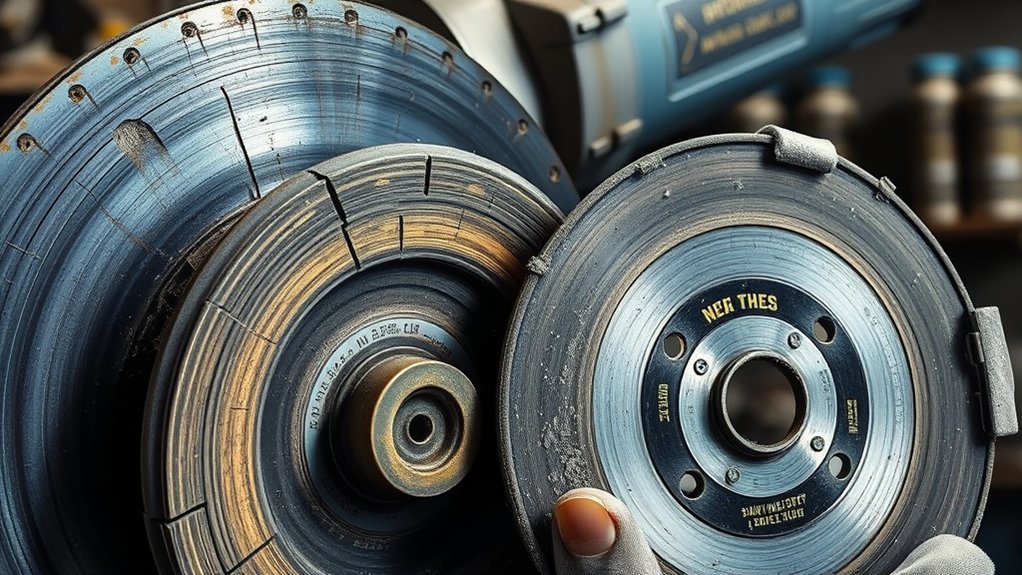
To guarantee peak performance from your angle grinder, you must regularly check for signs of wheel wear, such as cracks or uneven surfaces. If you notice excessive glazing or unusual vibrations, it’s time to replace the wheel to avoid damaging your workpiece. Staying vigilant about these indicators will help maintain cutting efficiency and prevent costly errors.
Signs of Wheel Wear
Recognizing signs of wheel wear is essential for maintaining the efficiency and safety of your angle grinder. Regularly inspect the grinding wheel for these indicators:
- Visible Damage: Look for cracks or chips, which require immediate replacement.
- Uneven Wear Patterns: Any irregular wear can lead to inconsistent performance, signaling the need for a new wheel.
- Glazing: A shiny, smooth surface reduces cutting efficiency; consider dressing or replacing the wheel.
- Diminished Grit Visibility: If the grit feels overly smooth or isn’t visible, it’s time for a replacement.
- Excessive Vibration: Increased vibration during use could indicate damage or imbalance, necessitating further inspection.
Address these signs promptly to guarantee safe and effective operation of your angle grinder.
When to Replace Wheels
Knowing when to replace your angle grinder wheel is essential for maintaining both safety and performance. Regular inspections can help you identify common grinding wheel problems. Look for cracks, chips, or deformities, as these indicate the wheel needs replacement. Excessive wear or glazing reduces cutting efficiency and affects your workpiece finish. If the wheel vibrates or wobbles, it’s time for a change to prevent injury. Monitor your wheel’s lifespan; typically, replace it after 100 to 200 hours of use or when performance dips. Discoloration suggests overheating, indicating structural issues requiring urgent replacement.
| Signs for Replacement | Action |
|---|---|
| Visible cracks or chips | Replace immediately |
| Excessive wear or glazing | Replace for peak performance |
| Vibration or wobbling | Replace to prevent injury |
Techniques to Avoid Gouging During Grinding
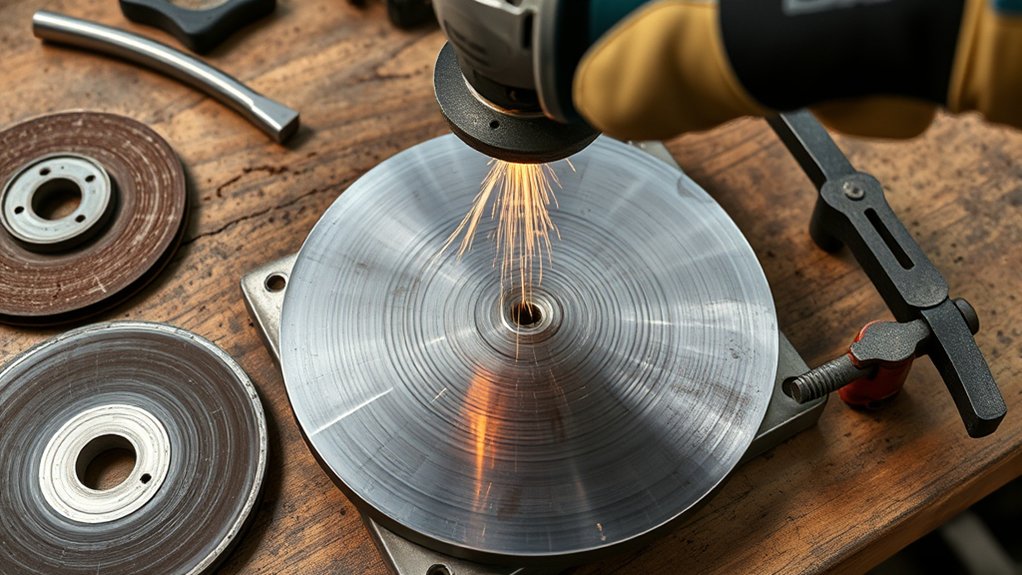
To prevent gouging while grinding, start by selecting the right wheel type and grit size for your material. Consistent support for the workpiece is essential; it stabilizes your cuts and reduces the risk of unwanted marks. By applying steady pressure and maintaining control, you can achieve a clean finish without damaging the surface.
Proper Wheel Selection
Selecting the right wheel for your angle grinder is essential, as the correct type and grit size greatly influence your grinding results. To achieve peak performance and avoid gouging, consider the following:
- Choose wheel type based on material (e.g., metal vs. masonry).
- Match grit size to the task; finer grits yield smoother finishes, while coarser grits remove material aggressively.
- Confirm wheel thickness is appropriate; thinner wheels cut, thicker wheels provide stability.
- Regularly inspect and dress the wheel to maintain a sharp edge, preventing glazing and loading.
- Control your feed rate; too fast can cause the wheel to dig in.
Consistent Workpiece Support
Consistent workpiece support is critical for achieving precise grinding results and preventing gouging. Securely clamp or support your workpiece to eliminate movement during grinding, as misalignment or incorrect positioning can lead to unwanted gouging. Use a stable work surface to minimize vibration and absorb shocks, enhancing your setup’s consistency. Always position the angle grinder at the correct angle to maintain even pressure across the material, reducing the risk of digging. Regularly check and adjust your support as needed, especially when switching between different tasks or materials. Consider utilizing jigs or fixtures for additional support, ensuring consistent contact and alignment throughout your grinding operations. This will help you achieve the liberation of flawless results.
How to Keep Your Workpiece Steady While Grinding
While grinding, keeping your workpiece steady is essential for achieving clean, precise results. Here’s how to guarantee stability during your grinding tasks:
- Secure your workpiece with a vice or clamps to prevent movement.
- Use a backer or support plate for thin or irregular shapes, reducing flexing.
- Maintain a firm grip on the angle grinder with both hands for better control.
- Position the grinder at the correct angle, typically 15 to 30 degrees, to optimize contact and minimize gouging.
- Regularly check the alignment and condition of the workpiece and grinding wheel to prevent wobbling.
Safety Checks Before Operating Your Angle Grinder
Before you operate your angle grinder, it’s crucial to conduct thorough safety checks to prevent accidents and guarantee peak performance. Start with a visual inspection; check for any visible signs of wear, damage, or loose components. Verify the power cord is intact, free of fraying, and securely connected to an appropriate power supply. Confirm that the correct disc size and type align with your task to avoid operational inefficiencies.
Next, inspect the guard and flange to verify they’re secure and functioning properly. This protects you from debris and sparks during operation. Always wear appropriate personal protective equipment (PPE), including safety goggles and gloves, to minimize the risk of injury. Installation: verify all components are correctly assembled before powering on the tool. By taking these precautions, you not only enhance your safety but also improve the grinder’s operational efficiency.
When and How to Replace Your Angle Grinder Wheel?
Knowing when and how to replace your angle grinder wheel is crucial for maintaining both safety and efficiency. You should replace the wheel when you notice visible signs of wear, including:
Knowing when to replace your angle grinder wheel is essential for safety and optimal performance. Look for visible signs of wear.
- Cracks or chips
- Significant gouging on the surface
- Excessive vibration or noise during operation
- A mismatch in size and type with your grinder’s specifications
- RPM ratings that don’t match or exceed your grinder’s maximum
Before replacing the wheel, disconnect the grinder from the power source to prevent accidental start-up. Always verify the new wheel matches the diameter, thickness, and type specified for your grinder. Regular inspections are important; if you observe any of the above issues, it’s time to replace. This proactive approach not only enhances cutting efficiency but also guarantees your safety during operation.
Frequently Asked Questions
What Causes an Angle Grinder to Stop Working?
An angle grinder stops working due to electrical issues, user error, or poor angle grinder maintenance. Check for power supply problems, overheating, and verify all components, like the spindle lock, function correctly for peak performance.
What Is the Ball Gouge on an Angle Grinder?
A ball gouge on an angle grinder efficiently shapes materials with its rounded end. To prevent gouges, focus on angle grinder maintenance and control your technique, ensuring a smooth finish while minimizing unwanted damage to your workpiece.
What Is the Cause for Faulty Wheel Dressing?
Faulty wheel dressing arises from inadequate wheel maintenance, improper dressing techniques, or insufficient dressing speed. These issues compromise grinding precision, leading to uneven surfaces and increased gouging risks during your grinding operations.
What Are the Common Problems With Grinding?
“Don’t judge a book by its cover.” Common grinding problems include improper wheel selection, incompatible materials, and flawed techniques. These issues can lead to overheating, poor finishes, or chatter, hindering your project’s success.
Conclusion
In conclusion, preventing gouges while using an angle grinder is like steering a ship through a storm; it requires attention, skill, and the right tools. By identifying common causes and maintaining your equipment, you can achieve clean, precise cuts. Always make sure you’re using the appropriate wheel for your material and keep a steady hand. Prioritizing safety checks not only protects you but also enhances the quality of your work. Stay vigilant, and your projects will shine without unsightly marks.