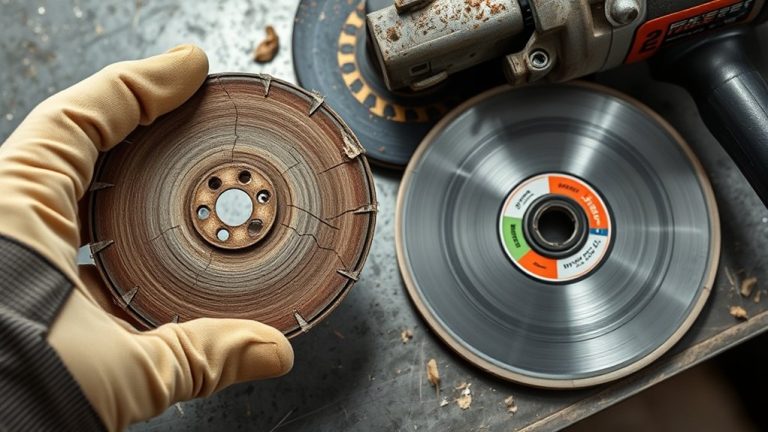
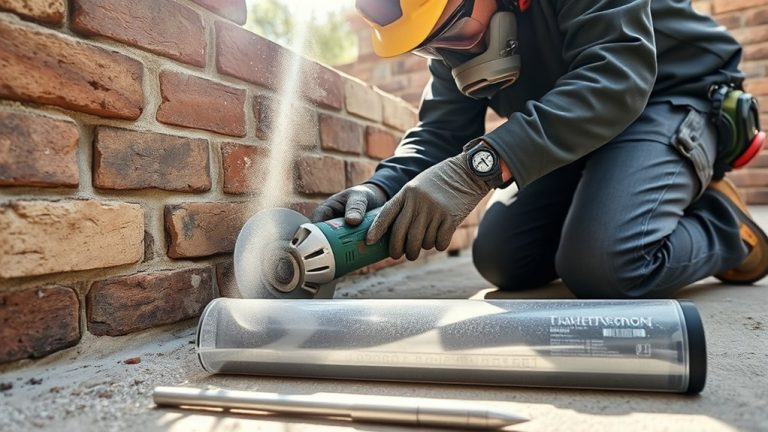
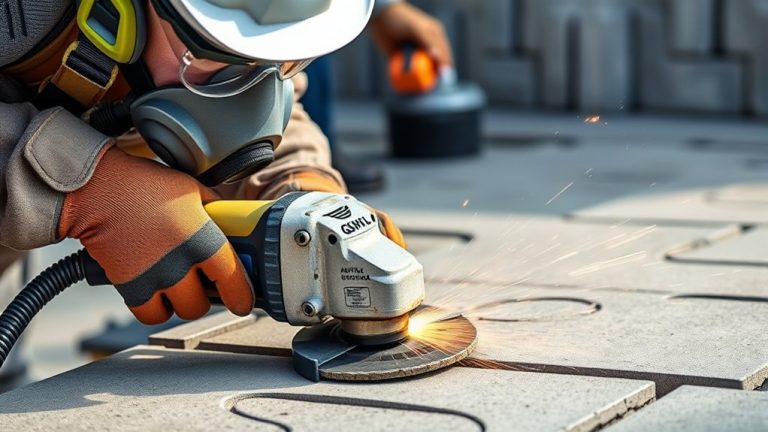
If your angle grinder overheats, it’s often due to prolonged use, poor ventilation, or mismatched discs. You might notice it getting uncomfortably hot, cutting slower, or even emitting strange smells. To prevent this, keep air vents clean, select the right discs, and allow your tool to cool during use. Regular maintenance is essential too. Understanding these factors can help you operate safely and efficiently, so keep exploring for more insights on preventing overheating issues.
Understanding Angle Grinder Overheating: Causes and Effects
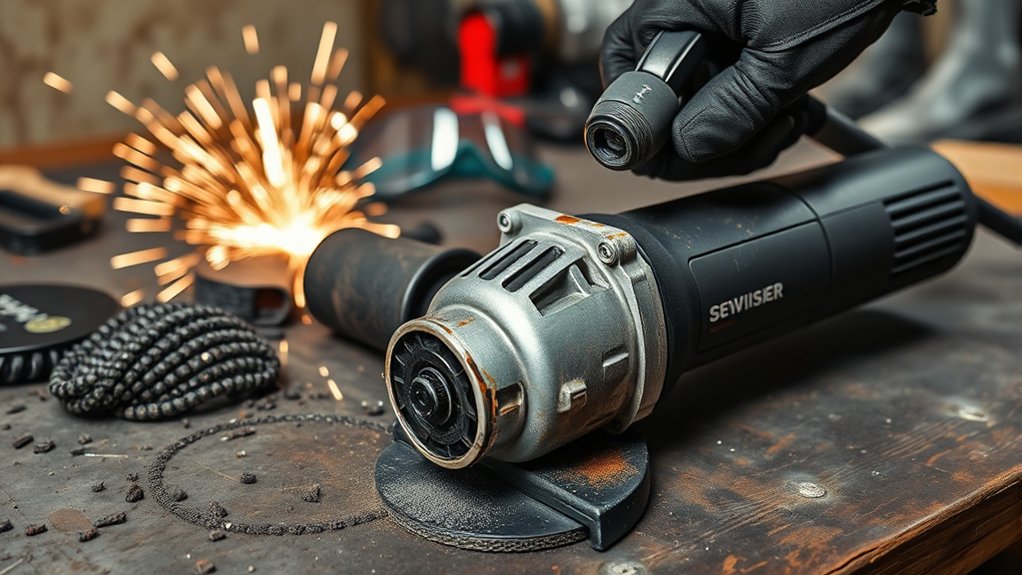
Understanding why angle grinders overheat is vital for effective usage. Overheating often results from prolonged use without breaks, straining the motor and causing thermal buildup. Insufficient ventilation can restrict airflow, leading to heat accumulation that may damage internal components.
Using the wrong disc size or type increases friction, generating excessive heat during operation. Additionally, overloading the motor by cutting hard materials highlights the significance of matching the grinder’s power and disc specifications to each task.
To prevent overheating, regular maintenance is important. Clean air vents from dust and debris, and guarantee proper lubrication to keep your tool running smoothly. Many grinders come with built-in safety features, but understanding these causes empowers you to take proactive steps. By prioritizing maintenance and using the correct discs, you can extend your grinder’s lifespan and enhance your safety while liberating your creative potential.
Signs Your Angle Grinder Is Overheating
When your angle grinder starts overheating, you’ll notice a few clear signs. You might detect unusual smells or sounds, experience reduced cutting efficiency, or feel excessive vibrations during use. Pay attention to these indicators to prevent further damage and guarantee safe operation.
Common Overheating Indicators
How can you tell if your angle grinder is overheating? First, touch the housing; if it feels uncomfortably hot, that’s a clear sign. You might also notice reduced performance, like slower cutting speeds—this indicates the motor’s struggling. Keep an eye out for any discoloration or warping of the grinding disc, which signals excessive heat exposure that can lead to failure. If you detect a burning smell, it often means electrical components are overheating. Finally, listen for unusual noises; if grinding sounds shift to a high-pitched whir, it could indicate stress on internal parts. Always wear proper safety gear when operating, and check for damaged cords to verify your equipment runs smoothly.
Unusual Smells or Sounds
If you notice unusual smells or sounds coming from your angle grinder, it’s essential to pay attention. Burning plastic or rubber odors often indicate overheating components like the motor or wiring, which can cause permanent damage if ignored. A high-pitched whining or grinding noise might signal that the bearings are overheating, risking failure. If you smell burning, it could mean the carbon brushes are worn out or the tool is under excessive load, requiring immediate inspection. An acrid smell indicates that lubricant within the motor is breaking down, affecting performance. Finally, popping noises can point to electrical issues or overheating, so cease operation and inspect the tool to prevent further damage. Stay alert to keep your grinder safe and effective.
Reduced Cutting Efficiency
As you use your angle grinder, you might notice a drop in cutting efficiency, which often signals overheating. This can manifest as slower cutting speeds or the tool struggling to maintain RPM under load. Frequent stop-and-go operation, a burning smell, or even discolored discs are clear indicators that your grinder’s overheating. Increased vibration or unusual noises also suggest potential issues.
| Signs of Reduced Cutting Efficiency | Possible Causes | Recommended Actions |
|---|---|---|
| Slower cutting speeds | Overheating | Allow to cool, check safety guard |
| Frequent stop-and-go operation | Excessive heat buildup | Perform regular maintenance |
| Glazed or discolored discs | Tool stress | Replace disc, inspect tool |
Stay vigilant and guarantee your angle grinder operates efficiently for safety and effectiveness.
Best Practices to Prevent Angle Grinder Overheating
To keep your angle grinder running smoothly, proper maintenance is crucial. Regular cleaning and lubrication can greatly reduce the risk of overheating. Additionally, using effective cooling techniques guarantees your tool stays at peak performance during longer tasks.
Proper Tool Maintenance
Maintaining your angle grinder is essential for preventing overheating and guaranteeing peak performance. Start with regular tool maintenance by cleaning dust and debris from air vents and motor housing to promote proper airflow. Inspect and replace worn or damaged discs, as imbalanced or cracked discs can create excessive friction, leading to heat buildup. Lubricate moving parts according to the manufacturer’s guidelines to reduce friction and maintain smooth operation. Monitor your grinder’s usage time, allowing it to cool down periodically during extended tasks. Also, verify that electrical components, including cords and switches, are in good condition to avoid electrical resistance. Don’t forget your safety goggles; they protect your eyes while you focus on effective grinder maintenance.
Effective Cooling Techniques
While angle grinders are powerful tools, they can quickly overheat without proper cooling techniques in place. To prevent overheating, regularly clean air vents and the housing to guarantee unobstructed airflow. Utilize proper lubrication as specified in your owner’s manual; this reduces friction and minimizes heat generation. Always operate the grinder at the recommended RPM for the disc you’re using; exceeding this can lead to excessive heat and wear. During extended use, allow the tool to cool down periodically and alternate tasks to avoid continuous strain on the motor. Finally, make sure you’re using appropriate discs for the material at hand; mismatched discs increase resistance, which can elevate temperatures and risk tool failure.
How Proper Ventilation Prevents Angle Grinder Overheating
Proper ventilation is essential for keeping your angle grinder cool, especially during extended use. When the air vents are blocked, heat builds up, causing overheating that can drastically reduce your tool’s performance and lifespan. To combat this, make it a habit to regularly clean dust and debris from the air vents. This simple maintenance task enhances airflow, allowing the motor to operate within safe temperature limits.
Additionally, using your angle grinder in well-ventilated areas further aids in cooling, minimizing the risk of overheating during demanding tasks. Ensuring clear ventilation paths not only protects the motor but also boosts the overall efficiency of your tool. By prioritizing proper ventilation, you empower yourself to work effectively and safely, keeping your angle grinder performing at its best. Don’t overlook this vital aspect—it could make all the difference in your projects.
Select the Right Disc for Your Material
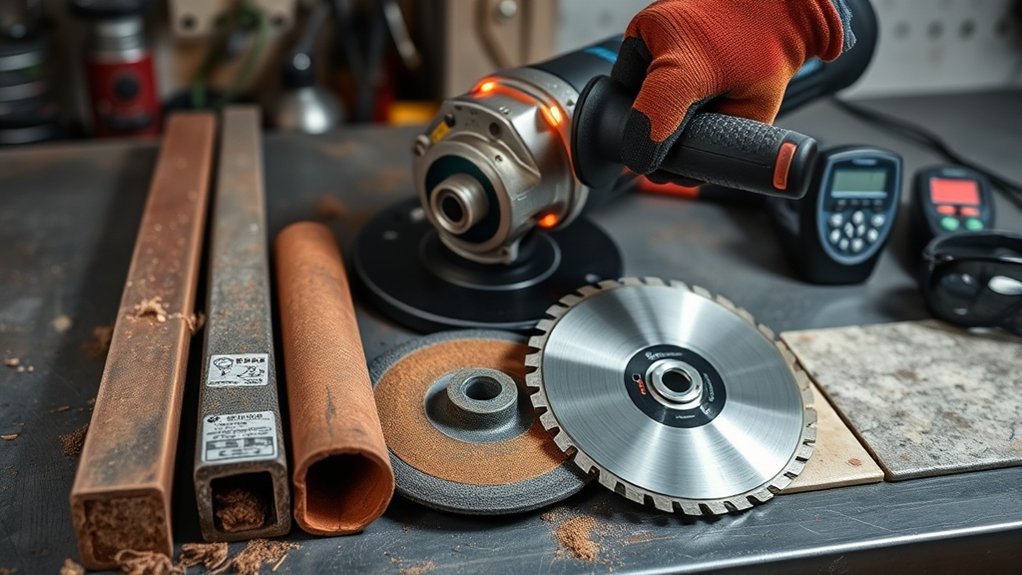
Selecting the right disc for your material is essential for maximum performance and safety. Whether you’re cutting metal or grinding concrete, the disc type must match the material’s hardness to prevent overheating and damage. Always check the RPM rating to guarantee compatibility with your angle grinder, as mismatched discs can lead to serious issues.
Disc Type Selection
Choosing the right disc for your angle grinder is essential to achieving ideal results and preventing overheating. Different disc types serve specific purposes. For cutting metals, opt for metal cutting discs, which feature a thin profile to minimize friction, ensuring maximum performance. If you’re tackling concrete or masonry, use concrete grinder discs with diamond segments to effectively grind hard materials. For stone and brick, masonry blades provide the durability needed for heavy-duty tasks. Finally, strip discs are perfect for removing paint and rust without damaging metal surfaces. Always match the disc’s RPM rating with your grinder’s speed to maintain safety and prevent overheating, ensuring a smooth and efficient grinding experience.
Material Compatibility Factors
When you’re using an angle grinder, ensuring the right disc matches the material you’re working with is essential to prevent overheating. Metal cutting discs are designed for slicing metals, while concrete grinder discs feature diamond edges for hard materials like concrete. Using the wrong disc, such as a wood disc on metal, can lead to excessive friction and heat buildup. Always check that the grinder’s RPM aligns with the disc’s rated speed to avoid overheating and breakage. For masonry tasks, opt for stronger masonry blades tailored for the density of stone and bricks. Regularly inspect your discs for wear or damage, as a worn disc can generate more heat and compromise safety. Choose wisely!
Maintenance Tips to Keep Your Grinder Cool
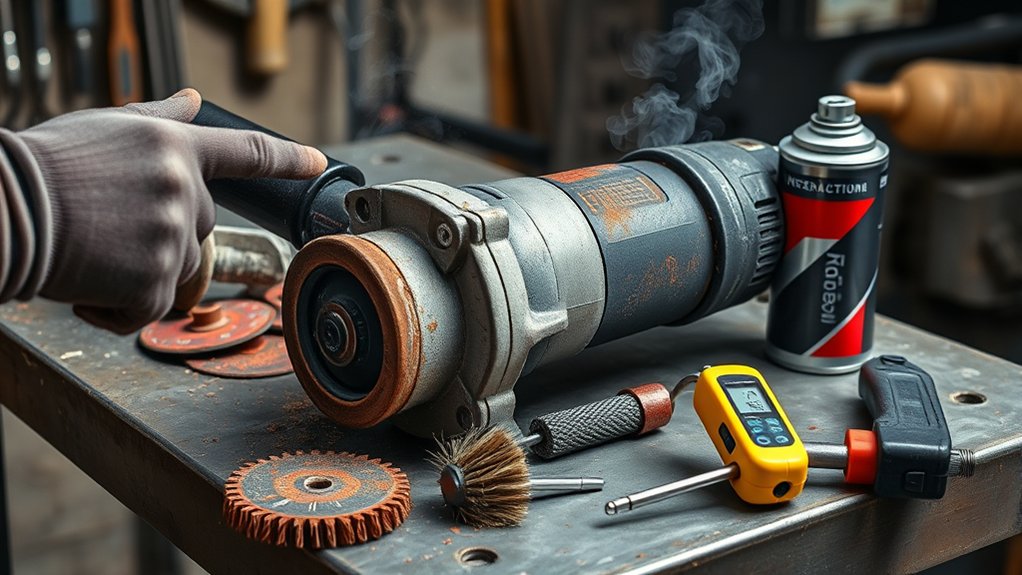
To keep your angle grinder running cool and efficient, regular maintenance is key. Start by cleaning dust and debris from air vents; this guarantees proper airflow and prevents overheating during use. Check that your grinder’s discs and blades match the tool’s specifications to minimize strain and heat generation. Lubricate moving parts according to the user manual to reduce friction and heat buildup in the motor and gears.
Monitor your grinder for signs of overheating, like unusual smells or excessive vibration. Don’t hesitate to take breaks, allowing the tool to cool down if needed. Finally, store your cordless grinder in a cool, dry place. This not only prevents moisture-related damage but also helps maintain peak performance. Following these maintenance tips will keep your grinder cool and extend its lifespan, ensuring you can tackle projects without interruption.
When Should You Call in the Pros for Overheating?
Ever wondered when it’s time to call in the pros for your overheating angle grinder? Here are some key signs that indicate you shouldn’t hesitate to reach out for professional help:
| Sign | What It Means | Action |
|---|---|---|
| Consistent overheating | Possible internal issue | Consult a technician |
| Unusual sounds | Worn bearings or motor problems | Get expert repair |
| Burning smell/smoke | Clear overheating indication | Stop use, call a pro immediately |
| Frequent circuit trips | Potential electrical issues | Professional assessment needed |
If your grinder’s overheating persists despite careful maintenance or if you notice any of these signs, don’t risk further damage. Professionals can assess motor problems or electrical issues with expertise, ensuring safe operation and longevity for your tool.
How Prolonged Use Leads to Overheating
Prolonged use of an angle grinder can quickly lead to overheating, as the continuous friction between the disc and material generates excess heat. When you operate at high speed for extended periods, the motor’s temperature rises, often exceeding safe limits. This not only risks damaging internal components but also shortens your tool’s lifespan.
Additionally, inadequate airflow around the motor and vents traps heat, worsening the overheating problem. If you consistently apply pressure without allowing breaks for cooling, you further exacerbate this issue. Dull or damaged discs require more effort from the motor, increasing friction and heat generation. To prevent overheating, make sure you take breaks and allow air to clear around the grinder. By managing your usage and maintaining your equipment, you can keep your angle grinder in peak condition and reduce the risk of overheating.
The Impact of Dull or Damaged Discs on Heat Buildup
Dull or damaged discs greatly impact heat buildup during operation. When you use a worn-out disc, it creates increased friction that can quickly lead to overheating your angle grinder’s motor. You might find yourself applying more pressure to achieve the desired cutting or grinding effect, further exacerbating heat generation. If your disc has cracks or chips, it can cause uneven rotation, leading to vibrations that contribute to additional heat and strain on the motor.
Using a disc not rated for your grinder’s RPM can also result in excessive friction, pushing your tool towards overheating. To maintain peak performance and safety, regularly inspect your discs. Replace discs at the first signs of wear to considerably reduce the risk of overheating and prolong your grinder’s lifespan. Keeping your discs in good condition is essential for efficient operation and preventing costly damage.
Conclusion: Key Takeaways for Preventing Angle Grinder Overheating
To prevent overheating in your angle grinder, it’s essential to prioritize proper maintenance and usage. Here are key takeaways to keep your tool safe and efficient:
| Tip | Description |
|---|---|
| Regular Maintenance | Clean and lubricate your grinder regularly. |
| Check Air Vents | Make sure air vents are free of dust and debris. |
| Use Proper Discs | Always choose the right grinding discs. |
| Take Breaks | Avoid prolonged use; give your grinder time to cool. |
| Follow Manufacturer Specs | Operate at the recommended speed and pressure. |
Frequently Asked Questions
What Causes a Grinder to Overheat?
Your grinder overheats due to motor issues, excessive friction from dull blades, and improper usage like prolonged operation. Make certain you replace blades regularly, take breaks, and use appropriate settings to avoid overheating and extend tool life.
How Should an Operator of a Bench Grinder Prevent Overheating the Work When Sharpening or Reconditioning a Hand Tool?
To prevent overheating while sharpening, use effective tool sharpening techniques, maintain proper grinding pressure, choose the right wheel, and apply cooling techniques like intermittent pauses or coolant to keep your tools and workpiece in peak condition.
How to Cool Down a Grinder?
To cool down your grinder, take breaks for cooling, utilize effective lubrication, and guarantee proper usage with reduced pressure. Regular maintenance and cleaning enhance airflow, helping prevent overheating during your grinding tasks.
What Is the Lifespan of an Angle Grinder?
An angle grinder’s lifespan ranges from 5 to 10 years. Regular maintenance, choosing quality accessories, and ensuring motor efficiency enhance durability. Don’t overlook safety features; they protect both you and your tool.
Conclusion
In the end, preventing your angle grinder from overheating might seem like a chore, but isn’t it ironic how a little care can save you from a meltdown? By following these tips, you won’t just keep your tool running smoothly—you’ll also avoid that awkward moment when your grinder decides to take an unplanned break. So, gear up, stay cool, and let your angle grinder do the heavy lifting while you enjoy a hassle-free project!