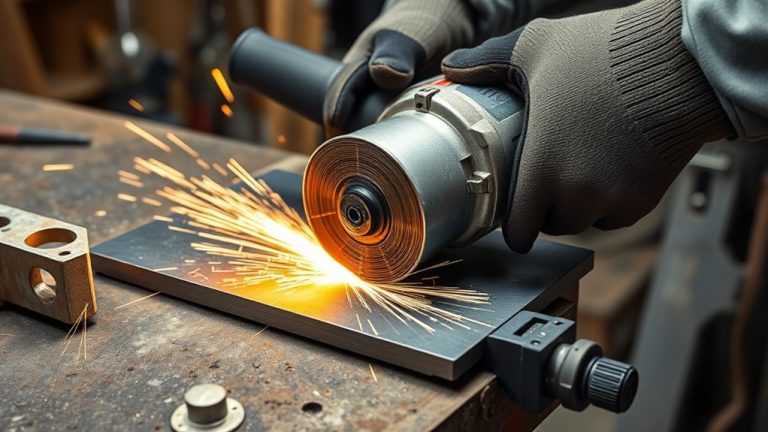
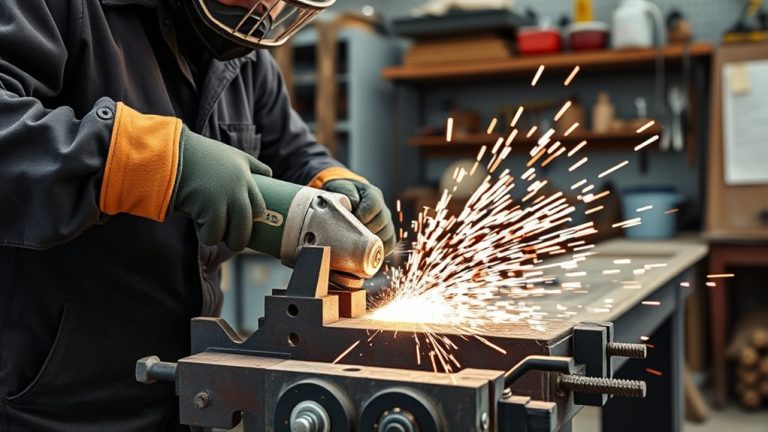
A soft start in angle grinders gives you smoother activation and improved control right from the start. It reduces sudden voltage spikes, allowing for gradual acceleration and minimizing jolting torque. This helps prevent tool slippage while protecting motor and power supply from electrical surges, ultimately extending your grinder’s lifespan. When searching for an angle grinder, look for this feature along with variable speed options and safety measures. Discover more benefits and features that can enhance your experience.
Why Use a Soft Start in Angle Grinders?
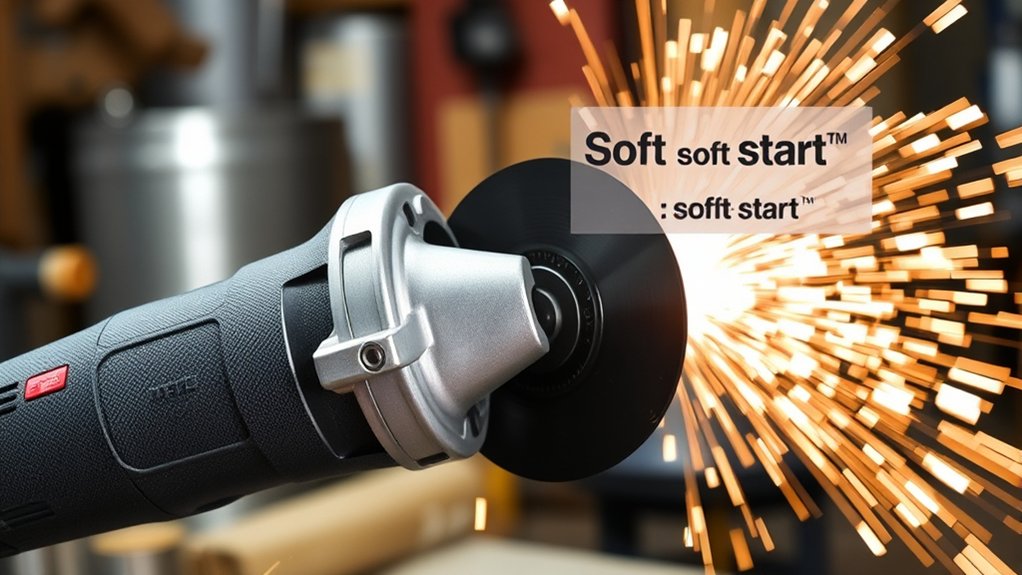
When you use an angle grinder with a soft start feature, you benefit from a smoother activation process that considerably reduces sudden voltage surges. This soft starter gradually increases power, allowing for smooth acceleration, which minimizes jarring starting torque. This enhanced control is vital, especially when you’re tackling intricate tasks or working in tight spaces, as it boosts your confidence while operating the tool.
Moreover, the soft start feature extends the lifespan of your angle grinder by decreasing wear on its internal components caused by abrupt starts. By reducing the likelihood of accidents associated with sudden torque, it also enhances user safety, making it an ideal choice for both novice and experienced users. Embracing this technology not only improves your handling but also guarantees that your tools remain reliable and effective in the long run.
Benefits of Using a Soft Start Feature
Utilizing a soft start feature in angle grinders offers several key advantages that enhance both performance and safety. Soft starters greatly reduce the starting current, minimizing initial torque and preventing tool slippage from your grip. This gradual ramp-up in speed not only protects the grinder’s motor and power supply from sudden electrical surges but also contributes to superior motor control. By alleviating mechanical stress during startup, you lower the likelihood of accidents caused by abrupt tool movements. Additionally, this feature enhances user safety and confidence, allowing for smoother operation across various tasks. Over time, the soft start functionality helps extend the lifespan of your angle grinder by decreasing wear on internal components, leading to fewer maintenance needs. Overall, employing a soft start makes your grinding experience safer and more efficient, empowering you to tackle any project with assurance.
What to Look For in Angle Grinders
Choosing the right angle grinder is essential for achieving ideal results in your projects. To make an informed decision, consider the following features:
Selecting the perfect angle grinder is crucial for optimal project results; consider essential features for an informed choice.
- Soft Starter: This feature prevents sudden torque during startup, giving you better control and a smoother experience.
- Speed Control: Look for models with variable speed options to adapt to different materials and tasks effectively.
- Safety Features: Confirm the grinder includes electronic relays for surge protection and a design that enhances grip to minimize slippage.
Additionally, think about the power source—mains models offer high performance, while cordless options provide portability but may limit runtime. A versatile grinder compatible with various attachments will maximize its functionality for tasks like grinding, polishing, and cutting. By focusing on these key aspects, you’ll find an angle grinder that meets your needs and enhances your project outcomes.
Connecting a Soft Starter: A Step-by-Step Guide
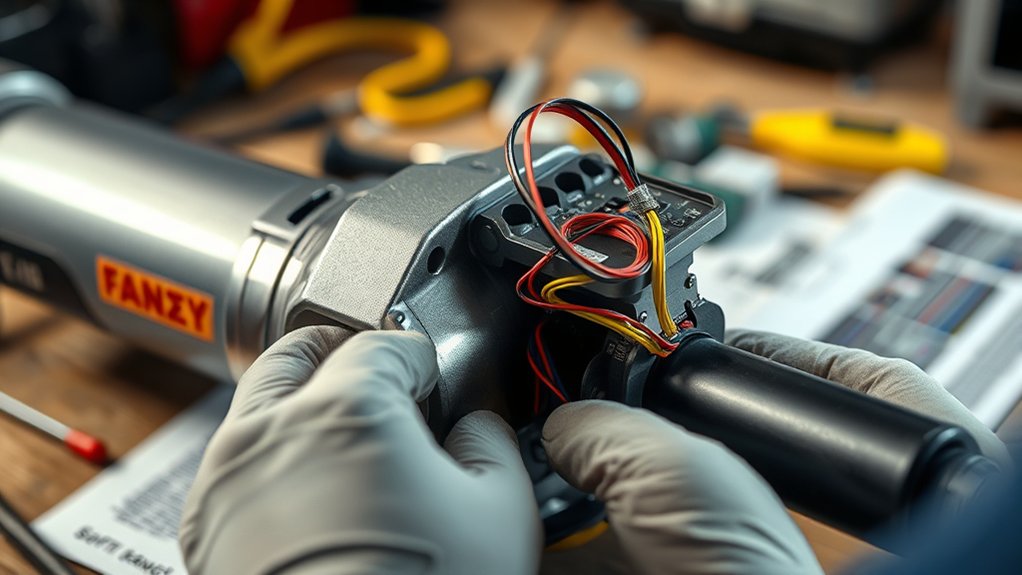
Connecting a soft starter to your angle grinder can greatly enhance its performance by providing a smoother startup and reducing wear on the motor. Follow these steps to guarantee a successful connection:
| Step | Action | Component |
|---|---|---|
| 1 | Identify the zero phase | Angle Grinder |
| 2 | Connect to the rectifier unit | KR1182PM1 microcircuit |
| 3 | Use a 47 μF capacitor for delay | Capacitor (C1) |
Start by wiring components like resistors (R1, R2) and capacitors (C1, C2, C3) for gradual acceleration. Confirm the contacts are secured with a blowtorch, then verify functionality with a tester. When integrating a speed controller, prioritize high voltage safety. This setup reduces the initial surge, allowing your grinder to reach full voltage smoothly, enhancing control during starting.
Troubleshooting Common Soft Starter Problems
When troubleshooting common soft starter problems, it is vital to identify issues early to prevent motor damage. By addressing these problems, you can guarantee your angle grinder runs smoothly and efficiently without risking unnecessary wear.
- Guarantee proper sizing: An improperly sized soft starter can lead to insufficient voltage control, risking motor damage.
- Check for dust and debris: Accumulation can obstruct ventilation, causing overheating and potential failure.
- Monitor electrical stability: Power surges or dips can disrupt performance, so using surge protectors is essential.
Regularly monitoring settings and calibrating your soft starter can help catch potential issues before they escalate. Consulting the manufacturer’s guidelines for installation and maintenance further reduces mechanical failures, guaranteeing your motor runs at full speed. By staying proactive, you can maximize the lifespan and efficiency of your equipment, liberating you from unexpected downtime.
Frequently Asked Questions
Is a Soft Start Better Than a Hard Start?
Yes, a soft start’s benefits—like smoother operation and reduced stress—outweigh hard start drawbacks. In various application scenarios, user experiences show improved performance and safety, making soft starts the preferable choice for controlled, efficient tool use.
What Are the Disadvantages of Soft Starters?
Soft starters can feel like a luxury car—smooth but costly. You’ll face increased wear, limited compatibility, higher costs, complexity issues, and maintenance requirements. These factors might make you reconsider their use in specific applications.
How Does a Soft Starter Work?
A soft starter uses electronic circuit design to gradually increase voltage, managing motor speed control and torque. Key components like TRIACs provide application benefits, preventing mechanical stress and enhancing tool longevity and user safety during operation.
Does a Soft Starter Reduce Starting Current?
Absolutely, a soft starter reduces starting current. For example, in a high-load application, it protects the motor by lowering starting torque, enhancing energy efficiency while simplifying installation and ensuring better application suitability without compromising performance.
Conclusion
To sum up, integrating a soft start feature in your angle grinder isn’t just a luxury; it’s a game changer. With smoother starts and improved control, you’ll enhance both your efficiency and safety on the job. Imagine transforming your grinding experience from chaotic to precise with just a simple feature. As you choose your next angle grinder, prioritize soft start capabilities to elevate your craftsmanship and tackle projects with confidence and finesse.