When choosing an angle grinder, understanding the switch types is essential. Paddle switches enhance safety by requiring constant pressure for operation, reducing accidental activation. Slide switches offer ease of use for extended tasks but lack the dead-man feature, which can pose risks. Trigger controls may lead to finger fatigue but are handy for large grinders. Each switch type serves specific needs and preferences, so evaluating your tasks helps you find the right fit for peak performance and safety. Discover more about these switches and their applications.
Understanding Angle Grinder Switches: Types and Functions
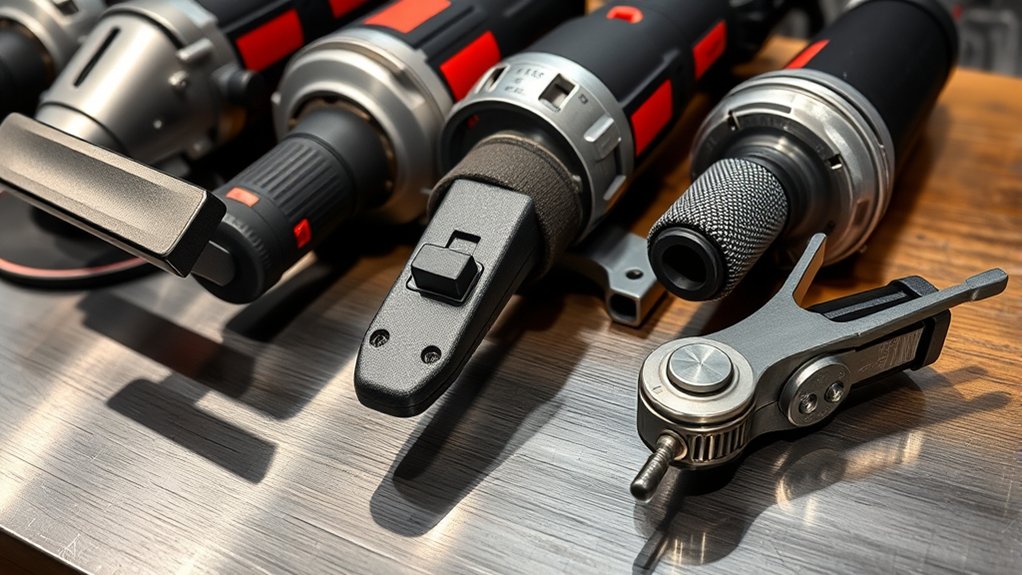
When it comes to angle grinder switches, there are three main types you should know: toggle switches, paddle switches, and dead man’s switches. Each type offers unique functions that directly impact user comfort and operational safety. Paddle switches require continuous pressure for operation, which means the tool stops immediately if you lose grip, greatly enhancing safety features. This design is essential in high-risk environments, as it helps mitigate operator fatigue by minimizing the risk of accidental activation. Conversely, slide switches allow for straightforward on/off control but can lead to unintentional engagement, making them less appealing for safety-minded users. Dead man’s switches add another layer of security, cutting power automatically if you release the grip. Choosing the right switch affects not only the efficiency of your work with power tools but also your overall safety, ensuring a liberated and confident approach to using angle grinders.
Safety and Control: Why Paddle Switches Are Preferred
Paddle switches are increasingly recognized as the safest option for angle grinders, primarily due to their automatic shut-off feature that activates when you release the grip. This safety feature acts as a dead-man control, drastically reducing the risk of accidents, especially in high-risk industries like construction and metal fabrication. User feedback highlights that paddle switches minimize accidental activation, a common concern with slide switches that can remain engaged if obstructed by clothing. The ergonomics of paddle switches also enhance your control, allowing for a more secure grip. This is particularly beneficial during prolonged use, as it helps reduce hand fatigue. In regions with strict safety regulations, such as Europe and North America, paddle switches are gaining popularity, reinforcing their reputation as a reliable choice. Ultimately, when safety and control are paramount, paddle switches stand out as the superior option for angle grinder users.
Pros and Cons of Slide Switches for Angle Grinders
While paddle switches are often touted for their safety features, slide switches present their own set of advantages and disadvantages.
| Pros | Cons | User Preference |
|---|---|---|
| Allow for continuous operation without hand fatigue | May pose a safety risk if obstructed by clothing | Favored in Asian markets |
| Provide a consistent power supply without accidental shut-off | Lack dead-man functionality, posing a risk if dropped | Suitable for prolonged tasks |
Slide switches enable easy repositioning of your hands during extended use, making them ideal for lengthy projects. However, be cautious; their inability to disengage easily could lead to accidents. The absence of dead-man functionality can be alarming, as the tool won’t automatically shut off if released. Ultimately, your choice may depend on the balance between productivity and safety, tailored to your specific needs and preferences.
Key Trigger Control Features for Angle Grinders
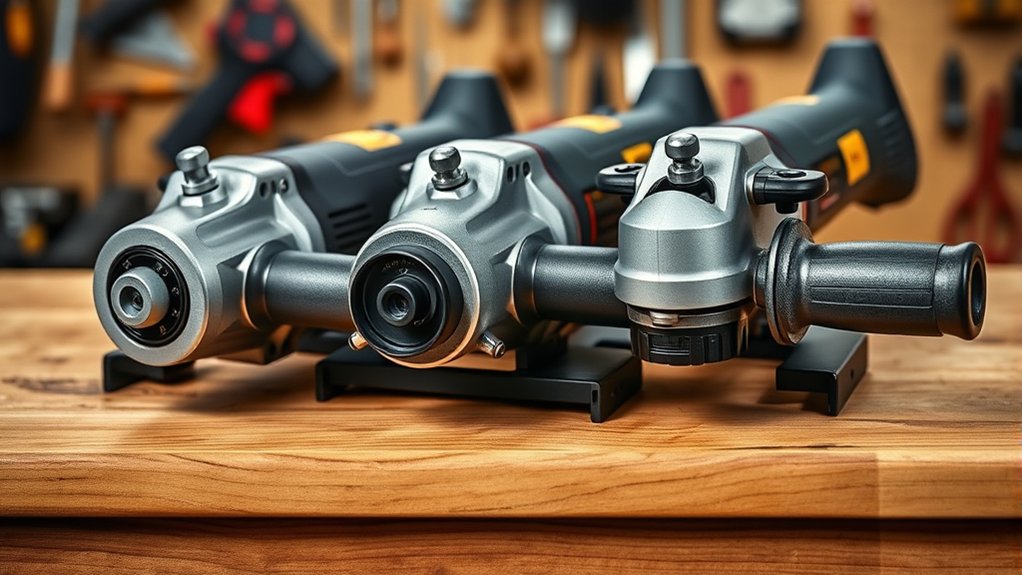
Understanding the key trigger control features of angle grinders is essential for maximizing both safety and efficiency. Paddle switches are designed to require constant pressure, automatically shutting off when released, which greatly reduces the risk of accidental activation—an invaluable safety feature in high-risk environments. On the other hand, slide switches allow for easier repositioning of your hands without the need to maintain pressure, making them ideal for tasks requiring prolonged use, where continuous power output is critical. However, trigger controls, commonly found on larger grinders, can lead to finger fatigue due to their constant pressure requirement during extended projects. While paddle switches enhance safety with their dead-man functionality, slide switches can improve productivity for jobs that don’t demand frequent stops. Ultimately, wearing protective gear and choosing the right switch type can profoundly affect your working experience and overall results.
How to Pick the Best Switch Type for Your Angle Grinder?
How do you choose the right switch type for your angle grinder? First, assess your tasks. If you need frequent stopping, paddle switches offer instant power cut-off, enhancing safety in high-risk environments. They’re particularly effective for smaller grinders (4 to 5 inches) but can cause discomfort during prolonged use due to the constant pressure required.
On the other hand, slide switches are perfect for extended tasks, allowing continuous operation without hand fatigue. They enable varied hand positions, which improves comfort and ergonomics. Typically found in larger grinders (7 to 9 inches), slide switches are more common in Asian markets, whereas paddle switches are gaining traction in North America and Europe due to stringent safety regulations.
Ultimately, your choice should reflect your specific needs, balancing safety, comfort, and the nature of your projects to liberate your grinding experience.
Frequently Asked Questions
What Is a Slide Switch on an Angle Grinder?
A slide switch on an angle grinder enables you to control power effortlessly, enhancing user experience. Its advantages include durability and ease of maintenance, but be mindful of safety features to prevent accidental activation during use.
What Are the Different Types of Slider Switches?
Slide switches offer advantages like ease of use and comfort, but their disadvantages include potential accidental deactivation. Consider switch durability, compatibility, and safety tips during installation and maintenance for ideal performance and customization options.
What Is the Paddle Switch on an Angle Grinder?
The paddle switch on an angle grinder offers safety and versatility, requiring constant pressure for operation. While it enhances control, it may cause hand fatigue over time, impacting ergonomics and maintenance during prolonged applications.
What Are the Different Types of Grinder Switches?
When it comes to grinder switches, you’ve got paddle, toggle, and dead man’s options. Each offers unique safety features, user comfort, and durability. Prioritize control precision and ergonomics for ideal performance and maintenance.
Conclusion
In the domain of angle grinders, the switch type serves as the gatekeeper to your safety and efficiency, much like a captain steering a ship through turbulent waters. Whether you prefer the precision of a paddle, the stability of a slide, or the responsiveness of a trigger, each option offers a unique navigational tool. By understanding these switches, you can confidently choose the right one, ensuring your journey through projects is smooth and successful, with every cut and grind under your control.