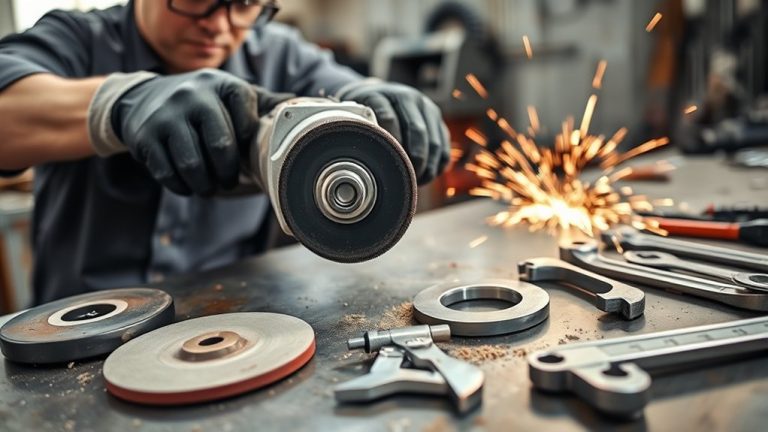
If your angle grinder takes too long to stop spinning, it’s likely due to worn carbon brushes, insufficient gearbox grease, or a failing brake system. Electrical issues or improper wheel installation can also contribute to longer spin times. To address these problems, check the brake functionality, inspect the power supply, and confirm the outlet voltage. Regular maintenance can prevent many of these issues. Explore additional causes and fixes to guarantee peak performance and longevity of your grinder.
What Causes an Angle Grinder to Spin Too Long?
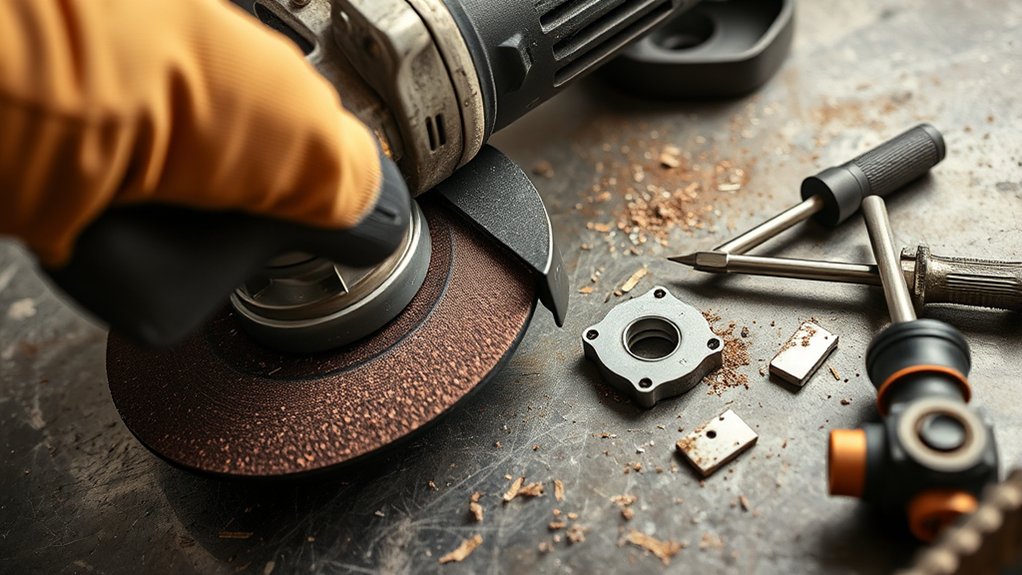
When an angle grinder continues to spin longer than expected, it usually indicates underlying mechanical or electrical issues. One common cause is worn-out carbon brushes, which impede the motor’s ability to stop swiftly. Additionally, insufficient grease in the gearbox can increase friction, prolonging spin-down time. A malfunctioning spindle lock mechanism may fail to engage, further delaying the grinder’s stop.
Electrical problems, such as a failing motor or a damaged power cord, can also contribute to this issue. Furthermore, improper installation of the grinding wheel or backing flange can create an imbalance, affecting the grinder’s stopping capability. Each of these factors not only impacts the performance of your angle grinder but also poses safety risks. Understanding these causes enables you to address the issues effectively, ensuring your tool operates safely and efficiently, thereby liberating you from unnecessary frustration during your projects.
Immediate Fixes for Your Grinder’s Performance
To enhance your grinder’s performance, start by checking the brake functionality to guarantee it engages properly. Next, inspect the power supply; fluctuations can affect motor efficiency and stopping time. Finally, clean the air vents to prevent overheating, which can also impact braking performance.
Check Brake Functionality
Make certain your angle grinder’s brake is functioning correctly to maintain safety and efficiency during operation. Start by testing the brake after each use; a malfunctioning brake can cause excessive spinning and extended stopping times. Inspect the brake switch for any signs of wear or damage, as a faulty switch may prevent the brake from engaging promptly. Regularly clean the brake assembly to eliminate dust and debris, which can hinder effectiveness. Always refer to the manufacturer’s guidelines for brake maintenance intervals to guarantee peak performance. If the brake fails to engage or doesn’t stop the grinder quickly, consult a professional for repairs or replacements to avoid potential hazards. Prioritizing brake functionality is essential for your safety and productivity.
Inspect Power Supply
A properly functioning brake is just one aspect of your angle grinder’s performance; the power supply is equally important. First, check the power cord for any damage and make sure it’s securely connected. A faulty cord can lead to inconsistent power, affecting performance. Next, confirm the outlet voltage; your grinder should operate at the manufacturer-recommended voltage—typically around 120V in the U.S. and 230V elsewhere. Inspect the power switch for wear or malfunction; a faulty switch can cause intermittent power delivery, impacting stopping time. If you’re using extension cords, make sure they’re rated for your grinder’s amperage to prevent voltage drops. Finally, periodically test the electrical circuit with a multimeter for consistent voltage during operation.
Clean Air Vents
Regularly cleaning the air vents of your angle grinder is vital for maintaining peak performance and preventing overheating. Dust and debris can accumulate in these vents, obstructing airflow and increasing motor strain, which leads to longer stopping times. To enhance cooling efficiency, use compressed air or a soft brush to clean air vents regularly. This simple maintenance step not only promotes better heat dissipation but also extends the lifespan of your tool. By incorporating air vent checks into your routine, you’ll considerably boost your grinder’s responsiveness and efficiency. Don’t underestimate the power of clean air vents; they are essential for ideal operation and maintaining the reliability you need in your projects.
How to Identify Brake System Issues
To effectively identify brake system issues in your angle grinder, start by understanding the different brake system types and their common failures. Look for signs of wear and guarantee the mechanism engages without obstruction. Regular maintenance and testing can help prevent delays in stopping, assuring peak performance.
Brake System Types
Identifying brake system issues in angle grinders is essential for maintaining ideal performance and safety. There are two primary brake system types: mechanical and electronic. Mechanical brake systems rely on friction to decelerate the spindle. Problems may stem from worn brake pads or disengaged components, leading to extended spinning times. In contrast, electronic brake systems use sensors and motors for rapid stopping. Common issues include faulty sensors or electrical malfunctions that inhibit immediate braking. To pinpoint brake system issues, listen for abnormal sounds, observe any delays in stopping, or detect smoke and burning odors, which signal overheating components. Regular maintenance and adherence to user manual guidelines are vital for ensuring reliable operation and preventing safety hazards.
Common Brake Failures
While using an angle grinder, you might encounter common brake failures that can compromise both performance and safety. One key issue is worn brake pads; regularly inspect them for thickness to guarantee effective stopping power. A malfunctioning brake switch can also lead to inconsistent engagement, delaying the tool’s stop. Overheating brake components may warp or degrade, so keep an eye on temperature during extended use. Insufficient lubrication in the brake mechanism increases friction and wear, making regular maintenance checks essential. Finally, dust and debris can accumulate in the brake assembly, impairing function and contributing to longer stopping times. Identifying these common brake failures early can help maintain peak performance and enhance your safety while working.
Maintenance Best Practices
Regular maintenance of your angle grinder’s brake system is essential for guaranteeing safe and effective operation. Start by inspecting the brake pads; worn-out pads can greatly increase stopping time and create safety hazards. Keep the brake mechanism clean, free from dust and debris, as buildup can impede function and prolong spinning after use. Verify proper lubrication of all brake components; insufficient lubrication raises friction and delays stopping. Don’t overlook the electrical connections and switches tied to the brake system—faulty wiring can lead to inconsistent performance. Finally, always refer to the manufacturer’s guidelines for maintenance intervals and procedures. Adhering to these practices not only prevents brake system issues but also enhances your tool’s overall safety.
Identifying Grinder Switch Malfunctions?
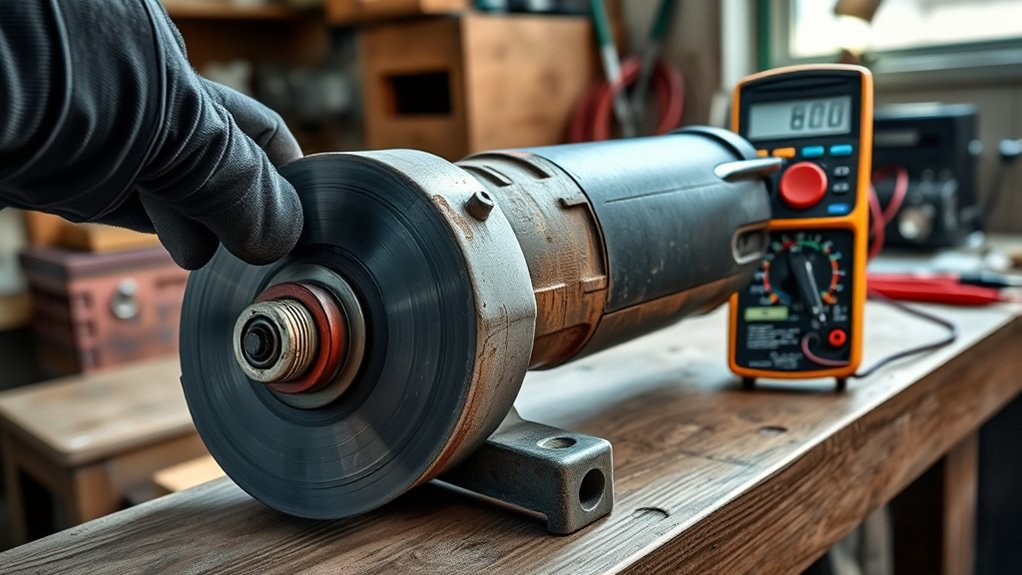
How can you tell if your angle grinder’s switch is malfunctioning? Identifying grinder switch malfunctions is essential for safety and efficiency. Here are some signs to watch for:
- The grinder continues spinning after being turned off.
- The switch feels sticky or unresponsive.
- You notice debris or corrosion around the switch area.
- The grinder struggles under heavy loads more than usual.
- Testing with a multimeter reveals inconsistent readings.
These issues can signal internal damage or excessive wear, often exacerbated by frequent heavy use. Regular maintenance, including cleaning, can help prevent these malfunctions and guarantee your grinder stops promptly. If you suspect a malfunction, test the switch with a multimeter to confirm its condition and consider replacing it if necessary. Being proactive can liberate you from unexpected downtime and guarantee safe operation.
How Bearing Friction Affects Grinder Performance
Identifying switch malfunctions is just one aspect of maintaining your angle grinder. Bearing friction plays a vital role in your grinder’s performance. When there’s excessive friction, typically due to inadequate lubrication, you’ll notice slower speeds and delayed stopping times, which directly impacts efficiency. Worn or damaged bearings exacerbate these issues, causing inconsistent grinding and increased vibration during operation. Regularly inspecting your bearings is important to prevent these performance drops.
Using high-quality lubricants, like black wheel-bearing grease, can greatly reduce bearing friction and enhance the longevity of your grinder. Additionally, confirm proper alignment and installation of bearings during assembly; misalignment can lead to premature failure and further increase friction. By understanding these factors, you can maintain peak performance and extend the life of your angle grinder, liberating yourself from frustrating downtime.
Tips for Keeping Your Angle Grinder in Top Shape
To keep your angle grinder performing at its best, consistently maintain key components to prevent issues. Regular inspection is essential for optimizing functionality and extending the tool’s lifespan. Here are some tips to guarantee your grinder operates efficiently:
- Clean air intake and exhaust ports to prevent dust buildup.
- Lubricate gears and bearings with high-quality grease and motor oil.
- Regularly check and replace worn carbon brushes to maintain power.
- Tighten all mechanical components and verify the locking flange is secure.
- Store the grinder upright to avoid oil leaks and maintain lubrication.
Signs It’s Time to Replace Angle Grinder Parts
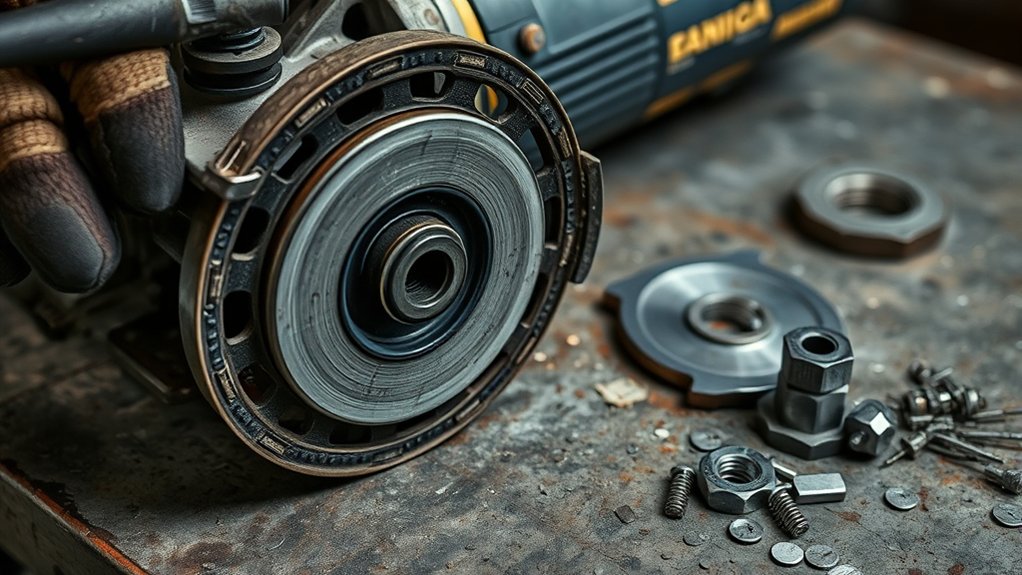
While maintaining your angle grinder is essential, recognizing when it’s time to replace parts can be equally important for safety and efficiency. First, inspect the carbon brushes; if they’re worn out, they can hinder performance and should be replaced. Next, check the locking flange; a loose or damaged flange can destabilize the grinding wheel, prolonging spin time. Examine the spindle for signs of wear or damage, as a faulty spindle may prevent the wheel from stopping promptly and could necessitate replacement. Don’t forget the gearbox; insufficient or old grease affects lubrication and can impact stopping speed. If you’ve addressed these issues and the grinder still exhibits slow stopping, it’s time to evaluate replacement parts or the entire unit. Prioritizing these evaluations guarantees your angle grinder operates safely and efficiently, empowering you to achieve your tasks with confidence.
Professional Help: When to Seek Expert Assistance
When your angle grinder continues spinning after you’ve released the trigger, it’s vital to seek professional assistance. Ignoring this issue could lead to safety risks and reduced tool performance. Consider the following signs that indicate it’s time to contact an expert:
- Persistent spinning or slow stopping
- Unusual noises during operation
- Frequent overheating
- Inconsistent performance despite maintenance
- Failure of DIY repairs to resolve issues
Engaging professional help guarantees a thorough evaluation of mechanical issues that could cause injury. Authorized repair centers provide tailored solutions based on your specific model, and regular maintenance checks can catch wear early, saving you from costly repairs. Don’t compromise safety for convenience; consulting an expert is vital when home repairs fall short, allowing you to work confidently and liberate your productivity.
Frequently Asked Questions
How to Tell if an Angle Grinder Disc Is Bad?
To tell if an angle grinder disc is bad, conduct a disc inspection. Look for cracks, chips, uneven wear, excessive vibrations, or unusual sparks. If you notice these, it’s time to replace the disc for safety.
What Are Signs My Grinder Needs Repair?
If your grinder’s speed drops under pressure, it’s time for maintenance. Unusual noises, excessive heat, or vibrations signal wear. Regular checks can prevent costly repairs and guarantee peak performance, keeping you liberated in your work.
What Are the Two Common Faults That Occur With Grinding Wheels?
Two common grinding wheel issues are wheel damage, which leads to vibrations, and improper installation, causing slippage. Both can severely impact performance and safety, so always inspect your wheels for these faults before use.
What Causes an Angle Grinder to Stop Working?
An angle grinder stops working primarily due to motor malfunction, often caused by damaged cords, dull wheels, or mechanical wear. Don’t overlook dust buildup and misalignment; they can cripple performance and lead to frustrating failures.
Conclusion
In summary, if your angle grinder spins too long, addressing brake system issues and switch malfunctions is essential. Bearing friction can also hinder performance, so regular maintenance is key to keeping your tool in prime condition. Just like a knight relies on a sharp sword, you need a fully functional grinder to tackle your projects efficiently. Don’t hesitate to seek professional help when necessary—it’s better to consult an expert than to risk injury or further damage.