If your angle grinder trips the breaker, start by checking the power cord for damage. Test it on a dedicated 20-amp circuit to pinpoint issues. Common culprits include high starting amperage, overloaded circuits, or faulty components like capacitors. Inspect for short circuits and make certain connections are secure. Regular maintenance helps prevent problems. If the breaker still trips frequently, it might be time for professional help. There’s more you can do to tackle these issues effectively.
Diagnosing Breaker Trips in Your Angle Grinder
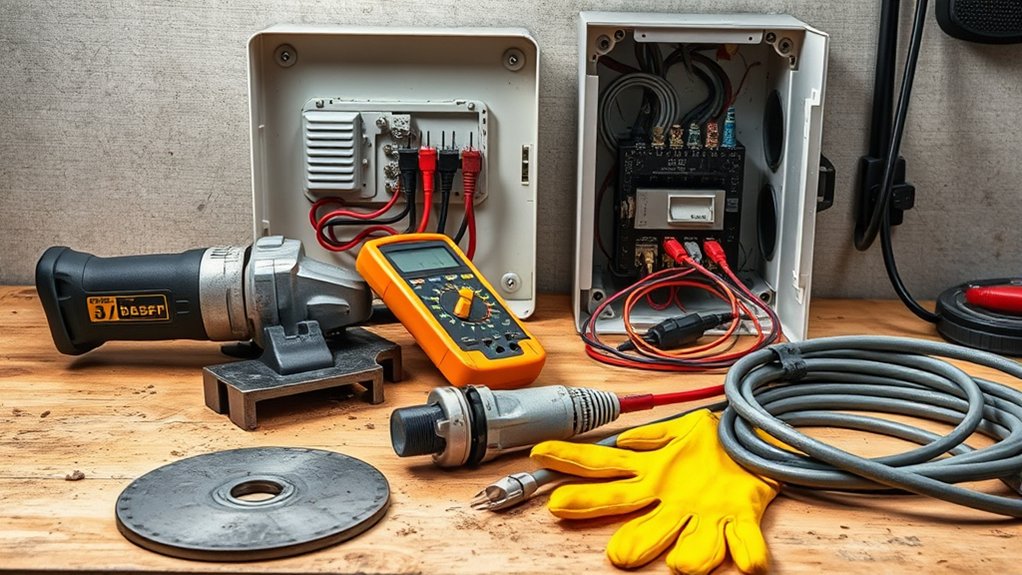
When troubleshooting breaker trips in your angle grinder, it’s crucial to understand the common causes behind these interruptions. First, check the power cord and plug for visible damage. Defects here can lead to short circuits, resulting in circuit breaker trips. Next, test your grinder on a dedicated 20-amp circuit; this helps isolate problems linked to shared loads. If the grinder struggles to start, inspect the start capacitor and switch, as malfunctions in these components can contribute to breaker trips. Remember, excessive motor amperage, especially during startup, can temporarily exceed 50 amps, triggering the breaker. Frequent circuit breaker trips may signal serious electrical faults, so don’t hesitate to seek professional inspection. By methodically addressing these areas, you can guarantee the reliability and safety of your angle grinder, liberating you from frustrating interruptions and potential hazards.
Common Causes of Angle Grinder Breaker Trips
Breaker trips can often be traced back to specific issues within the angle grinder itself. One common cause is an overloaded circuit, where too many devices draw power, exceeding the circuit’s capacity. A short circuit can occur if there’s damaged wiring or components, leading to immediate trips when you start the grinder. Additionally, ground faults may happen if moisture contacts the grinder’s electrical parts, interrupting the circuit.
Another frequent issue arises from the high starting amperage of the motor, which can surpass the circuit’s rating, causing the breaker to trip at startup. Finally, faulty components, like a malfunctioning start or run capacitor, can hinder the motor’s performance, resulting in breaker trips as it struggles to initiate. By understanding these causes, you can troubleshoot effectively and maintain your angle grinder’s performance.
Understanding Circuit Overloads and Their Impact
Understanding circuit overloads is essential for safe angle grinder operation. You’ll notice symptoms like flickering lights or frequent breaker trips when the load exceeds the circuit’s capacity, typically around 1800 watts for a 15A circuit. To prevent these issues, always distribute high-power tools across dedicated circuits and monitor the electrical load closely.
Common Overload Symptoms
Circuit overload symptoms can greatly impact your electrical system and tools like angle grinders. You might notice flickering lights, buzzing outlets, or your circuit breaker tripping immediately when you engage a device. These signs indicate that the circuit is overloaded, often due to too many devices drawing power from a single source. When using high-draw tools like angle grinders on shared circuits, you risk exceeding the circuit’s amp rating, leading to potential equipment damage. To mitigate these overload issues, redistribute devices across different circuits, ensuring each operates within safe load limits. Regularly monitoring your electrical usage and being aware of these overload symptoms will help maintain a safe and efficient electrical system, empowering you to work confidently.
Circuit Capacity Considerations
When using high-draw tools like angle grinders, it’s crucial to know your circuit’s capacity to prevent overloads. Circuit capacity considerations are critical; a standard 15A circuit can handle devices drawing up to 12A continuously, while a 20A circuit manages up to 16A. Given that angle grinders often have high starting currents, they can exceed these limits at startup, causing breaker trips. If you’re using multiple devices on the same circuit, you increase the risk of overload. To maintain safety and performance, consider using dedicated circuits for high-amp tools. Regularly inspect your circuit wiring and connections, as damaged components can worsen load issues and lead to frequent disruptions. Stay aware, stay safe.
How to Inspect Your Grinder for Faults
To inspect your grinder for faults, start with a visual inspection checklist, focusing on the power cord and plug for any signs of damage. Next, assess electrical connections to verify they’re secure and functioning correctly. Finally, examine internal components like the start capacitor for wear that could lead to operational issues.
Visual Inspection Checklist
A thorough visual inspection is essential for maintaining your angle grinder and guaranteeing safe operation. Start with your visual inspection checklist by examining the power cord and plug for frays or cuts, which can cause short circuits and trip the breaker. Next, open the grinder casing with an Allen wrench to check internal wiring for loose connections or wear. Assess motor components for signs of overheating or burnt smells, and inspect the start capacitor and motor brushes for defects. Don’t forget to clean the grinder head area regularly to prevent grit buildup that can bog down the motor. Finally, verify all outlet and circuit breaker connections are secure to avoid intermittent faults that could trip the breaker.
Electrical Connection Assessment
After completing your visual inspection, it’s time to assess the electrical connections of your angle grinder. Start by examining the power cord and plug for visible damage; any compromise can lead to short circuits that trip the breaker switch. Next, use a multimeter to check motor resistance and continuity, pinpointing potential internal faults. Verify all connections at the outlet and circuit breaker are secure, as loose connections can cause breaker trips. Test the grinder on a different circuit to rule out outlet issues, and consider using a dedicated circuit for peak performance. Finally, be alert for signs of overheating or burning smells, which may signal deeper electrical problems within the grinder. Safety first!
Internal Component Examination
While inspecting your angle grinder for faults, start by carefully opening the casing with an Allen wrench to access its internal components. Conduct a thorough internal component examination by first checking the power cord and plug for visible wear or damage, as these can cause shorts and trip the breaker. Next, inspect the motor brushes and start capacitor for signs of malfunction; faulty components can lead to excessive current draw. Use a multimeter to measure resistance in wiring and look for loose connections that could contribute to electrical faults. Finally, verify the centrifugal switch operates correctly, as a failure here can prevent the motor from starting and trip the breaker. Prioritize safety throughout this process.
Identifying Short Circuits and Ground Faults
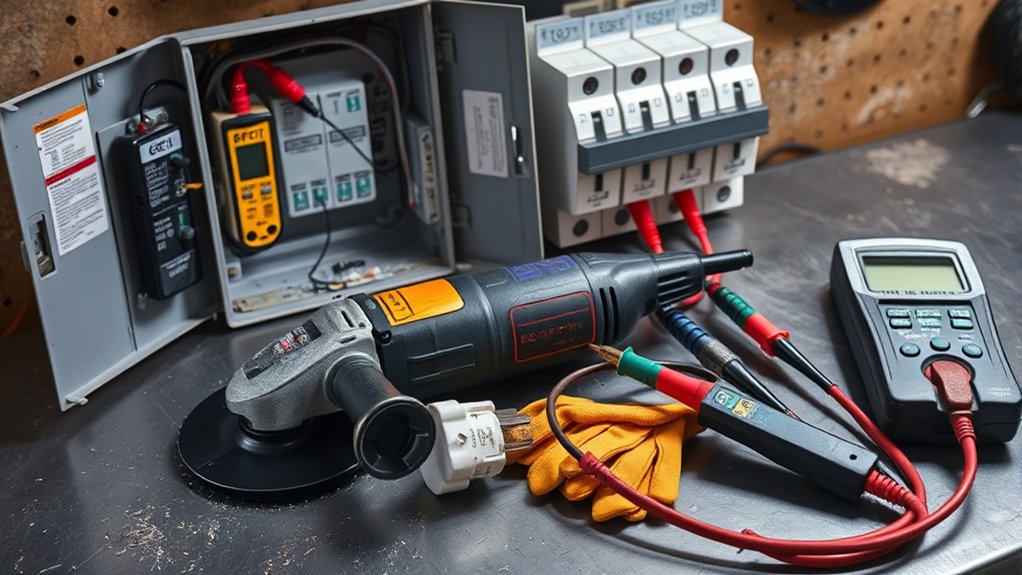
Identifying short circuits and ground faults is essential for maintaining the safety and functionality of your angle grinder. A short circuit occurs when hot wires touch neutral wires or other hot wires, causing surges in electrical current that trip breakers. Look for common indicators like burning smells, scorched outlets, or your grinder unexpectedly shutting down.
Ground faults present another risk; they happen when energized conductors contact the ground, potentially leading to electric shocks. Conduct regular safety checks by inspecting outlets for discoloration or heat, which can signal underlying electrical issues. If your breaker trips frequently, even when devices are unplugged, it may indicate a serious electrical fault that requires professional evaluation. Addressing these issues promptly guarantees not only your safety but also the longevity of your tools. Stay vigilant and proactive to maintain an efficient work environment.
Step-by-Step Troubleshooting for Your Angle Grinder
Troubleshooting your angle grinder involves a systematic approach to pinpoint issues effectively. Start by inspecting the power cord and plug for visible damage, as this can lead to shorts that cause the breaker to trip. Next, use a multimeter to check the motor’s resistance and continuity; internal faults may trigger trips as well. Ascertain your grinder is connected to a dedicated circuit, ideally rated for 15A or 20A, since shared circuits can easily overload.
Remove any grinding wheels to isolate the motor and observe its behavior without load. This step helps you detect potential problems that might not manifest under normal conditions. If these steps don’t resolve the issue and trips continue, it’s time to consult a qualified technician. Professional evaluation can clarify underlying electrical or motor issues, assuring your angle grinder runs safely and efficiently.
Why You Need Dedicated Circuits for High-Amp Tools
Properly setting up your angle grinder involves more than just checking its components; it requires understanding the electrical demands of high-amp tools. High-amp tools can draw considerable current during startup, often exceeding standard circuit ratings. This is why dedicated circuits are essential. By using a dedicated circuit, you minimize the risk of tripping breakers, ensuring a consistent power supply without interference from other devices.
For these tools, a 20-amp circuit is typically recommended to handle the initial surge current, which can be much higher than their running amperage. Dedicated circuits must include appropriate wiring and breaker ratings to accommodate the increased load safely, preventing overheating and electrical faults. Connecting your angle grinder to a dedicated circuit not only enhances performance but also maintains overall electrical system safety, markedly reducing nuisance tripping and potential damage to your equipment. Prioritize this setup to liberate your workflow and protect your investment.
When to Call in the Pros for Your Grinder?
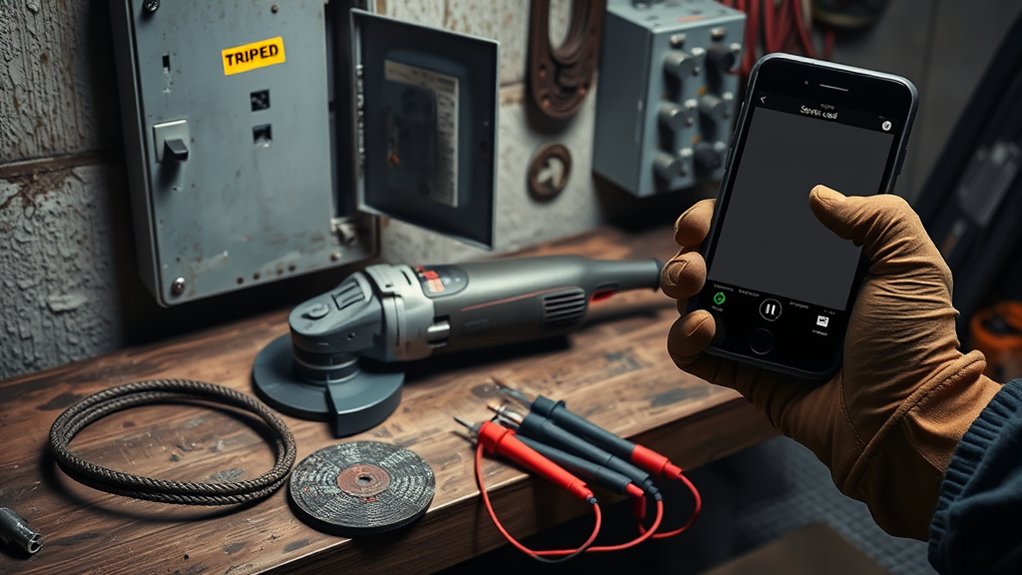
When should you consider bringing in a professional for your angle grinder? If your grinder consistently trips the breaker despite your troubleshooting efforts, it’s time to seek expert help. This issue could indicate a serious electrical fault, such as a ground fault, that requires professional assessment for safety.
Consider contacting an electrician if you notice:
- Visible damage to outlets or cords
- Frequent trips even on different circuits
- Electric shocks during use
Ignoring these signs can lead to unsafe operating conditions, particularly if the start capacitor or motor is malfunctioning. If you’ve replaced components like capacitors or switches without success, professionals possess advanced diagnostic tools to uncover hidden issues. They can also verify your grinder operates safely on the appropriate circuit, minimizing overload risks and enhancing reliability. Prioritize safety—don’t hesitate to call in the pros when needed.
Simple Maintenance Tips to Prevent Breaker Trips
To keep your angle grinder running smoothly and prevent breaker trips, regular maintenance is essential. Start by cleaning the grinder head area to eliminate grit buildup, which can hinder motor performance. Use an Allen wrench to disassemble the grinder for thorough cleaning, guaranteeing all components are free of debris. Periodically check and tighten all electrical connections; loose wires can lead to overloads and trip the breaker. Inspect the power cord and plug for any signs of wear or damage, as these can cause short circuits and breaker trips. Schedule routine maintenance to test motor resistance and check capacitors. This proactive approach allows you to identify potential issues before they escalate into circuit breaker problems. By following these simple maintenance tips, you’ll not only prolong the lifespan of your angle grinder but also promote safer, more efficient operation.
Testing & Replacing Bad Capacitors
Regular maintenance not only keeps your angle grinder running efficiently but also helps identify components that might be failing, such as capacitors. Faulty capacitors can lead to excessive current draw, causing circuit breakers to trip during startup or operation.
Regular maintenance ensures your angle grinder operates smoothly and helps catch failing components like capacitors before they cause issues.
To test a capacitor, follow these steps:
- Use a multimeter with capacitance measurement capability.
- Confirm safety precautions are taken, as capacitors can hold charge.
- If a start capacitor is suspected to be faulty, replace it immediately.
Sourcing replacement capacitors can be done through local motor shops or HVAC suppliers, verifying that the specifications match the original component. Regular inspections and testing of capacitors can prevent performance issues and extend your grinder’s lifespan. Don’t overlook this vital aspect of maintenance; it’s key to keeping your tools in top condition and avoiding unnecessary interruptions.
Frequently Asked Questions
Why Does My Grinder Pump Keep Tripping the Breaker?
Your grinder pump trips the breaker due to overloaded circuits or faulty components. Check for motor issues, inspect wiring, and verify it’s on a dedicated circuit to optimize pump performance and prevent further disruptions.
Why Does My Angle Grinder Keep Cutting Out?
Your angle grinder keeps cutting out due to motor overload, often from circuit issues or excessive amperage. Check for a faulty motor, worn components, or make certain it’s on a dedicated circuit to improve performance.
How Do You Troubleshoot a Breaker That Keeps Tripping?
To troubleshoot a tripping breaker, turn off devices, reset the breaker, and inspect for damage. Use a multimeter for continuity checks. If issues persist, consult a licensed electrician for proper breaker maintenance.
What Is the Most Common Cause of a Tripped Breaker?
The most common cause of a tripped breaker is an overloaded circuit. When too many devices draw power simultaneously, it exceeds the circuit’s capacity, triggering the breaker to prevent overheating and potential hazards.
Conclusion
To summarize, consistently tripping breakers can signal underlying issues with your angle grinder, often linked to circuit overloads or faults. Did you know that nearly 30% of electrical failures stem from faulty connections? Regular inspections and maintenance can help mitigate these risks. If your troubleshooting efforts don’t yield results, don’t hesitate to consult a professional. Keeping your equipment in top shape not only enhances performance but also guarantees your safety while working.