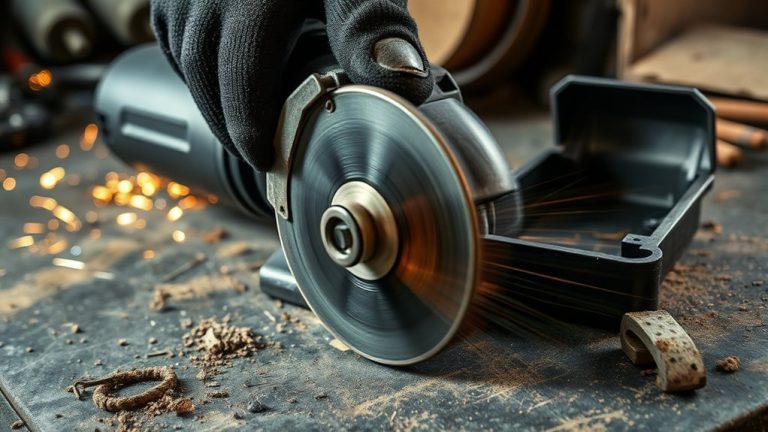
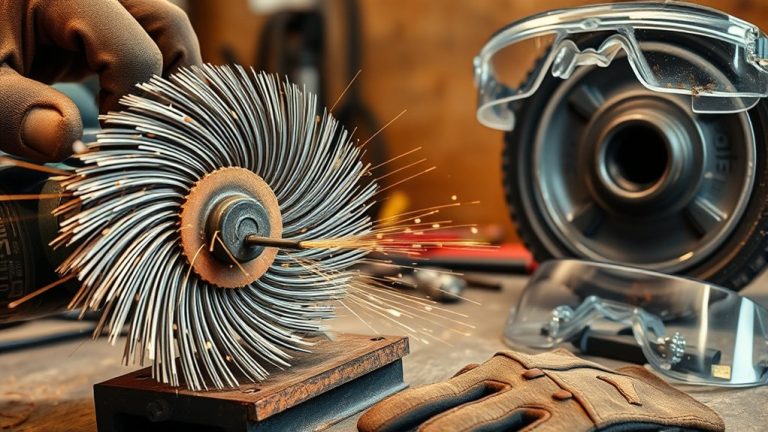
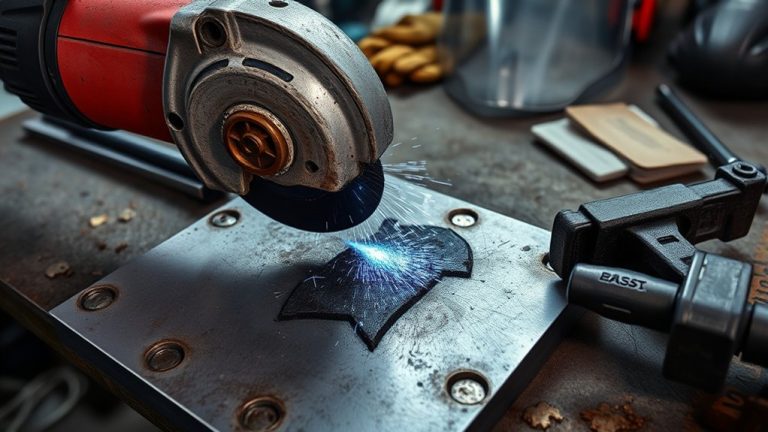
If your angle grinder vibrates excessively, it’s likely due to unbalanced grinding wheels, worn bearings, or improper workholding techniques. Check for cracks in the wheel, guarantee it’s securely mounted, and inspect bearings for wear. Tighten any loose components and maintain proper alignment. Regularly inspect your tools to prevent persistent issues. Addressing these problems swiftly can enhance performance and safety. Explore further for detailed solutions to eliminate vibration and improve your grinding experience.
Identifying Common Causes of Angle Grinder Vibration
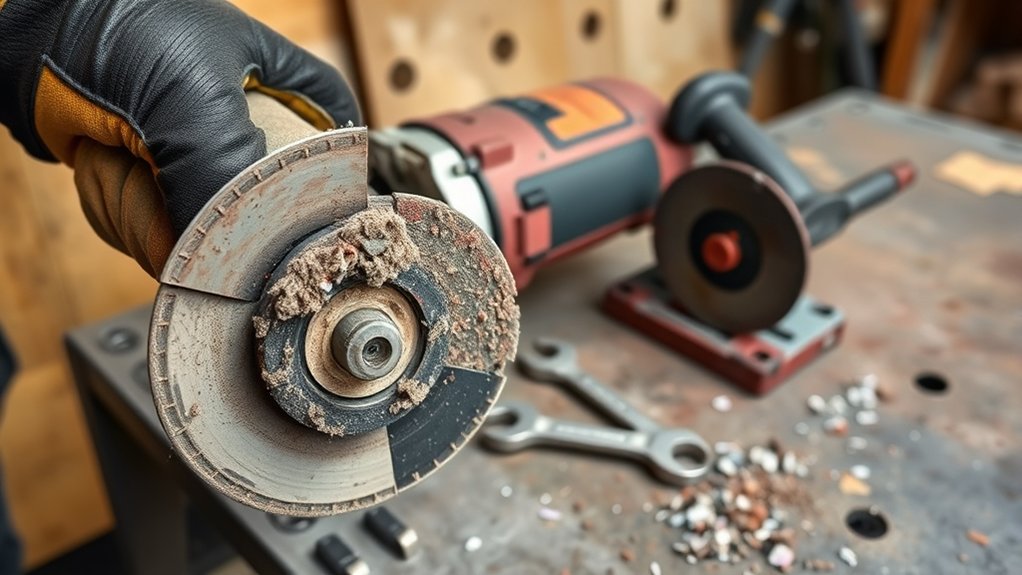
Angle grinder vibration often results from several key factors that can greatly affect performance. One prominent cause is an unbalanced grinding wheel, which leads to uneven mass distribution, creating substantial oscillations during operation. This imbalance compromises your ability to achieve precise results. Additionally, worn bearings within the grinder can exacerbate vibration levels, negatively impacting both precision and overall machine performance.
Improper workholding techniques can introduce vibrations as they fail to stabilize the workpiece adequately, causing further instability. Dull grinding wheels are another culprit, generating excessive heat and friction, which results in increased vibration and reduced cutting efficiency.
To minimize these issues, regular maintenance is essential. Conducting regular inspections and ensuring proper alignment can help secure components and markedly reduce vibration, enhancing your grinding experience. By addressing these common causes, you’ll improve both performance and safety in your angle grinding tasks.
Diagnosing Angle Grinder Vibration Issues
Identifying the causes of angle grinder vibration is only the first step; diagnosing these issues is equally important for maintaining peak performance. Start by inspecting the grinding wheel for cracks or deformities—these can lead to excessive vibration if not addressed. Confirm the wheel is securely mounted and balanced correctly. Next, check the bearings for signs of wear and tear, as worn bearings can greatly impact operation. Proper installation is vital; verify that all components are aligned correctly. Don’t overlook external factors, like incorrect workholding techniques and improper cutting angles, which can exacerbate vibration issues. Keep an eye out for warning signs, such as sudden increases in vibration, as these indicate potential problems that require immediate inspection. Utilize these troubleshooting tips to maintain ideal grinding results and confirm your angle grinder operates smoothly and safely.
Fixing Excessive Vibration: Step-by-Step Solutions
To fix excessive vibration in your angle grinder, start by checking the balance of the grinding wheel; an unbalanced wheel can lead to significant operational issues. Next, inspect all grinder components for wear or improper installation, as loose parts can exacerbate vibration problems. By addressing these factors, you’ll enhance both performance and safety during use.
Check Wheel Balance
When dealing with excessive vibration from your angle grinder, checking the wheel balance is vital. An unbalanced grinding wheel can greatly impact both performance and work quality. Start by confirming proper installation; misalignment can exacerbate vibration issues. Use dynamic balancing techniques to achieve even weight distribution, minimizing vibrations during operation. Regular inspections are important; look for signs of wear, cracks, or uneven surfaces that could lead to imbalances. Additionally, selecting the correct wheel for your specific material and application helps reduce vibrations and enhances overall effectiveness. By prioritizing wheel balance, you’ll not only improve your grinder’s performance but also guarantee a smoother, more controlled experience while working.
Inspect Grinder Components
Inspecting your angle grinder components is essential for minimizing vibration issues. Start by checking the grinding wheel for balance; an unbalanced wheel leads to excessive vibration during operation. Next, inspect the bearings for wear, as worn bearings can greatly impact grinding precision. Confirm all components, including the spindle and mounting hardware, are securely tightened to prevent loose parts from exacerbating vibration. Don’t overlook the shaft—check for bends or deformities, as a bent shaft results in wobbling. Finally, verify that the grinder is properly aligned and mounted; misalignment can introduce external factors that contribute to vibration. Regular inspections of these critical components will enhance both performance and safety in your grinding tasks.
Preventing Binding and Stoppage
To prevent binding and stoppage, you need to select the right disc type and maintain a proper cutting angle. Using a disc suited to the material and aligning your cut with its grain can enhance efficiency and reduce friction. Always guarantee your workpiece is secure to allow the grinder to operate effectively without excessive pressure.
Proper Cutting Angle
Maintaining the correct cutting angle is essential for preventing binding and stalling of your angle grinder. An incorrect angle can cause the disc to pinch the material, leading to unexpected interruptions. To guarantee peak grinding efficiency, hold the grinder at a comfortable angle, avoiding excessive pressure. This minimizes the risk of kickback and enhances stability.
- Experience smoother cuts without interruptions
- Feel empowered by mastering your tool
- Enjoy longer tool life and fewer repairs
- Achieve precise, professional results every time
Regularly inspect your tool and adjust the cutting angle as needed. This practice not only improves cut accuracy but also prolongs the grinder’s lifespan, granting you the freedom to tackle any project with confidence.
Suitable Disc Selection
Choosing the right grinding disc is pivotal for achieving peak performance and preventing binding during operation. Suitable disc selection directly impacts cutting efficiency; using a disc that’s too hard for your material can cause excessive pressure and increase binding risk. Thinner cutting wheels excel in cutting tasks, while thicker grinding wheels are ideal for material removal, minimizing unwanted stoppage. Always inspect the grinding wheel for compatibility with your angle grinder and confirm it’s securely mounted to mitigate vibration and binding issues. Regularly checking for excessive wear and replacing worn discs can further enhance cutting efficiency, helping you avoid common issues that disrupt workflow. By making informed choices, you’ll guarantee smoother operation and best results.
Preventing Kickback Risks
While using an angle grinder, it’s essential to recognize that kickback can pose significant safety risks if not properly managed. To guarantee that the wheel operates effectively and safely, follow these guidelines:
- Always secure the workpiece to prevent movement.
- Maintain a proper cutting angle to avoid pinching the disc.
- Use both hands for enhanced control and stability.
- Apply light pressure; don’t force the grinder.
Excessive force can lead to personal injury, so let the disc do the work. Regularly inspect the grinder for uneven wear and follow operational guidelines to further reduce risks. Familiarizing yourself with safe cutting techniques is fundamental to liberate your skills while minimizing hazards. By prioritizing these practices, you promote a safer working environment and enhance your overall proficiency with the tool. Embrace safety and efficiency, and you’ll find the angle grinder can be a powerful ally in your projects.
Maintenance Tips for Reducing Vibration
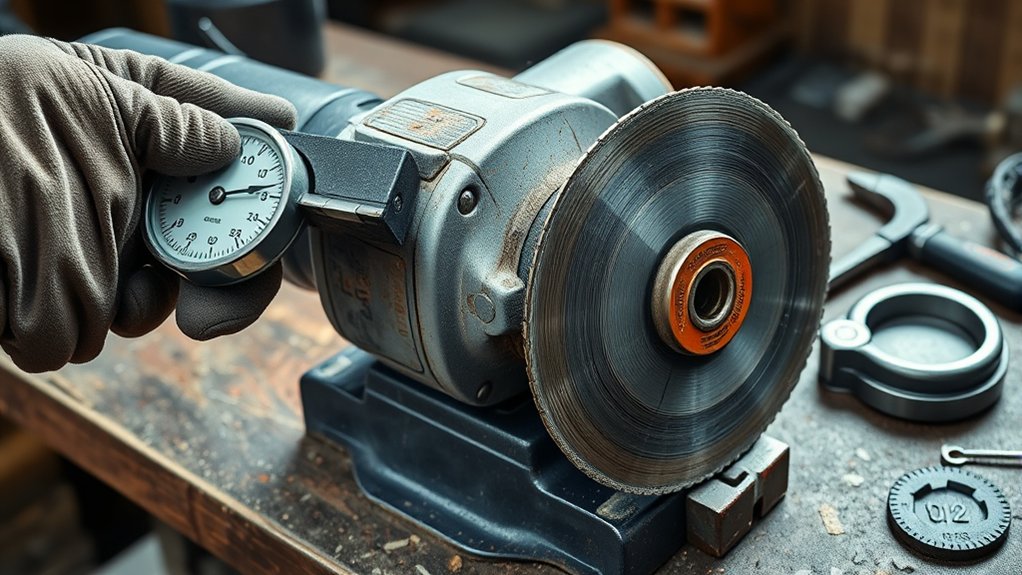
To effectively reduce vibration in your angle grinder, regularly inspecting and maintaining the tool is essential. Start by checking for unbalanced discs and worn bearings, as these greatly contribute to excessive vibrations. Always use the correct wheel type for the material you’re working on; improper choices can lead to unwanted vibrations. Additionally, leverage any anti-vibration features of modern grinders to enhance your experience.
Here’s a quick reference table for your maintenance tips:
| Maintenance Task | Purpose | Frequency |
|---|---|---|
| Inspect discs | Prevent unbalanced operation | Before each use |
| Check bearings | Minimize excessive vibrations | Monthly |
| Use correct wheel type | Guarantee proper grinding | Every project |
| Secure workpieces | Reduce movement and pressure | Always |
| Maintain consistent angles | Enhance efficiency | During operation |
Implementing these maintenance tips guarantees peak performance and reduces vibrations, making your grinding tasks smoother and more enjoyable.
When Should You Call a Pro for Grinder Issues?
Even with regular maintenance, some issues with your angle grinder may arise that require professional attention. If you encounter any of the following, it’s time to call a pro:
- Excessive vibration despite using the correct disc
- Visible damage to the grinder or disc
- Binding or stalling that adjustments can’t fix
- Unusual noises like grinding or rattling
These symptoms can indicate serious underlying problems. For instance, persistent overheating might signal motor malfunctions, while significant pulling or lateral movement often points to misalignment needing specialized tools for correction. Ignoring these signs can lead to further damage or safety hazards. Professional assessment guarantees your grinder operates safely and efficiently, allowing you to focus on your projects without worry. Don’t hesitate; addressing these issues promptly can save you time, money, and potential danger.
Frequently Asked Questions
Why Is My Angle Grinder Vibrating so Much?
Your angle grinder vibrates due to unbalanced wheels, poor motor alignment, or improper grip. Regular maintenance, vibration dampening techniques, and balancing wheel adjustments can enhance performance, minimizing vibrations and improving efficiency in your tasks.
What Causes Excessive Motor Vibration?
Excessive motor vibration’s like a wild dance, caused by motor imbalance, bearing wear, loose components, misalignment issues, and electrical faults. Each factor disrupts harmony, leading to inefficiency and potential tool failure. Stay vigilant!
What Are Signs My Grinder Needs Repair?
If your grinder vibrates excessively, binds, or pulls, it’s time for repairs. Follow grinder maintenance tips, utilize vibration dampening techniques, and consult a troubleshooting guide with your repair tools checklist for ideal safety precautions advice.
What Factors May Cause Chatter in Grinding Operations and Give Reasons That These Factors Cause Chatter?
Chatter in grinding operations arises from wheel imbalance, low tooling quality, inadequate workpiece rigidity, and excessive operating speeds, all contributing to increased chatter frequency that disrupts stability and compromises surface finish quality.
Conclusion
In summary, addressing angle grinder vibration is essential for both safety and efficiency. By identifying causes and applying the fixes outlined, you can transform your tool from a shaky dinosaur into a smooth-operating machine. Regular maintenance and preventive measures will keep vibration at bay, ensuring peak performance. Remember, if you’re ever in over your head, don’t hesitate to call a professional. A well-functioning grinder not only enhances your work but also protects you from potential accidents.