Using an angle grinder wire wheel for rust removal is efficient due to its high RPM capabilities, allowing quick cleaning of metal surfaces. Different wire types serve various purposes—knotted wheels tackle heavy rust, while crimped wheels offer gentler cleaning. Always wear safety gear, including goggles and gloves, to prevent injury. Avoid common mistakes like using the wrong wheel type and applying excessive pressure. For detailed techniques and maintenance tips to maximize results, there’s more to explore.
Why Use an Angle Grinder Wire Wheel for Rust Removal?
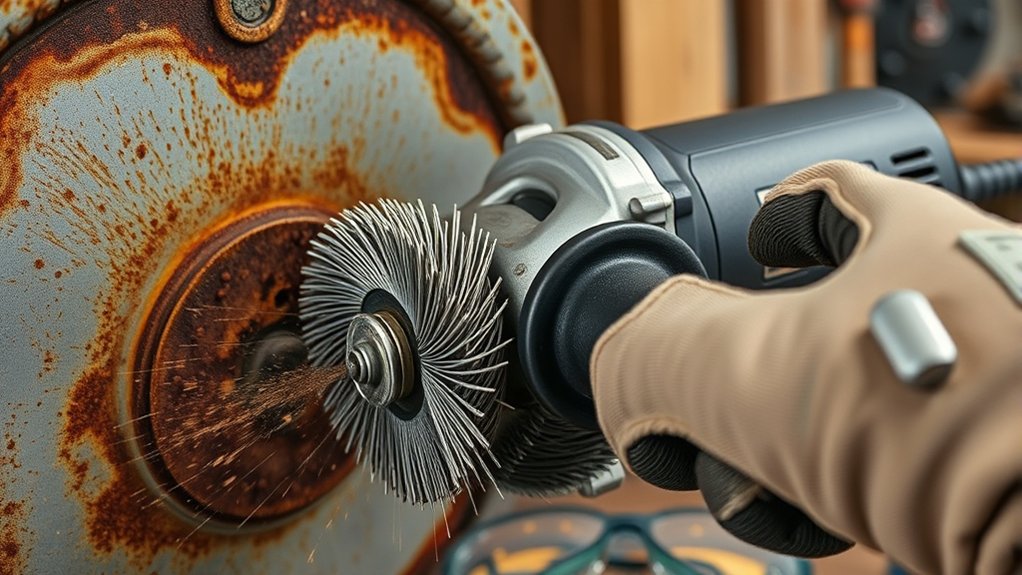
When tackling rust removal, using an angle grinder wire wheel offers notable advantages over traditional methods. The high RPM capability of an angle grinder allows you to clean large areas aggressively and efficiently, considerably reducing the time and effort required compared to manual sanding or scrubbing. Choosing the right wire wheel is essential; knotted wheels excel at heavy-duty rust removal, while crimped wheels are gentler for lighter tasks.
Proper technique is fundamental for effective rust removal. Maintain a constant motion to prevent surface damage and edge kickbacks. Additionally, prioritize safety by wearing protective gear such as safety glasses and gloves to shield yourself from flying debris. By combining the right tools and techniques, you can liberate your surfaces from rust while ensuring a safe working environment. This method not only enhances efficiency but also empowers you to tackle rust with confidence.
Benefits of Using Wire Wheels for Rust Removal
Using wire wheels for rust removal brings a range of benefits that enhance both efficiency and effectiveness in your projects. Wire wheels and brushes are designed to aggressively scrub surfaces, making them ideal for removing rust in both light and heavy-duty applications. Crimped wire wheels offer gentler cleaning for lighter rust and paint, while knotted wire wheels excel at tackling heavy rust and burr removal. By employing these tools, you greatly reduce the time and effort required compared to manual methods, streamlining surface preparation before painting or welding. Furthermore, the materials used in wire wheels—such as carbon steel for ferrous metals and stainless steel for non-ferrous metals—ensure peak performance and prevent contamination. However, remember that using personal protective equipment is essential to safeguard against flying debris and potential injuries during the cleaning process. With the right technique, wire wheels can revolutionize your rust removal tasks.
Understanding Angle Grinder Wire Wheels: Types and Functions
When choosing an angle grinder wire wheel, you’ll encounter various types, including crimped, knotted, and straight wire brushes, each tailored for specific tasks. Understanding the wire material and thickness is essential, as it affects the wheel’s performance and suitability for different surfaces. By aligning the right type and material with your cleaning application, you can enhance efficiency and achieve the desired finish.
Types of Wire Wheels
Angle grinder wire wheels come in three primary types—crimped, knotted, and straight—each tailored to specific cleaning and rust removal tasks. Understanding these types of wire wheels is crucial for achieving desired results.
- Crimped Wire: Provides gentle cleaning, perfect for light rust removal and polishing.
- Knotted Wire: Offers a stiff, aggressive action for heavy-duty tasks, effectively removing thick rust layers.
- Straight Wire: Designed for specific applications, often used in delicate scenarios.
- Size and Configuration: Critical for optimizing rust removal effectiveness.
- Surface Compatibility: Different materials work best on various metals, influencing performance.
Selecting the right type of wire wheel guarantees efficient rust removal while preserving the integrity of your workpiece.
Wire Material Considerations
Selecting the right wire material for your angle grinder wire wheels directly impacts performance and efficiency in rust removal. Here’s a breakdown to help you choose wisely:
| Wire Material | Best For |
|---|---|
| Carbon Steel | Ferrous metals |
| Stainless Steel | Non-ferrous alloys |
| Brass | Soft materials |
| Crimped Wire | Light rust removal |
| Knotted Wire | Heavy-duty cleaning |
Wire thickness also plays an important role; thicker wires enhance durability for aggressive tasks, while crimped wire brushes provide a gentler touch. Regularly inspect your wire wheels for frayed wires or damage to maintain safety and effectiveness. This understanding of wire material guarantees you optimize your angle grinder’s performance.
Applications and Uses
Understanding the applications and uses of angle grinder wire wheels is essential for achieving ideal results in various cleaning tasks. These wire brushes are versatile tools suited for a range of purposes, including:
- Rust removal from metal surfaces
- Paint stripping to prepare for refinishing
- Surface preparation on wood and metal
- Cleaning welds and joints
- Polishing and finishing surfaces
Different brush types, like crimped for gentle cleaning or knotted for aggressive rust removal, cater to specific needs. Always wear safety glasses to protect your eyes during operation. The choice of wire thickness and arbor size is critical for effective performance and safety, ensuring you select the right tool for the job at hand.
Choosing the Best Wire Wheel for Your Rust Removal Project
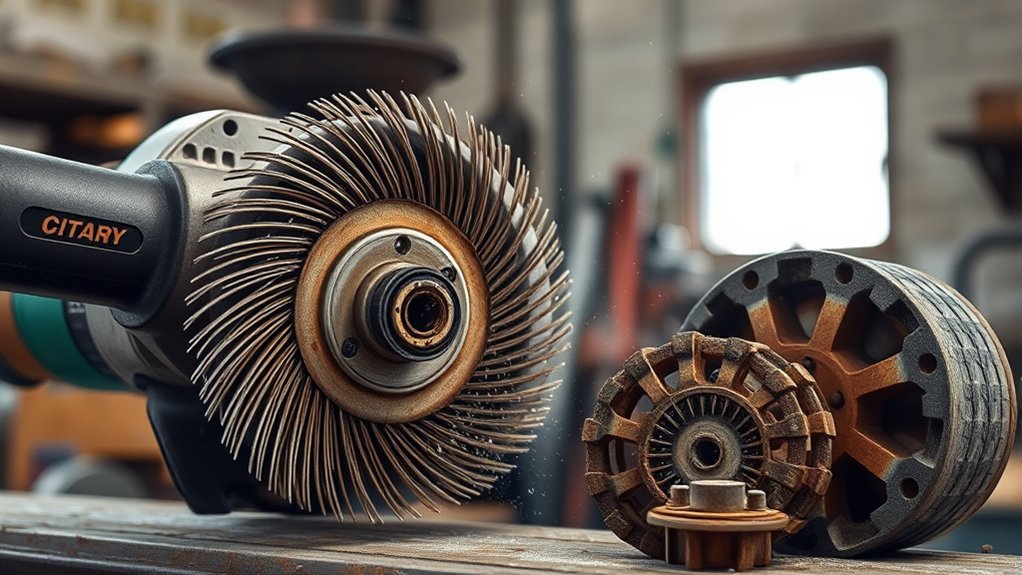
When tackling a rust removal project, it’s crucial to choose the right wire wheel to guarantee efficiency and effectiveness. Start by considering the wire material: carbon steel works well for ferrous metals, while stainless steel prevents contamination on non-ferrous surfaces. For lighter rust and paint removal, opt for crimped wire wheels, as they offer a gentler touch. Conversely, knotted wire wheels are better suited for aggressive cleaning tasks due to their stiffer bristles.
Confirm the wire wheel’s arbor hole size matches your angle grinder’s arbor size—typically 5/8 inch or 7/8 inch—to maintain balance and safety during operation. A higher-quality wire wheel will last longer and perform better, minimizing replacements and costs. Finally, always check the RPM rating of the wire wheel against your angle grinder’s speed to prevent damage and confirm safe rust removal. And don’t forget your safety glasses!
Must-Have Safety Gear for Using Your Angle Grinder Wire Wheel
When using your angle grinder wire wheel, prioritizing safety gear is essential. Necessary eye protection, such as safety glasses or a full face shield, prevents injury from flying debris, while proper clothing standards minimize exposure to sparks and abrasions. Additionally, respiratory safety measures are important, especially when working with materials that may release harmful dust or toxins.
Essential Eye Protection
Eye protection is essential for anyone using an angle grinder with a wire wheel, as the risk of injury from flying debris and broken wire bristles is significant. To guarantee your safety, you should:
- Wear safety glasses with side shields for added protection.
- Choose a full-face shield when working with large projects or high debris levels.
- Confirm compliance with ANSI Z87.1 standards for impact resistance.
- Regularly inspect your eye protection for scratches or damage that could compromise visibility.
- Select eye protection rated for specific hazards in your work environment, as recommended by OSHA.
Proper Clothing Standards
To guarantee maximum safety while using an angle grinder with a wire wheel, adhering to proper clothing standards is important. Always wear safety glasses or a full face shield to shield your eyes from flying debris. Opt for thick, long-sleeved protective clothing made from durable materials to prevent skin injuries from sparks. Leather gloves are significant for hand protection and provide a better grip on tools. Avoid loose clothing and jewelry, as these can entangle in the rotating wire wheel, causing serious harm. While respirators are essential for respiratory safety, remember to prioritize your overall attire for maximum safety.
| Safety Gear | Purpose | Notes |
|---|---|---|
| Safety Glasses | Protects eyes from debris | Full face shield preferred |
| Protective Clothing | Shields skin from sparks and wire ejection | Thick, long-sleeved fabric |
| Leather Gloves | Prevents cuts and improves grip | Important for hand safety |
Respiratory Safety Measures
Using an angle grinder with a wire wheel generates significant dust and debris, making respiratory safety measures vital for your health. You must protect yourself from inhaling harmful particles by wearing a suitable respirator.
- Choose a respirator with N95 or P100 filtration for effective protection.
- Confirm it fits snugly to create a proper seal around your face.
- Regularly inspect and replace filters following manufacturer guidelines.
- Maintain good ventilation in your workspace to disperse hazardous dust.
- Consider using an exhaust fan or opening windows to improve airflow.
Effective Techniques for Using Wire Wheels
Wire wheels on an angle grinder can greatly enhance your surface preparation tasks when employed with effective techniques. For ideal rust removal, begin with a knotted wire wheel to tackle heavy debris, then shift to a crimped wire wheel for a polished finish. Maintain a consistent motion across the surface to prevent uneven wear and guarantee a smooth outcome. Adjust the angle of the grinder to access edges and corners effectively, always making sure the brush rotates away from the edge to prevent kickback. Don’t forget to wear appropriate personal protective equipment (PPE), including safety glasses, gloves, and a face shield, to shield yourself from flying debris and potential injuries. Regularly inspect your wire brushes for frayed or broken wires and replace them if significant wear is detected. This guarantees both safety and peak performance during your tasks.
Common Mistakes to Avoid When Using Wire Wheels
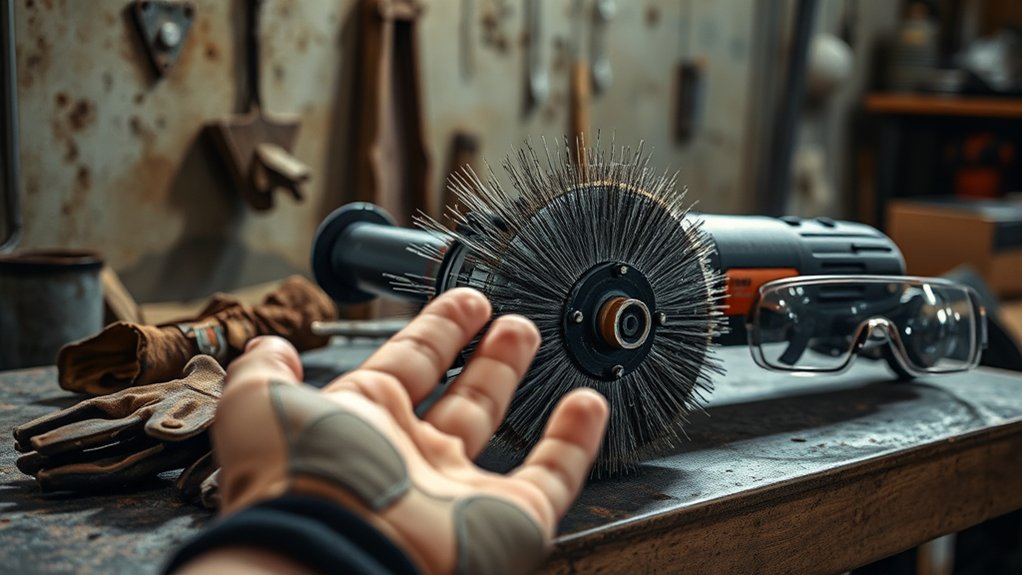
Maximizing the effectiveness of wire wheels on an angle grinder requires awareness of common mistakes that can undermine your results and safety. Avoiding these pitfalls will enhance your performance during tasks like removing paint or rust.
- Using the wrong type of wire brush; choose knotted wheels for heavy rust and crimped for lighter tasks.
- Failing to wear safety glasses and gloves, increasing the risk of injury from flying debris.
- Applying excessive pressure; let the wire bristles do the work for a smoother finish and longer brush life.
- Neglecting to inspect wire wheels for wear or damage can lead to accidents from broken wires during operation.
- Inconsistent motion and angle can create uneven surfaces and increase kickback risks.
Troubleshooting Your Angle Grinder Wire Wheel
When troubleshooting your angle grinder wire wheel, you’ll encounter common issues like clogging or uneven wear that can hinder performance. Adjusting your technique and ensuring proper brush maintenance is essential for effective operation. If you notice excessive vibration or frayed bristles, it’s time to replace worn brushes to maintain ideal function and safety.
Common Issues Encountered
While using an angle grinder wire wheel can be efficient for various tasks, several common issues may arise that can hinder performance and safety. Recognizing these problems is essential for effective operation:
- Wire bristle breakage due to excessive RPMs or pressure.
- Wire brush wear leading to decreased effectiveness; inspect regularly.
- Kickback from misalignment or catching on surfaces; maintain a firm grip.
- Contamination from using different types of brushes, causing rust.
- Dust and debris obstructing visibility and posing health risks; wear appropriate PPE.
Addressing these issues promptly guarantees safer, more effective use of your angle grinder wire wheel, allowing you to achieve your desired results without unnecessary setbacks.
Adjusting Technique Effectively
To achieve ideal results with your angle grinder wire wheel, it’s essential to adjust your technique based on the specific surface conditions and rust levels. Employ a left/right and up/down motion to guarantee thorough coverage during rust removal. Additionally, modify the angle of the grinder when working on edges and corners to enhance effectiveness and maintain safety by reducing the risk of kickbacks. Periodically altering the direction of the wire brushes helps tackle small pits and uneven surfaces for a consistent finish. Keep a constant motion to prevent overheating and uneven brush wear. Monitor the rust dust generated; a decrease signals effective removal, prompting necessary technique adjustments for peak performance.
Replacing Worn Brushes
Inspecting and replacing worn brushes is essential for maintaining the performance of your angle grinder wire wheel. Regular checks can prevent safety risks and guarantee peak performance during rust removal. Here are key points to bear in mind:
- Look for frayed wires or loose bristles indicating wear.
- Replace worn brushes immediately to avoid damage to both the work surface and the grinder.
- Confirm new wire wheels match your grinder’s arbor size (typically 5/8 or 7/8 inch).
- Select wire wheels suited to the specific task—knotted for heavy-duty cleaning, crimped for lighter tasks.
- Follow manufacturer guidelines for lifespan and replacement to maintain safety and efficiency.
Maintaining Your Wire Wheel for Longevity
Maintaining your wire wheel is vital for guaranteeing both its longevity and peak performance. Start by routinely inspecting the wheel for any frayed or damaged wires; signs of wear can compromise both safety and effectiveness. After each use, make it a habit to clean the wire wheel to remove any debris and prevent rust buildup. This simple step greatly extends its lifespan.
Proper storage is equally important. Always store your wire wheels in a dry, safe location, away from moisture and contaminants, which can lead to corrosion. Adhering to manufacturer guidelines for care and maintenance is essential to achieving ideal performance and preserving any warranties on your tool. Finally, don’t hesitate to replace wire wheels that show considerable wear or damage; prompt action guarantees safe operation and effective rust removal. Taking these steps will keep your wire wheel performing at its best for years to come.
Alternative Rust Removal Methods: When to Use Them?
Even with proper care, there are times when your wire wheel may not be the best solution for rust removal. Consider alternative rust removal methods based on your specific needs:
- Razor blade or scotch pad: Effective for small rust spots, especially when used with mineral spirits, allowing localized cleaning without damage.
- Sandblasting: Ideal for intricate webbing and tight areas, though it requires caution to avoid unwanted surface texture.
- Citric acid: A user-friendly option for small parts like nuts and bolts, but steer clear of wooden handles.
- Flexible grinding discs: Excellent for quick paint and rust removal, striking a balance between efficiency and material safety.
- Stripping discs: Less aggressive than wire brushes, these provide a gentler approach for various surfaces.
Frequently Asked Questions
What Are the Key Safety Considerations When Using a Wire Wheel for Grinding?
When using a wire wheel, prioritize protective gear, choose appropriate wire wheel types, apply correct grinding techniques, maintain firm control, and conduct regular maintenance checks to guarantee safe and effective surface preparation.
Can You Remove Rust With a Wire Wheel?
Yes, you can effectively remove rust using a wire wheel. Choose the right type for your task, apply proper rust removal techniques, and maintain your grinding wheel for peak performance on metal surface preparation.
What Are the Key Safety Precautions to Take When Using an Angle Grinder?
To guarantee safety with an angle grinder, wear protective gear essentials, practice tool handling skills, maintain grinder maintenance tips, apply electrical safety measures, and organize your workspace effectively to minimize hazards and enhance operational efficiency.
Can You Use an Angle Grinder for Rust Removal?
Yes, you can use an angle grinder for rust removal. Choose the right wire wheel type, apply effective rust removal techniques, guarantee proper metal surface preparation, and follow grinder maintenance tips for best results.
Conclusion
In the domain of rust removal, the angle grinder wire wheel stands as a steadfast knight, cutting through corrosion with precision. By understanding its nuances and employing proper techniques, you wield a powerful tool in your arsenal. Remember, safety gear is your shield, while regular maintenance guarantees your knight remains battle-ready. Embrace this method, but don’t shy away from alternatives when necessary. With the right approach, you can restore your metal surfaces to their former glory, reclaiming their strength.