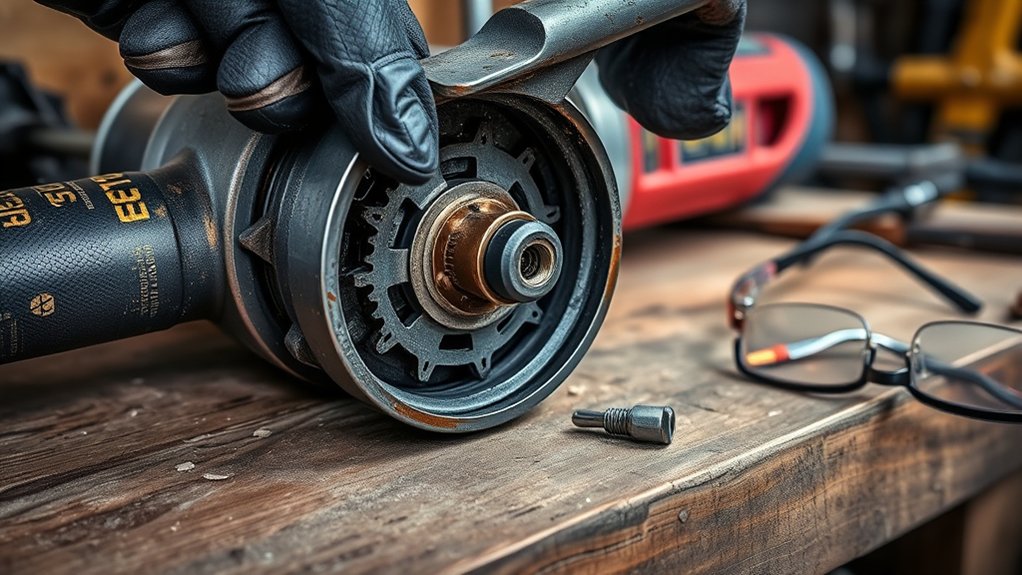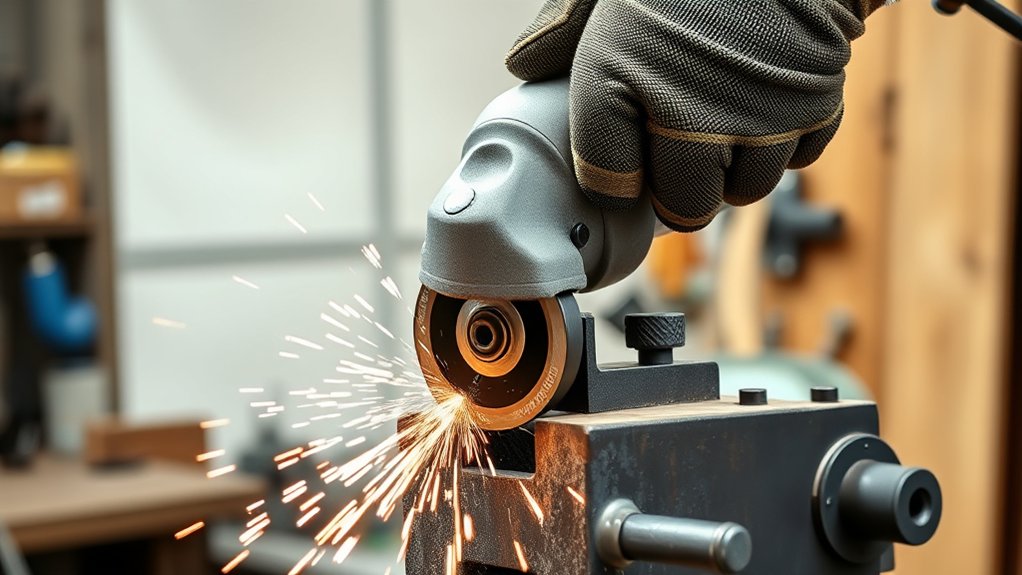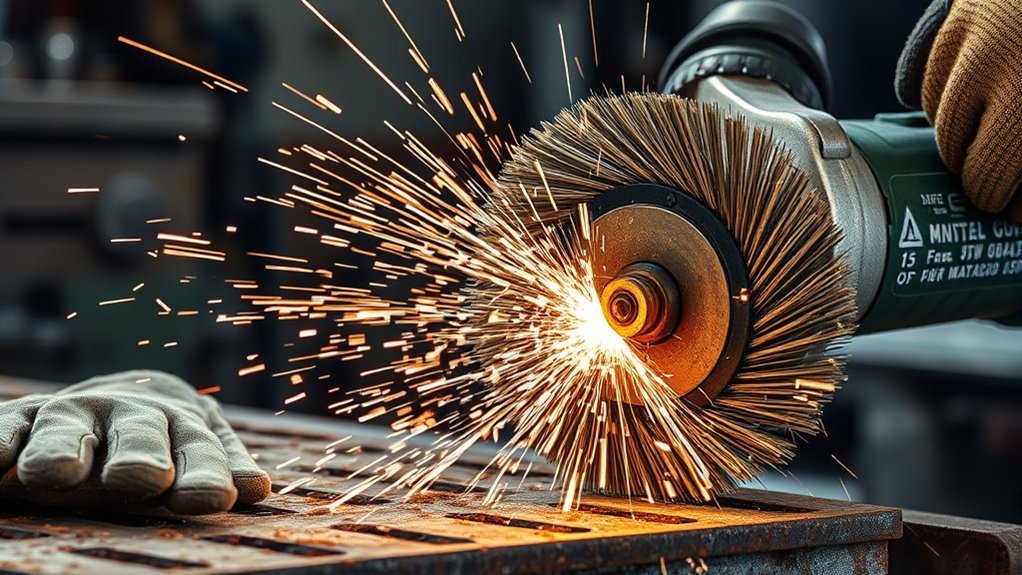
An angle grinder fitted with a compatible wire wheel can remove rust quickly, clean welds, and prepare metal for primer or paint. It can also throw sharp wire fragments, catch on edges, and spread hazardous coating dust. Safe results depend on choosing the right brush, checking its speed and mounting requirements, controlling the workpiece, and using light pressure.
Quick Answer
Use a crimped wire wheel for light rust and paint residue, or a knotted wire wheel for heavy scale. Confirm the brush fits the grinder and is rated at or above the tool’s maximum speed. Keep the guard and side handle installed, use light pressure, control dust, and wear protection suited to the hazard.
Key Takeaways
- Choose crimped wire for lighter cleaning and knotted wire for heavy rust, scale, or tough weld cleanup.
- Match the brush diameter, mounting system, guard requirements, and maximum RPM to the grinder.
- Use safety glasses with side protection and add a face shield for protection from wire fragments and debris.
- Let the wire tips do the work. Excessive pressure bends and breaks wires instead of cleaning faster.
- Identify old or unknown coatings before brushing because mechanical removal can create hazardous dust.
- Prime or otherwise protect bare steel soon after cleaning to reduce flash rust.
At a Glance
| Time Required | About 20–60 minutes for a small or medium area, depending on rust depth and access |
| Difficulty | Intermediate; requires two-hand tool control and careful brush selection |
| Tools Needed | Compatible angle grinder, approved wire brush, guard, side handle, clamps, PPE, cleaning supplies, and primer or protective coating |
| Cost | Usually low to moderate if you already own the grinder and required PPE |
Warning: Wire bristles can break free during normal operation and can penetrate clothing or skin. Keep other people out of the work area, direct debris away from yourself, and wear impact-rated eye protection with side coverage. Use a face shield over—not instead of—safety glasses or goggles when the tool or brush manufacturer requires it.
Why Use an Angle Grinder Wire Wheel for Rust Removal?
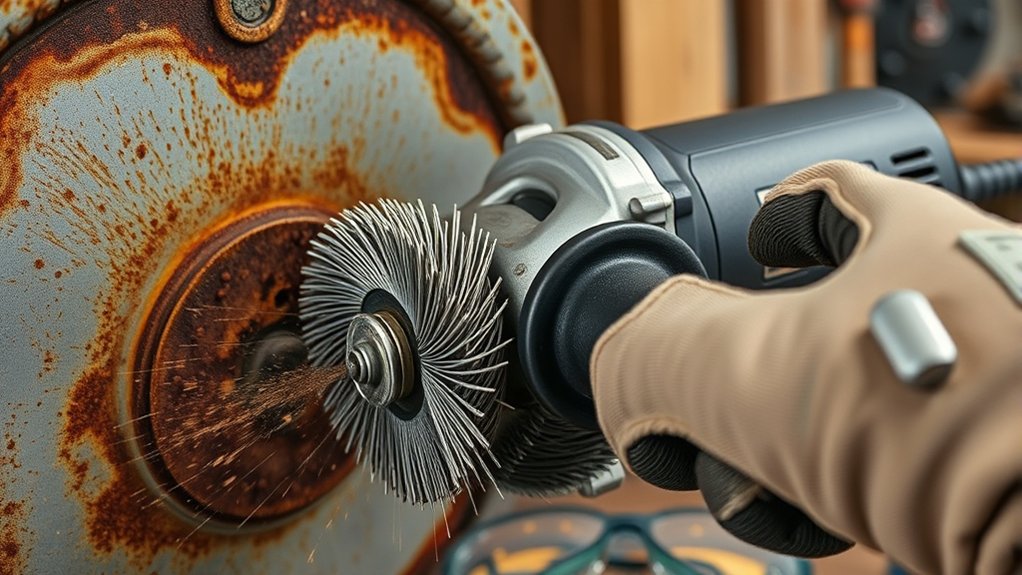
An angle grinder wire wheel removes rust by striking and scraping the surface with thousands of moving wire tips. Compared with hand brushing, the grinder covers a larger area with less time and effort. Compared with a grinding disc, a wire brush normally removes less sound metal, although an aggressive brush can still scratch, peen, heat, or mark the surface.
The wheel you choose matters. A crimped brush flexes as it works, making it useful for light rust, loose paint, and general cleanup. A knotted or twisted-wire brush is stiffer and works better on heavy corrosion, scale, and stubborn buildup.
Technique matters just as much as the brush. Keep the grinder moving, avoid sharp-edge snags, and use only enough pressure to keep the wire tips in contact. Forcing the brush bends the wires and can make them fail sooner.
Benefits of Using Wire Wheels for Rust Removal
Wire wheels are useful for both cleanup and surface preparation because they can reach small pits and irregular areas that are hard to sand by hand. Common benefits include:
- Fast coverage: A powered brush removes loose rust much faster than a hand brush over broad metal surfaces.
- Less base-metal removal: A properly selected brush normally cleans the surface without cutting as deeply as a grinding wheel.
- Access to uneven areas: Flexible wires can reach shallow pits, weld toes, corners, and textured surfaces.
- Several aggression levels: Crimped and knotted designs let you match the brush to the rust level.
- Useful preparation: Brushing can prepare compatible metal for inspection, welding, primer, paint, or another coating.
A wire wheel does not repair metal that has been deeply pitted or weakened by corrosion. After cleaning, inspect the part for thinning, holes, cracks, and structural damage before returning it to service.
Understanding Angle Grinder Wire Wheels: Types and Functions
Wire brushes differ by shape, wire construction, fill material, diameter, trim length, mounting system, and maximum operating speed. The safest choice is one that is approved for your grinder and suited to both the base metal and the amount of rust.
Products Worth Considering

Cost-Effective 6 Pcs Angle Grinder Wire Wheel: WENORA Angle grinder brushes are made of high strength hardened carbon steel wire for better performance than comparable products. Wire brush sets for angle grinders are a better value than buying from your local tool store.

Cost-Effective 8 Pcs Angle Grinder Wire Wheel: WENORA Angle grinder brushes are made of high strength hardened carbon steel wire for better performance than comparable products. Wire brush sets for angle grinders are a better value than buying from your local tool store.

【12Pcs Angle Grinder Wire Brush Set】3x aggressive 4"knotted wire wheel for angle grinder, 3x 4" coarse crimped angle grinder wire wheel, plus 3x 3"knotted and 3x 3" crimped cup brushes. Professional tailored combo, perfect for heavy-duty rust, paint and weld spatter removal on metal surfaces, covering all tough metal finishing & surface prep demands.
Types of Wire Wheels
| Brush Type | Best Use | What to Expect |
|---|---|---|
| Crimped wire wheel or cup | Light rust, loose paint, dirt, and general surface cleaning | Flexible brushing action and a less aggressive finish |
| Knotted or twisted-wire wheel | Heavy rust, scale, weld cleanup, and stubborn buildup | Aggressive action with a greater risk of snagging or marking thin metal |
| Cup brush | Broad, flat, or gently curved areas | Good surface coverage; must not rub or interfere with the guard |
| Wheel brush | Edges, seams, narrow surfaces, and straight passes | More focused contact than a cup brush |
| Bevel brush | Corners, fillet welds, and angled joints | Reaches areas that a flat wheel or cup may miss |
| End brush or straight-wire brush | Small recesses, holes, and targeted cleanup | Use only when the brush and tool are designed for the same mounting and speed |
Wire diameter and trim length also change how a brush behaves. Thicker or shorter wires are usually stiffer and more aggressive. Finer or longer wires flex more and tend to leave a lighter finish.
Wire Material Considerations
The brush material should match the base metal. Using the wrong brush can embed foreign metal in the surface and cause staining, after-rust, or weld-quality problems.
| Wire Material | Best For | Important Limitation |
|---|---|---|
| Carbon steel | Carbon steel and ordinary iron surfaces | Do not use where carbon-steel contamination of stainless steel or aluminum would be a problem |
| Stainless steel | Stainless steel, aluminum, and other compatible corrosion-resistant or non-ferrous metals | Keep the brush dedicated to one material family so it does not carry carbon-steel particles onto the work |
| Brass or brass-coated wire | Light cleaning where a softer touch is needed | Many products sold as brass brushes are brass-coated steel; check the label and do not assume they are non-sparking |
Power-brush manufacturer guidance recommends matching the fill material to the base metal and keeping brushes separated to prevent cross-contamination. See Weiler’s wire-brush material and contamination guidance.
Applications and Uses
Angle grinder wire brushes are commonly used for:
- Removing loose rust and oxidation from compatible metal
- Stripping loose or failing paint after the coating hazard has been identified
- Cleaning welds, joints, and fabrication scale
- Preparing metal for inspection, welding, primer, paint, or protective coating
- Cleaning irregular shapes that are difficult to reach with flat abrasive discs
- Removing light surface residue without the deeper cutting action of a grinding wheel
Do not assume a high-speed wire wheel is suitable for wood, plastic, plated surfaces, thin sheet metal, decorative finishes, or soft alloys. The brush may tear, gouge, smear, overheat, or contaminate the surface. Test an inconspicuous area and follow the accessory maker’s material guidance.
Choosing the Best Wire Wheel for Your Rust Removal Project
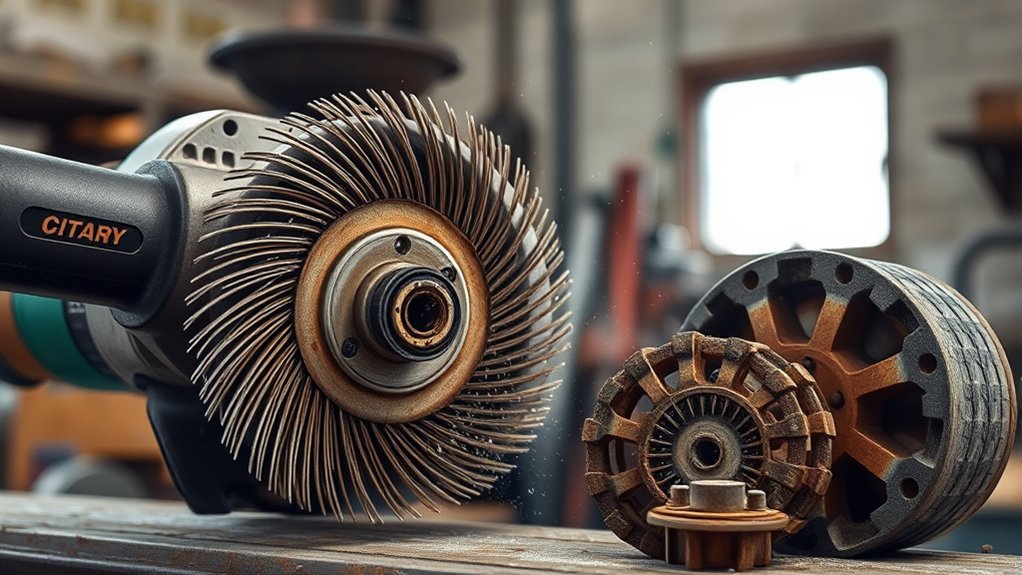
Start by identifying the base metal and how severe the corrosion is. Use a crimped brush for light rust, loose paint residue, and general cleanup. Use a knotted brush when heavy scale or thick corrosion requires more aggressive action.
Next, verify every compatibility point before mounting the brush:
- Tool approval: The grinder manual must allow wire-brushing accessories.
- Maximum speed: The brush’s rated speed must equal or exceed the grinder’s maximum no-load speed.
- Diameter and thickness: The brush must stay within the grinder’s stated accessory capacity.
- Mounting system: Match the exact spindle thread, arbor hole, hub, flange, and locking method.
- Guard: Use the guard specified for the brush and position it between the operator and the accessory.
- Clearance: Confirm that the brush cannot touch the guard as it rotates or expands under load.
A 5/8″-11 threaded spindle is common on some small grinders sold in the United States, while M14 threads are common in many other markets. Arbor-hole wheels also come in several sizes. These are examples, not universal standards. Check the grinder manual, brush label, and guard instructions rather than relying on appearance alone.
Power-tool manufacturers warn that an accessory can be unsafe even when it physically attaches to the spindle. Review the safety instructions in the DeWalt angle grinder instruction manual or the manual supplied with your own grinder.
Note: Never use a homemade adapter, stacked washer, damaged flange, or improvised bushing to make an incompatible brush fit. A secure physical connection does not correct the wrong speed rating, diameter, guard, or thread engagement.
Products Worth Considering

Application: OSFTBVT 4in crimped wire wheel brush great for quickly surface rust cleaning, paint stain removing, weld cleaning, weld spatter removal, deburring, scale removal etc. Ideal for most object 2nd step surface cleaning.
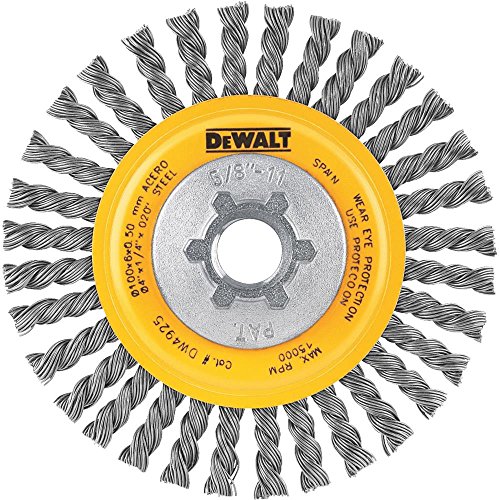
High tensile, heat treated carbon or stainless steel wire provides long lasting aggressive brushing action for the wire wheel

3x 5/8-11 Knotted cup brush, carbon steel, Knotted wire is for heavy material removal
Must-Have Safety Gear for Using Your Angle Grinder Wire Wheel
Wire brushing creates fast-moving debris, noise, dust, and possible sparks. The exact PPE depends on the grinder, accessory, base metal, coating, and work environment.
Essential Eye Protection
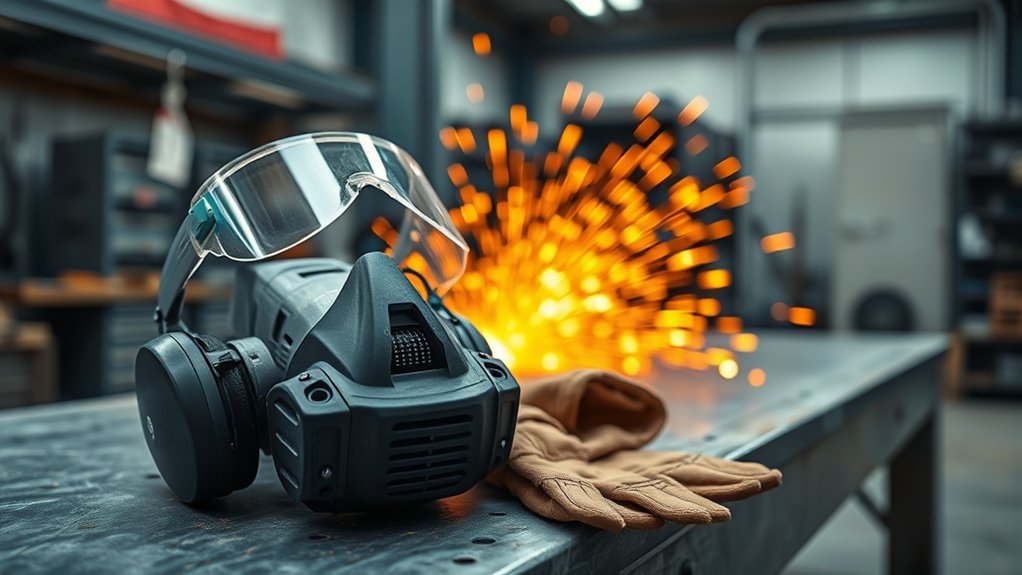
Wear impact-rated safety glasses or goggles that provide side protection. OSHA requires side protection where flying objects are a hazard. A face shield adds protection for the rest of the face but does not replace primary eye protection. Review the OSHA eye and face protection standard.
- Use safety glasses with side shields or sealed goggles suited to the dust and impact hazard.
- Wear a face shield over the glasses or goggles when required by the grinder or brush manufacturer.
- Replace scratched, cracked, loose, or damaged eye protection.
- Keep bystanders outside the debris path and require them to wear suitable eye protection if they must remain nearby.
Proper Clothing Standards
| Safety Gear | Purpose | Use Notes |
|---|---|---|
| Safety glasses or goggles | Protects the eyes from debris and wire fragments | Use side protection; add a face shield when required |
| Face shield | Protects the face from larger debris | Wear over—not instead of—primary eye protection |
| Snug protective clothing | Reduces skin exposure to wires, debris, and sparks | Avoid loose sleeves, drawstrings, jewelry, and frayed fabric |
| Close-fitting work gloves | Helps protect the hands from sharp metal and hot surfaces | Follow the grinder manual; never use loose or cloth gloves that may catch |
| Hearing protection | Reduces exposure to grinder and brushing noise | Choose protection suitable for the measured or expected noise level |
| Protective footwear | Protects against dropped workpieces and sharp debris | Use sturdy, closed footwear with secure footing |
Respiratory Safety Measures
Do not select a respirator by filter number alone. First identify what the dust contains. Plain rust, old paint, galvanized coatings, stainless-steel residue, primers, and industrial coatings can create different hazards.
NIOSH classifies particle filters by oil resistance and filtration efficiency. N-series filters are not resistant to oil, R-series filters are somewhat resistant to oil, and P-series filters are strongly resistant to oil. The numbers 95, 99, and 100 describe filtration efficiency under the test conditions. See the NIOSH respirator filter-class guide.
- Use ventilation or local dust extraction to reduce airborne material at its source.
- Select a NIOSH-approved respirator for the identified contaminant and exposure level.
- Remember that a particle filter does not protect against gases or solvent vapors unless the respirator also has the correct approved cartridge.
- Make sure the respirator fits and seals correctly; facial hair can interfere with a tight-fitting facepiece.
- In a workplace, follow the employer’s written respiratory-protection program, medical evaluation, training, and fit-testing requirements.
OSHA requires employers to identify and evaluate respiratory hazards before selecting protection. See the OSHA respiratory protection standard.
Warning: Do not wire-brush old or unknown paint until you have considered whether it may contain lead or another hazardous substance. Disturbing lead-based paint can create dangerous dust. Review current EPA lead-safety guidance and follow all rules that apply to the work.
How to Remove Rust With an Angle Grinder Wire Wheel
1. Identify the Metal and Any Coating
Confirm whether the part is carbon steel, stainless steel, aluminum, plated metal, or another material. Determine whether the surface has paint, primer, grease, sealant, or an unknown coating. Do not begin mechanical removal until hazardous coatings have been identified and controlled.
2. Prepare the Work Area
- Remove flammable liquids, paper, rags, dust, and other combustible material from the debris and spark path.
- Provide adequate ventilation and dust control.
- Keep children, pets, and unprotected bystanders away.
- Arrange lighting so you can see the brush contact area clearly.
- Route the power cord away from the wheel, or inspect the battery and tool if using a cordless grinder.
3. Secure and Inspect the Workpiece
Clamp small parts to a stable bench or fixture. Do not hold a small part in one hand while operating the grinder with the other. Support larger pieces so they cannot rock, roll, flex, or fall. Check for thin sections, cracks, holes, or severe corrosion that could fail during cleaning.
4. Inspect the Grinder and Brush
Disconnect the plug or remove the battery before changing accessories. Check the spindle, guard, side handle, flanges, and locking hardware. Inspect the brush for:
- Missing wire bundles or unusually heavy wire loss
- Bent, crushed, or heavily frayed wires
- Cracks or damage around the hub
- Corrosion, looseness, or an out-of-round shape
- A speed rating below the grinder’s maximum speed
- A diameter or mounting system not approved for the tool
Replace a damaged or questionable brush. Do not try to repair it by welding, bending the hub, trimming wire bundles, or adding adapters.
5. Install the Guard, Side Handle, and Brush
Install the guard specified for wire brushing and position it so it shields the operator from as much of the accessory as practical. Fit the side handle and use the mounting procedure in the grinder and brush manuals. Confirm that the brush is fully seated and that its threads or arbor engage correctly.
Turn the accessory by hand while the tool is disconnected. Make sure it clears the guard and tool housing. Never press the spindle lock while the grinder is running.
6. Perform a No-Load Check
Put on all required PPE. Hold the grinder with both hands, stand out of the accessory’s plane, and point the discharge area away from people and property. Start the tool without touching the workpiece.
Let the brush reach operating speed for the period required by the manufacturer. Stop immediately if you notice unusual vibration, wobble, rubbing, a loose accessory, or abnormal noise. Disconnect the power and correct the problem before continuing.
7. Brush the Rust With Light Pressure
Bring the brush into contact gradually. Use light, controlled pressure and let the wire tips clean the surface. Move in overlapping passes rather than holding the tool in one place.
- Keep a firm two-hand grip.
- Keep your body out of the likely kickback path.
- Approach sharp edges so the brush rotates away from the edge instead of digging into it.
- Avoid bouncing the brush or forcing it into corners.
- Pause if the metal, brush, or grinder becomes unusually hot.
Pro Tip: Use the least aggressive brush that removes the rust at a reasonable rate. For heavy corrosion, make the first pass with a knotted brush, then use a crimped brush for lighter cleanup instead of pressing harder with the aggressive wheel.
8. Inspect as You Work
Stop the grinder and wait for the brush to come to a complete stop before setting it down. Inspect the surface often. Remove only the corrosion and failing coating needed for the next process. Do not keep brushing sound thin metal simply to make the finish look perfectly uniform.
Deep pits may remain after loose rust is gone. A wire wheel cannot rebuild lost metal. Severely corroded structural parts may need repair, professional inspection, or replacement.
9. Clean and Protect the Metal
After brushing:
- Allow the part and brush to cool.
- Remove loose dust with a HEPA-filtered vacuum or another method suitable for the identified hazard.
- Wipe or degrease the surface with a cleaner compatible with the metal and the coating you plan to apply.
- Let the surface dry fully.
- Inspect for remaining rust, contamination, cracks, or deep pitting.
- Apply primer, paint, rust inhibitor, or another approved protective finish as soon as practical.
Freshly cleaned carbon steel can develop flash rust quickly in humid conditions. Avoid touching the bare surface with oily hands before coating it.
Effective Techniques for Using Wire Wheels
Good control improves the finish and reduces wire loss, heat, and kickback risk.
- Large flat surfaces: Use steady overlapping passes and keep the brush moving.
- Edges: Work so the wire movement leaves the edge rather than hooks into it.
- Corners and weld toes: Use a bevel, narrow wheel, or other brush designed for the space instead of forcing an oversized cup brush into it.
- Pitted rust: Change direction between passes so the wire tips reach different sides of shallow pits.
- Thin sheet metal: Use a lighter brush and short passes to limit heat, distortion, and visible marking.
- Final preparation: Switch to a less aggressive brush when the heavy buildup is gone.
Watch the material coming off the surface. A large drop in debris usually means the loose corrosion is nearly gone. Stop and inspect instead of increasing pressure.
Common Mistakes to Avoid When Using Wire Wheels
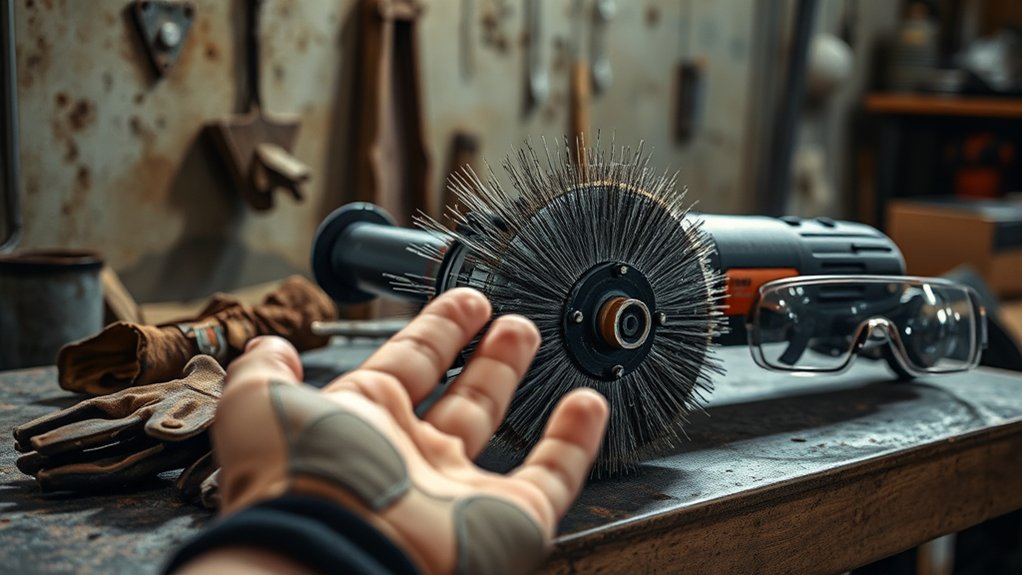
- Using the wrong brush type: A crimped wheel may clean heavy scale too slowly, while a knotted brush may be too aggressive for thin or finished metal.
- Using the wrong wire material: A carbon-steel brush can contaminate stainless steel or aluminum.
- Ignoring the RPM rating: Never install a brush rated below the grinder’s maximum speed.
- Removing the guard: Use the guard required by the grinder and brush manufacturer.
- Pressing too hard: Excessive pressure bends wires, creates heat, and increases wire loss.
- Holding the work by hand: Clamp or fixture small workpieces securely.
- Entering a sharp edge in the wrong direction: This can make the brush snag and kick the tool.
- Using a damaged brush: Replace brushes that vibrate, wobble, lose bundles, or have hub damage.
- Brushing unknown coatings: Identify and control lead, chromate, or other hazardous dust before work begins.
- Waiting too long to coat bare steel: Clean metal can rust again quickly in damp air.
Troubleshooting Your Angle Grinder Wire Wheel
| Problem | Likely Cause | Safe Correction |
|---|---|---|
| Rust removal is slow | Brush is too soft, worn, contaminated, or not reaching operating speed | Use the correct brush type, verify compatibility and speed, and replace a worn brush |
| Excessive vibration or wobble | Damaged brush, incorrect mounting, dirty flange, bent spindle, or uneven wear | Stop immediately, disconnect power, remount correctly, or replace the accessory; service the grinder if vibration remains |
| Heavy wire shedding | Excess pressure, excessive speed, snagging, fatigue, or brush damage | Confirm RPM, reduce pressure, correct the approach direction, and replace the brush if shedding is abnormal |
| Brush catches or kicks | Wire is entering a sharp edge, the brush is too aggressive, or the operator is forcing it into a corner | Change direction, use a smaller or less aggressive brush, and maintain two-hand control |
| Uneven cleaning or low spots | Holding the brush in one place or using inconsistent passes | Use overlapping passes and keep the tool moving |
| Brown staining on stainless steel | Carbon-steel contamination from the brush or nearby work | Use a clean, dedicated stainless-steel brush and follow the material’s approved cleaning or passivation process |
| Metal becomes hot or discolored | Too much pressure, too much dwell time, or an overly aggressive brush | Use lighter pressure, shorter passes, and time for cooling |
| Rust returns soon after cleaning | Moisture, residue, deep pits, contamination, or delayed coating | Clean and dry the surface thoroughly, treat remaining corrosion as required, and apply protection promptly |
Common Issues Encountered
Some wire loss is possible during normal brush operation, but rapid shedding, missing bundles, severe vibration, or a loose hub are reasons to stop. Do not continue working in the hope that the brush will “settle down.”
Dust can also reduce visibility and enter the grinder’s ventilation openings. Keep the vents clear according to the tool manual, and never clean the grinder while it is connected to power.
Adjusting Technique Effectively
For even coverage, use controlled left-to-right and up-and-down passes. Change direction only after considering the brush rotation and nearby edges. On corners, adjust the tool position so the wire tips sweep away from the edge rather than hooking under it.
If cleaning slows, do not automatically push harder. Stop and check whether the brush is worn, too flexible, contaminated, incorrectly mounted, or unsuitable for the rust level.
Replacing Worn Brushes
Replace the brush when you find:
- Missing knots, rows, or large groups of wires
- Heavy or uneven wire loss
- A cracked, loose, bent, or corroded hub
- Permanent wobble or vibration after correct mounting
- Wires worn so short that the brush no longer cleans effectively
- Guard interference or abnormal expansion
- Damage from being dropped, crushed, or stored improperly
The replacement must match the grinder’s approved size, mounting system, guard, and speed. Follow the brush manufacturer’s replacement criteria if they are more restrictive.
Maintaining Your Wire Wheel for Longevity
Routine inspection and dry storage help a wire wheel remain predictable and effective.
- Disconnect the grinder before inspecting or cleaning the brush.
- Remove loose debris without bending or cutting the wires.
- Keep the wheel dry and protected from moisture, impact, and corrosive chemicals.
- Store brushes so the wire fill is not crushed or distorted.
- Keep carbon-steel, stainless-steel, and non-ferrous-work brushes separate and clearly marked.
- Clean the grinder’s air vents according to the tool manual.
- Replace damaged brushes rather than attempting repairs.
Do not soak a mounted brush in solvent unless the brush and tool manufacturers specifically allow it. Residual flammable liquid can create a fire or exposure hazard when the grinder starts.
Alternative Rust Removal Methods: When to Use Them?
A wire wheel is fast, but it is not the best method for every part or finish.
| Method | Best Use | Main Limitation |
|---|---|---|
| Hand wire brush, scraper, or nonwoven pad | Small spots, delicate control, and areas near edges or seals | Slower than powered brushing; use mineral spirits only when compatible and away from ignition sources |
| Nonwoven stripping disc | Paint and moderate rust where a less scratch-prone finish is wanted | Can wear quickly on sharp edges and heavy scale |
| Flap or flexible grinding disc | Rust removal that also requires leveling or smoothing | Removes more base metal than a wire brush |
| Abrasive blasting | Complex shapes, deep pitting, and large restoration work | Requires containment, suitable media, respiratory controls, and care with thin metal |
| Citric acid or commercial chelating remover | Small removable steel parts, nuts, bolts, and detailed shapes | Requires correct concentration, rinsing or cleanup, thorough drying, and protection of wood, coatings, and sensitive materials |
| Electrolysis | Removable ferrous parts with detailed shapes | Requires electrical and chemical precautions and is not suitable for every metal or assembled part |
Choose the method based on the part’s value, thickness, finish requirements, corrosion depth, coating hazards, and whether the part can be removed and treated separately.
Frequently Asked Questions
What Are the Key Safety Considerations When Using a Wire Wheel for Grinding?
Use a brush approved for the grinder, confirm its maximum RPM and mounting system, install the required guard and side handle, secure the workpiece, and keep your body out of the likely kickback path. Wear impact-rated eye protection, add a face shield when required, control dust, and use light pressure.
Can You Remove Rust With a Wire Wheel?
Yes. A crimped wire wheel works well on light rust and general cleanup, while a knotted wire wheel is better for heavy rust and scale. The wheel removes loose corrosion but cannot restore metal that has already been lost to deep pitting or structural damage.
What Are the Key Safety Precautions to Take When Using an Angle Grinder?
Read the grinder manual, inspect the tool and accessory, disconnect power before adjustments, install the correct guard and side handle, clamp the work, maintain a two-hand grip, and wait for the accessory to stop before setting the tool down. Keep the work area dry, clear, well lit, and free of combustible material.
Can You Use an Angle Grinder for Rust Removal?
Yes, when the grinder is designed for wire brushing and the accessory matches its speed, size, mounting system, and guard. Use a controlled procedure: identify the coating, secure the part, test the brush at no load, remove rust with light overlapping passes, clean the surface, and apply protection promptly.
Should I Use a Knotted or Crimped Wire Wheel?
Use crimped wire for light rust, loose paint residue, and a gentler finish. Use knotted wire for heavy scale and stubborn corrosion. Start with the least aggressive brush that can complete the job without excessive pressure.
Can I Use a Carbon-Steel Brush on Stainless Steel or Aluminum?
Avoid it when surface contamination matters. Carbon-steel particles can become embedded in stainless steel or aluminum and later cause staining or after-rust. Use a clean, dedicated stainless-steel brush approved for the material.
How Much Pressure Should I Use With a Wire Wheel?
Use light pressure—only enough for the wire tips to contact and clean the surface. Pushing harder bends the wires, increases heat, shortens brush life, and can increase wire shedding without improving the result.
Conclusion
An angle grinder wire wheel is one of the quickest ways to remove loose rust and prepare compatible metal for painting, welding, inspection, or repair. Good results come from matching the brush to the rust level and base metal, verifying every speed and mounting requirement, securing the work, and letting the wire tips clean with light pressure.
Inspect the brush before every use, stop immediately if it vibrates or sheds wires abnormally, and control dust from old or unknown coatings. Once the surface is clean, inspect the remaining metal and apply a protective finish before corrosion returns.
Sources
- DeWalt DCG407/DCG408 Angle Grinder Instruction Manual — accessory compatibility, wire-brushing hazards, control, and PPE guidance
- OSHA 1910.133 Eye and Face Protection — protection from flying particles and side-protection requirements
- OSHA 1910.134 Respiratory Protection — workplace hazard evaluation, respirator selection, fit testing, and program requirements
- NIOSH Respirator Filter Classes — N, R, and P oil resistance and particle-filter efficiency classes
- Weiler Abrasives Wire-Brush Selection Guidance — pressure, brush selection, and cross-contamination control
- U.S. EPA Lead Safety Guidance — risks from disturbing lead-based paint and contaminated dust