Disclosure: As an Amazon Associate, we earn from qualifying purchases. If you click a link on this page and make a purchase, we may receive a small commission at no extra cost to you.
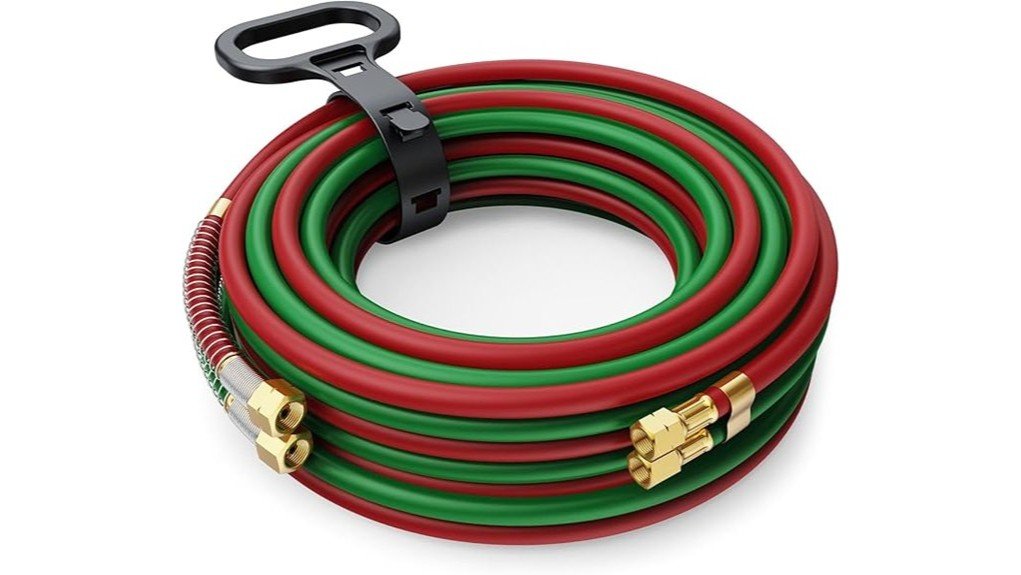
Gas hose problems can slow down cutting and welding work fast, especially when a short hose limits movement or a worn hose creates pressure concerns. The ARCCAPTAIN Grade T Hose is built for oxy-acetylene setups that need long reach, clear gas-line separation, and steady pressure delivery. Its 50-foot twin-line design makes it useful in larger shops, but the same length can feel bulky in a tight garage. This review helps you decide if the reach, pressure rating, and T-grade rubber construction fit your setup.
Quick Verdict
Rating: 8/10, recommended with caveats
Best For: Welders and fabrication users who need a 50-foot twin-line hose for oxy-acetylene cutting, brazing, or workshop welding.
Bottom Line: The ARCCAPTAIN Grade T Hose gives you long reach, color-coded gas lines, and strong pressure ratings for shop use. The tradeoff is storage space, because a 50-foot twin-line hose needs careful coiling and routing.
Key Specifications
| Specification | Detail |
|---|---|
| Brand | ARCCAPTAIN |
| Product Type | Twin-line oxy-acetylene welding hose |
| Design | Dual gas lines with external protection sleeve or guard |
| Length | 50 feet |
| Inner Diameter | 1/4 inch |
| Material | T-grade rubber, described as oil, abrasion, and weather resistant |
| Working Pressure | 300 PSI |
| Burst Pressure | 900 PSI |
| Color Coding | Red line for acetylene and green line for oxygen |
| Fittings | Standard 9/16-18 B fittings |
| Best Use | Oxy-acetylene cutting, brazing, fabrication, and workshop welding setups |
| Storage Note | The 50-foot twin-line design needs more coiling and storage space than shorter hoses |
What Is the ARCCAPTAIN Grade T Hose?
The ARCCAPTAIN Grade T Hose is a twin-line oxygen and acetylene hose for oxy-fuel cutting, brazing, and welding applications. It connects regulators to torches through standard 9/16-18 B fittings, so it targets common workshop torch setups.
The main job of this hose is to move oxygen and acetylene from the regulators to the torch while keeping the two gas lines clearly separated. The red and green color coding helps reduce connection mistakes during setup, which matters when you work around pressurized gas and open flame.
The 50-foot length is the key buying point. You get more reach around benches, frames, and larger work areas, but you also need enough floor control and storage space to manage the extra hose safely.
Who Should Buy It?
Best For
- Welders who need a long hose to move around larger workpieces without repositioning cylinders
- Fabrication users working with oxy-acetylene cutting, brazing, or torch heating setups
- Shop owners who want color-coded twin lines for easier gas-line identification
Skip If
- You only need a short hose for a small bench or compact garage
- You do not use oxy-acetylene equipment with compatible 9/16-18 B fittings
- You want the lightest hose possible for occasional torch work
Build Quality and Materials
The hose uses T-grade rubber described as resistant to oil, abrasion, and weather exposure. That matters in welding and fabrication areas because hoses often drag across concrete floors, pass near metal edges, and sit around shop debris.
The twin-line layout keeps the oxygen and acetylene paths paired together while still separating the gases. This design helps with routing because you manage one joined hose assembly instead of two loose hoses running in different directions.
An external protection sleeve or guard adds support at stress points. It is most useful near fittings and bends, where repeated movement can lead to kinking or extra wear over time.
Safety and Pressure Performance
The article-supported pressure ratings are 300 PSI working pressure and 900 PSI burst pressure. These numbers matter because an oxy-acetylene hose must handle pressure changes during setup, flame adjustment, cutting, and shutdown.
The red and green color coding adds a simple safety advantage. Red identifies the acetylene side, while green identifies the oxygen side, making it easier to check connections before lighting the torch.
Correct setup still matters. You should inspect the hose before each use, keep it away from sharp edges and hot metal, and follow the instructions for your regulators, torch, and gas cylinders.
Before You Buy: A 50-foot hose gives excellent reach, but it can create trip hazards and storage problems in small shops. Make sure you have a clear routing path and enough space to coil it after use.
Fit and Compatibility
This hose uses standard 9/16-18 B fittings, which makes it suitable for many common oxy-acetylene regulator and torch connections. You should still confirm your current torch, regulator, and hose-end requirements before ordering.
Compatibility is not only about the fitting thread. You also need to confirm that your setup is meant for oxygen and acetylene service and that the hose length works with your cylinder placement.
Setup Tips Before First Use
Before installation, lay out the hose and check the full length for cuts, crushed areas, loose fittings, or sharp bends. A long hose can hide damage if you only inspect the ends.
Connect the red line to the acetylene side and the green line to the oxygen side. After connection, route the hose so it does not pass under tires, cart wheels, sharp metal, or hot workpieces.
During use, avoid tight coils or sharp turns that can restrict flow. When the job is done, let the hose cool if it has been near hot work, then coil it loosely for storage.
Pro Tip: Uncoil the full hose before cutting or brazing. A straight, relaxed hose is easier to route, easier to inspect, and less likely to twist while you move around the work area.
How It Performs in Real Use
Workshop Welding and Brazing
In a fixed workshop, the 50-foot length gives you more freedom around workbenches, clamps, and welding carts. You can reach larger projects without dragging cylinders closer to the work area as often.
Cutting Larger Metal Pieces
For cutting tasks, the 300 PSI working pressure rating gives the hose a practical performance foundation. The longer reach also helps when you cut sheet, frames, or stock that does not fit neatly on a small bench.
Outdoor or Open-Bay Work
The T-grade rubber construction is described as weather resistant, so it makes sense for covered outdoor or open-bay use when your torch setup moves between work areas. You should still store the hose properly and keep it away from standing water, sharp debris, and direct heat.
Storage and Transport
The included strap mentioned in the original article helps manage coiling, but the hose still needs dedicated storage space. A 50-foot twin-line hose is not the most convenient choice if you move your torch setup often or store tools in a small cabinet.
Pros and Cons
Pros
- 50-foot length gives you strong reach around larger work areas
- 300 PSI working pressure and 900 PSI burst pressure support demanding torch use
- T-grade rubber construction is described as oil, abrasion, and weather resistant
- Red and green twin lines make oxygen and acetylene identification easier
- Standard 9/16-18 B fittings support many common oxy-acetylene setups
Cons
- Long hose length can be difficult to store in compact shops
- Twin-line construction may feel bulky for light-duty or occasional users
- Requires careful routing to avoid trip hazards, sharp bends, and pinch points
Need More Reach for Torch Work?
Check current product details and confirm compatibility with your oxy-acetylene setup.
Is It Worth the Price?
The ARCCAPTAIN Grade T Hose fits the mid-range value category for oxy-acetylene hose accessories. It makes the most sense if you need long reach, stronger hose durability, and color-coded gas separation in one hose assembly.
You get the most value from it in a workshop, fabrication bay, or larger garage where a short hose would limit movement. If your work area is small, the extra length may create more inconvenience than benefit.
Its value depends on how often you use oxy-acetylene equipment. Frequent users will likely appreciate the reach and pressure ratings more than occasional hobby users who only need a compact hose.
How It Compares to Alternatives
Compared with shorter twin-line welding hoses, the ARCCAPTAIN Grade T Hose prioritizes reach over compact handling. A 25-foot hose may be easier to store, but it will not give you the same movement around large workpieces.
Compared with heavier industrial hoses, this model aims for practical workshop use rather than specialized plant-level service. It is worth considering if you want a long twin-line hose with clear color coding and article-supported 300 PSI working pressure.
Frequently Asked Questions
Is the ARCCAPTAIN Grade T Hose compatible with all oxy-acetylene torches?
It is listed with standard 9/16-18 B fittings, which fit many common oxy-acetylene setups. You should still confirm your torch and regulator fitting requirements before buying.
Is 50 feet too long for a small garage?
It can be too long if your torch work happens near one bench or cart. The extra length improves reach, but it also takes more space to route, coil, and store safely.
What do the red and green hose lines mean?
The red line is for acetylene, and the green line is for oxygen. This color coding helps you identify the correct line during setup and inspection.
Can this hose be used outdoors?
The article-supported material description says the T-grade rubber resists weather exposure, oil, and abrasion. For longer service life, store it dry and keep it away from direct heat, sharp debris, and standing water.
Does the hose require special maintenance?
It does not need complicated maintenance, but it does need regular inspection and careful storage. Avoid sharp bends, crushed sections, hot surfaces, and tight coils that can stress the hose.
Who should skip this hose?
Skip it if you only need a short hose for occasional torch work or if your setup does not use compatible fittings. It is also not ideal if your shop has limited floor space and no safe hose-routing path.
What common setup mistake should you avoid?
Do not leave the hose partly tangled, tightly coiled, or routed across sharp metal. A clear path helps reduce trip hazards, wear points, and flow restrictions during torch work.
The Bottom Line
The ARCCAPTAIN Grade T Hose is a strong fit if you need a long, color-coded twin-line hose for oxy-acetylene cutting, brazing, or workshop welding. Its main strengths are the 50-foot reach, T-grade rubber construction, and article-supported 300 PSI working pressure.
You should skip it if you work in a compact area, need a short hose, or cannot safely manage the extra length. The 8/10 verdict fits because it offers practical shop value, but only for buyers who truly need the reach.