Disclosure: As an Amazon Associate, we earn from qualifying purchases. If you click a link on this page and make a purchase, we may receive a small commission at no extra cost to you.
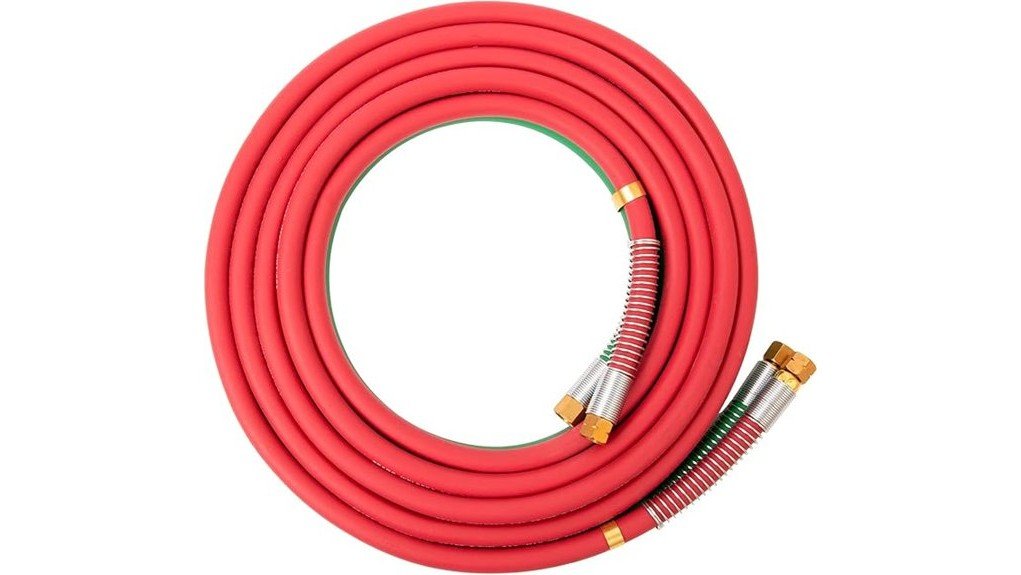
A worn, cracked, or poorly matched torch hose is not something you want to ignore when working with oxygen and fuel gas. The SPARC 1/4″ Grade T Cutting Torch Hose is a 15-foot twin hose set built around Grade T synthetic rubber, Type B fittings, and coil-style strain relief at the hose ends. Its short length suits compact shops and portable setups, while its 300 PSI working-pressure rating and broad fuel-gas compatibility give it more flexibility than an acetylene-only Grade R replacement. The main limitation is simple: 15 feet may be too short if your cylinders must remain well away from your work area.
Quick Verdict
Rating: Recommended
Best For: Buyers who need a compact 15-foot Grade T replacement hose with standard Type B connections.
Bottom Line: The SPARC hose combines Grade T synthetic rubber, metal coil-style strain relief, and compatibility with several common fuel gases. Its 15-foot length keeps a small setup manageable, but buyers needing more distance between cylinders and the work area should consider a longer hose.
Key Specifications
| Specification | Detail |
|---|---|
| Brand | SPARC |
| Product Type | Twin oxygen/fuel-gas welding and cutting hose set |
| Hose Grade | Grade T |
| Material | Grade T synthetic rubber |
| Length | 15 feet |
| Hose Diameter | 1/4 inch |
| Fittings | Type B, 1/4″, CGA 022/023 |
| Line Identification | Green oxygen line and red fuel-gas line |
| Working Pressure | 300 PSI maximum hose working-pressure rating |
| Burst Pressure | 800 PSI |
| Temperature Range | -40°F to 212°F |
| Fuel Compatibility | Acetylene, propane, propylene, and MAPP gas applications when the connected equipment is compatible |
| End Protection | Built-in coil-style strain relief |
| Warranty | 1-year USA warranty against manufacturing defects |
| Best Use | Compact welding, brazing, heating, and cutting setups using compatible oxygen/fuel-gas equipment |
What Is the SPARC 1/4″ Grade T Cutting Torch Hose?
The SPARC hose is a 15-foot twin-line replacement hose designed to carry oxygen and a compatible fuel gas between your regulators and torch equipment. SPARC uses Grade T synthetic rubber, with a green oxygen line and red fuel line to help you identify the correct connection during setup.
Each end uses Type B 1/4-inch fittings identified as CGA 022/023. SPARC lists the hose for oxy-acetylene as well as propane, propylene, and MAPP gas applications, giving it an advantage when you need Grade T compatibility rather than an acetylene-only Grade R hose.
The other notable feature is the coil-style strain relief installed at the ends. Hose failures often begin near connection points where repeated bending places stress on the rubber and crimp area, so added support at those locations is a useful design choice.
Key Takeaways
- 15-foot length: Compact enough for a garage, workbench, cart, or portable torch setup.
- Grade T synthetic rubber: Designed for broader fuel-gas compatibility than a typical acetylene-only Grade R hose.
- Type B fittings: Uses 1/4-inch Type B CGA 022/023 connections.
- Pressure ratings: SPARC specifies 300 PSI maximum working pressure and 800 PSI burst pressure for the hose.
- Wide temperature specification: Manufacturer-listed range is -40°F to 212°F.
- Protected ends: Metal coil-style strain relief supports areas near the fittings that experience repeated bending.
- Warranty: Covered by a 1-year USA warranty against manufacturing defects.
Who Should Buy It?
Best For
- Home-shop users who want a compact 15-foot twin hose.
- Buyers replacing an old hose on equipment that uses Type B fittings.
- Users who need a Grade T hose for compatible acetylene, propane, propylene, or MAPP applications.
Skip If
- Your regulators or torch do not use compatible Type B CGA 022/023 connections.
- You need 25, 50, or 100 feet of reach between your cylinders and work area.
- You need a complete torch kit rather than replacement hoses.
Before You Buy: Do not choose a torch hose by diameter or pressure rating alone. Confirm that your regulator and torch connections match the hose’s Type B CGA 022/023 fittings and that every component in your setup is approved for the fuel gas you plan to use.
Grade T Construction and Durability
SPARC specifies Grade T synthetic rubber that is designed to resist abrasion and exposure associated with welding environments. The manufacturer also describes the tube and cover as flame and oil resistant. Those qualities matter because a torch hose is regularly dragged, coiled, moved around equipment, and exposed to a demanding shop environment.
Grade T is especially relevant if your setup uses a compatible fuel gas other than acetylene. SPARC lists this hose for acetylene, propane, propylene, and MAPP gas applications. Your torch, regulator, tips, valves, and other components still need to be rated for the gas being used.
Built-In Strain Relief
The metal coil-style strain relief surrounds the hose near its fittings. It supports the area that can otherwise bend sharply when you pull, coil, or reposition the hose.
That does not make the hose damage-proof. You should still avoid pulling the assembly by its hose ends, crushing it under equipment, or forcing sharp bends near a fitting. The strain relief is best viewed as added protection rather than a substitute for proper handling.
Fit and Compatibility
The hose is equipped with Type B 1/4-inch CGA 022/023 fittings. The oxygen and fuel sides use their respective connection arrangements, so you should compare your existing torch and regulator fittings before ordering rather than assuming all oxy-fuel equipment uses the same connection size.
For an existing setup, the simplest buying check is to look at the fittings on the hose you are replacing and confirm the equipment documentation. A hose that has the correct Grade T material but the wrong fitting type is not a useful replacement.
Pro Tip: Before ordering, compare the connection type on both your regulator and torch with the SPARC Type B specification. This takes less time than dealing with a hose that reaches your equipment but cannot connect to it.
What Do the Pressure Ratings Mean?
SPARC lists a 300 PSI maximum working-pressure rating and an 800 PSI burst-pressure rating for this hose. These figures describe the hose’s pressure capability, but they are not instructions to operate your torch system at those pressures.
Your actual operating settings depend on your fuel gas, regulator, torch, tip, process, and manufacturer instructions. Every component in the gas path must be suitable for the application, and you should never treat a high hose pressure rating as permission to exceed the operating limits of another component.
The 800 PSI burst figure provides information about the hose’s construction margin. It should not be treated as a usable working pressure.
Temperature Range and Shop Use
The manufacturer specifies a temperature range of -40°F to 212°F and describes the hose as suitable for indoor and outdoor work. This gives the hose a broad environmental specification for garages, shops, and many job-site conditions.
That specification does not mean you should intentionally expose the hose to molten metal, a torch flame, sharp edges, vehicle traffic, or other direct damage. Route the hose so you can work without repeatedly stepping on it, pinching it, or dragging it across hazardous surfaces.
How It Performs in Real Use
Compact Garage or Workshop Setup
The 15-foot length is useful when your cylinders and torch remain relatively close together. You have less extra hose to coil on the floor than with a 25-foot or 50-foot set, which can help keep a compact workspace easier to manage.
Replacing an Aging Hose Set
This SPARC model makes the most sense as a replacement when your existing torch and regulators already use compatible Type B fittings. The strain-relieved ends are particularly useful if the old hose showed wear near its connections.
Do not continue using an old hose just because it still carries gas. Visible cracking, cuts, damaged fittings, severe abrasion, or suspected leakage deserve attention according to your equipment manufacturer’s safety procedures.
Portable Work
A shorter hose can be convenient when you regularly move a compact oxy-fuel setup around a shop or between nearby work areas. There is less material to coil and manage after the job.
The tradeoff is reach. If your working position regularly moves more than 15 feet from the cylinders, a longer hose may be more practical and may reduce the temptation to place cylinders too close to the work area.
Alternate Fuel-Gas Applications
SPARC lists the Grade T hose as compatible with acetylene, propane, propylene, and MAPP gas applications. That makes it more versatile than an R-grade hose intended only for oxygen-acetylene service.
The hose alone does not make a torch system compatible with a different gas. Confirm the regulator, torch, tip, fittings, valves, and other equipment before changing fuels.
Setup and Usage Tips
- Check compatibility first: Confirm the Type B CGA 022/023 fitting requirement against your torch and regulators.
- Inspect before use: Look over the hose cover, fittings, strain-relief coils, and connection areas for damage.
- Do not force connections: If a fitting does not thread correctly, stop and confirm the connection type rather than applying extra force.
- Keep the lines identifiable: The green and red lines are intended to help distinguish oxygen from fuel gas.
- Route the hose carefully: Keep it away from sharp edges, pinch points, moving equipment, and direct hot-metal exposure.
- Follow your equipment manual: Use the leak-checking, lighting, shutdown, and operating procedures specified by the manufacturers of your torch equipment.
Storage and Maintenance
Coil the hose without tight bends when you finish working. Avoid sharply folding the rubber or hanging the entire hose weight from one fitting, since repeated stress near an end can shorten service life.
Store the hose in a clean, dry area where it is protected from physical damage. Before the next use, check the surface and connections again instead of assuming the hose remained undamaged while stored.
The built-in strain relief supports the connection areas, but routine inspection still matters. A durable hose is not a permanent hose, and a visibly damaged gas hose should be handled according to the manufacturer’s replacement and safety guidance.
Pros and Cons
Pros
- Grade T synthetic rubber supports several common fuel-gas applications.
- Built-in coil-style strain relief protects vulnerable hose-end areas.
- 300 PSI working-pressure and 800 PSI burst-pressure specifications.
- Type B CGA 022/023 fittings suit many standard compatible torch setups.
- Compact 15-foot length is convenient for smaller shops and portable equipment.
Cons
- Fifteen feet can be too short for larger work areas.
- Type B fittings will not match every regulator or torch setup.
- This is a hose set, not a complete regulator, torch, or safety-equipment package.
Customer Support and Warranty Details
SPARC backs this hose with a 1-year USA warranty against manufacturing defects. The company states that it is based in Denver, Colorado, and provides customer support by phone, text, and email.
The warranty is useful when you are concerned about a manufacturing problem, but it should not be interpreted as coverage for every kind of hose damage. Keep your purchase information and review the current warranty terms if you need service.
Is It Worth the Price?
The SPARC 15-foot hose fits best in the budget-to-mid-range replacement category for buyers who value Grade T construction, Type B fittings, and reinforced hose ends without needing a much longer hose.
You get the most value from it when 15 feet is genuinely enough for your workspace. Paying for 25 or 50 feet of hose that you constantly leave coiled may add unnecessary bulk, while buying a short hose for a large shop can create the opposite problem.
Its limitation is that the value depends heavily on fit. If your existing equipment uses a different connection type or your cylinders must remain farther from the work area, another hose length or fitting configuration is the better purchase.
How It Compares to Alternatives
The Forney 86164 is a 25-foot, 1/4-inch Grade T alternative with standard B fittings and compatibility with propane, propylene, and MAPP gas. It gives you 10 additional feet of reach, which may be preferable in a larger shop.
A Washington Alloy 25-foot 1/4-inch Grade T twin hose is another option when you want Grade T construction with B-size fittings but need more distance. By contrast, the Lincoln Electric KH578 is a 25-foot Grade R oxygen-acetylene hose, making it more appropriate for buyers who specifically need an acetylene-focused Grade R setup rather than SPARC’s broader Grade T fuel compatibility.
The SPARC makes the most sense when you want the shorter 15-foot format, Grade T construction, and built-in strain relief in one replacement hose set.
Frequently Asked Questions
Will the SPARC 1/4″ hose fit my torch and regulators?
The hose uses Type B 1/4-inch CGA 022/023 fittings. Check the connection specifications on both your regulator and torch before ordering because not every oxy-fuel setup uses the same fittings.
Can this hose be used with propane or MAPP gas?
SPARC lists the Grade T hose for acetylene, propane, propylene, and MAPP gas applications. Your regulator, torch, tips, and the rest of the system must also be approved for the fuel gas you intend to use.
What are the SPARC hose pressure ratings?
The manufacturer specifies a 300 PSI maximum working-pressure rating and an 800 PSI burst-pressure rating. These are hose ratings, not recommended torch operating settings, so follow the instructions for your complete gas system.
What temperature range is the hose rated for?
SPARC specifies a temperature range of -40°F to 212°F. You should still protect the hose from direct flame, molten metal, sharp edges, crushing, and other physical damage.
Is 15 feet long enough for a welding or cutting setup?
Fifteen feet works well when your cylinders and work area remain fairly close together. For a larger shop, long workbench, or setup where cylinders need to stay farther away, a 25-foot or longer hose may be easier to use.
What does the built-in strain relief do?
The coil-style strain relief supports the hose near its fittings, where repeated bending can put stress on the connection area. It can help protect the ends, but you should still avoid sharp bends, pulling by the fittings, and crushing the hose.
How should you store the SPARC torch hose?
Coil it without tight bends and keep it in a clean, dry location where it will not be crushed or cut. Inspect the hose and its fittings again before use, especially after transport or long-term storage.
What warranty does SPARC provide?
SPARC lists a 1-year USA warranty against manufacturing defects for this hose. The company states that customer support is available by phone, text, and email from its Denver, Colorado base.
The Bottom Line
The SPARC 1/4″ Grade T Cutting Torch Hose is a solid choice when you need a 15-foot Grade T replacement with Type B CGA 022/023 fittings, broad listed fuel-gas compatibility, and reinforced hose ends. Choose it for a compact compatible setup, but skip it if you need substantially more reach or your equipment uses a different connection standard.