Disclosure: As an Amazon Associate, we earn from qualifying purchases. If you click a link on this page and make a purchase, we may receive a small commission at no extra cost to you.
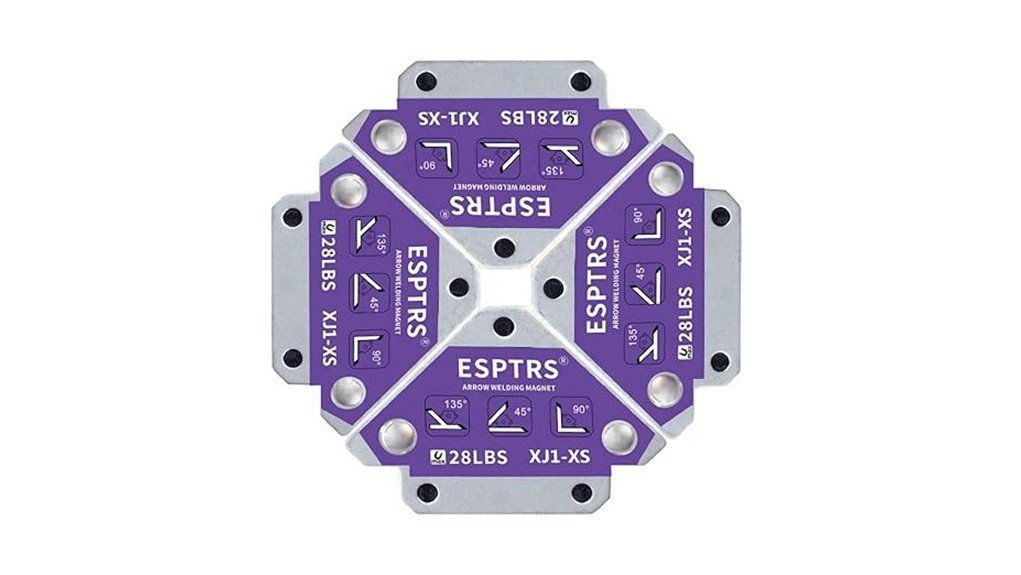
Keeping steel parts square while you tack weld can slow down even a simple project. The Arrow Welding Magnet gives you a 28 LBS magnetic hold with preset 45°, 90°, and 135° angles, so you can position small metal pieces with less measuring and fewer clamps.
This review helps you decide if it is enough for your shop, garage, repair bench, or light fabrication work. Its biggest strength is fast angle setup, but its holding power is not meant for heavy structural steel or high-load industrial work.
Quick Verdict
Rating: 8/10
Best For: Hobby welders, garage fabricators, light repair work, and quick metal alignment tasks
Bottom Line: The Arrow Welding Magnet is a useful helper when you need fast 45°, 90°, or 135° positioning on light steel pieces. It saves setup time, but you should still use clamps or stronger fixtures for heavy parts, uneven surfaces, or structural welds.
| Specification | Detail |
|---|---|
| Product Name | Arrow Welding Magnet |
| Product Type | Welding angle magnet |
| Holding Capacity | 28 LBS |
| Preset Angles | 45°, 90°, and 135° |
| Material | Metal construction, as described in the article |
| Compatible Workpieces | Best on ferromagnetic metals such as mild steel |
| Best Use | Light welding alignment, brackets, frames, shelves, tack welding, and small fabrication work |
| Not Ideal For | Heavy structural steel, large beams, non-magnetic metals, or high-load fixturing |
| Care Note | Keep the magnet face clean, dry, and free from metal chips before use |
What Is the Arrow Welding Magnet?
The Arrow Welding Magnet is a positioning tool that helps hold steel parts at fixed angles while you fit, tack, or assemble a weld joint. It uses magnetic force instead of a screw clamp, so you can place it quickly and move it between joints without much setup time.
The article-supported 28 LBS holding capacity makes it best for small to medium steel sections. It works well when you build frames, align brackets, or hold flat bar and square tubing before tack welding.
This tool is not a full replacement for clamps. You should treat it as a setup aid for alignment, not as the only support for heavy parts, stressed assemblies, or finished structural welds.
Who Should Buy It?
Best For
- Hobby welders who need fast 45°, 90°, or 135° setup for simple joints
- Garage fabricators building light frames, shelves, brackets, or small steel projects
- Repair work where you need a temporary magnetic hand during fitting and tack welding
Skip If
- You work mainly with thick beams, heavy plate, or structural steel assemblies
- You need adjustable custom angles beyond the preset 45°, 90°, and 135° positions
- You often weld stainless alloys, aluminum, or other materials that may not respond well to magnets
Key Features That Matter in Real Use
28 LBS Holding Strength
The 28 LBS magnetic hold gives you enough grip for many light fabrication tasks. It can help keep steel plates, small square tubing, and flat bars from shifting while you check fit and apply tack welds.
The limit matters. Magnetic strength depends on contact area, surface cleanliness, metal thickness, and part weight, so the tool may feel weaker on dirty, painted, curved, rusty, or uneven steel.
Preset 45°, 90°, and 135° Angles
The built-in 45°, 90°, and 135° positions cover common welding layouts. You can use 90° for square frames, 45° for miter-style positioning, and 135° for wider angled joints.
These preset angles reduce measuring time when you repeat similar joints. They also help you get close alignment before tack welding, though final squareness should still be checked with a square when accuracy matters.
Metal Construction and Durability
The article describes a metal construction that helps protect the internal magnetic core during normal shop handling. That matters because welding tools often sit near sparks, dust, metal chips, and rough benches.
Durability still depends on care. Avoid dropping the magnet, grinding directly into it, or leaving chips stuck to the contact faces because those habits can reduce alignment accuracy over time.
Compact Handling
The compact arrow-style shape makes the magnet easy to place at corners, edges, and inside simple frames. You can reposition it faster than a screw clamp when you are test-fitting several small joints.
That speed is the main reason to buy it. You get the most value when you use it for setup and tack welds, then rely on stronger clamping or fixturing before finishing larger welds.
Before You Buy: This magnet is not a replacement for clamps in high-load structural welding. If you work with thick steel, large beams, or parts that can shift under their own weight, use stronger fixtures and confirm the joint before welding.
Compatibility and Safety Notes
The Arrow Welding Magnet works best on ferromagnetic metals, especially mild steel. Stainless steel can vary by alloy, and aluminum will not hold with a magnetic welding square.
Use the magnet for positioning, not for lifting, carrying, or supporting heavy suspended workpieces. Keep your hands clear when parts snap into place, and remove the magnet before long heat exposure if the weld area gets very hot.
Always follow safe welding practices. Wear proper eye, hand, and body protection, keep flammable material away from the work area, and use clamps or stands when the part could fall, twist, or move during welding.
Setup Tips for Better Results
Clean both contact surfaces before placing the magnet. Grinding dust, slag, paint, rust, and metal chips can create small gaps that weaken the hold and throw off alignment.
Use the magnet to hold the parts while you tack weld, then check the angle before running a full bead. Heat can pull thin metal out of square, so small tack welds and a final alignment check help reduce mistakes.
For larger projects, use more than one magnet or combine the magnet with clamps. This gives you better control over twist, sag, and movement while you fit the joint.
Pro Tip: Before tack welding, press the magnet flat against clean bare steel and check the joint with a square. A small chip under the magnet can change the angle more than you expect.
How It Performs in Real Use
For Frame Building
The 90° position helps you hold square tubing and flat bar at right angles while you tack corners. It is useful for small frames, light stands, shop brackets, and simple box-shaped assemblies.
You should still check the frame with a square before final welding. The magnet speeds up placement, but weld heat and part weight can still pull a joint out of alignment.
For Small Fabrication Projects
For shelves, brackets, tabs, and light steel assemblies, the 28 LBS hold gives you a helpful extra hand. It keeps small parts from sliding while you position them and make the first tack.
This is where the tool feels most practical. It reduces the need to balance parts by hand, especially when a clamp would be awkward or slower to place.
For Repair Work
During repair work, the magnet can temporarily hold broken or loose metal pieces in position before you tack them. This can help when you need one hand for the torch and the other for small adjustments.
It works best when the repair part is clean and light enough for the magnetic hold. For bent, oily, rusty, or stressed parts, add clamps before welding.
For Repetitive Welding Tasks
When you make several matching pieces, the preset angles can reduce setup time. You can move the magnet from one joint to the next and keep a more consistent layout across similar parts.
For repeatable production work, treat it as a quick positioning aid rather than a precision jig. A dedicated jig or adjustable welding square may be better if every part needs tight tolerance.
Pros and Cons
Pros
- 28 LBS holding power supports many light welding alignment tasks
- Preset 45°, 90°, and 135° angles help speed up common joint setup
- Metal construction suits normal garage and workshop handling
- Compact shape makes it easy to reposition between tack welds
- Useful as an extra hand when clamps are slow or awkward to place
Cons
- Not suitable as the only support for heavy structural steel welding
- Magnetic strength can drop on dirty, rusty, painted, or uneven surfaces
- Limited to preset angles, so it is not ideal for custom-angle fabrication
Want a quick alignment tool for light welding projects?
Is It Worth the Price?
The Arrow Welding Magnet fits the budget-to-mid range purpose of a simple welding setup tool. It offers strong value for the price if you need faster corner alignment for home projects, small repairs, and light shop work.
You get the most value when you use it often for tack welding and repeated 45°, 90°, or 135° joints. It can save time compared with setting every small piece by hand.
It is not the best fit if your work demands heavy-duty fixturing, exact custom angles, or strong hold on large steel parts. In those cases, a higher-capacity magnet, adjustable welding square, clamp system, or dedicated jig makes more sense.
How It Compares to Alternatives
Compared to basic clamp sets, this magnet is faster to place but less secure under load. Clamps are better when you need strong pressure, non-magnetic material support, or a hold that will not shift during a longer weld.
Compared with stronger industrial welding magnets, the Arrow Welding Magnet is lighter and easier to handle for small tasks. Adjustable welding squares may be better for custom angles, while this tool makes the most sense when speed and simple preset positions matter more.
Frequently Asked Questions
How strong is the Arrow Welding Magnet?
It has a 28 LBS holding capacity, which suits light to medium positioning tasks like small frames, brackets, and flat bar alignment. It is not meant to support heavy structural steel by itself.
What angles does it hold?
The magnet supports preset 45°, 90°, and 135° positions. These angles cover many common corner, frame, and miter-style welding setups.
Can it be used for stainless steel?
It works best on ferromagnetic metals like mild steel. Stainless steel varies by alloy, so some stainless pieces may hold weakly or not hold well at all.
Does it replace welding clamps?
No. It complements clamps by helping with quick setup and alignment, but clamps are still better for high pressure, heavier parts, non-magnetic materials, and final fixturing.
Is it suitable for professional welding?
It can be useful for light professional fabrication, repair work, and quick shop positioning. For heavy industrial welding, higher-capacity magnets or dedicated fixtures are safer and more reliable.
Why might the magnet feel weaker than expected?
Paint, rust, grinding dust, metal chips, curved surfaces, or small contact areas can reduce magnetic grip. Clean bare steel and flat contact give the magnet its best chance to hold properly.
How do I maintain the magnet?
Keep the faces clean, dry, and free from steel chips. Store it away from heavy impacts, and avoid using it as a lifting tool or striking it with a hammer.
The Bottom Line
The Arrow Welding Magnet is a practical buy if you need quick preset-angle alignment for light welding, garage fabrication, and small repair work. Its main strength is fast 45°, 90°, and 135° positioning, while its main limitation is the 28 LBS hold that can fall short on heavy, dirty, or uneven steel.
Choose it if you want a simple magnetic helper for tack welding and setup. Skip it if your work requires heavy structural support, custom-angle precision, or strong clamping pressure.